Weeds growing in coquina shell: a Florida buyer and DIY guide
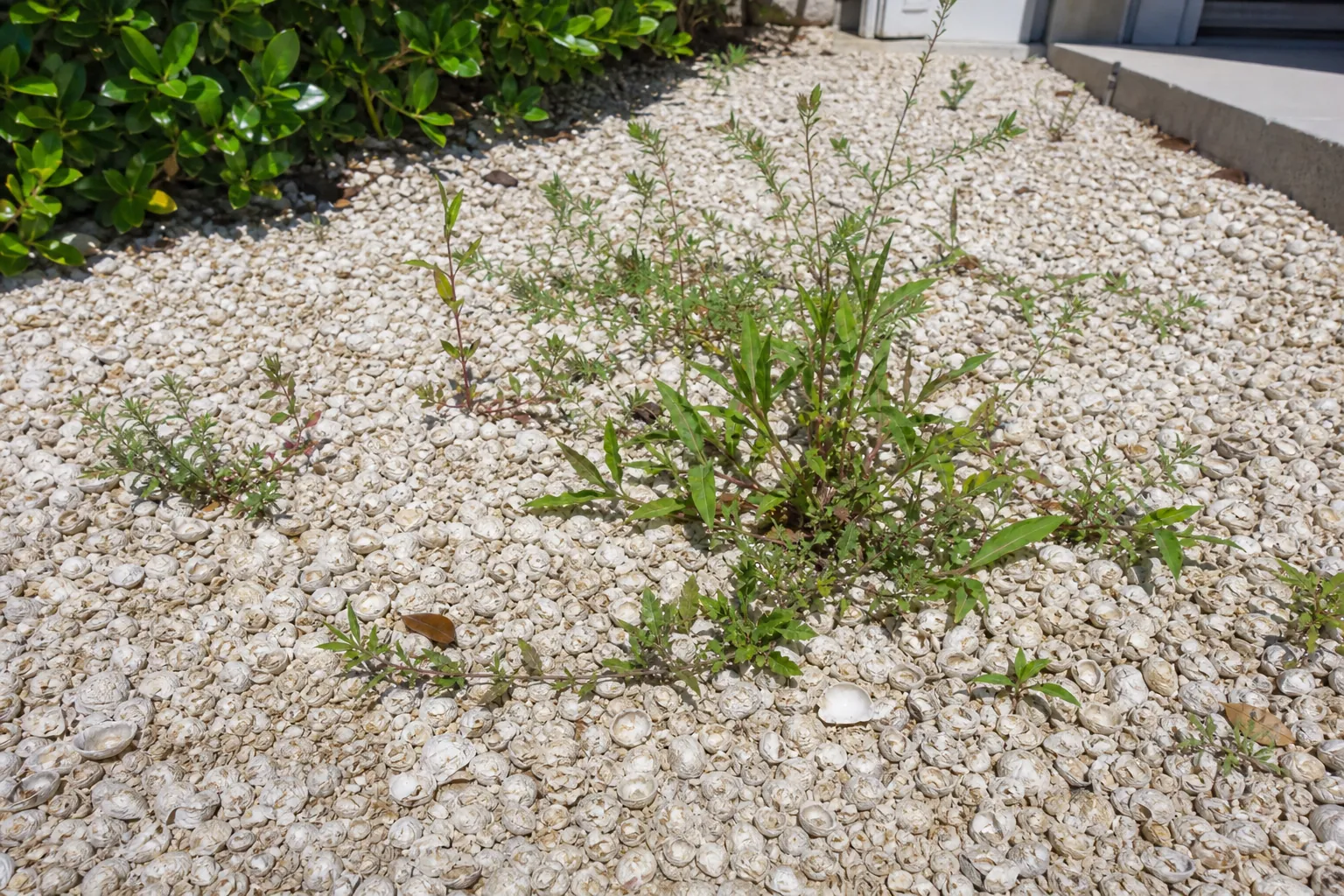
Finding weeds growing in coquina shell does not necessarily mean you chose the wrong ground covering. Shell is a loose surface material, not a sealed barrier. Seeds can settle between pieces, roots can reach soil underneath, and windblown debris can gradually create pockets where new growth takes hold.
For Florida homeowners, the useful question is not whether shell can eliminate every weed. It is how to choose the material, prepare the area, and manage the conditions that allow weeds to establish. Understanding those details before buying can help you avoid ordering more shell when the actual problem is underneath it.
Tropical Yards supplies coquina shell and tropical plants, with dump trailer delivery from St. Augustine to Daytona Beach. This guide covers buyer decisions and work you can plan to do yourself. Tropical Yards does not provide installation or yard maintenance.
Why Weeds Grow In Coquina Shell
Coquina shell covers the ground, but spaces remain between its pieces. Those spaces allow water to move through and can also give seeds a place to lodge. A shell-covered area may discourage some growth while still providing opportunities for persistent weeds.
There are two common starting points: weeds growing upward from the soil below and seedlings establishing in material that has accumulated on top. The distinction matters because each calls for a different DIY response.
Growth Coming From Underneath
Existing roots, runners, or seeds may remain beneath a new shell layer. Spreading grasses can move into an area from nearby turf. Some weeds store enough energy underground to push through loose material, especially where coverage is thin.
If shoots appear in lines or repeatedly return in the same spots, inspect the surrounding turf and the soil beneath the shell. Adding material over active roots may hide the problem temporarily without addressing its source.
Seeds Taking Hold On The Surface
Leaves, grass clippings, airborne dust, and decomposing plant litter can collect between shell pieces. Over time, these deposits can form small rooting pockets. Seeds brought by wind, birds, footwear, or lawn equipment may germinate there.
Florida's warm conditions and seasonal rainfall can make these pockets productive growing sites. Areas near shrubs, beneath trees, or beside frequently irrigated beds deserve particular attention because they may collect both moisture and organic debris.
Diagnose The Problem Before Buying More Shell
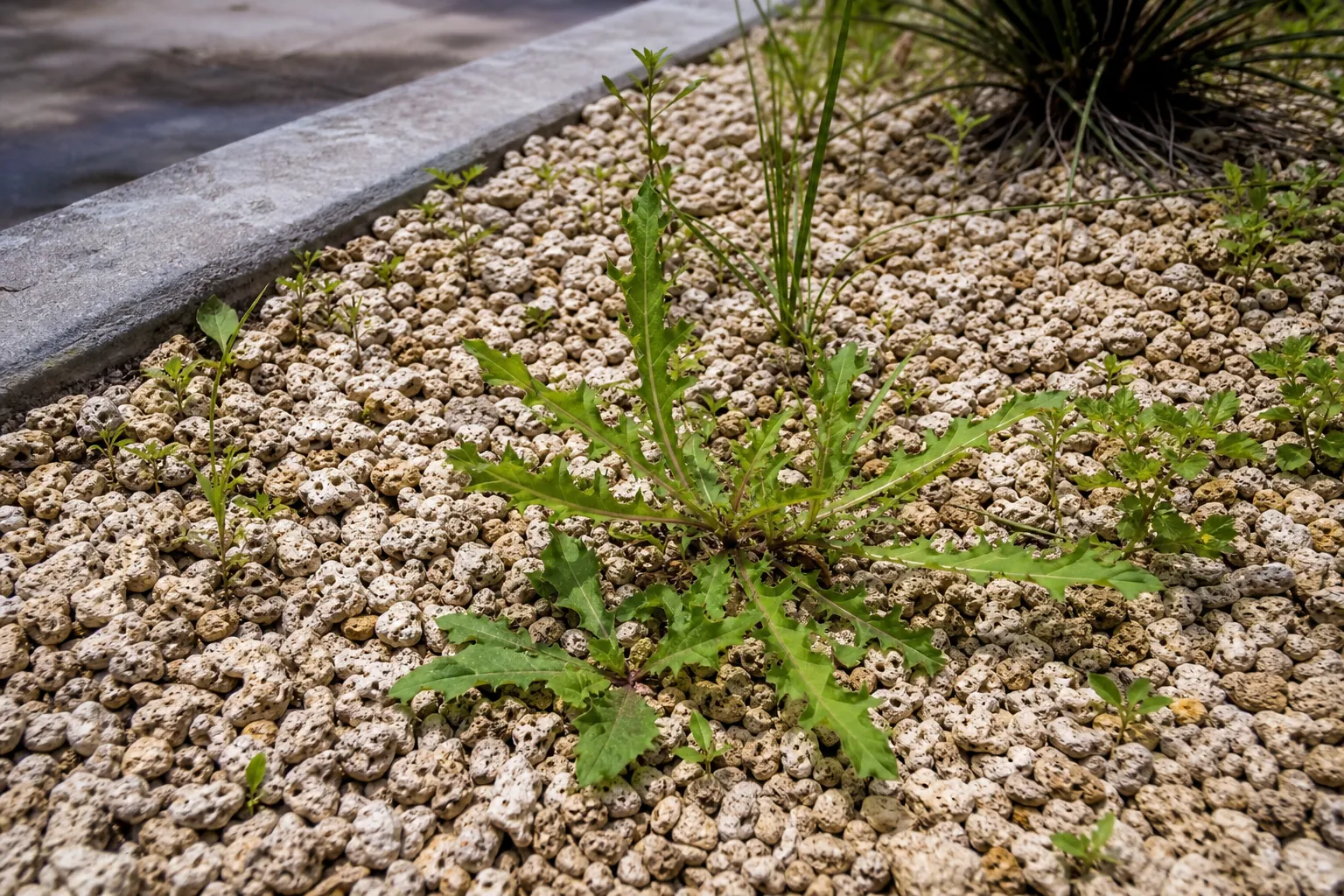
A fresh top-up may improve coverage, but it is not the answer to every weed problem. Begin by looking at where the growth appears, how firmly it is rooted, and what surrounds it. A brief inspection can help you decide whether you need more material or better preparation.
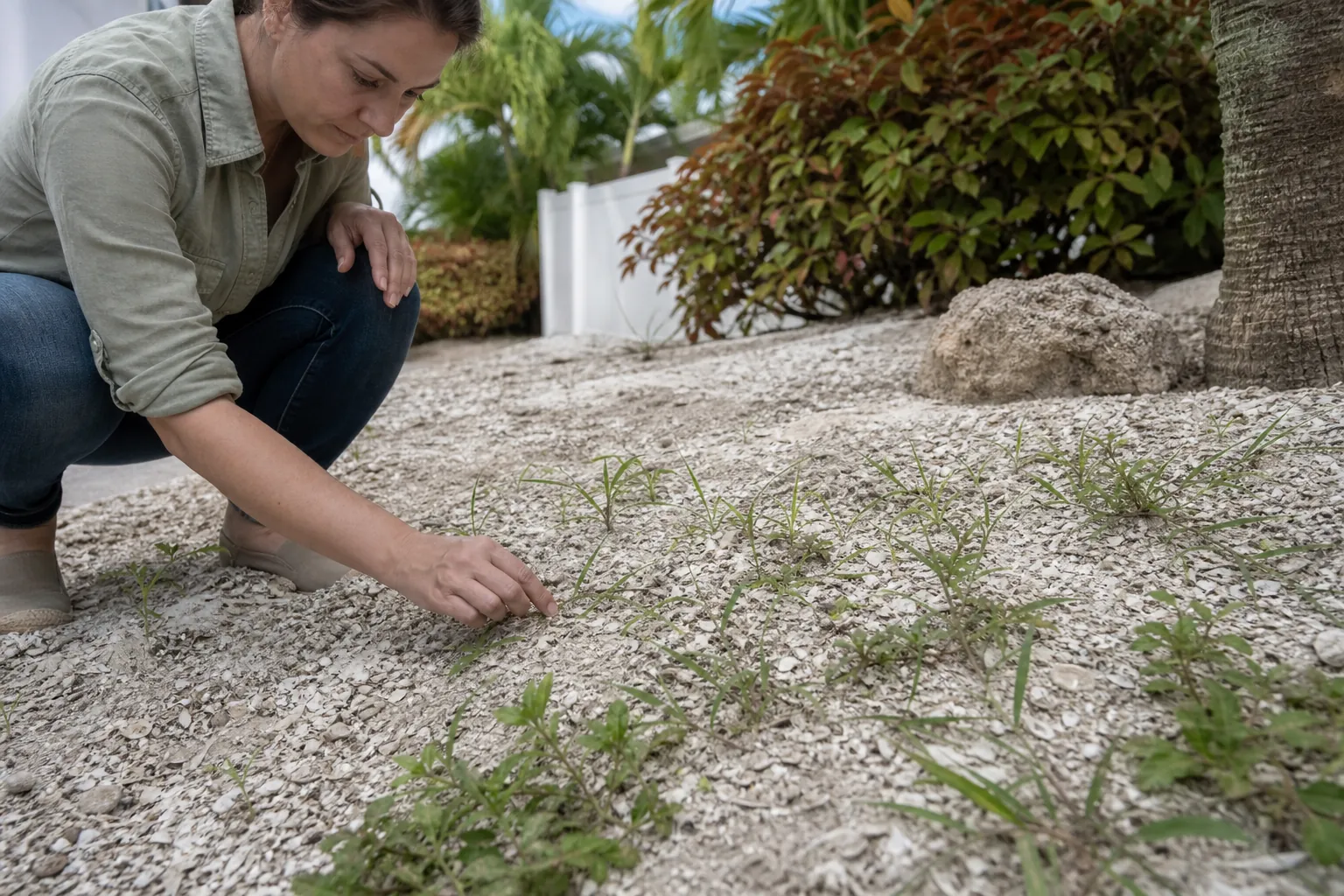
- Lift a small patch of shell to check whether the weed is rooted in underlying soil or in debris near the surface.
- Look along lawn edges for grass runners that have crossed into the shell-covered area.
- Check downspout outlets and low spots for deposits of soil washed in during rain.
- Compare weed-heavy patches with cleaner areas to identify differences in shade, irrigation, litter, or shell coverage.
- Photograph recurring weeds before removing them so you can seek an identification from your local UF/IFAS Extension office.
A shallow seedling rooted in surface debris may be straightforward to pull by hand. A spreading perennial with underground stems may require a more deliberate approach before you replenish the shell. Identification helps prevent repeated effort that leaves the main root system intact.
Also inspect the original surface height. If shell has shifted into surrounding beds or become mixed with soil, coverage can look adequate from a distance while leaving exposed patches. Correcting those isolated areas may be more sensible than topping up the entire space.
What To Check When Choosing Coquina Shell
Buy shell for its intended use and appearance, not as a promise of a weed-free yard. For an overview of the material, start with the Tropical Yards coquina shell page. This article focuses specifically on the conditions that influence weed growth.
Before ordering, ask about the material currently available. Natural shell can vary in color, fragment size, and the amount of smaller material mixed among larger pieces. A photograph or a sample, if available, can help you assess whether it suits your project.
Finer material can settle into gaps, while larger fragments leave more visible spaces. Neither characteristic makes shell weed-proof. Soil intrusion, leaf buildup, nearby turf, and preparation often matter more than appearance alone.
- Explain whether you are covering a new area or replenishing an existing shell surface.
- Ask how the material is measured and supplied so your quantity estimate uses the same unit.
- Discuss your intended use rather than assuming every shell product performs identically.
- Confirm the current material's appearance before expecting an exact match with older shell.
If you are replenishing an existing area, remember that weathering and accumulated dirt can change its color. New material may look different at first. Address the reason coverage became thin before buying a top-up, particularly if runoff repeatedly carries shell away.
Prepare A DIY Shell Area To Reduce Weed Pressure
The most useful preparation happens before delivery. Outline the area, evaluate drainage, and decide how you will separate the shell from nearby lawn or soil. Do not cover a poorly understood weed problem and assume the new surface will solve it.
For a small DIY project, work in manageable sections. Identify existing vegetation, remove unwanted growth using an appropriate method, and inspect for remaining roots or runners. Keep excavated soil and plant debris separate from the shell you intend to reuse.
Use caution near utilities, irrigation lines, and established tree roots. Avoid unnecessary excavation around mature trees. If the work requires substantial digging or changes to drainage, obtain appropriate guidance before proceeding.
Plan The Boundary
A defined edge can help keep shell in place and reduce mixing with surrounding soil. It can also make encroaching grass easier to notice. Edging is not a complete root barrier, however, and grass may still travel over, under, or around it.
Choose an edge appropriate for the site and install it yourself according to the manufacturer's instructions. Leave a practical way to inspect the lawn side. A boundary concealed under heavy plant growth can make early encroachment harder to catch.
Check Water Movement
Observe where water travels during ordinary rain. Soil washing across the proposed area can introduce both weed seeds and a growing medium. Shell should not be used to conceal an unresolved drainage issue.
Keep existing drainage routes open. Avoid raising the surface against siding, covering drainage openings, or burying irrigation components. Near the house, preserve any inspection clearances required by your pest-control professional and applicable building guidance.
Should You Put Landscape Fabric Under Coquina Shell?
Landscape fabric can separate shell from underlying soil and may reduce some weeds emerging from below. It is not a universal requirement, and it does not prevent seeds from germinating in debris that collects above it.
Its usefulness depends on the location, the existing weeds, and how you expect to use the area later. Fabric beneath a stable decorative strip presents different tradeoffs from fabric in a bed where you regularly add or replace plants.
- Check that the product is intended for landscape use and allows water passage.
- Follow the manufacturer's instructions for overlaps, fastening, and covering the fabric.
- Recognize that planting openings and exposed edges can become routes for weeds.
- Consider whether future digging or plant changes will make the fabric inconvenient.
- Avoid treating fabric as a substitute for addressing established spreading weeds.
Do not substitute ordinary impermeable plastic without considering drainage and plant health. Blocking water movement can create problems that are more difficult to correct after the area is covered.
If an existing shell area already has fabric, inspect an accessible section before adding more material. Torn fabric, exposed seams, or a thick layer of decomposed debris above it may explain the weed pattern. Another shell layer will not repair those conditions.
Estimate Shell Quantity Without Overfilling The Area
Ordering begins with measurements. Record the length and width of each reasonably rectangular section, then calculate its area. For irregular spaces, divide the footprint into smaller shapes and combine the results. Sketching the project can help you spot missed corners.
Volume depends on both area and planned depth. If you measure area in square feet and depth in inches, multiply the area by the depth divided by 12 to obtain cubic feet. Divide cubic feet by 27 to convert to cubic yards.
For example, a 120-square-foot area covered to a planned depth of 2 inches requires approximately 20 cubic feet, or 0.74 cubic yard, before project-specific adjustments. This is a calculation example, not a recommended depth for every site.
Choose a depth that suits the intended use, existing grades, and adjacent surfaces. Confirm your measurements and proposed coverage when discussing an order. If material is sold by weight, ask the supplier how to translate your volume estimate for the available shell rather than assuming a universal conversion.
For a top-up, measure the missing depth instead of calculating a full new layer. Avoid piling material against plant trunks, burying root flares, or raising the surface above nearby paving. More shell does not automatically provide better weed control.
Plan Dump Trailer Delivery Before You Order
Tropical Yards offers dump trailer delivery of coquina shell and plants from St. Augustine to Daytona Beach. A successful delivery plan starts with a clearly identified unloading location and an honest assessment of access.
Describe narrow gates, turns, low branches, overhead lines, soft ground, and sloping surfaces when discussing delivery. Do not assume a trailer can reach a backyard simply because a passenger vehicle can enter the property.
- Confirm the delivery address and whether it falls within the service area.
- Explain where you would like the material unloaded and ask whether that location is feasible.
- Keep parked vehicles and other movable obstacles away from the agreed access route.
- Identify septic components, buried irrigation, and other sensitive areas that should not bear vehicle loads.
- Plan how you will move shell from the unloading point to its final location yourself.
If unloading on a paved surface is being considered, ask whether a protective ground covering is appropriate and how it would affect unloading. Keep the pile out of public travel lanes and drainage paths, and check any applicable neighborhood rules.
Schedule delivery when you can manage the material afterward. Have suitable tools ready, such as a wheelbarrow, shovel, rake, gloves, and sturdy footwear. Delivery supplies the material; it does not include spreading shell, preparing the yard, or removing existing plants.
Remove Existing Weeds With A Targeted DIY Approach
Once you understand where the weeds are rooted, choose the least disruptive effective method. For scattered seedlings, hand pulling may be sufficient. Gently move shell aside so you can reach the base rather than breaking off only the visible leaves.
Collect removed weeds instead of leaving them on the shell. Plants carrying mature seeds can contribute to another round of growth. Return clean shell to the patch without mixing in soil or root fragments.
Repeatedly returning weeds need closer attention. Seek identification before deciding on a treatment, particularly for plants with underground runners or tubers. Different species respond differently, and disturbing some spreading weeds can distribute viable pieces.
If you choose an herbicide, select a product labeled for the site and follow all label directions. Keep spray away from desirable plants, observe weather restrictions, and protect nearby water. Shell does not shield adjacent roots or foliage from improper application.
Avoid relying on household salt mixtures. Salt can damage desirable plants and affect soil beyond the treated patch. Boiling water also carries burn risks and may injure nearby vegetation. A simple-looking remedy is not necessarily a suitable one.
Keep New Soil And Seeds From Accumulating
Long-term weed reduction depends partly on keeping the shell surface from becoming a planting medium. This is a homeowner care task, not a service offered by Tropical Yards. Focus your effort on the places where debris consistently gathers.
Remove fallen leaves before they break down into the shell. Avoid directing grass clippings into the area when mowing nearby turf. If you use a blower, use enough restraint to move lightweight litter without scattering shell or pushing debris deeper into gaps.
Adjust irrigation that unnecessarily wets unplanted shell areas. Check for leaking emitters and overspray from adjacent lawn zones. Correcting excess moisture does not eliminate weeds, but it can reduce conditions that favor germination.
After heavy rain, inspect the edges for washed-in soil and displaced shell. Address small deposits before they become a continuous layer. Pull young weeds before they set seed, and watch recurring patches rather than waiting for the whole area to fill in.
Using Coquina Shell Near Tropical Plants
Coquina shell can be part of a planted landscape, but plant needs still come first. Its calcium carbonate content may influence soil chemistry over time. Plants differ in their preferred conditions, so consider a soil test when choosing plants for a shell-adjacent bed.
Keep shell away from direct contact with trunks and stems, and leave root flares visible. Do not assume that a shell surface tells you whether the root zone needs water. Check soil moisture where roots are growing and follow care guidance for each plant.
Tropical Yards sells palm trees, hibiscus, bougainvillea, ferns, and other tropical plants. When buying, discuss the specific plant's light, moisture, and soil needs rather than treating all tropical plants as interchangeable. Plan planting and subsequent care as your own project.
Choose The Next Step Based On The Cause
If weeds are rooted in surface litter, removing that litter and the seedlings may be the most useful next step. If turf is crossing the boundary, concentrate on the edge. If shell coverage is genuinely thin, measure the shortfall before ordering more.
For coquina shell sales, tropical plant sales, or dump trailer delivery questions between St. Augustine and Daytona Beach, call Tropical Yards at 772-267-1611. Have your measurements, intended use, and delivery access details ready so you can discuss a material order suited to your DIY plans.
Call 772-267-1611 to talk through next steps.