When Should You Avoid Trimming Palms in St. Augustine?
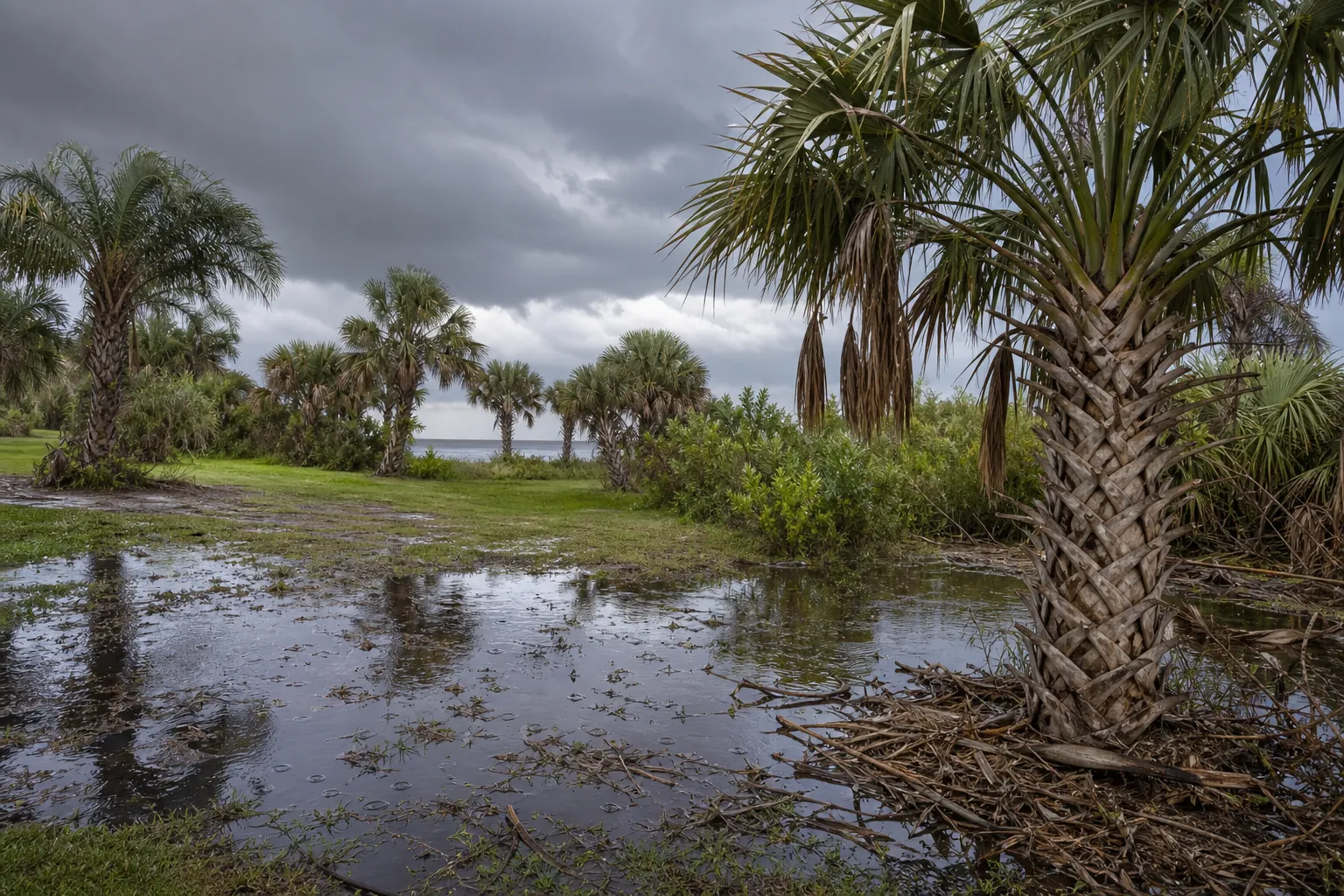
Knowing when not to trim palms in St. Augustine can prevent unnecessary damage and help you make a more informed decision about each tree. Timing matters, but so does the condition of the individual frond. Before cutting, consider recent weather, the palm’s overall appearance, and whether the frond is truly dead. When conditions are uncertain, waiting is often safer than removing healthy tissue.
Avoid Trimming Immediately Before Cold Weather
Do not rush to trim a palm when cold weather is approaching. Green fronds contribute to the palm’s normal functions, and removing them shortly before a cold spell creates fresh cuts at an unfavorable time. Even fronds that look imperfect may still be useful to the palm.
Check the local forecast before planning any trimming. If unusually cold temperatures are expected, postpone nonessential cuts until conditions improve. This is particularly important for young palms, recently planted palms, and palms already showing signs of stress.
Cold preparation should focus on reducing additional stress rather than improving appearance. Leave green fronds in place, avoid aggressive pruning, and review practical protection measures before temperatures drop. Our guide on how to protect young palms from frost in St. Augustine offers additional guidance for younger specimens. After cold weather passes, allow time for symptoms to become clear before deciding which fronds should be removed.
Wait Before Cutting Fronds After a Freeze
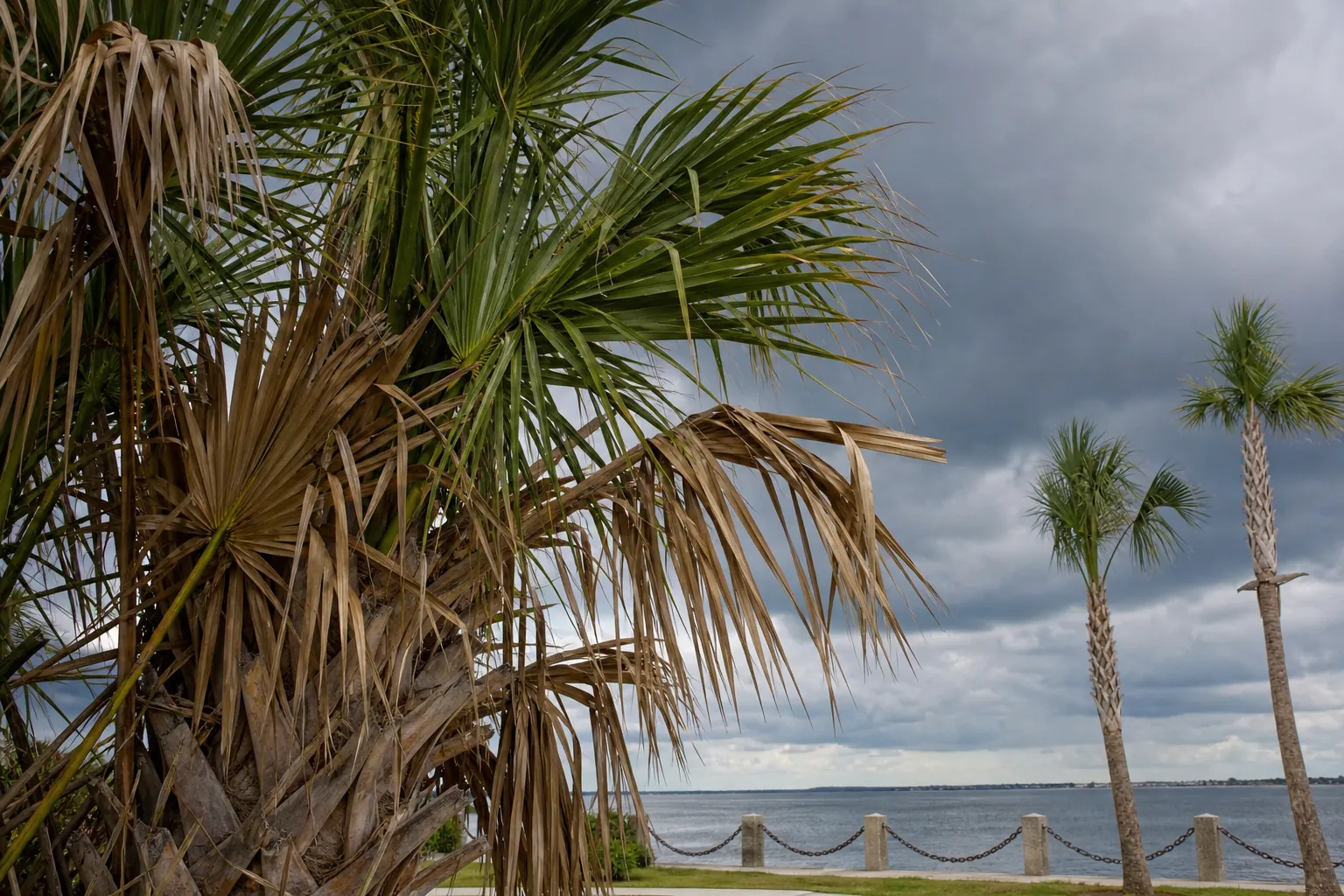
Cold-damaged palm fronds can turn brown, droop, or develop discolored areas. These changes may tempt you to trim immediately, but early cutting can make it difficult to determine the full extent of the damage. Some affected fronds may retain green tissue, while additional symptoms can appear gradually.
Wait until the threat of additional cold has eased and the palm’s condition is easier to evaluate. During the waiting period, observe the newest growth near the center of the crown. Do not pull, cut, or probe that area simply to test it. The growing point is important, and careless handling can add damage.
Once the weather stabilizes, separate completely dead material from fronds that remain partly green. Appearance alone should not drive the decision. If you cannot confidently identify what is dead, postpone the cut. Taking dated photographs can help you compare changes over time and explain the situation when requesting guidance.
Do Not Remove Green or Partly Green Fronds
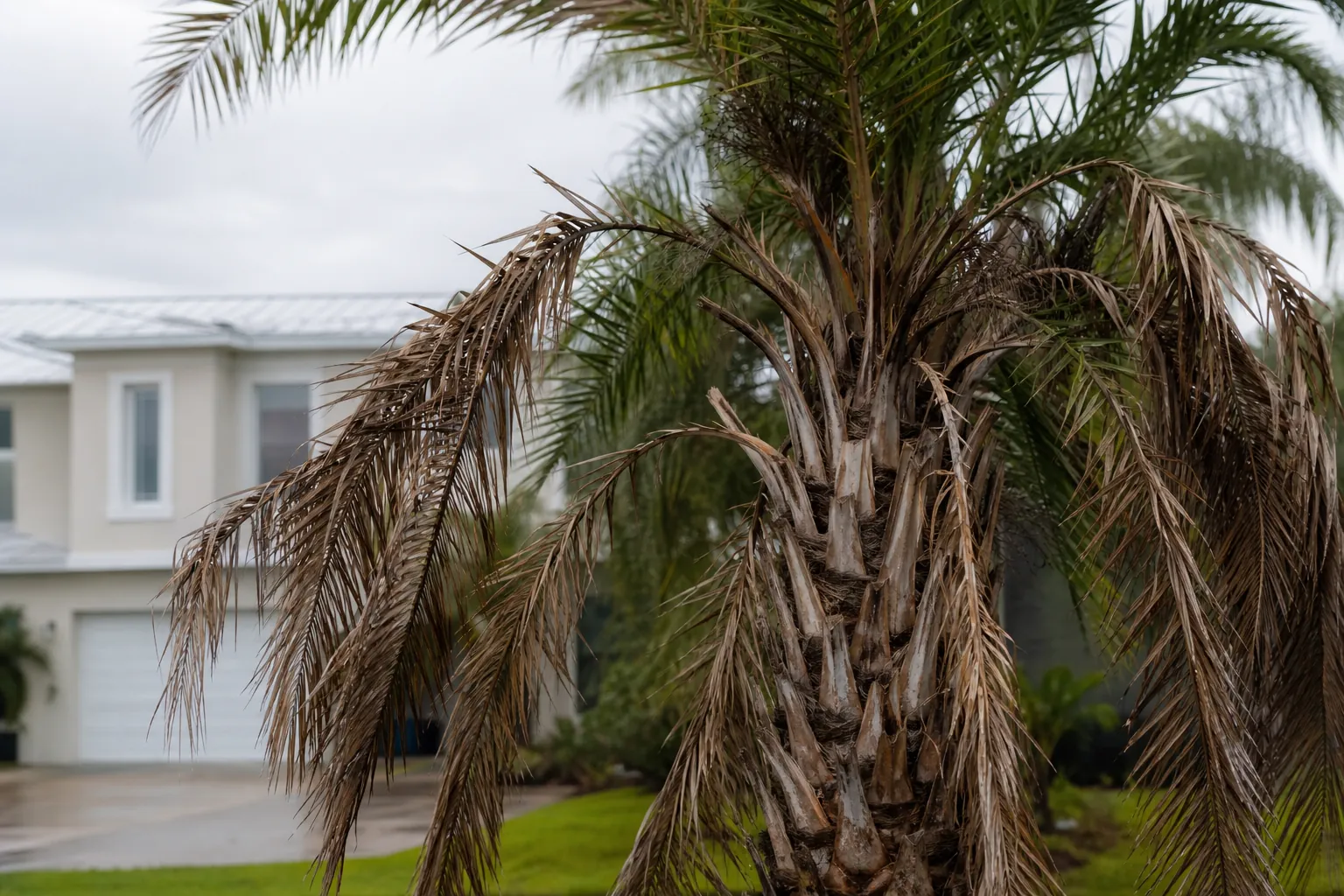
A palm does not need every frond to look perfect. Fronds may have brown tips, torn leaflets, or cosmetic blemishes while retaining substantial green tissue. Removing them only for appearance can reduce the palm’s functional canopy and leave it with fewer green fronds than necessary.
Before making a cut, inspect each frond from several angles. Consider its overall color, position, and condition rather than focusing on one damaged section. A useful decision checklist includes:
- Leave fully green fronds attached.
- Keep partly green fronds unless there is a clear reason to remove them.
- Do not trim solely to create a severely narrowed or upright crown.
- Avoid cutting into the trunk or pulling material away by force.
- Pause if the newest central growth appears damaged or unusual.
Conservative trimming is especially sensible when a palm has recently faced cold, drought, planting stress, or physical damage. If the issue is mainly cosmetic, give the palm time before reassessing it.
Postpone Routine Trimming During Severe Weather
Avoid routine palm trimming during thunderstorms, high winds, heavy rain, or other severe conditions. Wet surfaces and moving fronds make evaluation and cutting more difficult. Wind can also change the direction in which loose material falls. If weather deteriorates after work begins, stop and return only when conditions are calm.
Before trimming after a storm, examine the area from the ground. Look for hanging fronds, cracked stems, contact with structures, and nearby hazards. Do not stand beneath suspended material. Do not use a ladder where the footing is soft, uneven, or wet. Palms near utility lines require particular caution and should not be approached with tools or climbing equipment.
Storm damage can look urgent even when immediate cutting is not the safest response. Secure the surrounding area first, keep people away from potential falling material, and decide whether the situation can be assessed safely. A controlled delay is preferable to taking avoidable risks in poor conditions.
Pause When the Palm Shows Unexplained Decline
Trimming is not a reliable solution for every palm problem. Yellowing across multiple fronds, unusual spotting, a thinning crown, soft tissue, rapid decline, or changes in the newest growth may indicate an issue that cannot be corrected by simply removing foliage. Cutting first can eliminate useful clues and place more stress on the palm.
Document what you see before changing anything. Take clear photographs of the entire palm, the crown, the trunk, and affected fronds. Note when symptoms appeared, whether they followed cold or stormy weather, and how quickly they changed. Also check whether the symptoms affect one palm or several nearby palms.
Delay nonessential trimming until you have a sound reason for each proposed cut. Completely dead or detached material may require attention, but unexplained decline calls for careful assessment rather than aggressive removal. If a palm appears unstable or material may fall, keep a safe distance and prevent access to the surrounding area.
Make a Careful Trimming Decision
If you are unsure whether current conditions are suitable for trimming, take photographs and note recent weather before acting. For a calm conversation about your situation in St. Augustine, call Tropical Yards at 772-267-1611.
Call 772-267-1611 to talk through next steps.