When to replenish existing coquina shell in Florida
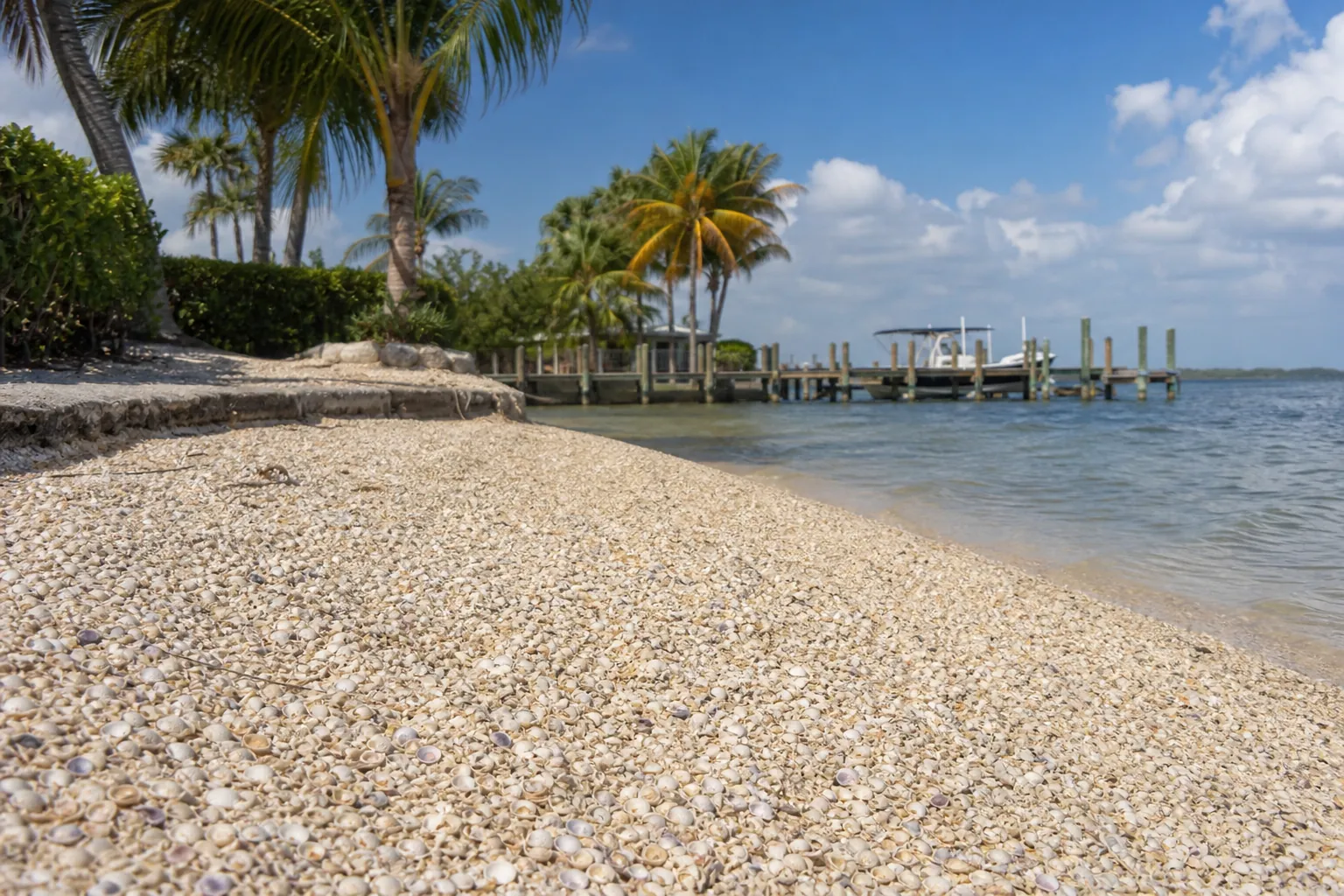
Coquina shell does not need replenishing simply because a certain number of months has passed. An established shell surface may remain useful while its color changes and individual pieces settle. The better question is whether the material still provides the coverage, separation, and usable surface you intended.
In Florida, heavy rain, foot traffic, edging changes, and movement into nearby soil can leave some areas thinner than others. Knowing when to replenish existing coquina shell starts with checking those conditions rather than automatically ordering enough to cover the entire space again.
This guide focuses on evaluating an existing shell area, deciding whether a top-up makes sense, and preparing a practical order. Tropical Yards supplies coquina shell and tropical plants, with dump trailer delivery from St. Augustine to Daytona Beach. Spreading material and making site improvements are tasks for the buyer or a separately hired contractor.
Look For Functional Changes, Not Just A Different Color
Fresh shell can look different from material that has weathered outdoors. Dirt, leaf debris, moisture, and natural variation can change its appearance without making it unsuitable. A color difference alone is not a reliable reason to add another layer.
Instead, walk the area and identify where the shell no longer performs as expected. Compare frequently used sections with quieter corners. Check along edges, beneath downspouts, and wherever people turn or step off a path.
- Replenishment may be useful when bare soil shows through in several places after loose surface material is gently moved aside.
- A top-up may help where shell has migrated away from a walking route and the remaining layer is noticeably thin.
- Additional material may be appropriate when the existing surface sits below its intended level but drainage and surrounding elevations remain suitable.
- New shell is not automatically the answer when the main problem is standing water, deep ruts, or repeated washout.
Small isolated gaps call for a different purchase than widespread thinning. Mark the affected areas before estimating quantity. This prevents a few bare spots from becoming an unnecessary full-area application.
Check Existing Depth In Several Places
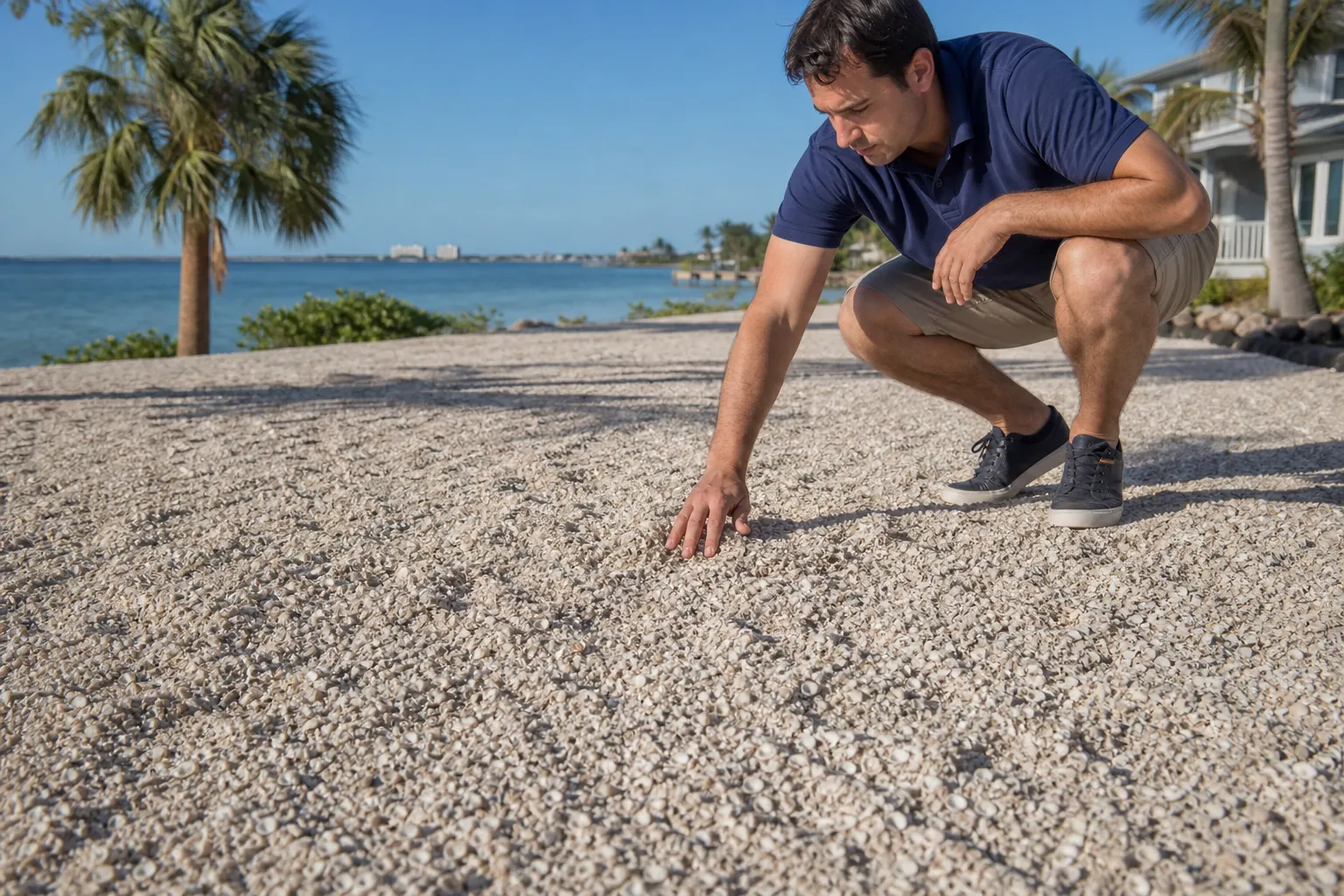
A surface can appear well covered while holding very little shell underneath. It can also look patchy because debris obscures a substantial layer. Before buying, inspect the actual depth at representative points.
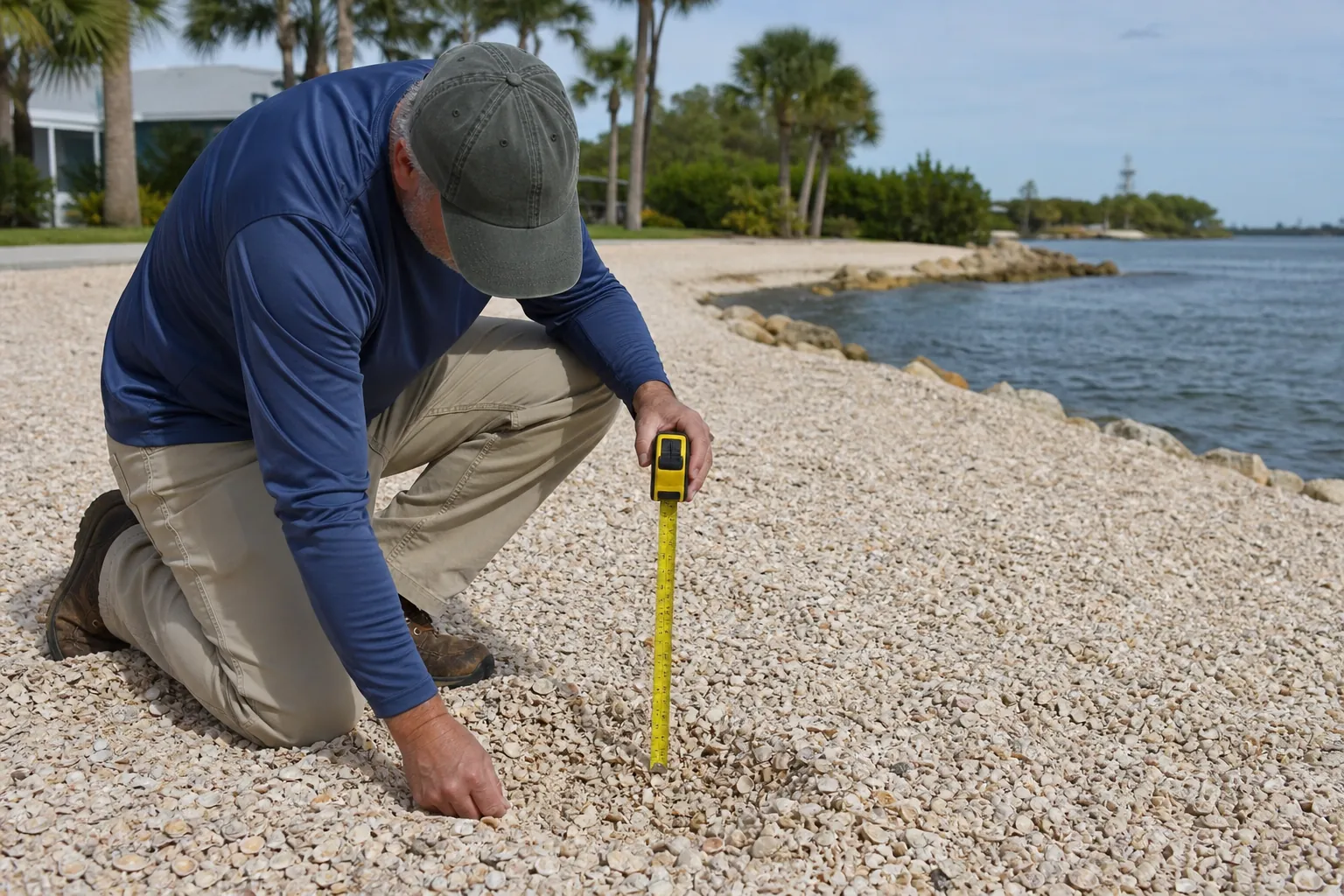
Use a small hand tool to open a narrow inspection spot without damaging nearby roots or any underlying fabric. Find the transition between shell and the material below it. Measure the remaining shell layer, then return the displaced material to the opening.
Take readings in a lightly used section, a high-traffic section, an edge, and any visibly thin area. If the space is large or irregular, add more inspection points. Record the measurements on a simple sketch rather than relying on memory.
There is no single replenishment depth that fits every existing shell surface. Intended use, shell size, the underlying base, edging height, and nearby features all influence what is appropriate. A decorative bed and a frequently used footpath should not be evaluated as though they serve the same purpose.
Also distinguish between adding shell and raising the whole area. If the original layer is already substantial, another blanket application may create an elevation problem instead of improving coverage. The useful measurement is the additional depth needed in each section, not the total depth you hope to see everywhere.
Identify Where The Missing Shell Went
Understanding material loss helps you avoid repeating the same purchase without resolving the cause. Shell rarely disappears evenly. It often moves toward an edge, into adjacent ground, or along a concentrated flow of water.
Inspect the site after ordinary use and, when safe, after rainfall. Look for shell accumulated outside the intended area. Note whether thin spots follow a walking pattern or a water route.
- If shell collects on the downhill side, runoff or the slope may be moving it.
- If the center of a path is thin but its margins are piled higher, regular foot traffic may be shifting the material sideways.
- If the boundary is no longer clear, soil and shell may be mixing along an uncontained edge.
- If shell appears to sink into soft ground, the underlying surface may need evaluation before more material is added.
For a minor displacement issue, you may be able to redistribute existing shell yourself before deciding whether anything needs to be purchased. Measure again after that adjustment. Material that was merely pushed aside is different from material that has genuinely been lost.
Repeated movement calls for attention to the cause. Adding more shell without addressing concentrated runoff, unstable ground, or ineffective boundaries can leave the same thin spots after the next period of rain or use.
Separate Replenishment From Drainage And Base Problems
Coquina shell should not be treated as a universal repair material for a failing surface. A shallow depression caused by lost shell is different from a depression caused by settlement underneath it.
Watch for water that remains after surrounding areas have drained, soft spots underfoot, exposed muddy sections, or ruts that keep returning. Those signs can indicate issues beyond ordinary surface wear. A thicker shell layer may conceal them briefly without correcting them.
Check adjacent elevations before adding material near a driveway, sidewalk, patio, or building. Raising the shell surface can change where water travels. Keep drainage outlets and intended flow paths open, and do not bury building clearances or other features that must remain exposed.
When the problem involves grading, persistent drainage trouble, or an uncertain base, seek advice from a qualified contractor before ordering a large top-up. Tropical Yards supplies materials rather than providing site assessment, grading, installation, or maintenance services.
If you find exposed landscape fabric, inspect its condition without assuming that covering it solves everything. Fabric folded onto the surface or displaced by erosion may require a separate correction. Avoid placing new shell over loose debris or an unstable layer simply to hide it.
Decide Between A Spot Top-Up And Whole-Area Replenishment
A spot top-up makes sense when most of the existing area remains adequately covered and only a few sections need additional material. It limits unnecessary buildup and lets you concentrate the order where it will be useful.
Whole-area replenishment may make sense when inspection reveals broadly reduced coverage, multiple connected thin sections, or a uniformly low surface. Even then, the additional layer should be based on measured need rather than a desire to make everything look freshly installed.
Appearance is a legitimate consideration, but distinguish it from function. New shell may not match weathered material immediately. Natural shell also varies, so a small patch can remain visible even when the product is suitable.
- Choose a targeted top-up when thinning is limited and surrounding shell remains at an appropriate depth.
- Consider a broader application when the whole area needs a modest increase and there is enough elevation clearance.
- Pause the purchase when deeper underlying problems explain the unevenness.
- Ask about the available shell before ordering if blending with existing material is important to you.
For general material selection information, start with the Tropical Yards coquina shell page. Use this replenishment guide to assess what your existing area actually needs rather than treating every refresh as a new installation.
Measure The Area And Estimate The Added Volume
Once you know which sections need shell, measure those sections separately. For a rectangle, multiply length by width to calculate square footage. Divide irregular spaces into simpler shapes, then combine their areas.
Estimate the added depth for each section based on your inspection. Do not use the full existing depth in the calculation unless you are actually replacing that entire layer. A replenishment order generally concerns the missing volume.
For measurements in feet and an added depth in inches, the calculation is: square feet multiplied by added inches, divided by 324, equals cubic yards. This is a geometric estimate, not a promise of final coverage.
For example, an area of 240 square feet receiving an additional 1 inch of material has a calculated volume of about 0.74 cubic yard. That example illustrates the math only. It does not establish a recommended depth or the quantity available for purchase.
Keep differently worn sections separate in your notes. One zone may need a modest addition while another needs no new material at all. Combining them into one average can produce too much shell in some places and too little in others.
Before placing an order, discuss your measurements, intended use, and existing surface with the supplier. Ask how the material is sold and what ordering quantities are available. Do not assume that a volume estimate converts directly to a particular weight, since material characteristics and moisture can affect that relationship.
Check Shell Suitability Around Tropical Plants
If the existing shell surrounds plants, consider the planting conditions before raising its level. Keep shell away from trunks, woody stems, and plant crowns. Do not bury those parts to make the bed look evenly filled.
Shell is calcium-carbonate material and can influence nearby soil conditions over time. That matters when plants prefer more acidic conditions. If plants have shown unexplained decline or nutrient symptoms, consider soil testing and plant-specific guidance rather than assuming additional shell is harmless.
Inspect how irrigation reaches the soil. Replenishing the surface should not bury emitters that need access, obscure leaks, or interfere with equipment. Take particular care around shallow roots when checking depth or spreading material.
Tropical Yards also sells palm trees, hibiscus, bougainvillea, ferns, and other tropical plants. Plant purchases should be matched to light, moisture, soil conditions, and mature size. The suitability of a plant for your yard is a separate decision from whether an existing shell area needs replenishing.
If you are changing both plants and ground cover yourself, settle the planting layout and required soil level before calculating the shell addition. Otherwise, the measured area may change after you have already ordered.
Plan Dump Trailer Delivery Before Ordering
A good quantity estimate is only part of a successful purchase. Decide where delivered shell can be unloaded and how you will move it to the intended area. Tropical Yards offers dump trailer delivery of plants and coquina shell from St. Augustine to Daytona Beach.
Delivery access needs to be discussed rather than assumed. A clear-looking driveway may still have overhead obstacles, tight turning space, a restrictive gate, or a surface that is unsuitable for unloading.
- Describe the approach, gate openings, turns, and overhead branches when discussing delivery.
- Choose a proposed unloading location that does not block drainage, doors, sidewalks, or required access.
- Tell the supplier about soft ground, steep grades, narrow streets, or other conditions that could affect access.
- Confirm the intended unloading spot and delivery arrangements before the load arrives.
- Prepare your own tools and a realistic route for moving shell from the unloading location to the project area.
Do not assume the load can be dumped directly into every bed or along the full length of a path. Dump trailer delivery is material delivery, not spreading or installation. The buyer needs to arrange the subsequent handling.
Review the coquina shell delivery information while planning your order, and confirm site-specific details by phone. Weather and access conditions can affect what is practical on delivery day.
Spread A Top-Up Carefully And Recheck The Result
Before adding shell yourself, remove loose surface debris as appropriate and address the issues you identified during inspection. Do not bury weeds, fallen branches, or displaced edging beneath a new layer and expect the surface to stay even.
Wear suitable gloves, closed-toe footwear, and eye protection when handling shell. If the material is dusty, avoid breathing the dust and use protection appropriate to the conditions. Work in manageable amounts, especially when transporting material by wheelbarrow.
Place small amounts in the thinnest sections first. Spread them gradually with a suitable rake, checking against the depth measurements and surrounding elevations. It is easier to add a little more than to remove an excessive layer from a planted bed.
Avoid piling shell against plants, edging that cannot retain it, or structures where increased ground level would be inappropriate. Keep the transition to adjacent walking surfaces deliberate so the top-up does not create an unexpected lip.
After spreading, inspect the area from several directions and walk the intended route carefully. Check again after rain and normal use. If the same low spot quickly reappears, investigate movement or settlement rather than automatically placing another order.
Use A Condition-Based Replenishment Schedule
Florida shell areas do not all wear at the same rate. A sheltered decorative bed experiences different conditions from an exposed path or a slope receiving runoff. A fixed annual replenishment schedule can lead to unnecessary buildup in areas that still have sufficient material.
Instead, inspect after significant weather, changes in drainage, alterations to edging, or noticeable increases in use. Keep a few dated photographs and depth measurements so you can compare the surface over time. This makes it easier to distinguish normal weathering from actual material loss.
The clearest time to buy more coquina shell is when coverage has become inadequate, measurements confirm a shortfall, and the underlying surface is suitable for a top-up. If those conditions are not present, postponing the purchase may be the more practical choice.
For coquina shell sales and dump trailer delivery from St. Augustine to Daytona Beach, call Tropical Yards at 772-267-1611. Have your area measurements, estimated added depth, and delivery access details ready so you can discuss a material order that fits your DIY project.
Call 772-267-1611 to talk through next steps.