Which Palm Fronds Should Be Removed in a St. Augustine Yard?
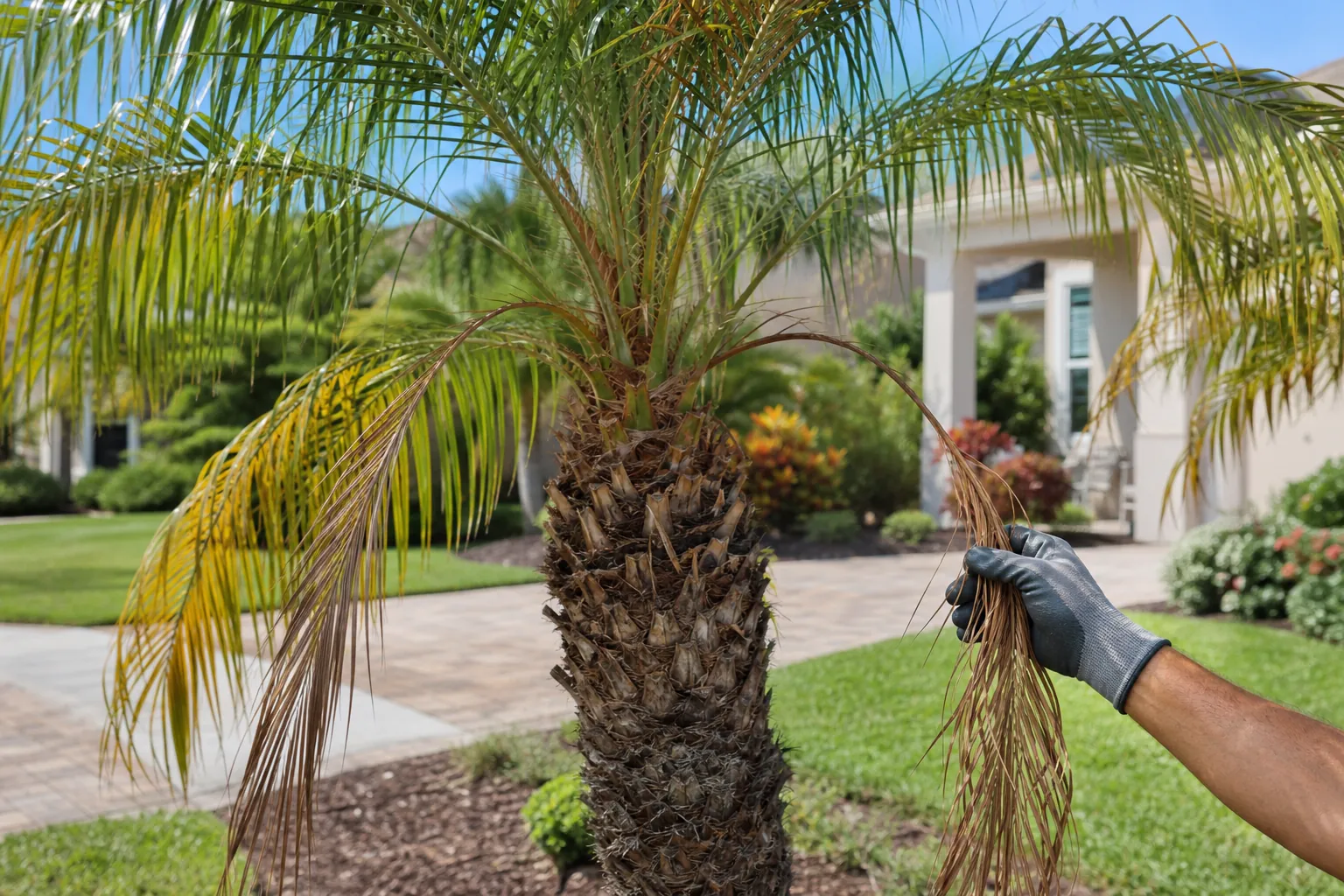
Deciding which palm fronds to remove is mostly a matter of distinguishing dead or hazardous growth from healthy, functioning foliage. Before cutting, inspect the entire canopy, identify why each frond concerns you, and avoid removing green fronds simply to create a tighter shape. A cautious approach helps preserve the palm’s natural form while addressing obvious problems.
Start With Fronds That Are Clearly Dead
Begin by looking for fronds that are fully brown, dry, and no longer showing meaningful green tissue. These are the clearest candidates for removal. Check the whole frond rather than judging only by a brown tip or edge. A partly green frond is still different from one that is completely dead.
Next, observe how the frond is attached. A dead frond may hang downward, remain lodged among other fronds, or rest against the trunk. Do not pull forcefully on anything that resists. Cutting or tearing too close to the trunk can damage living tissue, and working beneath a palm can expose you to falling material.
If you cannot clearly see the attachment point, cannot reach it safely from the ground, or would need to climb, stop and seek appropriate help. The goal is not to remove every imperfect-looking frond. It is to identify fully dead growth and handle it without creating unnecessary damage or personal risk.
Remove Broken or Dangerous Fronds Carefully
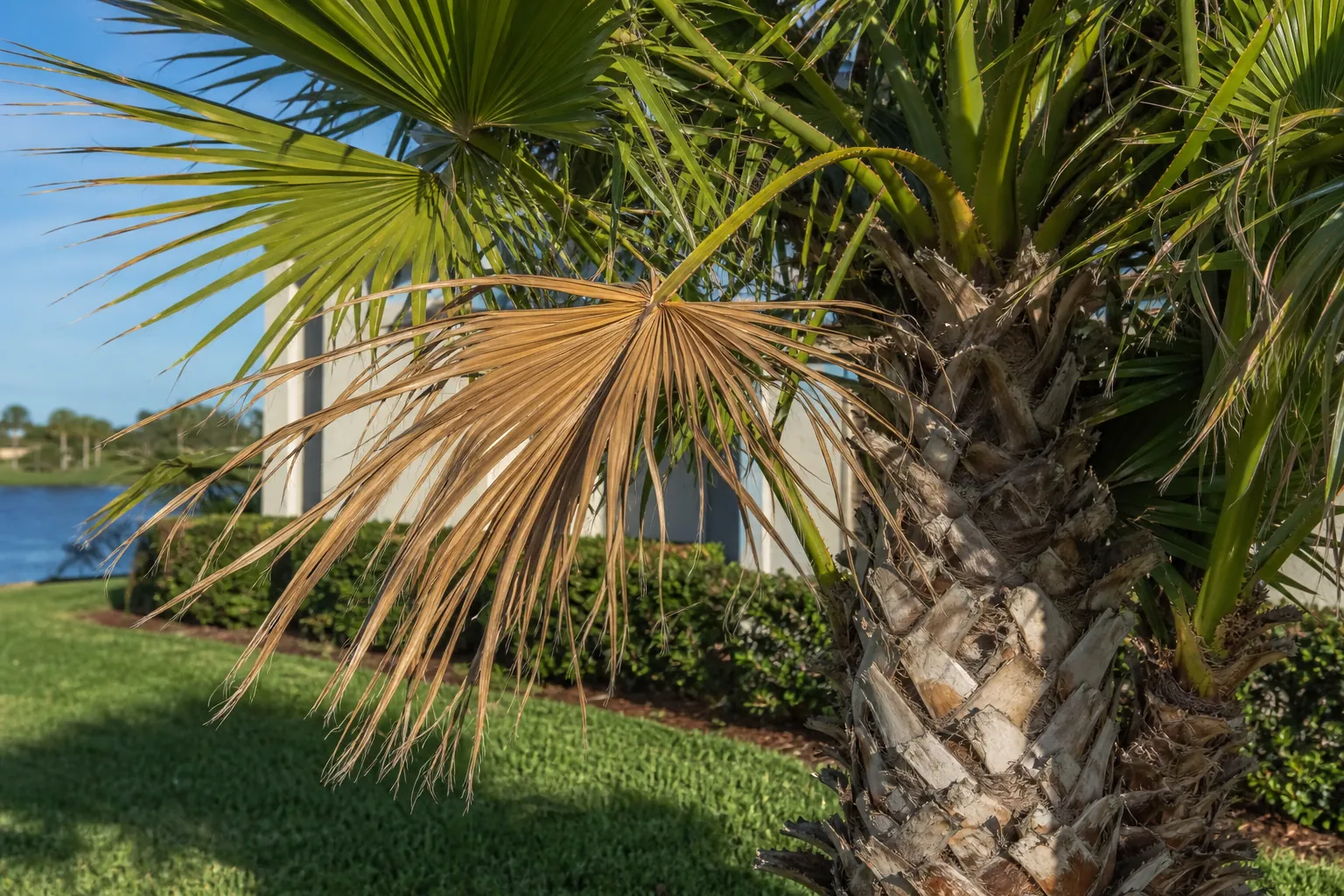
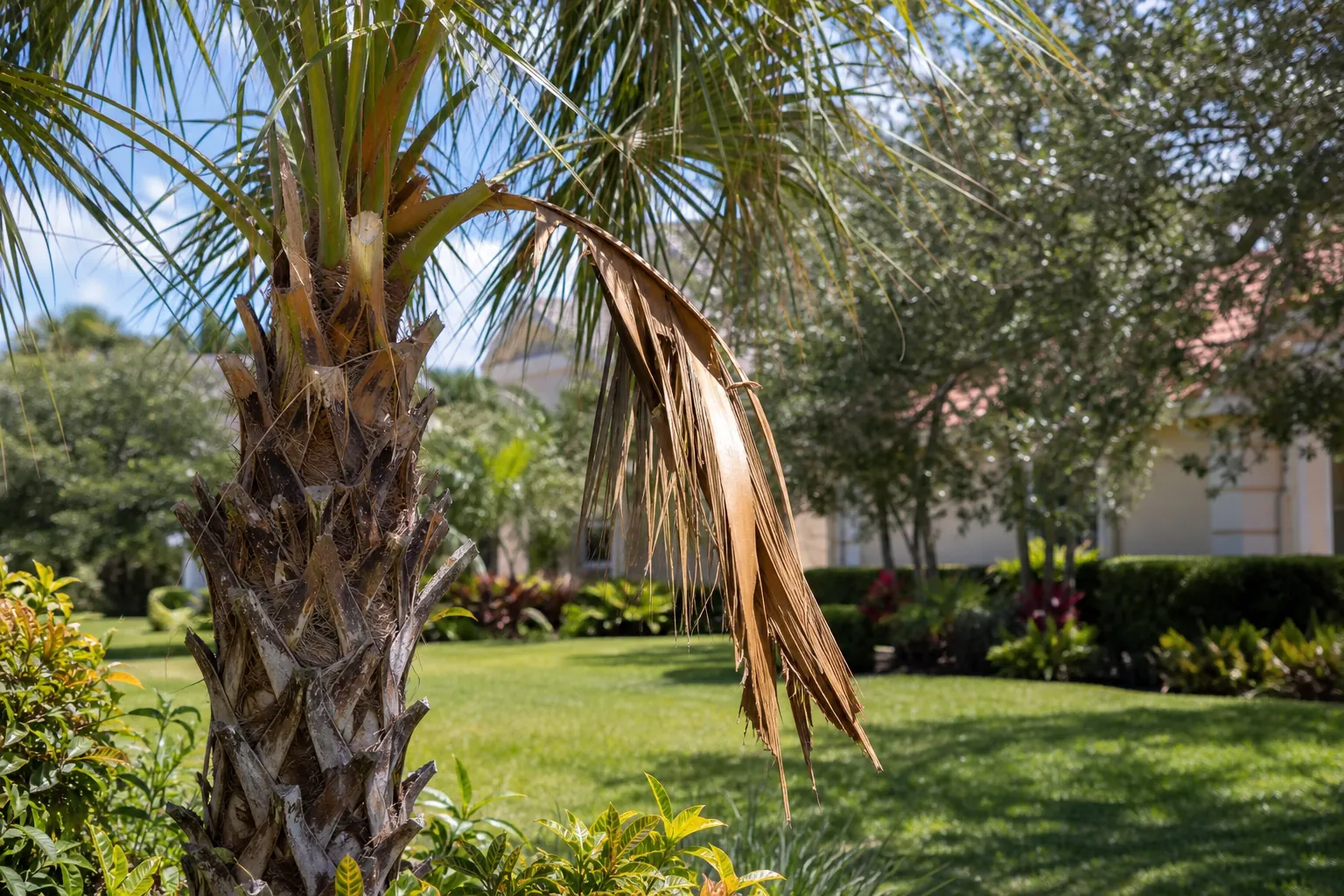
A frond does not need to be fully brown to deserve attention. Storms, wind, contact, or its own weight can leave it cracked, sharply bent, or partly detached. A broken frond hanging over a walkway, driveway, seating area, or other frequently used space may create a more urgent decision than a dead frond in an isolated part of the yard.
Assess the situation from a safe distance. Look for a split near the base, a dangling section, or movement that suggests the frond is no longer secure. Also check for loose debris trapped in the canopy. Avoid standing directly beneath questionable material while inspecting it.
Use this practical order when deciding what needs attention:
- Fully dead fronds that are dry and brown
- Broken fronds that are hanging or partly detached
- Fronds obstructing routine access or visibility
- Loose material that could fall into an occupied area
- Fronds whose condition cannot be judged safely from the ground
When the work requires climbing, overhead cutting, or working near utilities or structures, prioritize safety over speed.
Leave Healthy Green Fronds in Place
Healthy green fronds support the palm, so appearance alone is not a good reason to remove them. Some property owners prefer a sharply trimmed canopy, but cutting substantial green growth can leave the palm looking sparse and unnatural. A fuller canopy is not automatically a sign that pruning has been neglected.
Use color and condition together. A green frond with minor cosmetic damage, brown tips, or a few discolored areas is not the same as a fully dead frond. If much of the frond remains green and firmly attached, leaving it in place is generally the cautious choice. Likewise, avoid cutting central, upright growth. New foliage develops near the center, making that area particularly important to protect from accidental injury.
Do not prune by selecting a fixed number of fronds or by trying to force every palm into the same silhouette. Instead, review each frond individually. Ask whether it is dead, structurally compromised, obstructive, or hazardous. If none of those descriptions fits, removal may not be necessary.
Inspect Discolored Fronds Before Cutting Them
Yellowing, spotting, browning, and uneven color can have different causes, and pruning does not explain or correct every issue. Before removing a discolored frond, note where it sits in the canopy, how much green tissue remains, and whether similar symptoms appear elsewhere. This simple inspection can prevent a rushed decision based only on color.
Look at the palm as a whole. Is one older frond changing color, or are several fronds affected? Is the central growth upright and intact? Has the appearance changed suddenly, or has it developed gradually? These observations are useful even if you later ask someone else to assess the palm.
Avoid treating pruning as a universal remedy. Removing visible symptoms without understanding the pattern may leave the underlying concern unresolved. It can also make later evaluation harder because important evidence is gone. Photograph the canopy and affected fronds before cutting, especially when the change seems unusual. If a frond remains substantially green and secure, consider monitoring it rather than removing it immediately.
Plan Pruning Around Weather and Access
Timing and site conditions matter as much as the condition of the frond. Do not prune during strong wind, rain, or other conditions that make footing, visibility, or falling debris harder to manage. Clear people, pets, vehicles, and movable objects from the work area before beginning. Decide where each cut frond can fall without striking something below.
For young palms, weather preparation may involve more than pruning. If cold conditions are part of your concern, review this guide on how to protect young palms from frost in St. Augustine. Do not remove healthy foliage merely because cold weather is expected. Evaluate dead or damaged material separately from seasonal protection.
Finally, set a clear stopping point. If the attachment cannot be seen, the canopy is beyond safe ground-level reach, or the frond is close to a utility line, building, or occupied area, do not improvise. Careful palm decisions favor control, visibility, and restraint.
Make a Calm, Informed Decision
Focus first on fully dead, broken, obstructive, or hazardous fronds, and leave healthy green growth alone. If you want to discuss a palm in your St. Augustine yard, call Tropical Yards at 772-267-1611.
Call 772-267-1611 to talk through next steps.