Why Can Water Pool in a Florida Yard Even When the Soil Is Sandy?
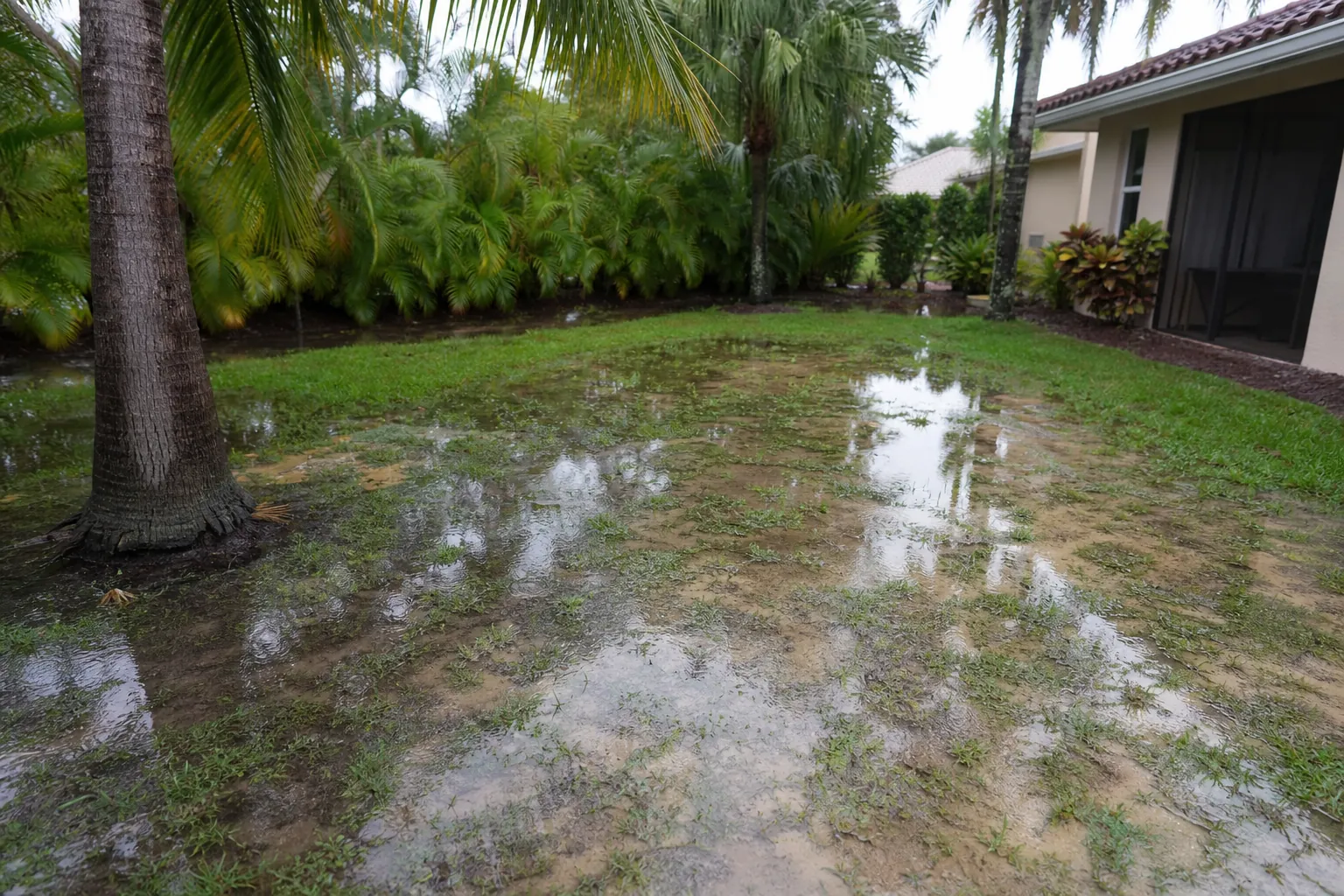
Sandy soil may drain quickly, but a Florida yard is rarely made of loose, uniform sand from the surface downward. Water can collect when the ground has low spots, compacted layers, buried material, heavy organic buildup, or nowhere suitable for runoff to go. Before deciding what to do, observe where the water begins, how far it spreads, and how long it remains after rain or irrigation.
Sandy Soil Does Not Guarantee Uniform Drainage
The visible soil surface tells only part of the story. A yard may look sandy while containing layers below the surface that accept water more slowly. Soil can also vary across a single property because of grading, previous digging, construction activity, root growth, and the movement of fine particles. When fast-draining sand sits above a denser layer, water may move downward until it reaches that layer and then spread sideways or rise toward the surface.
Compaction can create a similar effect. Repeated foot traffic, vehicles, equipment, or stored materials can press soil particles together and reduce the open spaces through which water moves. A compacted strip may interrupt drainage even when nearby areas absorb water normally.
Do not assume that adding more sand will solve the problem. First determine whether the issue appears at the surface, below the surface, or along the route water takes across the yard. That distinction helps prevent a quick fix from shifting water into another area.
Low Spots And Grading Can Hold Water
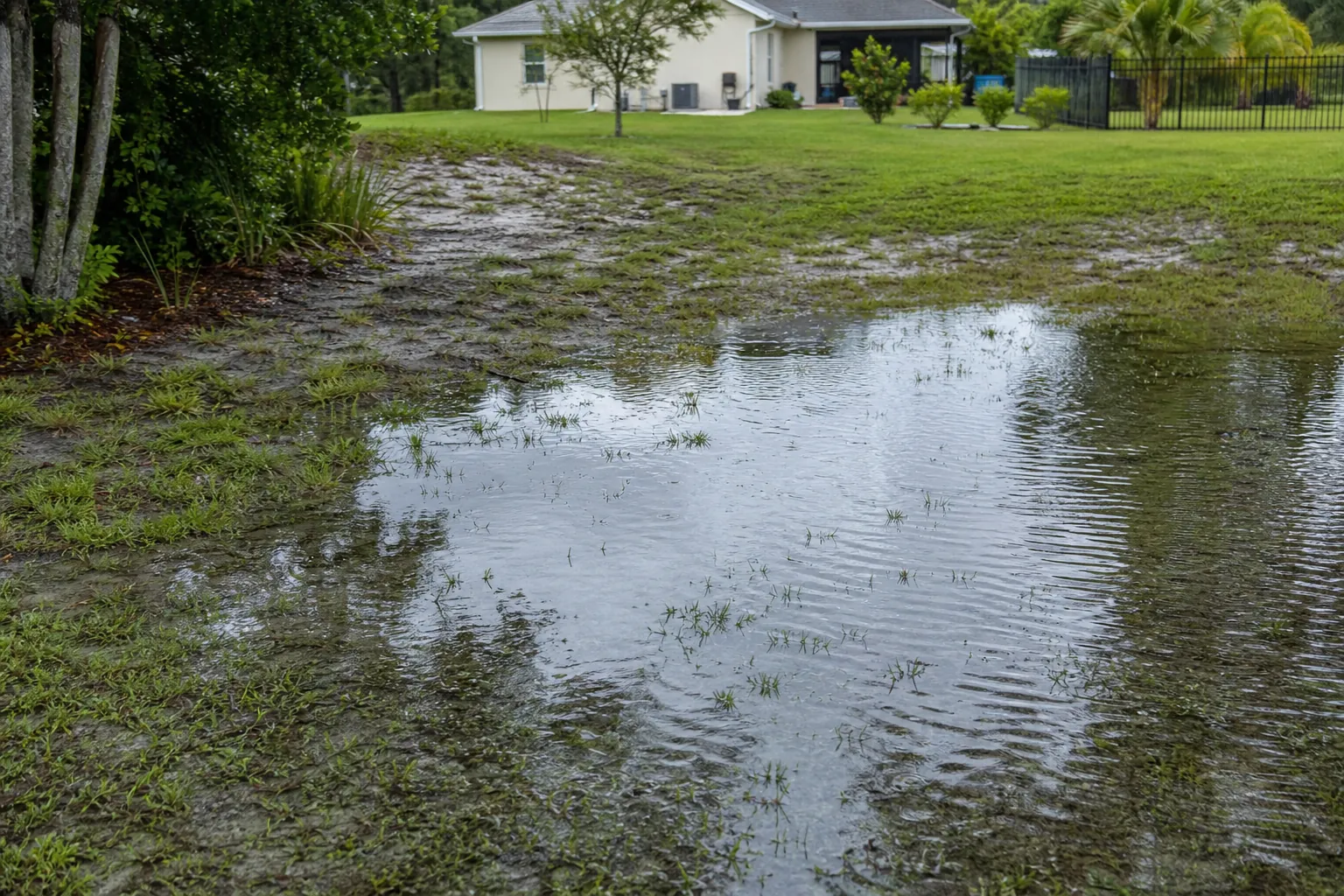
Water follows elevation, including small changes that may be difficult to notice when the yard is dry. A shallow depression can collect runoff from a surprisingly broad area. Soil settling, root removal, repeated traffic, and past landscape changes can all leave low areas. Edging, dense plantings, raised beds, walkways, and other boundaries may also interrupt the path that water previously followed.
Watch the yard during safe conditions as rain begins. Note whether water falls directly into the wet area or flows there from another part of the property. Look for narrow streams, mulch movement, exposed soil, or debris lines. These signs can reveal the direction of surface flow after the water itself disappears.
The goal is not simply to remove a puddle. Any grading decision should account for where the redirected water will go. Avoid sending runoff toward buildings, neighboring property, or another vulnerable planting area. When the destination is unclear, gather measurements and observations before changing elevations or building barriers.
Rainfall And Irrigation May Exceed Infiltration
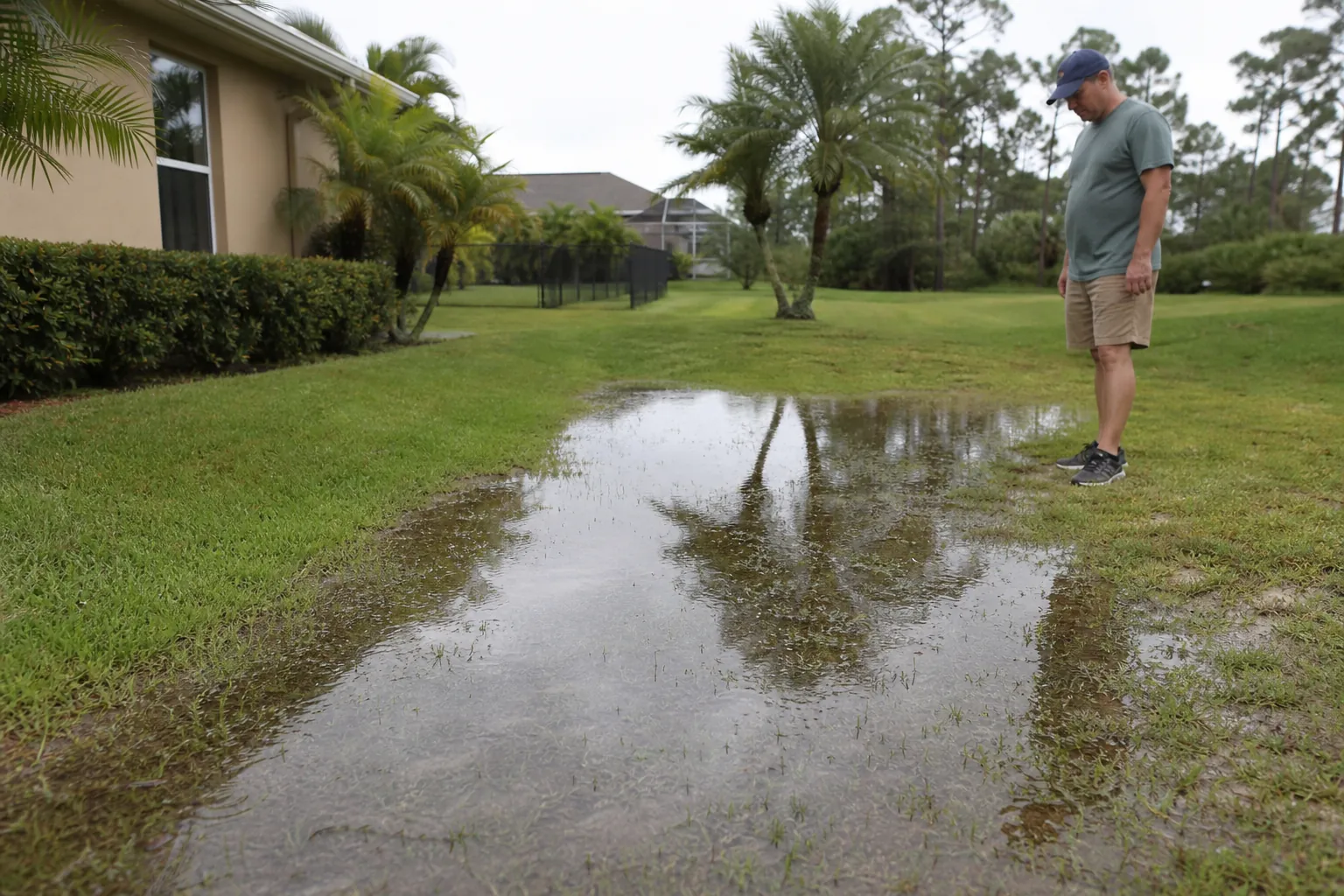
Even freely draining soil has a limit to how quickly it can accept water. If rain or irrigation reaches the surface faster than it can move downward, temporary pooling can occur. The effect may be stronger when the soil is already wet from earlier rain. Runoff from roofs, paved areas, or higher ground can add more water to one section of the yard than rainfall alone would suggest.
Compare wet areas after natural rain and after irrigation. If pooling appears only during irrigation, inspect the watering pattern. Look for overlapping spray, water striking pavement, a damaged component, or repeated watering of the same low area. If the puddle forms mainly during rain, observe whether concentrated flow enters from a roof discharge point, hard surface, or neighboring high spot.
- Photograph the area at the start, peak, and end of pooling.
- Record whether rain, irrigation, or both caused it.
- Mark the puddle's approximate edge and deepest point.
- Note how long visible water remains afterward.
- Check whether nearby soil is also saturated.
Surface Conditions Can Slow Water Entry
The top layer of a yard can behave differently from the sand beneath it. Fine sediment may wash into a depression and seal spaces at the surface. Decomposing organic material, thick thatch, matted leaves, or accumulated landscape debris can also slow water entry. In bare areas, repeated rain impact may form a crust. These conditions can cause water to sit above soil that would otherwise drain more readily.
Start with a careful visual inspection rather than aggressive digging. Compare the wet area with a nearby section that drains well. Check for differences in surface texture, vegetation, mulch depth, traffic, and elevation. If you make a small inspection hole, be alert for buried utilities and stop if the location is uncertain.
Plants can provide clues, but they do not prove a single cause. Sparse growth, exposed roots, or persistent dampness may justify closer investigation. Seasonal plant care may also overlap with drainage decisions. For related cold-weather planning, read how to protect young palms from frost in St. Augustine.
Choose A Response Based On The Water Source
A useful response begins with diagnosis. If irrigation is adding too much water, adjusting its pattern or timing may address the source. If a low spot is collecting runoff, elevation and the intended drainage path deserve attention. If the surface is sealed by sediment or organic buildup, correcting that layer may be more relevant than changing the entire yard. When water arrives from roofs or hard surfaces, the entry point may matter more than the soil beneath the puddle.
Before making a decision, review the whole route: where water originates, how it travels, where it collects, and where it can safely go. Consider nearby structures, property boundaries, established roots, utilities, and planted areas. Avoid filling a depression without a plan, because displaced water may create a new problem elsewhere.
If water remains for an extended period, repeatedly reaches a structure, appears with no clear rain or irrigation source, or exposes a possible utility concern, pause before disturbing the area. Document conditions and seek appropriate guidance for the specific issue.
Discuss What You Are Seeing
Clear observations can make the next decision easier. Note the water source, location, depth, spread, and duration before calling. To discuss your Florida yard calmly and clearly, contact Tropical Yards at 772-267-1611.
Call 772-267-1611 to talk through next steps.