Which Plants Can Form a Living Windbreak in an Ormond Beach Yard?
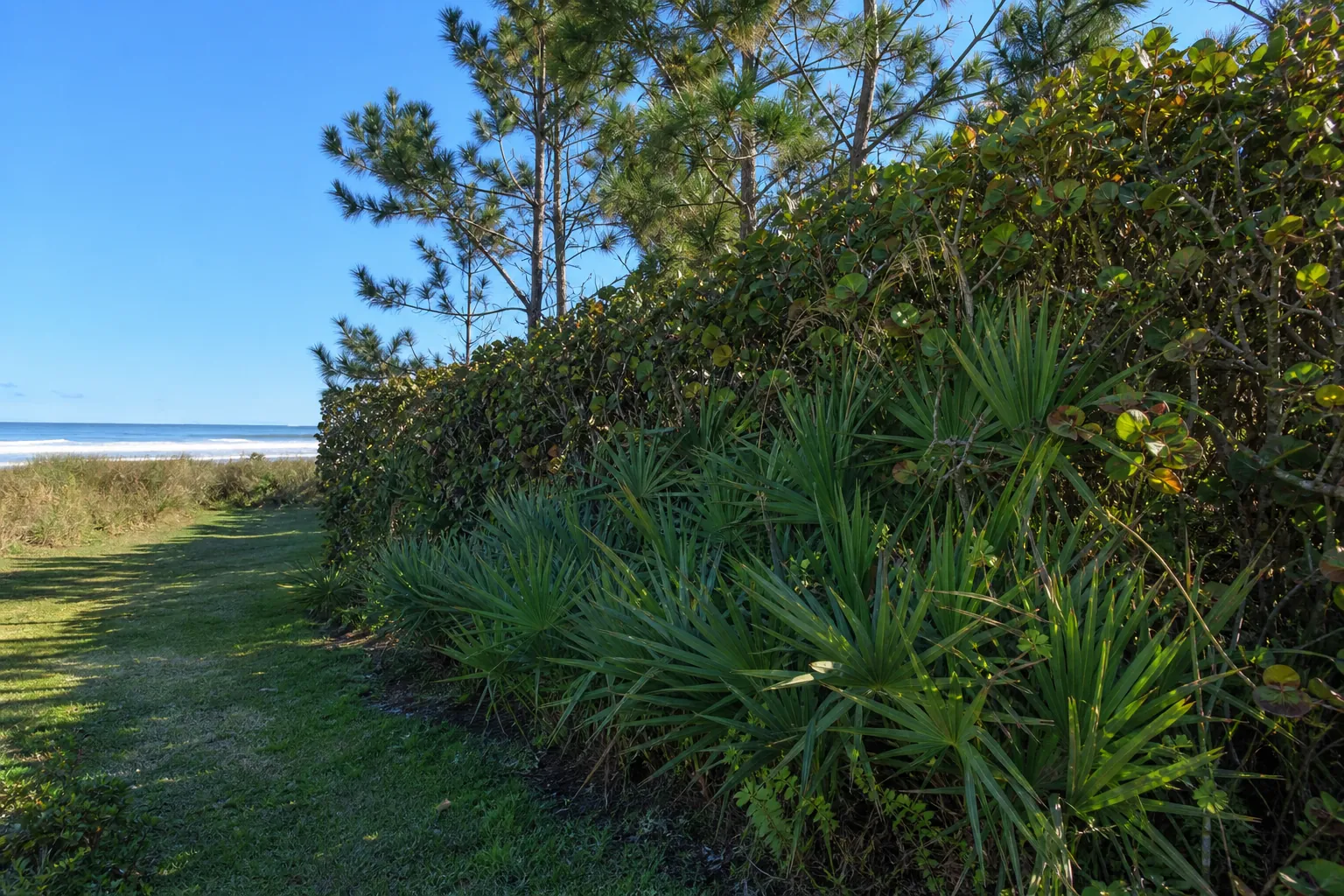
A living windbreak can make an exposed Ormond Beach yard more comfortable while helping shield young or delicate plants from persistent coastal wind. Success depends less on finding one perfect species and more on choosing plants suited to the exact site, arranging them to filter wind, and allowing enough room for mature growth. Before buying plants, observe where the strongest wind enters, how water moves after rain, and which areas receive sun or shade. Those details will help you compare candidates and avoid a planting that becomes crowded, unstable, or difficult to maintain.
Start With the Wind, Exposure, and Available Space
Walk the property on a windy day and identify the direction from which the most troublesome wind arrives. Note whether a building, fence, dune, or neighboring vegetation already changes its speed or direction. Then mark the area that needs protection, such as a patio, garden bed, entry, or group of young plants. A windbreak should stand between the prevailing wind and the protected area, but its roots and mature canopy must also fit the site.
Measure the planting strip rather than estimating it. Record its width, length, distance from structures, and proximity to utilities, walkways, and property boundaries. Check sunlight across the day and look for salt residue or visible stress on existing foliage. Coastal exposure can vary sharply within one yard, so a plant thriving near the house may not perform the same way near an open edge. These observations create practical criteria for comparing plants instead of selecting solely by appearance.
Choose Plants by Function, Not Appearance Alone
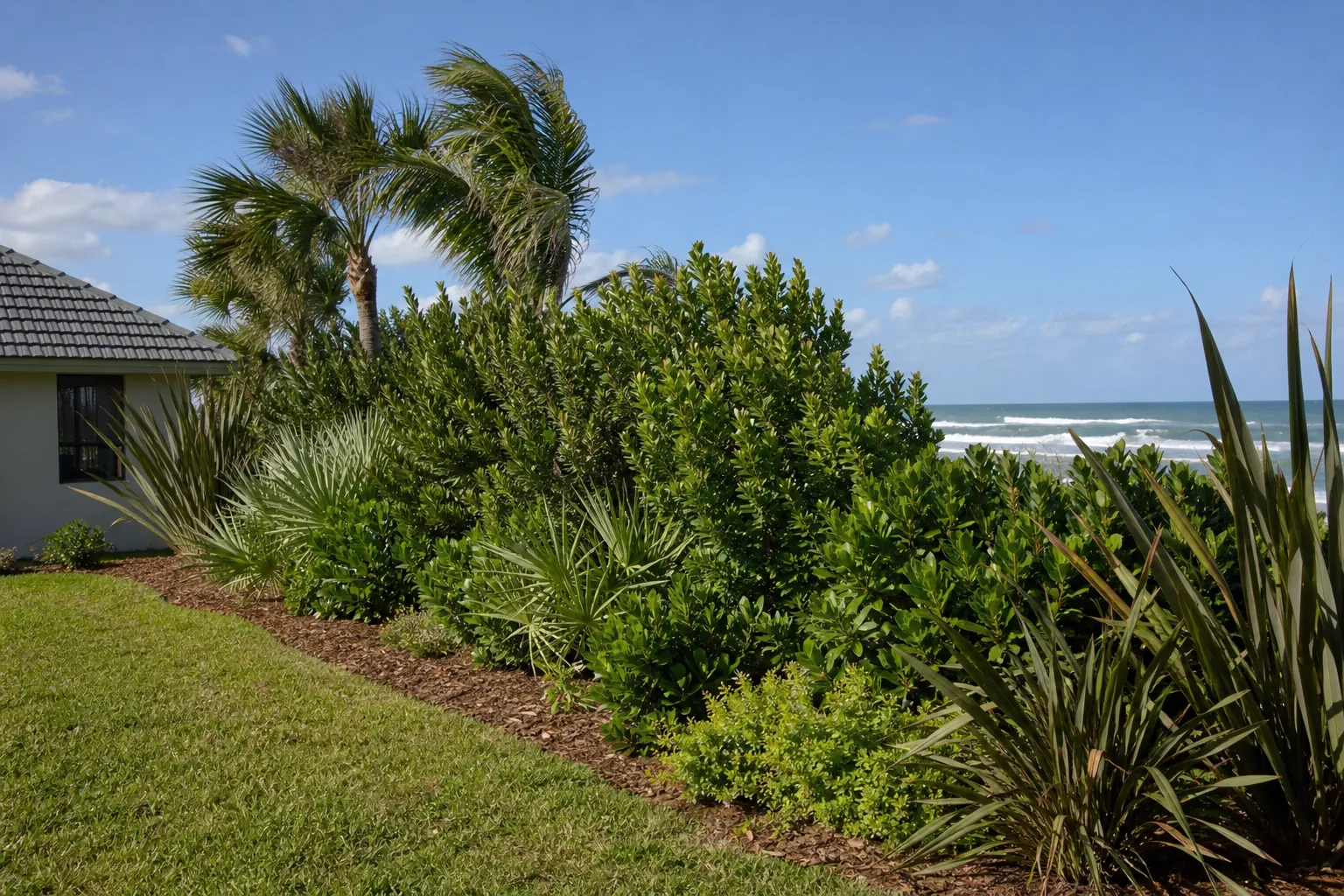
Useful windbreak plants need branching or foliage that begins low enough to slow air near ground level. They should also retain a reasonably full form under the yard’s light, soil, moisture, and exposure conditions. A tall plant with bare lower stems may block views without protecting the garden beneath it. Likewise, dense foliage is not automatically better. A living barrier that filters wind can be more practical than a rigid, solid wall that redirects turbulent air around or over it.
When comparing specific plants at a nursery, ask about mature height and width, root space, salt tolerance, cold sensitivity, pruning needs, and response to the site’s drainage. Confirm whether the plant naturally forms a hedge or requires frequent cutting to stay full. Avoid making a choice based only on a small container specimen. Picture the mature plant beside the house, driveway, fence, and neighboring property. A species can be suitable for coastal conditions yet still be wrong for a narrow planting strip.
Plan a Layered Windbreak for Better Coverage
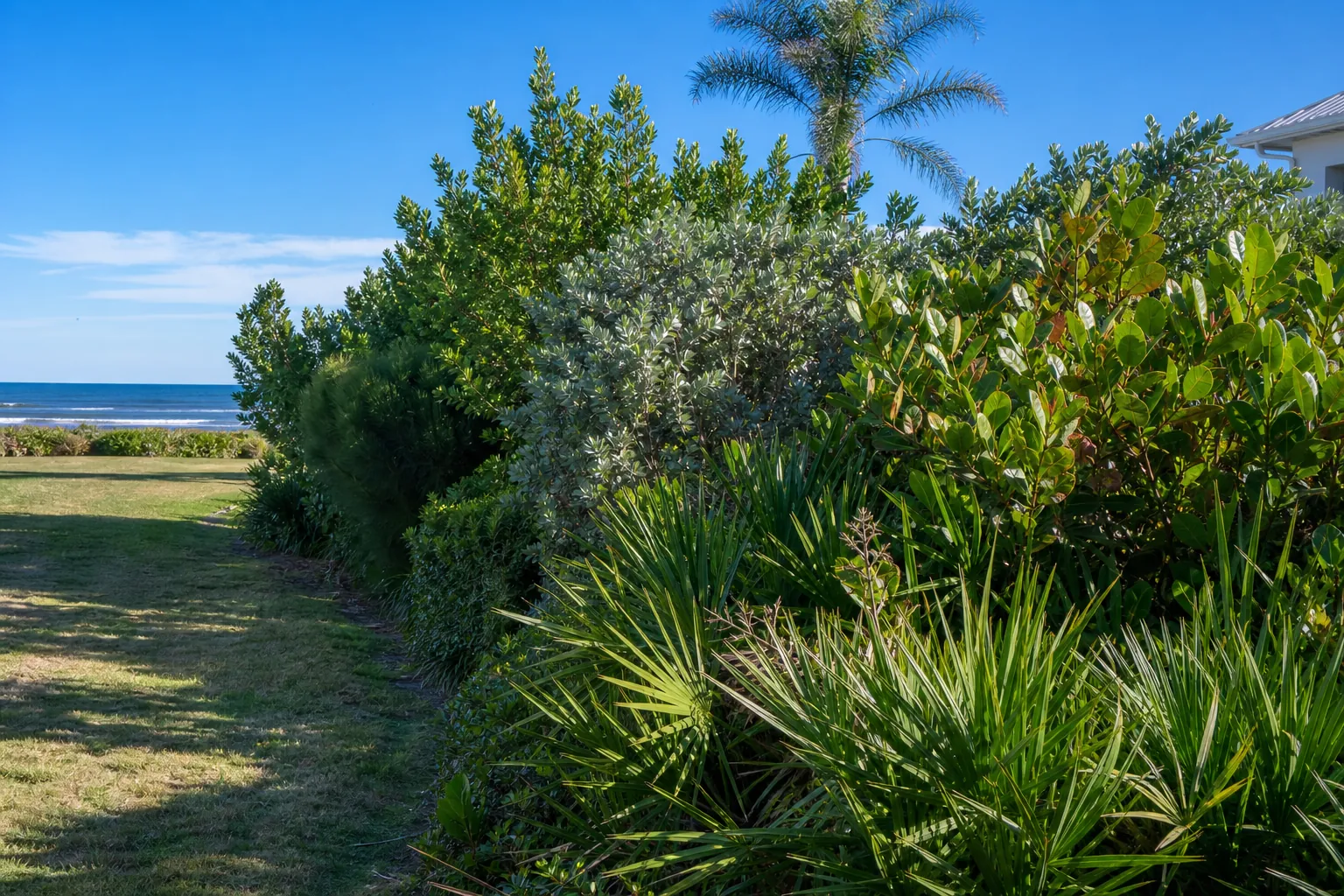
A single row can work where space is limited, but a layered planting often provides coverage at more than one height. The front layer can slow wind near the ground, while taller plants behind it address wind moving through the upper canopy. Layers also reduce dependence on one plant type. If a single specimen declines, the entire barrier is less likely to develop a large, immediate gap.
Use a simple plan before planting:
- Mark the incoming wind direction and the area that needs protection.
- Measure the planting bed and identify overhead and underground conflicts.
- Choose plants with mature dimensions that fit without constant correction.
- Arrange lower and taller growth so foliage overlaps without severe crowding.
- Leave access for watering, pruning, inspection, and replacement.
- Check sightlines near driveways, sidewalks, gates, and windows.
A staggered layout may reduce straight openings through the planting, provided every plant still has adequate room. Plan from mature size, not the temporary gaps visible on installation day.
Set Spacing From Mature Size and Maintenance Goals
Close spacing creates a full appearance sooner, but it can also increase competition for light, water, and root space. Crowded plants may thin at the base, grow unevenly, or require repeated pruning. Excessive spacing has the opposite problem: wind passes through broad gaps for years. The appropriate distance depends on each plant’s mature width, natural form, growth pattern, and the degree of overlap desired.
Decide how much maintenance you are willing to provide before setting the layout. A formal hedge generally needs more shaping than an informal mixed screen. If the windbreak will be near a walkway or driveway, allow room for growth without forcing constant cutting on one side. Also consider access to walls, meters, gates, and drainage routes. Set plants at appropriate soil depth, keep mulch away from stems, and water according to actual soil moisture and the needs of the selected plants. Young windbreak plants need consistent establishment care before they can provide meaningful shelter.
Protect Young Plants While the Windbreak Establishes
A new living windbreak does not provide full protection immediately. Inspect plants after strong wind for leaning, loosened roots, broken branches, and dry foliage. Supports, when needed, should stabilize rather than tightly restrain the trunk, and they should not remain indefinitely. Correct irrigation issues early, especially when exposed conditions dry leaves and soil unevenly. Replace failed plants before neighboring growth closes the gap and makes replanting difficult.
Seasonal weather also matters. Wind protection does not eliminate cold exposure, particularly for tender or newly planted material. If palms are part of the yard, review this guide on how to protect young palms from frost for additional planning considerations. Over time, reassess whether lower foliage remains full and whether pruning has created openings. Remove damaged growth thoughtfully rather than shearing every plant into the same shape. The objective is a healthy, stable barrier that filters wind while remaining appropriate for its space.
Discuss Your Coastal Yard
If you are deciding how to approach a living windbreak in an Ormond Beach yard, call Tropical Yards at 772-267-1611 for a calm conversation about your property.
Call 772-267-1611 to talk through next steps.