Which Evergreen Zone 9A Plants Provide Year-Round Privacy in Florida?
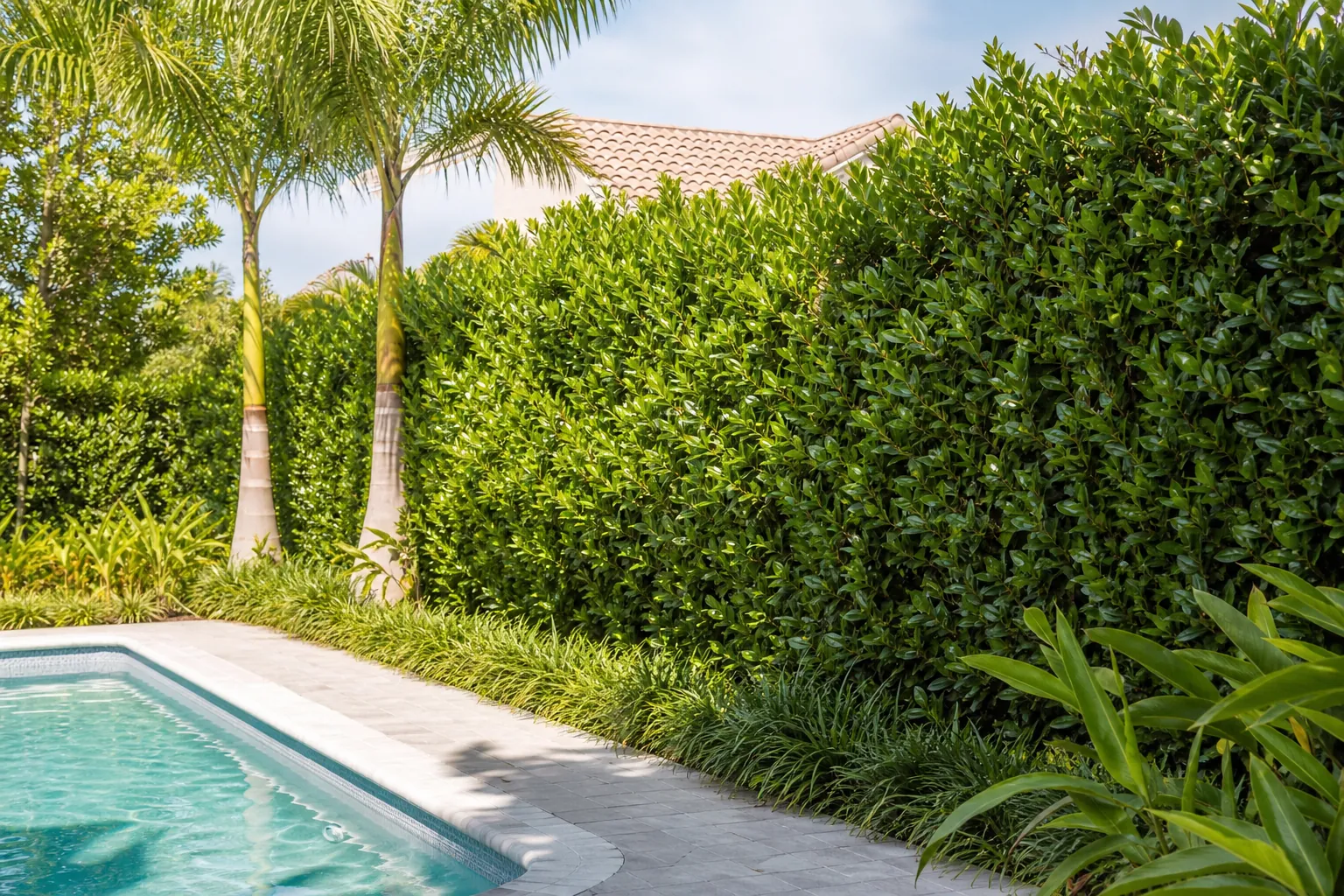
Choosing evergreen plants for privacy in Florida Zone 9A requires more than finding foliage that remains through winter. A dependable screen must fit the site, tolerate local cold events, handle the soil and drainage, and remain manageable at maturity. Before buying plants, define what needs screening, measure the available space, and note sun, wind, water movement, and nearby structures. Those observations help narrow the choices and prevent a hedge from becoming crowded, sparse, or difficult to maintain.
Start With the Privacy Problem, Not the Plant
Decide exactly what the planting must accomplish. Screening a neighboring window calls for a different height and density than softening a fence or blocking a broad view. Stand where privacy matters most, then identify the sightline and the minimum height needed to interrupt it. Consider whether the screen must work from a seated patio, a standing position, or an upper window.
Next, measure the planting bed's length and usable depth. Include clearance from walls, rooflines, air-conditioning equipment, gates, walkways, and utility areas. An evergreen that fits in a nursery container can become much wider with time, so mature width matters as much as mature height. Also decide whether you want a formal hedge that accepts regular shaping or a looser screen that can follow its natural form. This decision influences plant selection, spacing, pruning frequency, and the amount of open ground required. A clear target makes comparisons practical and reduces the temptation to choose solely by appearance.
Match Evergreen Types to the Available Space
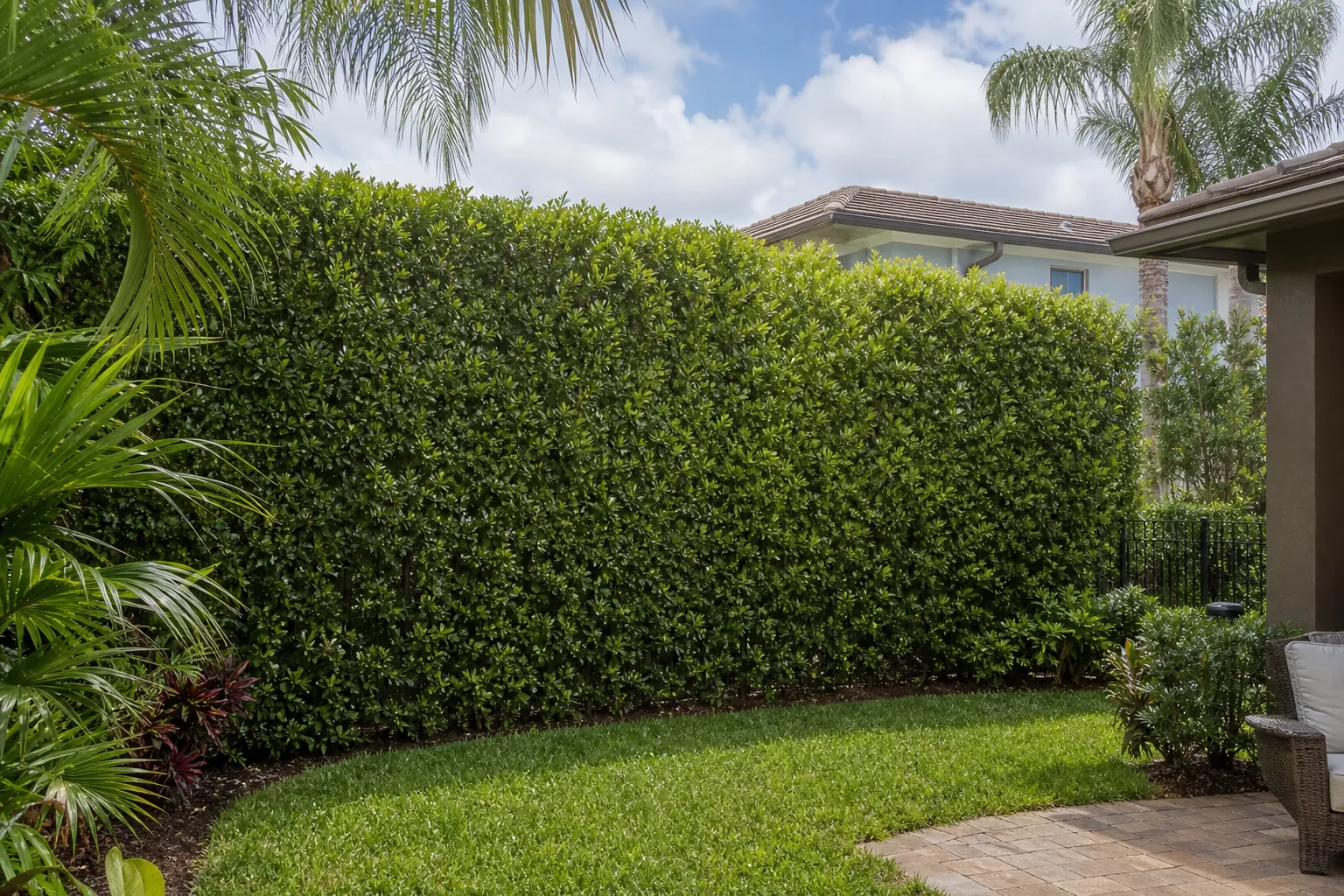
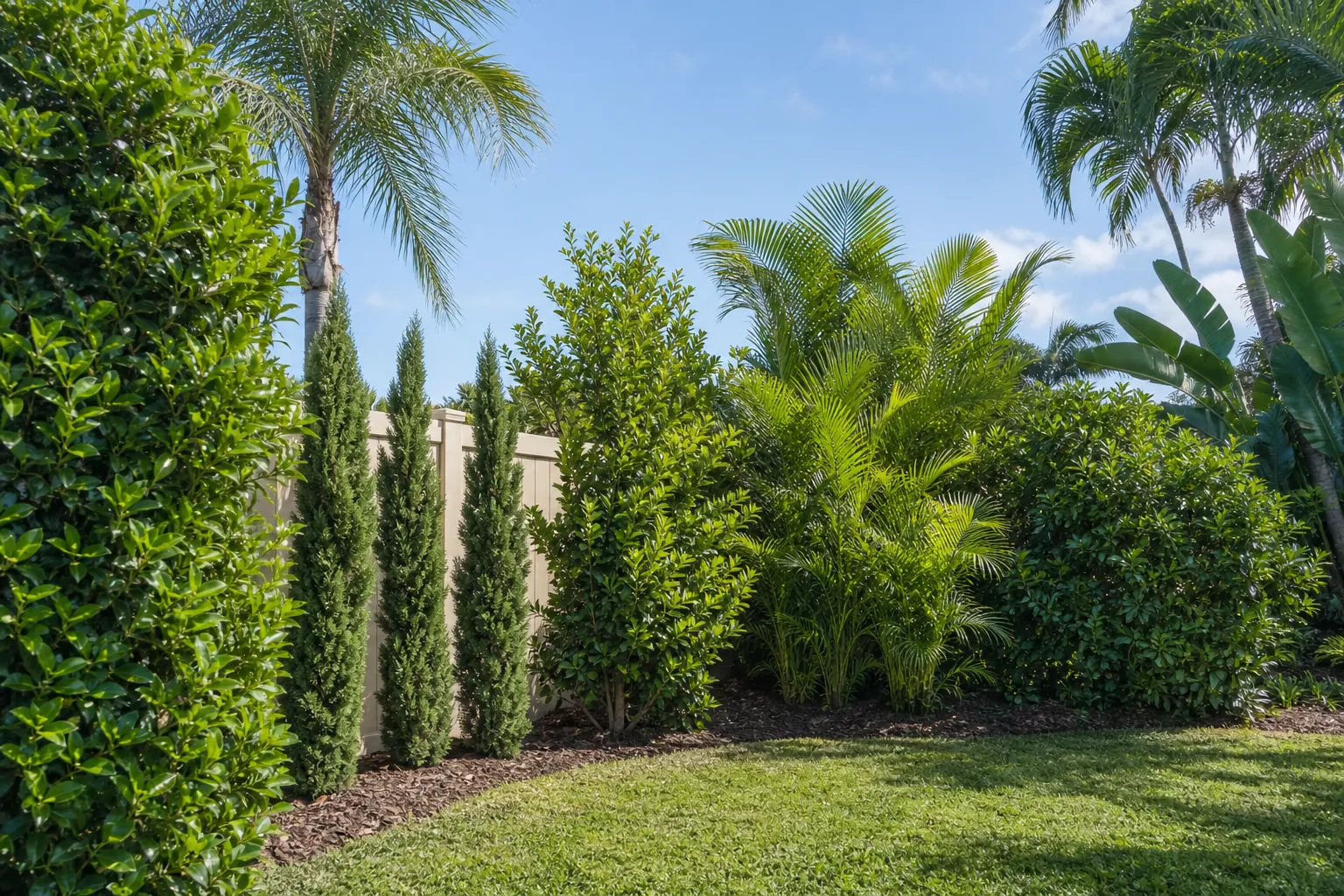
Zone 9A gardeners can consider several evergreen plant forms without relying on one specific species for every property. Broadleaf evergreen shrubs can create a dense, hedge-like wall. Narrow upright shrubs suit tighter beds, while small evergreen trees may provide higher screening where ground-level width is limited. Clumping palms can add layered foliage, but their suitability depends on cold exposure and whether their growth habit covers the required sightline.
Compare candidate plants by mature height, mature width, growth habit, foliage density, and response to pruning. Check whether foliage extends close to the ground or sits above a visible trunk, because an evergreen canopy does not automatically provide low-level privacy. Avoid planning around a plant's current retail size. Instead, use its expected mature dimensions to estimate whether it will fit without repeated severe cutting. If the space is narrow, select a naturally narrow form rather than forcing a broad plant into a confined bed. When overhead clearance is limited, favor plants whose mature height remains compatible with the site.
Evaluate Cold, Sun, Wind, and Drainage
A Zone 9A label is a starting point, not a complete site assessment. Conditions can vary within one yard. Open areas may receive more wind, while walls, pavement, and protected corners can create different exposures. Observe where cold air may settle and where winter winds reach plants directly. If a candidate is only marginally suited to the site, foliage damage can temporarily reduce the privacy you expected it to provide.
Sun exposure also affects density. Record whether the bed receives full sun, filtered light, or substantial shade across the day and through the seasons. Then examine drainage after rain. Soil that stays wet presents a different challenge from sandy soil that dries quickly. Before choosing, gather these facts:
- Required screening height and length
- Maximum usable bed depth
- Daily and seasonal sun exposure
- Wind and cold exposure
- Drainage pattern after rainfall
- Distance from structures, paths, and equipment
- Preferred hedge style and pruning commitment
Use this checklist when comparing plant labels and reliable horticultural guidance for each candidate.
Plan Spacing for Coverage and Long-Term Health
Close planting may create faster visual coverage, but it can also cause crowding as plants mature. Crowded branches compete for light and airflow, and access for pruning becomes more difficult. Base spacing on mature width and the desired degree of overlap, not on the temporary gaps visible on installation day. If immediate screening is essential, consider whether a fence or another permitted structure should provide short-term privacy while plants establish, rather than placing evergreens too close together.
Mark proposed plant centers on the ground before purchasing. View the layout from the patio, windows, sidewalk, and neighboring sightlines. Check that future growth will not obstruct a gate, narrow a walkway, cover equipment access, or press against a building. A staggered layout can sometimes create visual depth when adequate bed width is available, while a single row usually suits narrow spaces. Keep the design simple enough to maintain consistently. Thoughtful spacing often means accepting some initial openness in exchange for a screen that can develop its natural structure.
Choose a Screen You Can Maintain
Evergreen does not mean maintenance-free. A formal hedge generally needs more frequent shaping than a natural screen. Before choosing, decide how much pruning, cleanup, watering during establishment, and routine monitoring you are prepared to handle. Plants that naturally mature near the required height and width usually demand less corrective pruning than plants selected for rapid growth alone.
Inspect the planned bed periodically for irrigation coverage, standing water, leaning growth, and branches moving into access areas. Prune with the plant's growth habit in mind instead of repeatedly cutting everything into a narrow shell. If palms are part of the design, cold preparation deserves separate attention. Review this guide on how to protect young palms from frost before relying on young palms for winter screening.
Finally, compare several candidates side by side using the same criteria. The strongest choice is not simply the tallest evergreen. It is the plant whose mature form, environmental needs, cold tolerance, and maintenance requirements align with the exact planting location.
Discuss Your Privacy Planting Decision
For a calm conversation about your Florida yard and privacy goals, call Tropical Yards at 772-267-1611. Have your measurements, site photos, sun exposure, and drainage notes ready so the discussion can stay focused on the space.
Call 772-267-1611 to talk through next steps.