Which Zone 9A Tropical-Looking Plants Prefer Morning Sun In Florida?
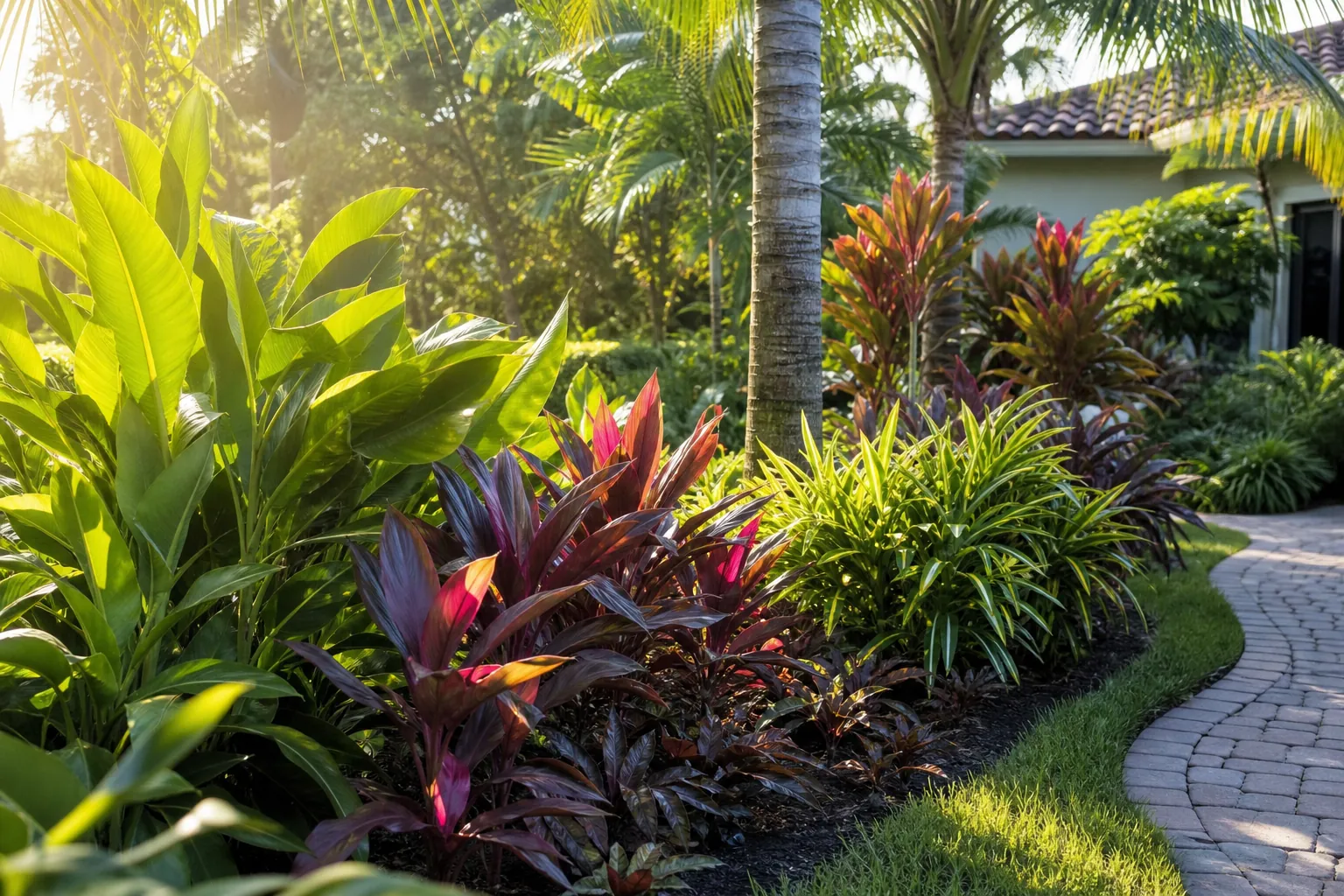
Morning sun can support a lush, tropical-looking Florida landscape without exposing every plant to the strongest afternoon heat. In Zone 9A, however, appearance is only part of the decision. A plant also needs to fit the site's winter exposure, soil drainage, available space, and changing light. Use the following steps to evaluate candidates carefully before buying or planting.
Start With The Actual Morning-Sun Window
“Morning sun” can describe very different conditions. A bed receiving direct light from sunrise until late morning is not the same as a narrow side yard that gets one bright hour through tree branches. Before selecting tropical-looking plants, observe the planting area on a clear day. Record when direct sun begins, when shade arrives, and whether the light is filtered by palms, fences, rooflines, or larger trees.
Repeat the observation in more than one season if possible. The sun's angle changes during the year, and deciduous trees can create a brighter winter site than expected. Also note reflected light from pale walls, paving, windows, or pools. A location may feel shaded while still becoming hot because nearby surfaces store and reflect heat.
Take this information with you when comparing plant labels or asking questions. Choosing according to a measured light window is more reliable than choosing by a broad label such as “partial sun.” It also helps distinguish plants suited to gentle early light from those that need a longer period of direct sun to maintain dense growth.
Separate Tropical Appearance From Tropical Hardiness
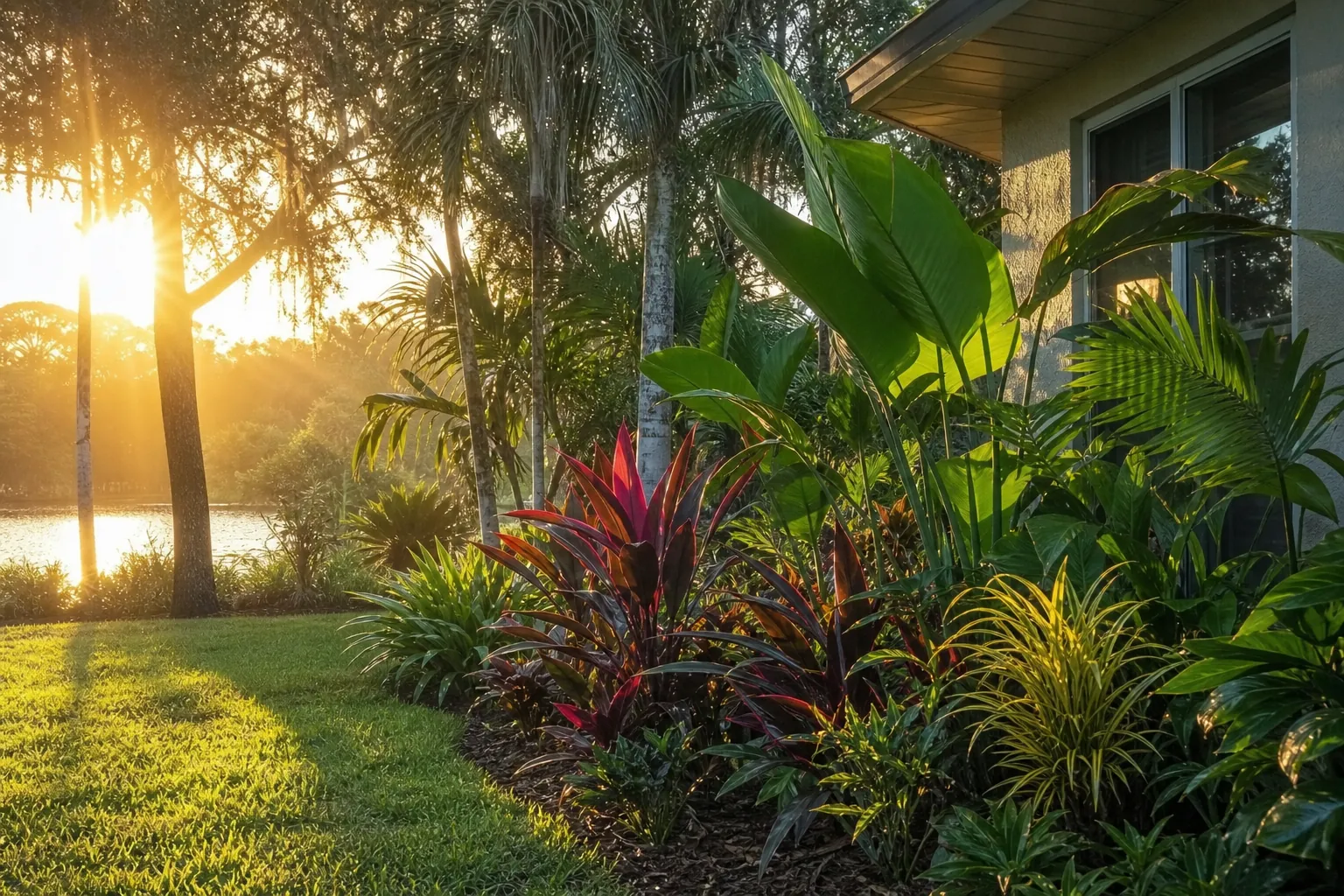
A tropical look can come from broad leaves, strong foliage color, layered growth, upright forms, or bold texture. A plant does not need to be truly tropical to create that effect. This distinction matters in Zone 9A because plants with similar appearances may respond very differently to cold weather.
When evaluating a candidate, verify its stated hardiness rather than relying on its appearance or a general Florida association. Ask whether cold typically damages only the foliage or threatens the entire plant. Also determine whether it is evergreen in local conditions, becomes dormant, or may need damaged growth removed after winter. Those differences affect how the planting will look during the colder part of the year.
Do not treat the zone rating as the only test. A plant beside a protected wall may experience different conditions from one in an open bed exposed to wind. Low areas can also collect colder air. Select plants for the specific position they will occupy, then decide whether their likely winter appearance fits your expectations for that part of the yard.
Compare Drainage, Moisture, And Root Space
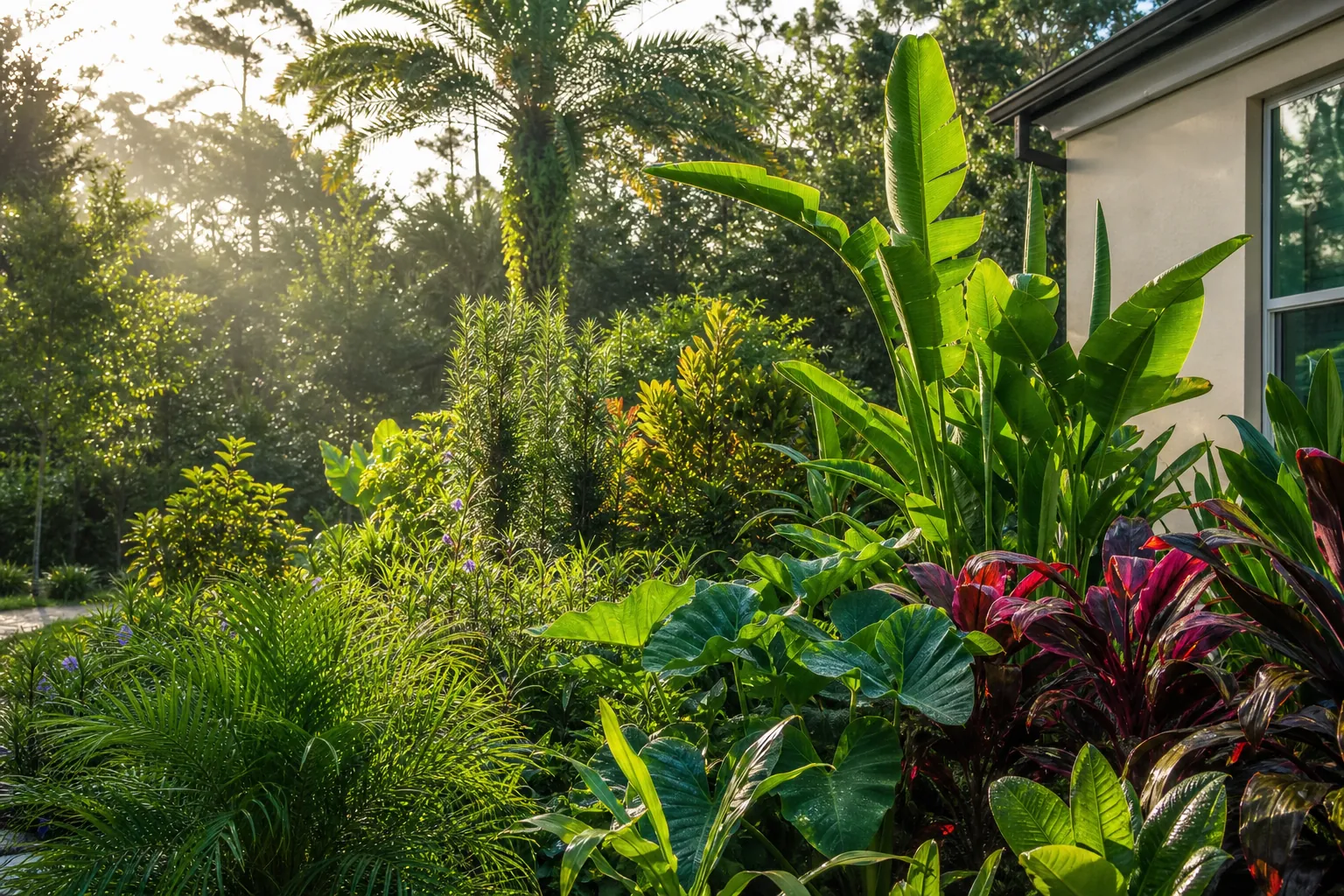
Light is only one part of a successful placement. Before planting, check what happens to water after irrigation or heavy rain. Soil that stays saturated can be unsuitable for plants that need air around their roots, while fast-draining soil may require more attentive watering during establishment. Avoid assuming that every lush-looking plant wants constantly wet soil.
Evaluate each candidate with a simple site checklist:
- Confirm that its mature height and width fit the bed.
- Check whether the soil drains promptly after rain.
- Identify irrigation coverage and nearby downspouts.
- Allow clearance from walls, walkways, windows, and equipment.
- Consider roots and overhead space before choosing a tree or palm form.
- Check how wind moves through the location.
These checks prevent common design conflicts. A plant that looks appropriately scaled in a nursery container may eventually cover a window or crowd a path. Likewise, a specimen placed under an eave may remain much drier than plants a few feet away. Match the plant to the site's practical limits first, then use foliage shape and color to build the tropical character you want.
Build A Layered Planting Instead Of Chasing One Plant
A convincing tropical-style bed usually depends on composition rather than a single dramatic specimen. Start with a structural plant that establishes the bed's overall height. Add medium-height foliage to create volume, then use lower plants to cover exposed soil visually and soften the edge. Repeating a few forms or colors can make the area feel intentional rather than crowded.
Morning-sun beds often transition into afternoon shade, so compare the light requirements of every layer. A taller plant can create additional shade as it matures, changing the conditions for plants beneath it. Leave enough room for that future canopy and avoid filling every gap immediately. Open space supports air movement and allows each plant to reach its natural form.
Use leaf contrast deliberately. Pair broad foliage with narrower or more finely textured leaves, and limit the number of competing colors in a small area. If winter exposure is a concern, combine more cold-tolerant structural plants with seasonal accents that can be changed. This approach preserves the bed's framework even when a tender accent is damaged or removed.
Plan For Winter Before Making A Final Choice
Cold preparation should begin with placement, not with a forecast. Areas protected from north wind may offer a better setting for tender-looking foliage than open corners. Container plants can provide flexibility because they may be moved, but their roots are also more exposed to temperature changes than roots in the ground. Make sure any container is manageable before relying on relocation as the winter plan.
For each plant under consideration, decide what action you would take during cold weather. That might include monitoring forecasts, protecting a young specimen, moving a container, or accepting temporary foliage damage. Buy only when that level of care is realistic. Newly planted palms deserve particular attention because they are still establishing. For related preparation steps, read how to protect young palms from frost.
Finally, keep the plant name and care information after purchase. Accurate identification makes later decisions about water, pruning, and cold response easier. Reassess the bed after its first summer and winter, then adjust spacing, irrigation, or plant selection based on what the site actually revealed.
Discuss Your Planting Decision
If you want to discuss tropical-looking plants for a morning-sun area, call Tropical Yards calmly at 772-267-1611. Have the site's light window, drainage conditions, available dimensions, and winter exposure ready so the conversation can stay focused on your planting decision.
Call 772-267-1611 to talk through next steps.