Using coquina shell near house siding in Ormond Beach, FL
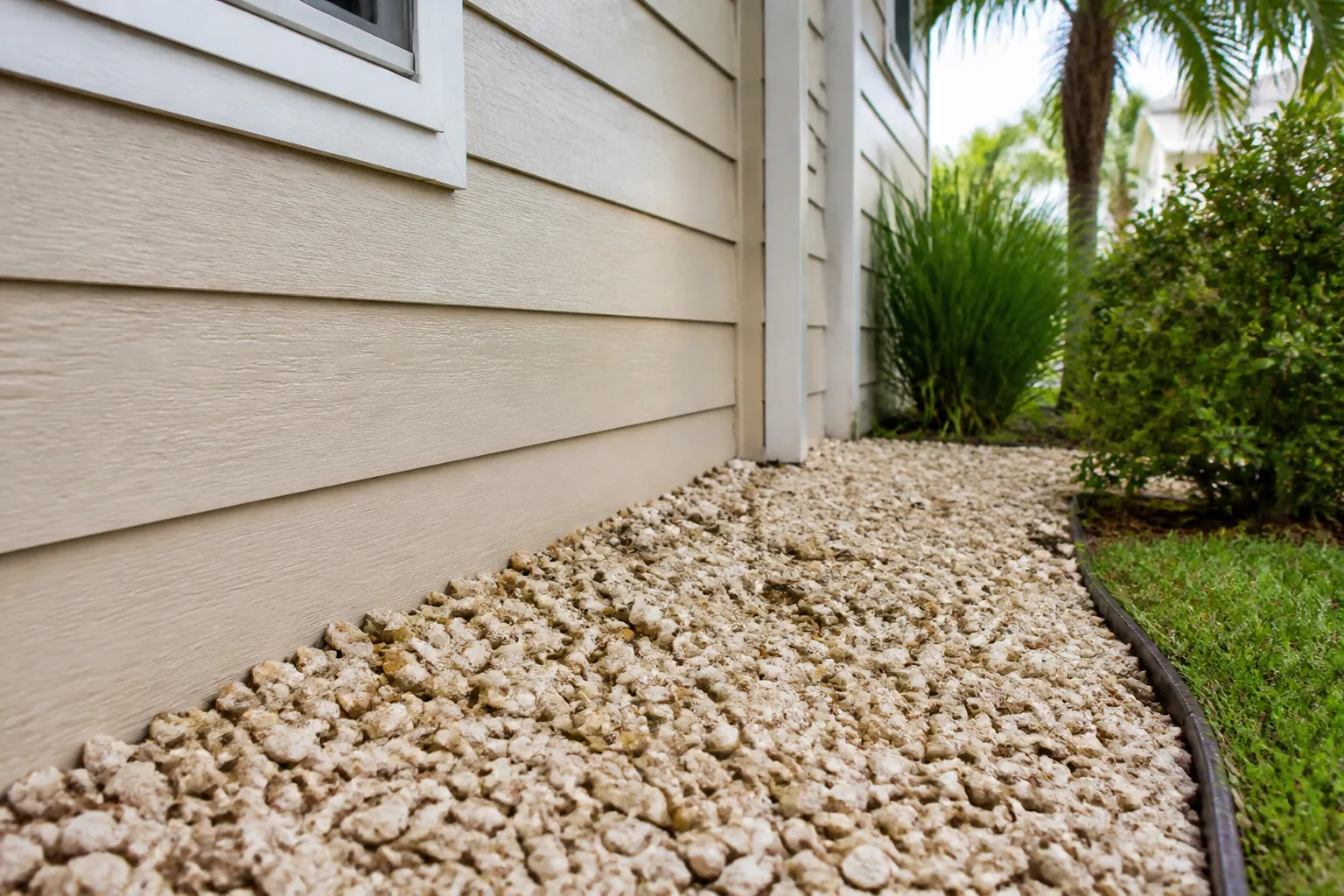
Using coquina shell against house siding requires careful clearance and drainage checks. Treat shell as ground cover, never material for banking against walls. Keep siding edges, vents, and drainage openings clear of material. Before ordering, review the manufacturer’s instructions and observe runoff during rainfall.
For Ormond Beach homeowners, site assessment comes before material selection. A shell border should preserve access for regular wall inspections. It should maintain drainage away from the house as well. Adding shell won’t correct low ground, leaks, or inadequate slope.
Tropical Yards supplies coquina shell and tropical plants, with dump trailer delivery. It doesn’t provide installation, soil grading, or yard maintenance. This guide covers border assessment, measurements, and preparation for your own work.
Can coquina shell against house siding cause problems?
Shell can create problems when its finished surface approaches the siding. It may conceal damage, obstruct wall openings, or alter surface drainage. Finished height and wall construction determine the clearance you need. Review your wall’s requirements before selecting border depth or ordering material. Compare coquina shell material options and coquina shell delivery planning when planning this step.
Inspect the lowest siding edge from several positions along the border. Ground elevations can vary considerably along the same wall. One section may provide ample clearance while another approaches the soil. Steps, hose connections, and corners can obscure these variations.
Don’t assume an existing mulch line indicates acceptable clearance. Previous layers may already conceal features that should remain exposed. Remove enough loose surface cover to inspect the wall base. Avoid excavation near buried utilities or disturbance to wall components.
Inspection needs vary with the wall’s construction and exterior finish. Lap siding, stucco, and brick veneer each have specific details. Drainage gaps and weep openings may be difficult to identify. Ask a qualified building professional about unfamiliar features before adding material.
Never use a shell border to conceal existing wall problems. Stains, softened trim, peeling paint, and damp patches require attention first. Photograph areas of concern before beginning your border preparation. New ground cover can make these warning signs harder to monitor.
Use this first check to decide if the project can proceed. You may need advice about the wall before buying shell. That pause helps keep a simple ground-cover project from masking a bigger issue.
How much space should you leave below the siding?
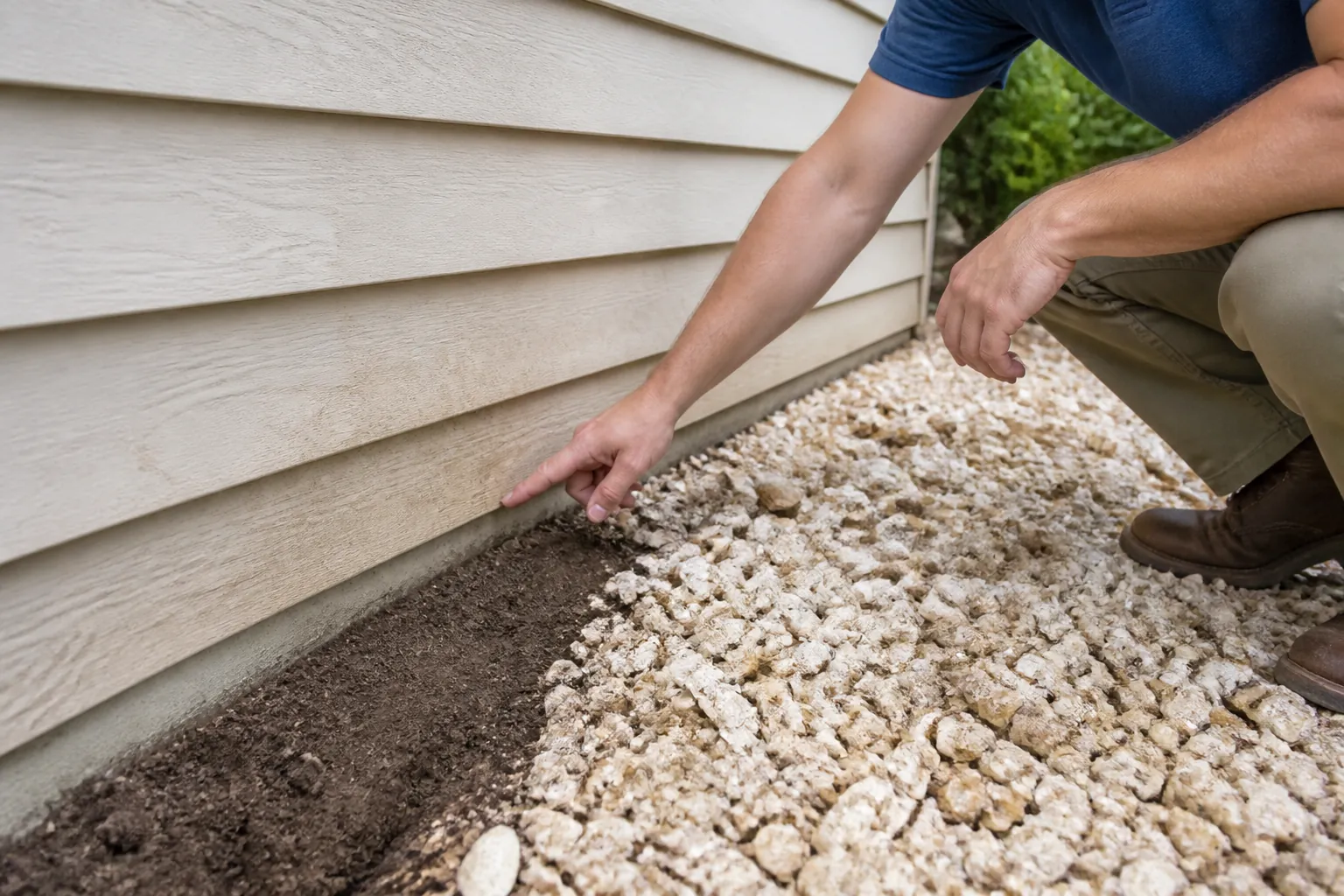
Follow the clearance requirements for your siding and wall assembly. No single measurement provides suitable clearance for every house. Measure from the proposed finished shell surface, rather than bare soil. Preserve required foundation exposure, and keep vents and drainage openings unobstructed. Compare coquina shell material options when planning this step.
Start with the siding manufacturer’s care or installation instructions. Confirm that the instructions cover the product installed on your home. Seek identification help if you don’t recognize the siding product. A neighbor’s border doesn’t establish your home’s clearance requirements.
Shell may shift during raking and routine use of the area. Consider that movement when planning the border edge and depth. Minimal clearance leaves little space for material that drifts toward siding. Avoid accumulations beside corners, steps, and downspout outlets.
A separate ground-level strip can help maintain distance from the wall. Choose its width around wall construction and inspection access. Preserve enough space for visual checks and debris removal by hand. Don’t attach garden edging to siding or conceal wall joints.
Before you settle on the border shape, check these points:
- Find the siding product and review its required ground clearance before setting the shell height.
- Locate vents, weep openings, access panels, and other wall features that must remain clear.
- Measure the lowest clearance along the full border, including corners and changes in ground level.
- Leave room to inspect the wall without moving a deep layer of shell each time.
- Check that the planned edge won’t cover utility access or block an exterior door.
Don’t force a deeper layer into space with insufficient clearance. Revise the layout or request advice specific to your property. Soil removal can affect roots, buried utilities, and existing drainage slopes. Consider those consequences before treating excavation as simple border preparation.
What should you check about drainage before ordering?
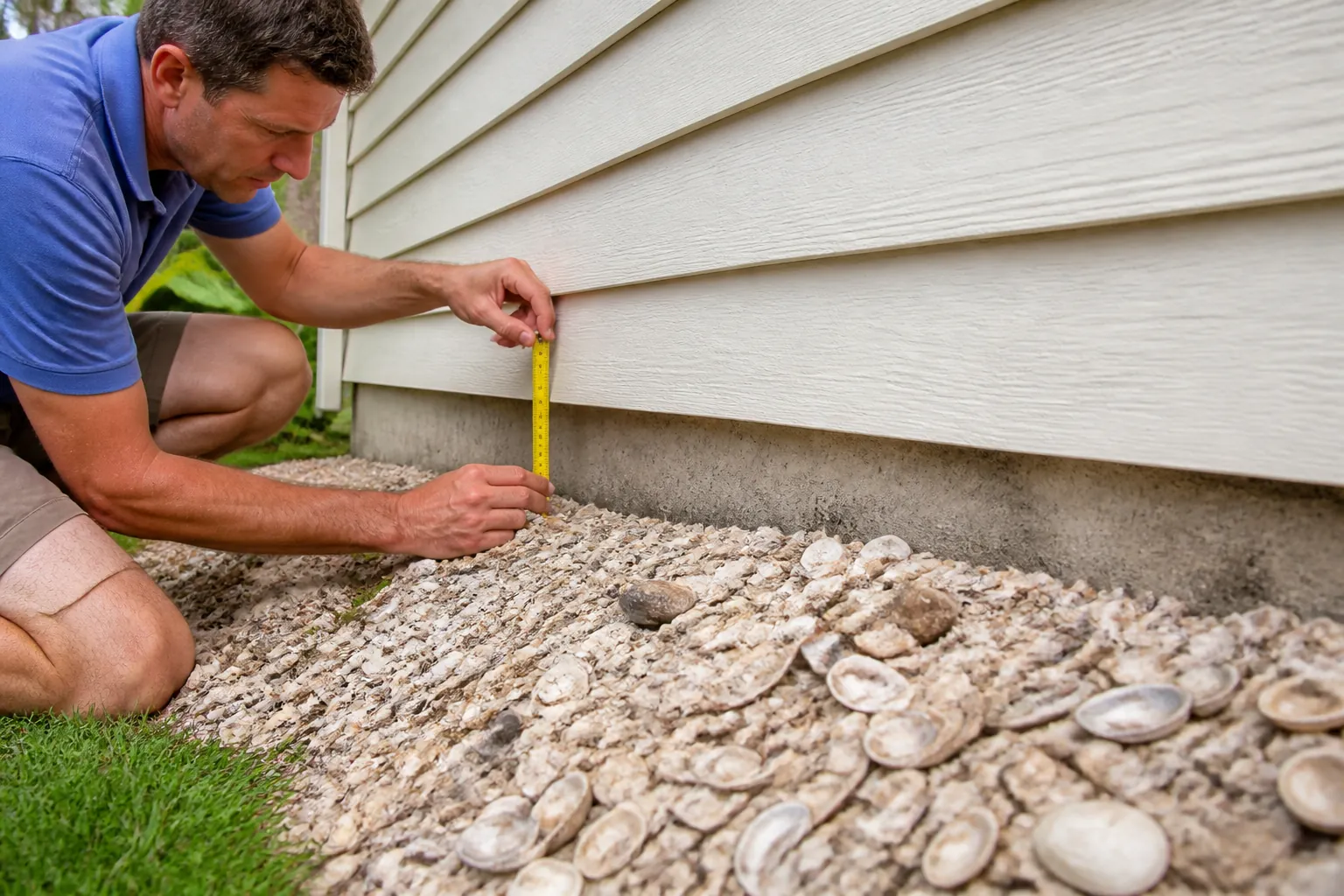
Observe rainfall and drainage patterns before ordering your coquina shell. Identify standing water, roof discharge, and runoff approaching the house. A shell layer won’t correct an inadequate ground slope. Address drainage concerns first, and preserve existing runoff routes when planning the finished border.
Choose a safe spot to watch rain reach the ground. Note where downspouts discharge and where roof edges shed water. Look again after the rain stops. A spot that stays wet needs closer review before you cover it.
Roof discharge may be only one source of border moisture. Nearby pavement can direct surface runoff toward the exterior wall. Hose connections or irrigation systems may leave persistent damp areas. Identify the source before choosing how to address each problem.
Don’t assume a shell layer provides adequate drainage throughout the area. Underlying soil still influences water movement beneath the surface. Additional material can alter surface runoff patterns as well. Consider the soil conditions and proposed finished elevation together.
Edging deserves the same care as the shell layer. A tall edge can hold water where it once flowed out. Avoid creating a closed basin along the house. Keep drain inlets visible and leave access for future checks.
Photograph standing water and the direction of surface runoff. These records can help explain concerns to a qualified professional. Tropical Yards supplies material without providing drainage assessments or repairs. Resolve drainage problems before calculating your final material quantity.
Check the area again after your DIY work is complete. The first rain may reveal shell collecting in low spots. It may also show an edge interrupting flow. Make small surface corrections only when they preserve wall clearance and drainage.
How do you measure a shell border and choose the material?
Measure length, width, and proposed finished depth after confirming clearance. Divide curved or irregular spaces into smaller, measurable shapes. Combine their areas using consistent measurement units throughout the calculation. Confirm Tropical Yards’ sales unit before converting those measurements into an order quantity. Compare coquina shell material options and coquina shell delivery planning when planning this step.
Sketch the border on paper, with doors and downspouts marked. Include areas you won’t cover, such as access strips or planting spaces. This helps prevent an order based on the whole bed. Label each part so you can check your math.
For a rectangle, multiply length by width to find area. Multiply that area by depth to find volume. Keep all measurements in the same units for this step. A depth in inches must be converted before combining it with feet.
Don’t select depth from an online photo alone. The look depends on the shell, base, and light. More material also raises the finished surface. The safe height near the wall must guide the plan.
Discuss the available shell before making your final material selection. Natural shell varies in color, dimensions, and the presence of broken pieces. Confirm the characteristics of the material available for your order. If appearance matters, ask about viewing the supply before purchasing.
A small test area can help you judge the look. Use it to check the planned depth against wall clearance. Think about foot traffic, pets, and nearby doors, too. Don’t assume a shell border will feel like a smooth path.
Before you buy, have these details ready:
- Record the measured area and planned depth so the order discussion starts with clear dimensions.
- Ask which sales unit applies to the shell available for your order.
- Confirm the current material’s appearance rather than relying on a photo from another project.
- Explain any narrow access, low wires, or overhead branches near the proposed delivery spot.
- Discuss your measured quantity before adding extra material that may have no safe storage place.
Keep your notes after ordering so you can compare the finished result. They may help with a later purchase. Still, natural material can look different across orders. Avoid treating a future load as an exact visual match.
How should you plan dump trailer delivery and DIY placement?
Choose an accessible unloading location before booking dump trailer delivery. It must allow unloading without depositing shell against the house. Confirm access conditions and property details with Tropical Yards when ordering. Plan your own material handling, since delivery excludes spreading, installation, and yard cleanup. Compare coquina shell material options when planning this step.
The best drop spot depends on access and ground conditions. Don’t assume the trailer can enter a side yard. Gates, tight turns, slopes, and soft ground may limit access. Discuss these conditions before the delivery day.
Check above the proposed unloading spot as well as around it. Raised dump equipment needs clear space overhead. Tell the supplier about wires, roof edges, and tree limbs. Let the delivery team confirm what access is workable.
Keep the drop area away from wall openings and drains. Protect access to doors, meters, and shared travel routes. If a driveway is involved, plan where vehicles will go. Don’t choose a spot that leaves you unable to move the pile.
Think through the hand work before the load arrives. Shell can be heavy, and moving it takes time. Set a pace that suits your strength and tools. Wear sturdy footwear, work gloves, and suitable eye protection when handling it.
Prepare the border before moving shell toward the house. Find buried utility routes before driving stakes or digging. Keep soil from piling against the wall during prep. Avoid laying fabric or edging over drains and wall openings.
For a manageable DIY work sequence, use these steps:
- Mark the planned border and wall clearance before moving any shell into the work area.
- Set aside a clear route for a wheelbarrow without blocking doors or utility access.
- Move small loads and spread them in stages rather than dumping piles beside siding.
- Check the finished height often so the shell stays below the required wall clearance.
- Clear stray pieces from paths and inspect drainage openings once the spreading work is done.
Keep leftover shell in a suitable spot away from the wall. Don’t solve excess volume by making the border deeper. That can undo your clearance plan. Discuss quantity carefully before delivery to reduce this risk.
How do you keep the border clear after placement?
Inspect the shell border after rainfall and during routine yard checks. Look for displaced material, accumulated leaves, and obstructed wall openings. Maintain the required clearance above the finished shell surface. Reposition loose pieces by hand, and investigate new moisture rather than concealing it with additional shell. Compare coquina shell material options when planning this step.
Pay close attention near downspouts and walkway edges. Flow and foot traffic may move shell from its starting place. A low spot doesn’t always mean you need more material. First check where the shell went and why.
Leaves and soil can build up between shell pieces over time. Remove debris without packing it against the house. Keep the wall base visible enough for checks. If you spot damage, address the cause before refreshing the border.
For nearby plants, leave room for mature growth and wall access. Don’t place a root ball against siding to save space. Check each plant’s needs for sun, soil, and water. Keep watering aimed at the planting area rather than the wall.
Tropical Yards sells palm trees, flowering plants, privacy plants, and other tropical plants. Ask about current stock if plants are part of your purchase. Planting, pruning, and ongoing care remain your responsibility. Choose a layout you can care for without crowding the house.
In Ormond Beach, your own site conditions should drive the final plan. A broad border may suit one wall and crowd another. Keep clearance, drainage, and access ahead of looks. Those checks matter more than matching a yard photo.
Frequently asked questions
Can I put coquina shell over old mulch near siding?
Check the total finished height before adding shell over anything. Old mulch may already sit too close to siding. Remove loose buildup as needed without changing the required ground slope. If the wall edge or drainage openings are hidden, uncover and assess them before adding new cover.
Will coquina shell solve water pooling beside my house?
No. Shell is a ground-cover choice, not a repair for pooling water. The cause may involve slope, roof runoff, or the soil below. Covering the area can hide the signs without fixing them. Review the drainage issue before buying material for that part of the yard.
Does Tropical Yards spread shell or install plants?
No. Tropical Yards provides coquina shell sales, tropical plant sales, and dump trailer delivery. Its delivery area runs from St. Augustine to Daytona Beach, including Ormond Beach. You handle the placement and planting, or arrange separate help. The supplier doesn’t provide installation, yard cleanup, or ongoing care.
Should I order extra shell to top up the border later?
Base your order on measured area, planned depth, and the supplier’s sales unit. Extra material needs a suitable storage spot away from the wall. Don’t add it merely to empty the pile. Any later top-up still needs to preserve siding clearance, drainage openings, and access around the house.
Ready to discuss material for your DIY border? Call Tropical Yards at 772-267-1611 about coquina shell sales and dump trailer delivery. Have your measurements and drop-site details ready so you can discuss the order clearly.
Sources And Further Reading
Call 772-267-1611 to talk through next steps.