Coquina shell for stepping stones in Flagler Beach, FL
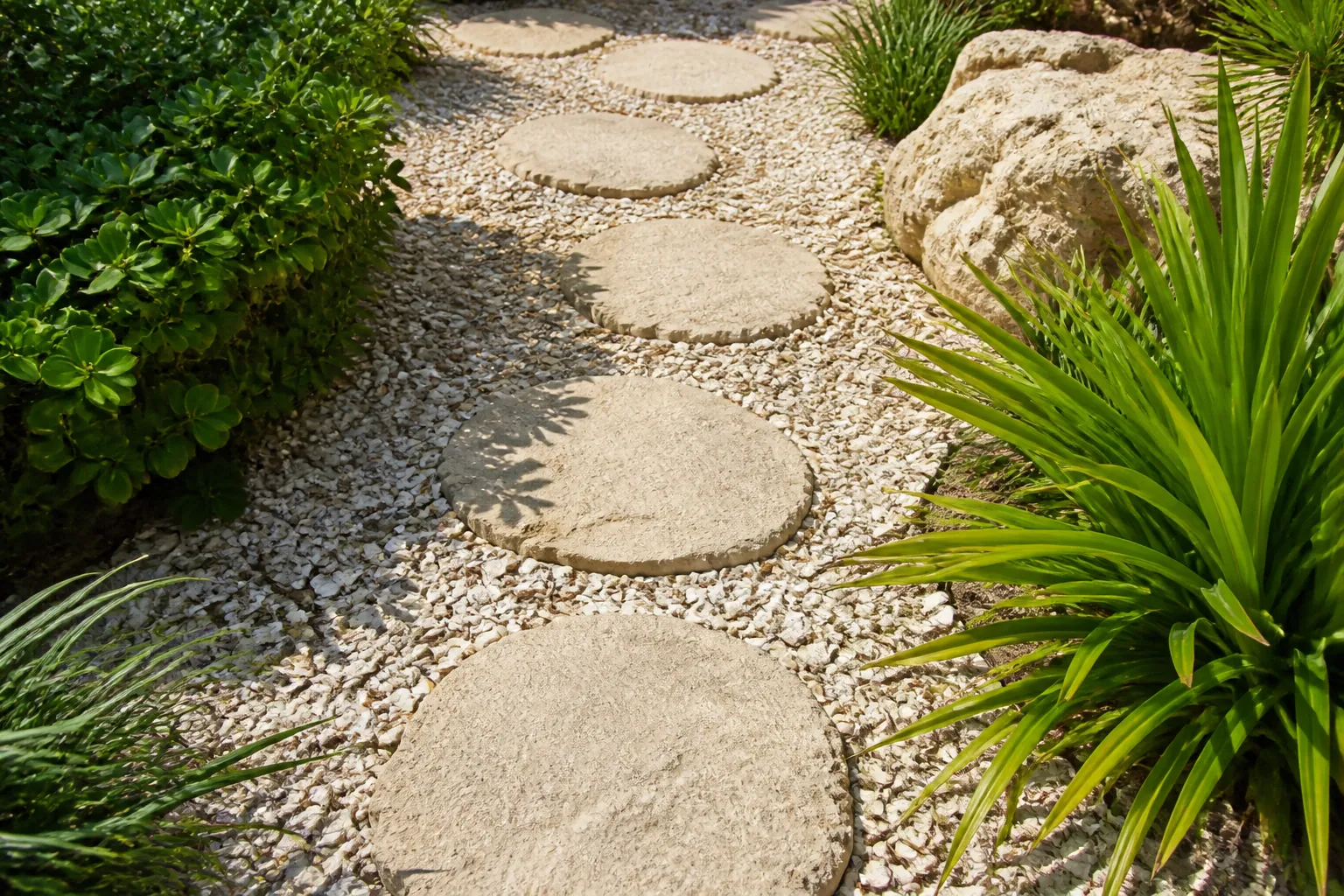
Coquina shell around landscape stepping stones can create a soft, coastal appearance. A practical DIY layout needs stable stones and comfortable spacing. Keep loose material below the walking surfaces to maintain clear footing. Check the completed pathway after rainfall and regular use for movement or scattered shell.
For Flagler Beach buyers, planning begins with the stepping-stone layout. Shell fills surrounding spaces, but it shouldn't conceal unstable footing. Tropical Yards supplies coquina shell and tropical plants, with dump trailer delivery. Buyers remain responsible for site preparation, stone placement, and ongoing care.
How should coquina shell fit around stepping stones?
Use coquina shell as surrounding fill beside a stable walking route. Each stone should support footsteps without rocking or shifting under pressure. Plan spacing around comfortable movement rather than appearance alone. Leave enough room to remove scattered material from the walking surfaces during regular care. Compare coquina shell delivery planning when planning this step.
Start with the route people will use
Walk the proposed route before purchasing material for the project. Take comfortable steps from the gate, patio, or doorway. Repeat this check while carrying a bag or watering can. Carrying supplies may reveal awkward spacing that wasn't obvious during the first trial.
Arrange the stepping stones before filling the surrounding spaces. Test both directions, since stride and balance can change. Include household members who will use the pathway regularly. One person's comfortable spacing may create awkward steps for another.
A narrow stepping-stone pathway may be unsuitable for some users. Loose material between stones can hinder small wheels or walking aids. Reconsider the layout if someone needs a firm, continuous surface. Choose materials around everyday access needs before focusing on appearance.
Give each stone its own firm support
Surrounding shell won't repair an unstable stepping stone or its support. Each stone needs a suitable base for its dimensions and location. Follow the stone supplier's instructions for preparing that base. Correct any movement before placing loose material around the edges.
Check stability at the corners and center of each stone. Apply pressure near every edge while watching for movement. A stone may support one footstep yet tilt under another. Don't conceal unstable support by adding material around the edges.
Keep the walking surfaces clearly visible throughout the completed pathway. Material covering stone edges can make the route harder to follow. Pay particular attention near corners and changes in surface height. Prioritize clear footing rather than creating a buried-stone appearance.
What should you check before buying coquina shell?
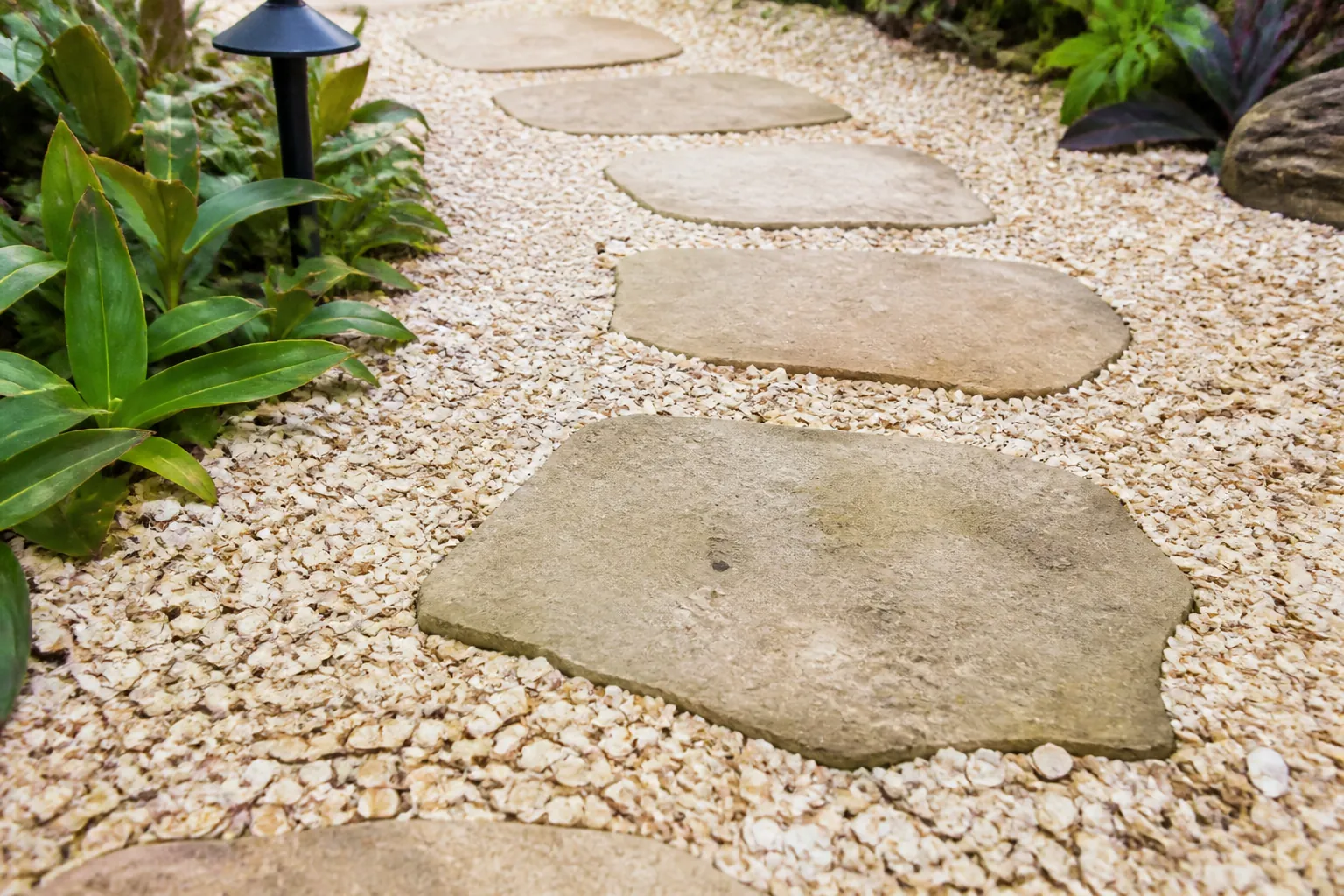
Ask about the shell currently available before placing your order. Look at its size, texture, and mix rather than color alone. Tell the supplier that it will surround stepping stones. That context helps you ask useful questions about handling, spreading, and keeping the walking surfaces clear. Compare coquina shell material options and coquina shell delivery planning when planning this step.
Judge the material for your specific gaps
Shell is a natural material, so photographs shouldn't be your sole reference. Ask about current pictures or available viewing options before ordering. Examine the individual pieces and the overall texture. Consider how that material will fit the spaces beside your stones.
Narrow spaces require particular attention to the size of shell pieces. Larger pieces may be difficult to distribute between closely spaced stones. Finer material can behave differently during rainfall or handling. Discuss the available material rather than assuming every shell load is similar.
Think about footwear, too. Loose shell may feel rough beneath bare feet. Keep a poolside or barefoot route focused on broad stone surfaces. Avoid treating the shell itself as the main walking surface.
- Ask about the size and texture of the shell available for your order.
- Explain how wide the gaps are between your planned stepping stones.
- Check how the shell looks beside your stone before choosing the final layout.
- Ask how the supplier measures the load so your order uses matching units.
Separate the shell order from the stone plan
Tropical Yards sells coquina shell without providing stone installation services. Prepare your layout and base plan before scheduling delivery. Arrange separate skilled help if your project requires site work. Purchasing material doesn't include labor for preparing or finishing the yard.
Confirm what's included before finalizing your coquina shell order. Record the material quantity, delivery details, and proposed unloading location. Written notes help everyone understand the same delivery plan. They can reduce last-minute decisions when the trailer arrives.
How do you estimate shell for the spaces between stones?
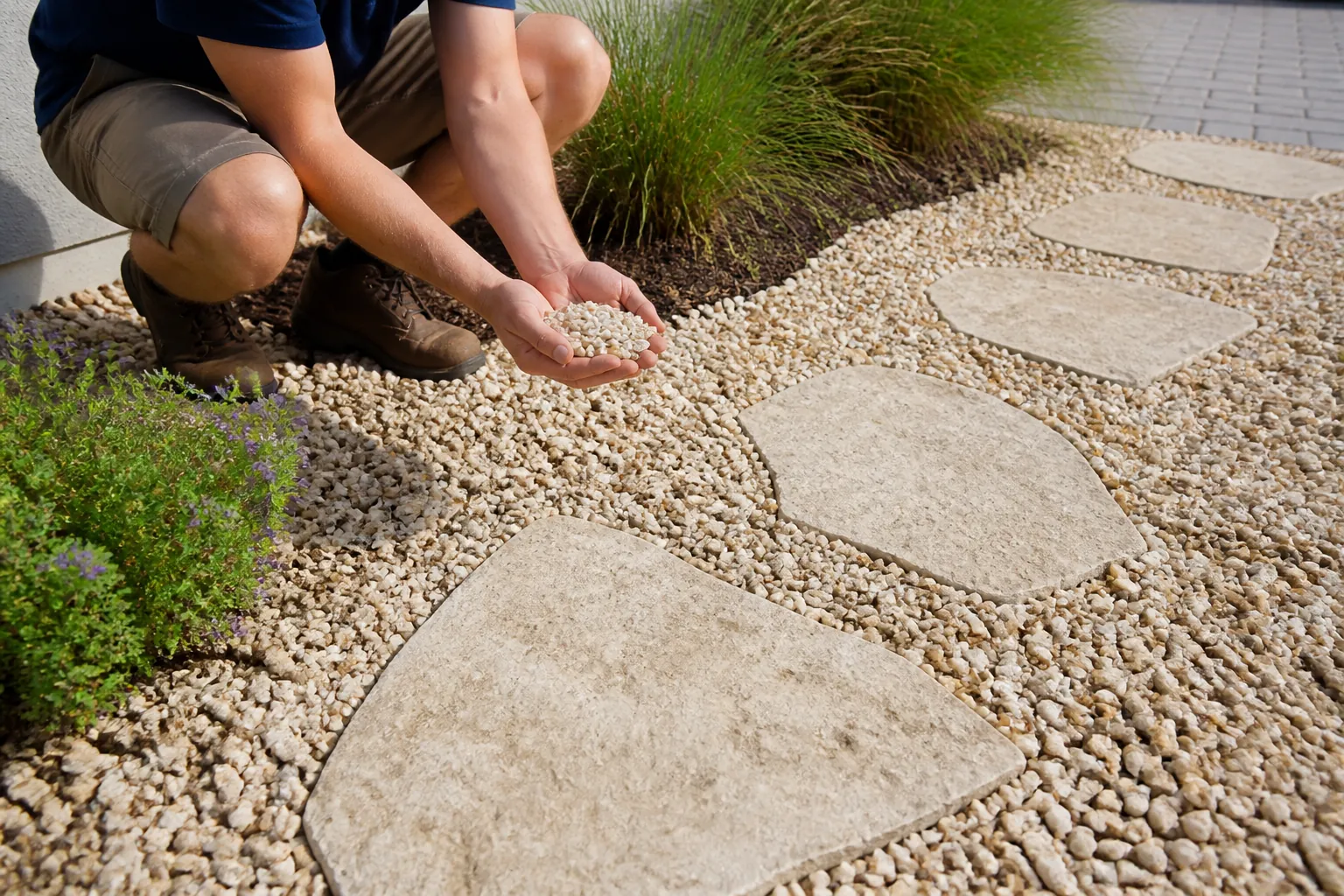
Measure the area that shell will cover, then subtract the stone footprints. Use a planned shell depth to estimate volume. Keep all measurements in matching units, and share them when ordering. The estimate should reflect the gaps and borders, rather than the full path as one solid shell bed. Compare coquina shell material options and coquina shell delivery planning when planning this step.
Measure the shape in simple parts
Measure the length and width of a straight pathway section. Divide a curved layout into smaller sections for easier measurement. Calculate each section separately, then combine the results for your estimate. A simple sketch helps organize measurements and identify missing areas.
Next, estimate the surface area occupied by the stepping stones. Use each stone's outer dimensions as an initial reference. Irregular shapes will reduce the accuracy of that estimate. Explain those limits when discussing the required quantity with the supplier.
Measure broad shell pockets along the outer border as separate sections. Avoid assuming that every space has the same width. Corners, entrances, and planting borders can affect the total area. A detailed sketch provides more useful information than pathway length alone.
Turn area into a volume estimate
Multiply the shell area by the planned depth to estimate volume. First, put the length, width, and depth in matching units. For example, depth measured in inches needs conversion before using feet. Then confirm the selling unit with Tropical Yards.
Don't increase the planned depth simply to accommodate a full load. Material depth affects the transition between stones and surrounding borders. It can change how much loose shell moves beneath footsteps. Decide the finished level before calculating the quantity to purchase.
Ask how uneven ground and handling losses affect your estimate. No single extra allowance is appropriate for every pathway. A flat, straight section differs from a curved, uneven planting bed. Describe actual site conditions instead of adding an unexplained quantity.
How do you prepare and fill the path yourself?
Finish the ground prep and stone setting before spreading shell. Check the path edges, water flow, and nearby plants first. Then place shell in small sections and keep it off the walking faces. Test the route as you work, so you can spot trouble before filling the whole area. Compare coquina shell material options and coquina shell delivery planning when planning this step.
Check water flow before covering the ground
Observe where rainfall enters and leaves the proposed pathway area. Check for depressions that collect water beside the stepping stones. A decorative shell surface won't correct an unsuitable ground slope. Address the underlying drainage problem before covering the area with material.
Keep existing drainage channels and outlets clear of loose material. Don't fill a channel merely to create an even appearance. Near buildings, avoid raising shell against siding or covering access points. Preserve enough clearance to inspect the building edge.
Consider underground utilities before digging or installing stakes for borders. Follow local utility marking procedures before disturbing the ground. Account for marked utility routes when planning any edge restraints. Even work that appears shallow can reach a buried line.
Make weed-control choices with care
Remove existing weeds before placing shell around the stepping stones. Covering active growth may leave roots that produce new shoots. Read the product instructions before choosing or installing landscape fabric. Consider future planting, weed removal, and changes to the layout.
Landscape fabric doesn't replace regular inspection and care of the pathway. Leaves and soil can accumulate above the shell surface. New weeds may establish roots in this collected material. Plan regular debris removal even when the prepared base appears clean.
- Set and test each stone before spreading shell into the surrounding gaps.
- Keep the finished shell below the stone faces so each step stays clear.
- Spread small amounts at a time to avoid burying stone edges and plants.
- Sweep stray pieces off the stones before testing the full walking route.
- Check the finished path after rain for movement, pooling, and covered drain openings.
Keep shell clear of plant crowns
Maintain clearance around stems and trunks when filling nearby planting beds. Don't conceal exposed soil by piling shell against plant bases. Keep additional material away from emerging stems and leaves. Follow each plant's care instructions for managing its root area.
Create a distinct border between the shell surface and nearby lawn. Loose pieces can migrate into areas used by mowing equipment. Inspect this boundary before operating yard equipment beside the pathway. Even a well-defined border requires regular checks for scattered material.
How should you plan dump trailer delivery?
Choose a drop spot that the truck and trailer can safely reach. Keep it separate from the finished stepping-stone route when possible. Discuss access, ground conditions, and the intended unloading spot before coquina shell delivery planning. Plan how you'll move the shell from that spot to the path without blocking daily access. Compare coquina shell material options when planning this step.
Check the route to the drop spot
Tropical Yards offers dump trailer delivery of plants and coquina shell. Its delivery area runs from St. Augustine to Daytona Beach. For a Flagler Beach order, confirm the address and access details. Delivery planning should happen before the load is scheduled.
Assess delivery access beyond the width of the driveway entrance. The vehicle may require additional space for turning and positioning. Gates, parked vehicles, low branches, and overhead lines can restrict access. Describe these potential obstacles to the supplier before scheduling delivery.
Don't assume delivery equipment can cross lawns or completed pathways. Soft ground and concealed features may make vehicle access unsafe. Identify irrigation equipment, septic areas, and paving vulnerable to damage. The unloading location requires approval based on actual site conditions.
Plan the work after unloading
Pick a spot that leaves doors and walkways usable. Think about garage access and where cars will park. Check that the pile won't block water flow. Keep children and pets clear during unloading and later handling.
Prepare suitable tools and protective clothing before the delivery arrives. A wheelbarrow, shovel, rake, gloves, and sturdy footwear may help. Keep individual loads manageable when transporting material by hand. Take regular breaks and stay within your safe lifting limits.
Dump trailer delivery doesn't include spreading shell or setting stones. Tropical Yards doesn't provide installation, design, yard cleanup, or maintenance. Plan to do the work yourself or arrange separate help. Confirm the drop details without assuming extra labor is included.
How do you keep shell gaps useful over time?
Check the path for loose shell on the stones and movement beneath them. Clear leaves before they form a thick layer. After heavy rain, look for washed-out gaps and blocked edges. Small checks help you spot the cause of a problem before adding more shell to cover it. Compare coquina shell material options when planning this step.
Reset the surface without hiding problems
Foot traffic may displace some material around the stepping stones. Return scattered pieces to surrounding spaces with a broom or hand tool. Avoid directing loose shell toward drainage openings or lawn borders. Maintain clear, visible walking surfaces throughout the pathway.
Inspect the underlying support if a stepping stone becomes unstable. Additional shell around its edges won't secure an inadequate base. Use suitable methods to lift and reset the stone if necessary. Arrange skilled assistance when repairs exceed your ability.
Before adding shell, compare its level with the stone walking surfaces. Repeated additions can gradually obscure the pathway and its edges. Remove accumulated leaves and soil wherever practical before assessing the gaps. Add material only where the existing layout needs replenishment.
Keep nearby planting choices practical
Nearby plants should preserve enough space for comfortable, safe movement. Check their mature dimensions before choosing locations and planting them yourself. Consider stems, thorns, and foliage beside the walking route. Avoid placements where future growth will restrict access along the pathway.
Tropical Yards sells palm trees, flowering plants, privacy plants, and other tropical plants. Ask about current availability and each plant's site needs. Match choices to light, space, and your care routine. Plant sales don't include planting or ongoing yard care.
Frequently asked questions
Can I place coquina shell over existing weeds?
Clear the weeds first rather than covering active growth. Roots may remain beneath a new shell layer. Check the area again before filling the gaps. Later, remove new weeds while they're small and clear the debris where they take root.
Should the shell sit level with the stepping stones?
Keep loose shell below the stone walking faces. This helps leave the route clear and visible. The exact finish depends on the stones and site. If shell keeps spreading across the tops, review the fill level and edge layout.
Can coquina shell stabilize a loose stepping stone?
No. Shell in the surrounding gaps isn't a sound fix for loose support. Check the base beneath the stone and correct the cause. Test the stone again before replacing nearby shell. Don't hide movement by piling material against its edges.
Does Tropical Yards spread shell after delivery?
No. Tropical Yards supplies coquina shell and tropical plants with dump trailer delivery. Buyers handle site prep, spreading, stone setting, and future care. Discuss the unloading spot before delivery so the material lands where you can manage it.
What should I have ready when ordering shell?
Have your path measurements, stone layout, planned depth, and delivery address ready. Note any gates, soft ground, or overhead access limits. Ask about current shell size and the selling unit. Confirm the amount and drop plan before scheduling delivery.
Ready to discuss your material order? Call Tropical Yards at 772-267-1611 about coquina shell sales and dump trailer delivery. Bring your measurements and access notes so you can review the next steps.
Sources And Further Reading
Call 772-267-1611 to talk through next steps.