Using coquina shell near newly planted trees in Palm Coast, FL
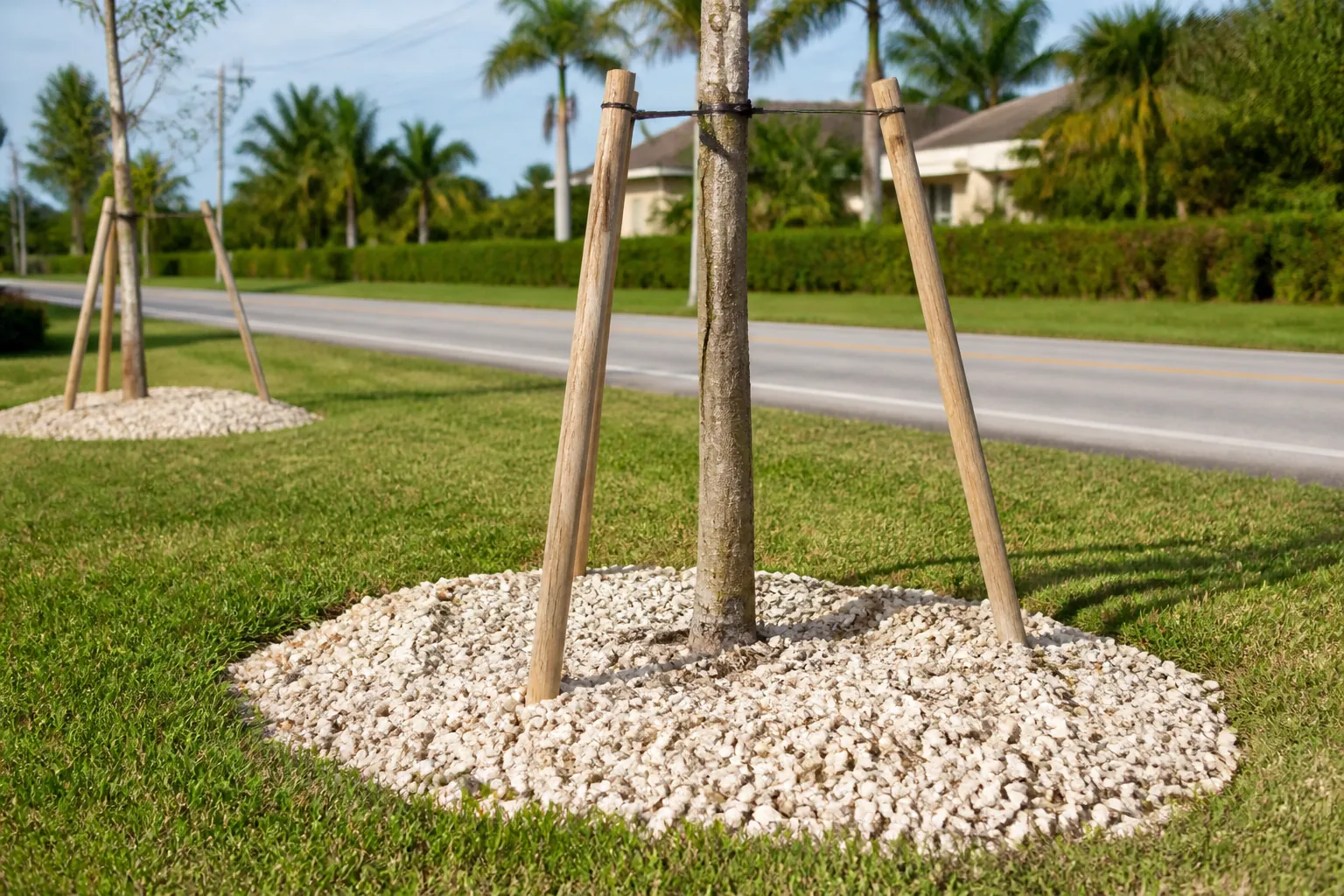
Using coquina shell around newly planted trees calls for a separate-material plan. UF/IFAS does not recommend shell as mulch around landscape plants. Prefer suitable organic mulch in the planted area, clear of the trunk and root flare. Consider shell only for a separate path or decorative area after reviewing the tree's site needs.
A newly planted tree needs more than a decorative border. Its roots must establish themselves in the surrounding soil. Ground cover should support that process, rather than conceal planting problems.
This guide helps Palm Coast buyers plan a DIY shell project. It covers tree spacing, moisture checks, watering access, and delivery preparation. Tropical Yards supplies coquina shell and tropical plants. Dump trailer delivery is available from St. Augustine to Daytona Beach. Customers remain responsible for planting and spreading, themselves or through separate contractors.
Is coquina shell around newly planted trees a good choice?
A decorative shell area should be planned separately from the planted bed. UF/IFAS favors suitable organic mulch around landscape plants rather than shell. Tree species, soil, drainage, and watering access still need review. Keep the root zone accessible while the tree becomes established. Compare coquina shell material options and coquina shell delivery planning when planning this step.
Start with the requirements of the plant you're buying. A palm and a broadleaf shade tree may need different care. Similar-looking trees can have different soil and moisture preferences. Confirm the plant's identity before selecting its ground cover.
Coquina shell contains calcium carbonate, which can affect soil pH. The effect varies with the material and surrounding conditions. Don't assume that shell is suitable for every tropical plant. Soil testing can guide material selection when pH is a concern. See UF/IFAS soil pH guidance for the soil-testing context.
Consider the purpose of shell within your planting layout. A broad shell border can define the bed's outer edge. It doesn't need to cover all soil beneath the tree. Preserving an inner mulch area can simplify care during establishment.
Appearance matters, but access takes priority during the first months. Observe where water travels during each watering session. You may need to reposition a hose or inspect soil moisture. A thick shell layer makes these routine checks more difficult.
Don't copy shell depth or spacing from an established tree. That tree may have a much larger root system. Its maintenance history and soil conditions may differ from yours. Plan around the newly planted tree's current requirements instead.
If the tree appears stressed, postpone the decorative work. First assess planting depth, soil moisture, and drainage. Adding a finished surface won't resolve an underlying root problem. Consider the outer shell border after checking those basic conditions.
How much space should you leave near the trunk?
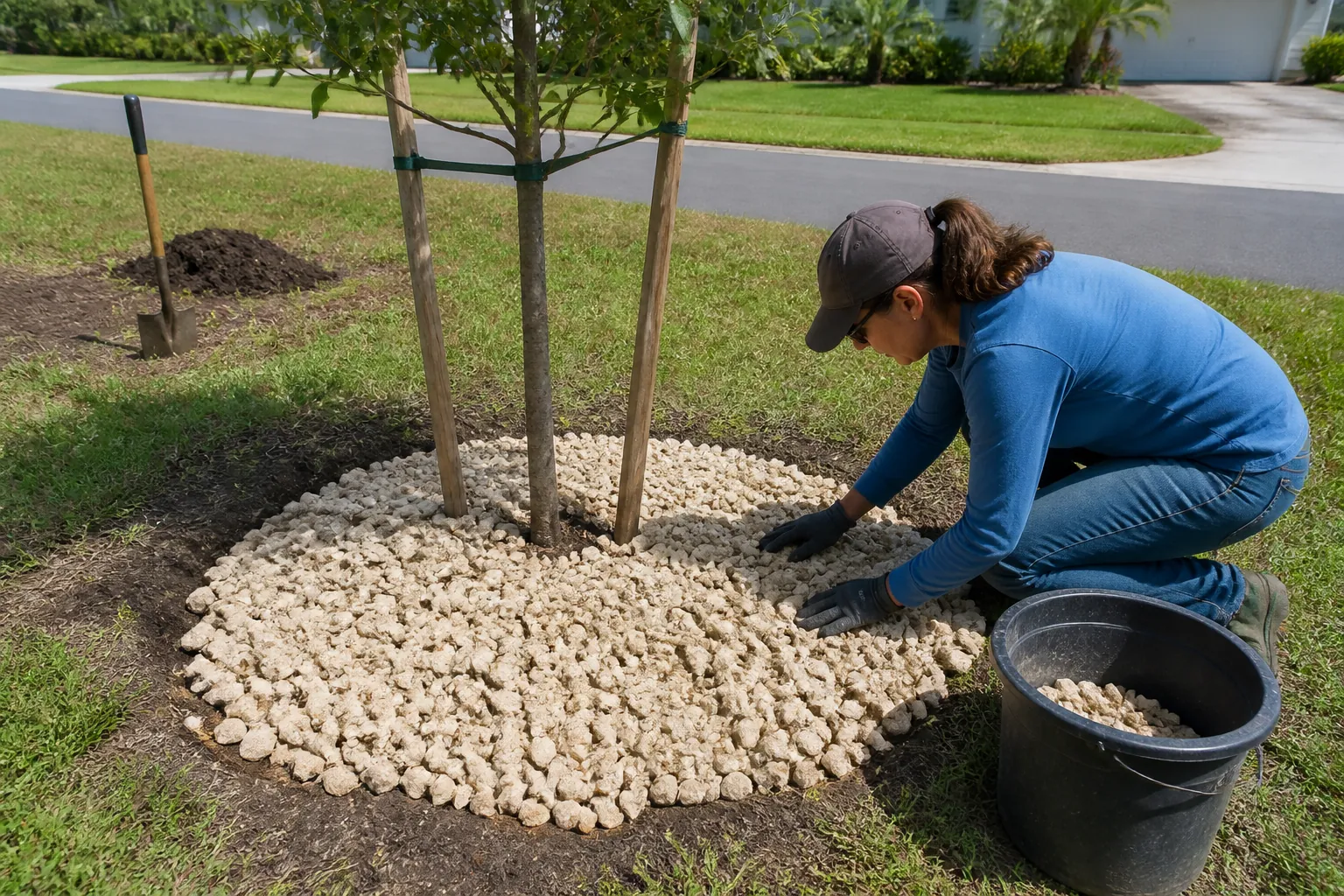
Keep shell clear of the trunk and visible root flare. Preserve enough open space for regular inspections of the base. Don't use shell to conceal an incorrect planting depth. Maintain the proper soil level without piling material against the bark. Check the finished border for any inward movement of shell. Compare coquina shell material options and coquina shell delivery planning when planning this step.
The root flare is where many tree trunks widen into roots. It should remain visible on trees that have this feature. Palms have different trunk and root structures. Follow species-specific guidance rather than assuming broadleaf recommendations apply to palms.
Before adding cover, examine the tree from several directions. Soil, mulch, or shell shouldn't form a cone around it. If the base is buried, assess the planting depth first. Avoid excavating around roots with a shovel to locate the flare.
A clear inner area provides space for routine tree care. You can position a watering hose without disturbing sharp shell pieces. You can inspect ties or supports without stepping against the trunk. This accessible space serves a purpose, even when it appears unfinished.
- Keep loose shell from sliding inward and collecting against the trunk after rain.
- Leave the root flare visible so you can check the tree's base.
- Place edging where it won't require cutting through the new root ball.
- Keep lawn tools and loaded wheelbarrows away from tender bark and surface roots.
Establish a clear boundary between shell and the inner care area. A simple edge can help contain loose material. Don't drive deep stakes beside the root ball. Select the boundary location before roots extend through the surrounding bed.
Allow space for growth rather than creating a restrictive ring. The trunk and root zone change as the tree develops. You may need to reposition the shell boundary farther outward. Inspect the clearance as part of your regular care routine.
Should you use wood mulch beneath the new tree instead?
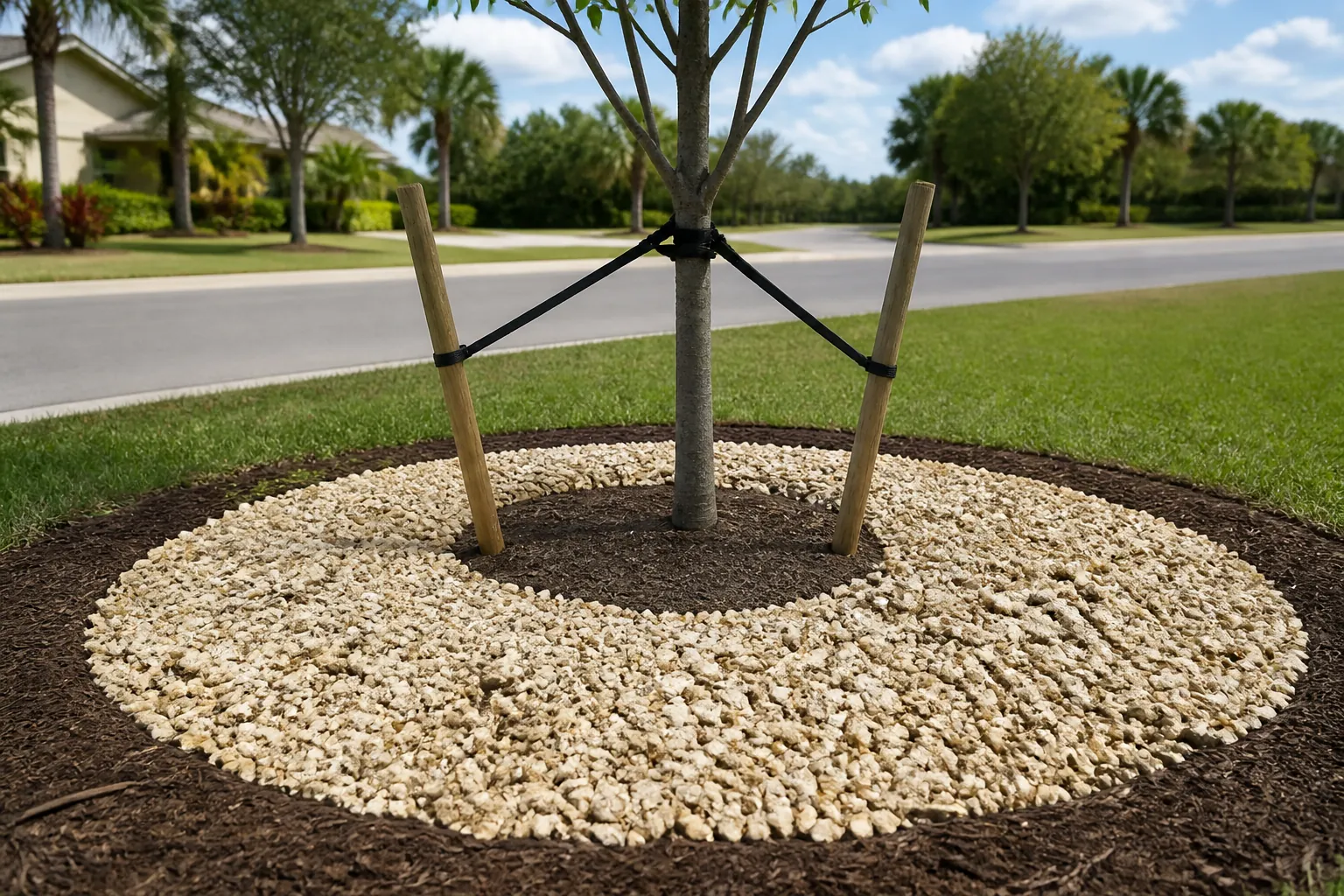
Suitable organic mulch can cover soil around a newly planted tree while preserving access for moisture checks. Keep it clear of the trunk and root flare. Plan any shell surface separately from the planted bed. Neither material should conceal an incorrect planting depth. Compare coquina shell material options when planning this step.
Wood mulch and shell serve different purposes within a planting bed. Wood decomposes and becomes part of the surface soil. Shell persists longer and provides a distinct visual contrast. Both choices require continued watering and attention to root conditions.
For a new planting, consider how easily you can maintain access. You can move wood mulch aside with a gloved hand. This provides access for checking moisture beneath the surface. Shell may require additional effort to move and keep separate.
Separate the planted bed from any proposed shell surface. Use suitable organic mulch around the young tree, keeping the trunk and root flare clear. Consider shell for a distinct path or decorative area only after checking its relationship to roots and runoff. Avoid expanding shell over the planted area simply for a uniform finish.
Don't conceal an existing surface beneath several additional layers. Inspect the bed before adding mulch or shell. Existing fabric, accumulated mulch, and buried edging can affect your layout. The finished surface shouldn't rise against the tree's base.
Avoid treating landscape fabric as a required layer beneath shell. Fabric can complicate future root inspections and changes to the bed. Weeds can still establish themselves in debris above it. Consider long-term access before covering the soil.
If your plan calls for fabric, follow its stated uses. Keep it away from the trunk and root flare. Don't wrap it tightly around a young tree. Make sure the watering method reaches soil rather than running off.
Choose the simplest setup you can care for well. A small, open tree bed often beats a crowded design. You can expand the shell area after watching the tree grow.
How do you water a newly planted tree near shell?
Water the root ball, then inspect moisture beneath the ground cover. Dry shell doesn't reveal the moisture level around the roots. A newly planted tree can have dry roots beside damp soil. Maintain watering access throughout establishment. Adjust your routine for rainfall, drainage, weather, and the plant's specific requirements. Compare coquina shell material options and coquina shell delivery planning when planning this step.
The original root ball requires careful attention after planting. Its soil may retain moisture differently from the surrounding ground. Water can reach one area while leaving another dry. Inspect both areas instead of relying on surface appearance alone.
Use a slow flow that can soak into the soil. Watch for runoff at the edge of the bed. If water escapes across the shell, change its placement or flow. The goal is wet roots, rather than wet ground cover.
No single watering schedule suits every Palm Coast planting. Tree size, soil conditions, sun exposure, and recent rainfall all matter. Request care guidance specific to the plant you're buying. Then assess conditions at home before each watering session.
- Move a small amount of cover aside before checking the soil underneath.
- Check the root ball and nearby soil, since they may dry differently.
- Watch the first watering to see where water pools or runs away.
- Adjust your checks after heavy rain, hot weather, or a change in growth.
Don't assume rainfall reached the full root ball. Light rain may wet shell without soaking deeply below it. On the other hand, heavy rain may leave soil wet. Check before adding more water in either case.
Yellow leaves, wilting, and limited growth have several possible causes. Additional watering isn't always the appropriate response. Assess soil moisture and drainage before adjusting your routine. Seek plant-specific guidance if the tree's condition continues to decline.
Keep irrigation parts easy to find and reach. Don't bury hose ends or emitters beneath loose shell. Clear access makes it easier to spot a clog or leak.
What should you check before buying coquina shell?
Measure the shell area after reserving space for tree care. Confirm material specifications, planned depth, and delivery access before ordering. Ask about the available shell's appearance and size range. Natural material can vary between supplies. Base your selection on current material rather than a photo from another project. Compare coquina shell material options when planning this step.
Draw a simple outline of the finished bed first. Mark the trunk, inner mulch area, and outer shell edge. This helps you avoid counting ground that won't receive shell. It also shows where you need a border.
For a circular bed, calculate the full outer area first. Then subtract the inner area reserved for tree care. Divide irregular beds into smaller sections that you can measure. Record your measurements to support a clear discussion about quantities.
Depth affects the amount of shell you need. It also affects the final height of the surface. Don't choose a deeper layer to hide uneven ground. Fix the plan before placing material beside a new tree.
- Measure only the area that will receive shell, excluding the tree's inner care space.
- Ask which unit is used for sales before comparing or confirming quantities.
- Confirm the current material's size range and appearance before placing your order.
- Explain slopes, gates, overhead branches, and the planned drop spot during delivery planning.
Consider material handling before scheduling your shell delivery. A short route across firm ground is easier to manage. Restricted access and soft soil can increase the work involved. Keep the transport route away from the newly planted tree.
Tropical Yards sells coquina shell and a range of tropical plants. Options include palm trees, flowering plants, privacy plants, and other tropical plants. Ask about current availability rather than assuming every plant is stocked. Choose plants for their site needs before matching decorative materials.
Keep the order focused on your measured project. A larger pile can create storage and handling problems. Confirm quantity with the supplier once the layout and depth are settled.
How should you plan delivery beside a newly planted tree?
Select an unloading location away from the tree and its roots. Plan an accessible route for moving shell by hand. Dump trailer delivery requires suitable access and adequate unloading space. Confirm property conditions before scheduling the trip. Don't assume the delivery vehicle can reach every planting bed on your property. Compare coquina shell material options when planning this step.
Keep the newly planted tree outside your material handling area. Avoid storing shell bags, loose material, or equipment beside it. Repeated foot traffic can compact wet soil around the planting. Loaded carts can damage bark and developing roots.
Select a firm, suitable staging location outside the planting area. Consider where the material will remain after unloading. Preserve access to parking, walkways, and other areas you use daily. Protect nearby drains from loose shell during your material handling work.
Inspect the route from the street to the unloading location. Record gates, overhead branches, restricted turns, and soft ground. Share these details during the delivery discussion. The supplier can assess access using those details instead of assumptions.
Weather can change the suitability of a planned delivery route. Saturated ground may support less traffic than dry ground. Reassess conditions shortly before the scheduled delivery date. Discuss access concerns before a vehicle arrives at your property.
Have your spreading tools ready before you start. Gloves, a shovel, and a suitable cart can help. Work from the outside of the bed toward the border. Keep tools and thrown shell away from the trunk.
Place shell gently near the inner edge of the bed. Don't dump a full cart beside the root ball. Check the finished level from several angles as you work. Leave the tree's base visible and the watering area open.
Tropical Yards supplies plants and coquina shell with dump trailer delivery. It doesn't provide installation, landscape design, maintenance, trimming, or yard cleanup. Arrange planting and material spreading yourself or through a separate contractor.
Frequently asked questions
Can coquina shell touch the trunk of a new tree?
Keep coquina shell away from the trunk and root flare. Loose pieces can shift inward during watering or rain. Check the gap after placing the shell and during routine care. A visible base makes it easier to spot buried bark, excess soil, and changes near the trunk.
Will coquina shell replace the need for watering?
No. A new tree still needs water that reaches its root ball. The shell's surface can't tell you how wet the roots are. Move some cover aside and check the soil. Use the tree's care needs, weather, and actual moisture to guide your own watering routine.
Can I add shell right after planting a tree?
You can plan the outer shell area at planting time. First confirm the planting depth, drainage, and watering access. Keep the inner root area easy to inspect. If you're unsure about the tree's condition, wait on the shell and focus on helping the new planting settle in.
Does Tropical Yards spread shell or plant the trees?
No. Tropical Yards supplies coquina shell and tropical plants, with dump trailer delivery. Customers handle planting, spreading, and ongoing care themselves or hire separate help. Discuss your order, drop spot, and access needs in advance. That keeps the supply and delivery plan clear before materials reach your property.
Ready to plan your materials? Call Tropical Yards at 772-267-1611 to discuss coquina shell, tropical plants, and dump trailer delivery. Have your bed measurements and proposed drop spot ready.
Sources And Further Reading
Call 772-267-1611 to talk through next steps.