DIY grass clipping care for coquina shell in Daytona Beach, FL
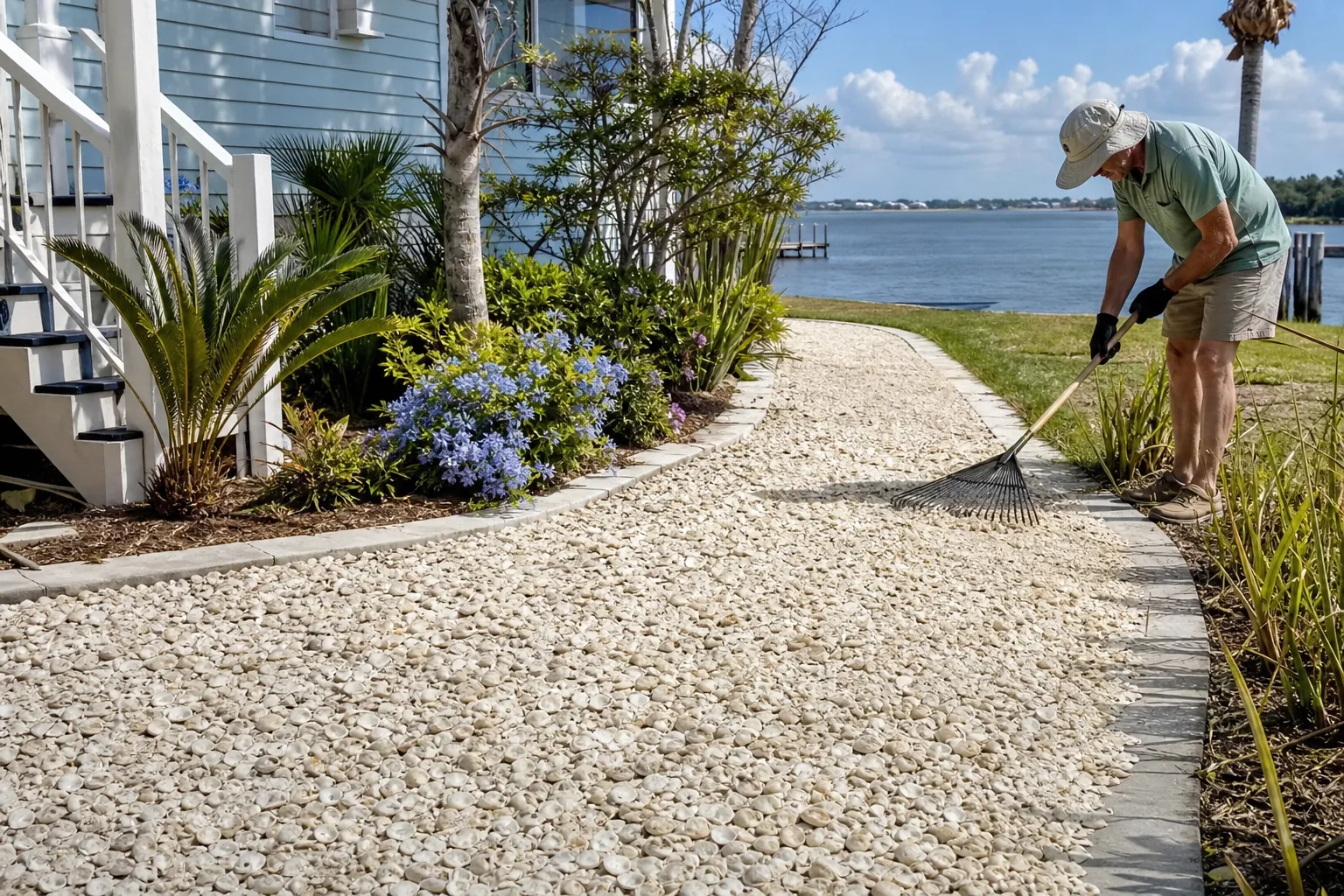
For coquina shell grass clipping removal, start with gentle, dry methods; pick up thick clumps by hand, then test a soft broom or low blower setting. Keep the shell in place as you work; Tropical Yards supplies shell and plants with dump trailer delivery; it doesn’t provide yard cleanup or lawn care.
Grass clippings can hide the shell’s color and gather along lawn edges; wet piles are harder to lift without moving shell. A small test area helps you choose a safe method; this guide covers DIY care, buying shell, and planning delivery in Daytona Beach, FL.
How should you start coquina shell grass clipping removal?
Check the clippings, shell depth, and nearby plants before choosing a tool; loose, dry grass often lifts with light hand work. Damp mats need more care because shell pieces may stick to them; start at a quiet edge, then check your results before clearing the full area. Review coquina shell choices.
Look across the surface before you step onto it; notice where the grass forms thick piles or thin strands. Check for loose soil, low spots, and exposed ground beneath the shell; these signs help you avoid making a small mess worse.
Try to work when the shell surface is dry; grass that feels wet or packed may need time to dry. Don’t rush if recent rain has left the ground soft; foot traffic can press clippings deeper into a loose shell layer.
Wear gloves and closed shoes when handling shell and debris; shell edges may be sharp, and hidden objects may be hard to spot. Keep children and pets away while tools are in use; follow each tool’s safety directions.
- Lift thick grass clumps by hand before trying to sweep the shell surface.
- Test your chosen tool on a small patch away from doors and parked cars.
- Stop if shell pieces shift, scatter, or expose the ground below.
- Place collected clippings in a container rather than moving them onto another shell area.
Work from the outer edge toward a clear collection point; that reduces the chance of walking over grass you’ve already gathered. Keep your tools close so you don’t cross the bed often; short work sessions can make a large area easier to manage.
Decide what a clean surface means for your yard; removing every tiny strand may disturb more shell than it helps. Focus first on dense clumps and visible bands along the lawn; a few small pieces may be less urgent than a thick mat.
Which tools can lift clippings without scattering shell?
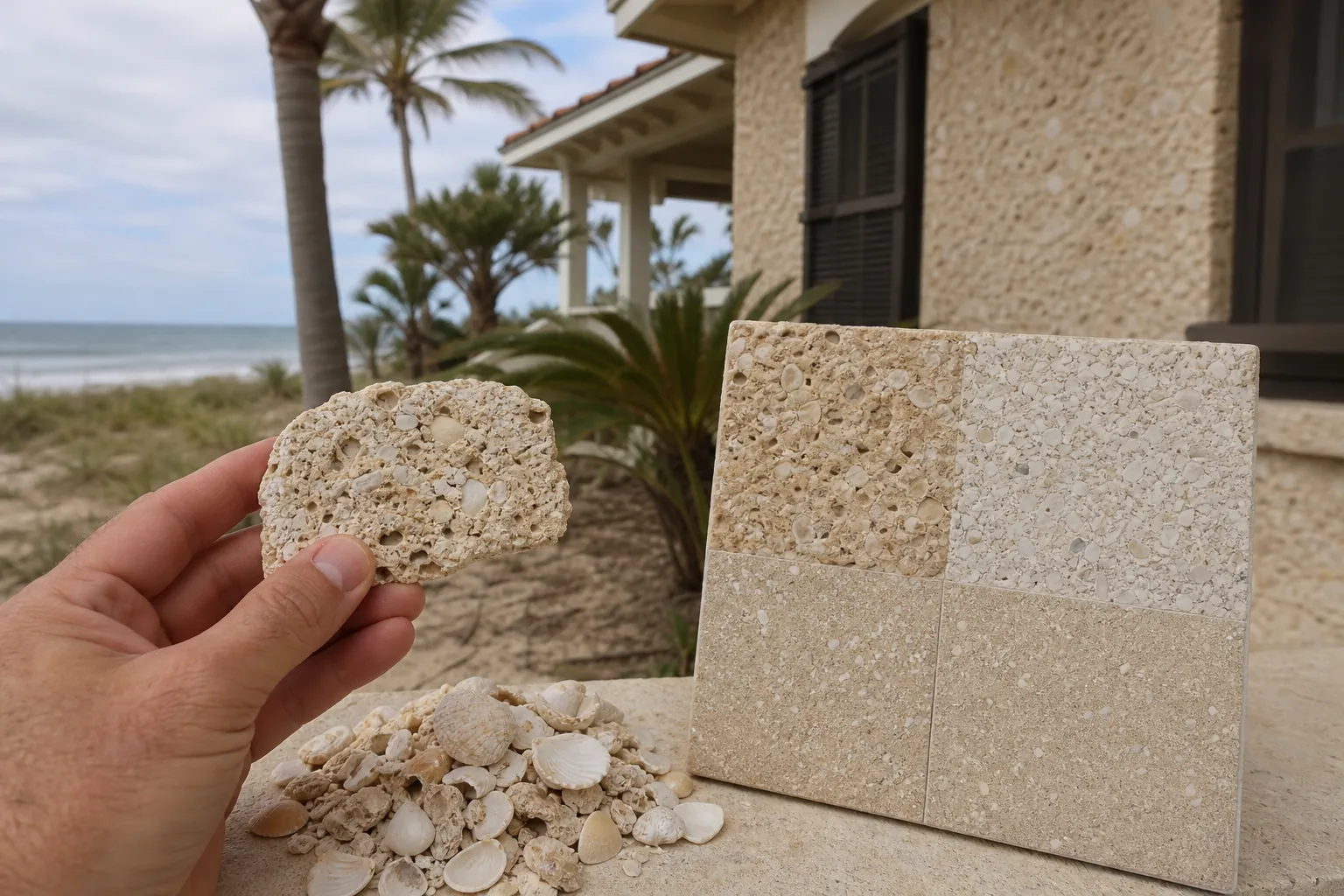
A gloved hand, soft broom, and blower on a low setting offer different options; use the lightest method that works on your test patch. Avoid digging into the shell with stiff rake teeth; if any tool moves the shell, change your angle, reduce force, or stop using it. Review coquina shell choices and dump trailer delivery planning.
Hand pickup gives you the most control around plants and borders; lift each clump slowly, then shake off loose shell over the bed. Don’t pull hard on grass caught around stems; free it gently so the plant and shell stay in place.
A soft broom may help with light grass on a firm surface; hold it at a low angle and use short strokes. Sweep across the top rather than pushing down into the shell; stop if shell starts to gather ahead of the broom.
A blower needs extra care around loose shell; begin on its lowest useful setting and keep the nozzle back. Aim across the surface instead of straight down; never aim toward people, pets, windows, cars, or the street.
If air moves the shell along with the grass, that method isn’t suitable; switch to hand pickup for that patch. Small shell pieces and fine material can move more easily than expected; wear the eye and hearing protection listed in the tool instructions.
Don’t assume a yard vacuum will sort grass from shell; loose pieces may enter the machine with the debris. Check the manufacturer’s instructions before using any pickup tool near stone or shell; hand collection is a better choice when debris and shell are mixed.
Strong water spray is usually a poor first choice for loose shell; it can shift material and push grass toward drains or plant bases. Washing also leaves wet clippings behind in some spots; try controlled dry pickup before reaching for the hose.
What should you do with wet or packed grass clippings?
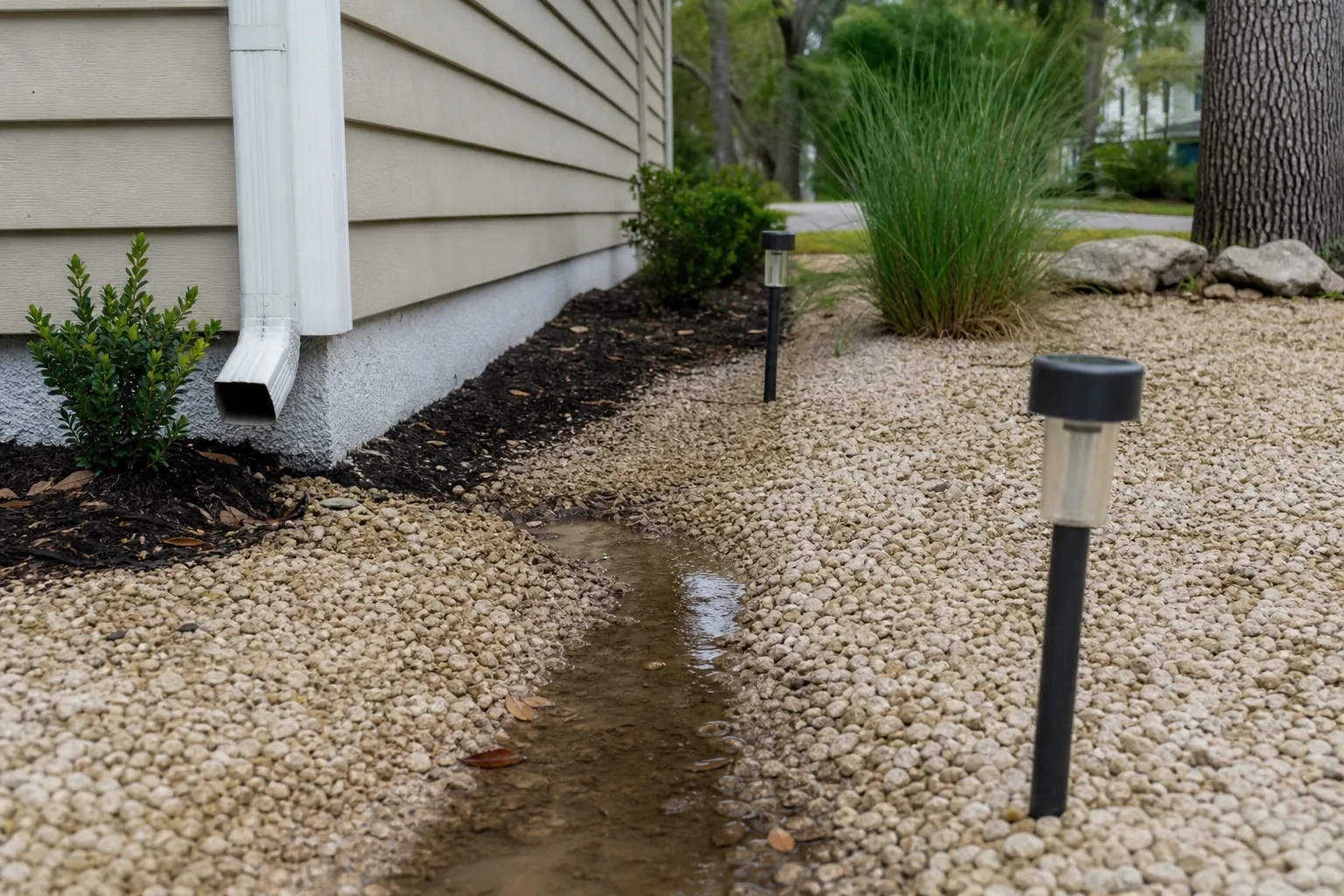
Lift wet grass in small portions rather than dragging one large mat; let loose surface moisture dry when practical, then reassess the area. Remove shell pieces caught in each handful before collecting the grass; don’t bury a thick grass layer beneath fresh shell to hide the problem. Review coquina shell choices.
Wet clippings can bind together and trap bits of shell; pulling the whole mat at once may leave a bare patch. Start at one edge and loosen small sections with your fingers; a slow approach gives you more control over what comes out.
If the mat sits around a plant, check the stem first; avoid tugging on grass wrapped around new growth or low branches. Use gentle hand work and leave roots undisturbed; you don’t need to dig into the bed to lift surface grass.
Keep collected grass off the shell while you finish; a bucket or suitable yard bag helps contain loose strands. Don’t leave full bags leaning against delicate plants; keep the collection spot clear of doors, paths, and delivery access.
Check local yard waste rules before setting clippings out for pickup; those rules may cover containers, collection days, and mixed material. Keep shell out of the grass waste as much as possible; don’t dump clippings in drains, waterways, or public spaces.
Some homeowners compost grass as part of a home compost plan; use care with clippings from lawns treated with products. Read the product label before choosing how to reuse that grass; if the label limits reuse, follow those limits.
After lifting the wet pile, inspect the shell underneath; a small surface gap may only need gentle leveling by hand. Deep ruts or soft ground need a closer look before adding material; extra shell won’t explain why the ground has sunk or stayed wet.
How can you keep lawn clippings out of shell areas?
Keep the mower’s discharge pointed away from shell when the mower allows it; follow its manual and use approved collection equipment when suitable. A clear lawn edge can help you spot buildup early; after mowing, remove fresh clumps before they get pressed into the shell or soaked by rain. Review coquina shell choices and dump trailer delivery planning.
Look at where the grass enters the shell bed; it may collect along one long edge or near a tight turn. That pattern can show which mowing pass creates the mess; change your route only when it remains safe for the mower and ground.
Never remove a discharge guard to direct grass more easily; don’t block the opening with a homemade cover. Use only the mower settings and parts allowed by its maker; shell can become a thrown object if the mower reaches it.
- Keep mower wheels on stable lawn rather than letting them drift onto loose shell.
- Point approved side discharge away from shell beds during safe mowing passes.
- Collect fresh grass piles soon after mowing when conditions allow safe hand work.
- Check lawn edges for stray shell before the next mowing session begins.
- Keep string trimmers from striking shell pieces near plants, paths, and borders.
An edge or border may help separate the two surfaces; its usefulness depends on the layout, height, and ground conditions. Choose any border with safe foot traffic and mower clearance in mind; this is a DIY planning choice, not a Tropical Yards installation service.
Don’t build a tall shell ridge along the lawn to catch grass; it can spill into the mower’s path or narrow a walkway. Keep the edge easy to see and inspect; move stray shell back by hand when it is safe.
In Daytona Beach, outdoor plans may change with rain and wind; check conditions before mowing or clearing loose debris. Avoid blowing grass on windy days when you can’t control its path; small changes in timing can reduce repeat work.
When does a shell area need a top-up?
Consider a top-up after removing grass and checking the shell beneath it; thin patches, uneven cover, or material lost from the area may call for more shell. First decide why the shell moved; buying more material makes sense only after you understand the area’s condition and your DIY plan. Review coquina shell choices and dump trailer delivery planning.
Grass can make a shell bed look thinner than it is; clear a few sample patches before estimating a new order. Compare the cover in high-use and low-use spots; you may find that only part of the area needs more material.
Separate a surface issue from a ground issue; a thin layer over firm ground differs from a deep low spot. If water sits there or soil keeps shifting, seek suitable advice first; adding shell alone may leave the same problem in place.
Don’t spread new shell over thick clippings, litter, or loose yard waste; clear those items before measuring what you need. Check the bed edges and nearby walking surfaces; make sure your planned level won’t block access or send shell onto the lawn.
Measure the area’s length and width, then note its shape; divide odd shapes into smaller sections you can measure. Record your current coverage and the depth you want to add; ask Tropical Yards what information is needed for a shell order.
Shell can vary in color, size, and appearance between loads; ask about the material currently available before ordering a top-up. Don’t assume a new load will look exactly like older shell; seeing current material, when possible, helps set clear expectations.
Tropical Yards offers coquina shell sales for buyer-led projects; the team can discuss an order and dump trailer delivery. Spreading, leveling, edging, and cleanup remain your responsibility or your chosen contractor’s work; keep those separate tasks in your project plan.
How should you plan a coquina shell delivery?
Start with your measurements, planned use, and a safe place to receive material; discuss access and the unloading spot with Tropical Yards before delivery. Dump trailer delivery brings shell to your property; it does not include spreading; plan your own tools, help, and time for moving the delivered shell. Review coquina shell choices.
Tropical Yards provides dump trailer delivery of plants and coquina shell from St; augustine to Daytona Beach. For a Daytona Beach order, discuss your address and access needs directly. Don’t assume every driveway or gate is suitable; the delivery plan needs a clear, agreed unloading point.
Look for low branches, narrow gates, slopes, and tight turns; note soft ground and any buried systems near the proposed drop spot. Share these details before a delivery is arranged; keep parked cars and loose items out of the agreed access route.
- Measure the shell area and keep your notes ready when discussing an order.
- Describe driveway width, gate clearance, slopes, and other access limits before booking delivery.
- Choose an unloading spot that keeps doors, drains, and public paths clear.
- Plan how you’ll move shell from the drop spot without crossing fragile plants.
- Confirm delivery details before preparing the site or arranging help for your project.
Choose a drop spot with the later DIY work in mind; a pile close to the project may reduce carrying distance. Yet access and safe unloading still come first; ask the supplier to review your preferred spot rather than making assumptions.
Keep fresh shell separate from collected clippings and yard waste; you’ll want clean material ready for your planned use. Have gloves, closed shoes, and suitable tools ready for your work; follow tool directions and avoid lifting loads beyond your comfort level.
Tropical Yards sells palm trees, hibiscus, bougainvillea, ferns, and other tropical plants; if you’re buying plants too, discuss their delivery needs when ordering. Planting and plant care remain DIY tasks or separately arranged work; leave room to handle plants without crossing the shell pile.
How can you care for shell near tropical plants?
Remove clippings near plants by hand when tools could strike stems or scatter shell; keep the plant’s base easy to inspect, and avoid piling material against it. Choose plants based on their light, space, and care needs; shell cover does not replace a suitable soil or watering plan. Review coquina shell choices and dump trailer delivery planning.
Check low leaves and branches before clearing nearby grass; a blower may push clippings deeper into dense growth. Hand pickup often gives better control in these tight spaces; take care around thorny plants such as bougainvillea, and wear suitable gloves.
When planting yourself, plan the planting space before spreading shell nearby; keep shell out of the hole’s soil unless sound plant guidance supports its use. Different plants have different needs for moisture and drainage; ask questions about the plant you’re buying rather than using one rule for all.
Palm trees, hibiscus, bougainvillea, and ferns can serve different yard goals; their care needs also vary by type and growing conditions. Tropical Yards supplies plants, but does not design or plant yards; choose with your site in mind and arrange your own planting work.
Check shell edges during your regular DIY plant care; lift grass clumps before they hide stems or cover the bed. Keep the surface tidy without digging around roots; small, careful checks are often easier than clearing a long-neglected pile.
Frequently asked questions
Can I use a leaf blower on coquina shell?
You can test a low setting on a small patch; keep the nozzle back and aim across the surface. Stop if shell shifts or flies; follow the tool’s safety directions, and use hand pickup where loose shell makes blowing unsafe.
Should I cover grass clippings with new shell?
Remove thick clippings before adding fresh shell; covering them hides the debris rather than clearing it. Once the surface is clear, inspect the remaining layer; then decide if you need more shell or simply need to level a small patch.
Does Tropical Yards remove grass clippings?
No; Tropical Yards supplies coquina shell and tropical plants, with dump trailer delivery. It does not clean up yards, maintain lawns, or install shell; you’ll need to handle clipping removal yourself or arrange that work with a separate provider.
Can I order shell and tropical plants together?
Ask Tropical Yards about ordering both and planning delivery; plant categories include palms, hibiscus, bougainvillea, ferns, and other tropical plants. Confirm your plant choices and delivery details directly; plan your own shell spreading and planting work after the materials arrive.
What should I know before calling about a top-up?
Have the area’s measurements, current condition, and intended use ready; describe access and your preferred unloading spot. Ask about current shell material and delivery planning; clear clippings first so your estimate reflects the shell you need, not debris covering the surface.
Ready to discuss a coquina shell order for your Daytona Beach project? Call Tropical Yards at 772-267-1611. Ask about shell, tropical plants, and dump trailer delivery. Plan cleanup, spreading, and planting as your own separate work.
UF/IFAS guidance on landscape mulch does not recommend shells as mulch in planted garden beds. Shell does not add nutrients or improve soil water storage. Consider organic mulch around plants and assess shell separately for decorative surfaces or pathways. The UF/IFAS walkway guide discusses material selection and keeping loose surfaces contained.
Call 772-267-1611 to talk through next steps.