How Thick Should a Coquina Shell Driveway Be? Depth Guide for Northeast Florida
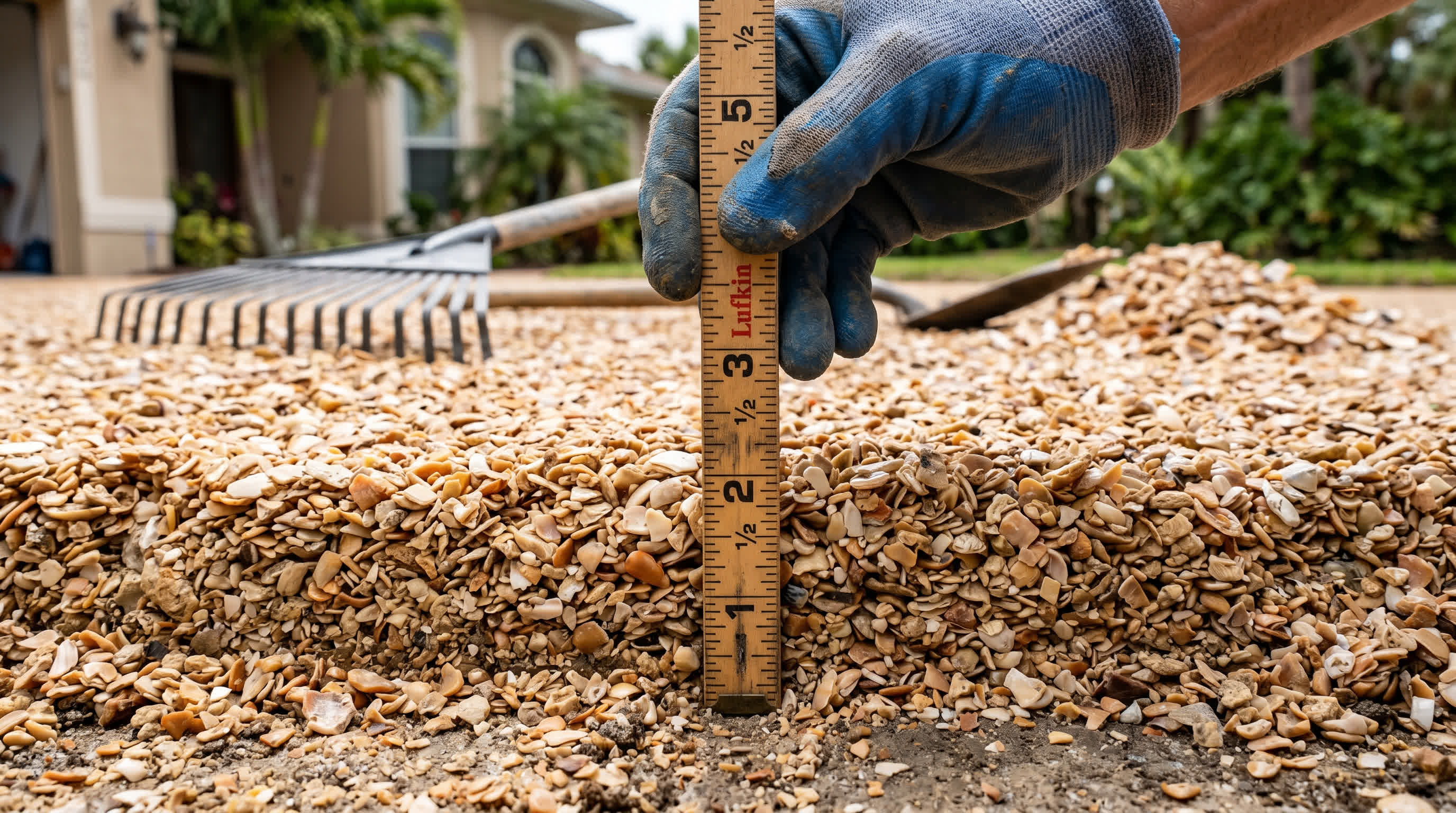
Most Northeast Florida coquina shell driveways perform best with a compacted surface layer thick enough to fully cover the base and still shed water. If your soil is loose sand, you have heavy turning traffic, or you want a firmer surface, you may need additional base prep and extra depth in high-stress zones.
Key takeaways
- Thickness changes by soil, base stability, and traffic patterns.
- Add extra structure where tires turn, stop, and accelerate.
- A flat, well-compacted base reduces how much coquina you need long-term.
- Edging keeps installed depth consistent by preventing shell loss at borders.
- Expect settling; a light top-off after the first rainy season is normal.
- If water flows across the driveway surface, fix grading before adding depth.
Table of contents
- What is the recommended coquina shell driveway depth in Northeast Florida?
- How do you estimate how much coquina you need for a driveway?
- Do you need a base layer under coquina shell?
- Should coquina thickness change in different parts of the driveway?
- How much does coquina shell settle after installation?
- What are the signs your coquina layer is too thin (or too thick)?
- Delivery pricing in Northeast Florida
- FAQ
What is the recommended coquina shell driveway depth in Northeast Florida?
Aim for a compacted coquina surface layer that fully covers the base and stays intact after heavy rain. Because soils vary from deep sand to mixed fill, the right thickness is about a stable system rather than one measurement.
- coquina shell driveway depth
- how many inches coquina driveway
- coquina shell driveway St. Augustine
- coquina shell driveway Flagler County
- coquina driveway compaction
If you already have a stable driveway that’s graded correctly, you can often refresh it with a thinner coquina layer.
If you have ruts, soft spots, or ponding water, repair the foundation first or the shell will disappear into low areas.
For a broader overview, see our coquina shell guide.
How do you estimate how much coquina you need for a driveway?
Measure length and average width, choose target depth, convert volume to cubic yards, then add a buffer for settling. Your buffer should be larger if the base is uneven or you expect significant compaction after installation.
- coquina shell cubic yards driveway
- calculate driveway material Florida
- coquina shell delivery estimate
- dump trailer coquina quantity
- driveway depth to cubic yards
Compute square footage (length × average width). Multiply by depth in feet to get cubic feet, then divide by 27 for cubic yards.
Plan more material in low spots, transitions, and turning zones.
For access and load notes, review our delivery options page before scheduling.
Can I just add another load of coquina to fix ruts?
Sometimes, but ruts usually mean the subgrade is soft or the base is uneven. Adding shell without base work often becomes a repeating cycle after heavy rains.
Do you need a base layer under coquina shell?
Often yes—especially on loose sand, soft fill, or driveways that rut during rainy season. A base layer spreads weight and prevents shell from mixing down into the subgrade.
- base layer under coquina shell
- geotextile for shell driveway
- coquina driveway rutting fix
- driveway base St. Johns County
- shell driveway stabilization
If your driveway is firm when dry but soft when wet, the subgrade is the issue. Adding more shell is usually short-term.
Common approaches include separation fabric, a compactable base aggregate, and then coquina as the finished surface.
Edging is part of the system because it keeps installed depth consistent during storms.
Want coquina shell delivered this week?
Tell us your driveway size, base condition, and neighborhood, and we’ll quote material + dump trailer delivery anywhere from St. Augustine to Daytona.
Get a Free Quote Call 772-267-1611Should coquina thickness change in different parts of the driveway?
Yes—reinforce turning and braking zones, then keep straight runs consistent. Driveways fail where forces concentrate: the garage apron, street entrance, and sharp turns.
- coquina driveway turning zones
- shell driveway garage apron
- coquina driveway street entrance
- driveway rut prevention Florida
- coquina shell compacted depth
If you only add thickness in straight sections, you still rut where you actually drive.
A better plan is stronger base prep in high-stress zones plus slightly more surface depth.
If you’re adding beds along the drive, keep the shell grade slightly lower than the edging so shell doesn’t wash into plantings.
Do you compact coquina with a plate compactor?
A plate compactor can help on flatter areas, but compaction should match base design and moisture conditions. Over-compacting wet areas can push material outward.
How much does coquina shell settle after installation?
Expect settling in the first season as fines lock in and rain helps compact the surface. That’s normal, and it’s why a small buffer load or a later top-off is smart.
- coquina shell settling
- compact coquina driveway
- coquina fines lock in
- shell driveway top off
- coquina driveway rainy season
Fresh shell is fluffier than the finished surface. Small particles fill voids and the driveway becomes firmer.
If you install right before rainy season, you may see the driveway tighten quickly, but edges can lose material without containment.
A light rake and compaction pass after early rains often makes the surface feel significantly more stable.
What are the signs your coquina layer is too thin (or too thick)?
Too thin shows base bleed-through and rutting; too thick can feel loose and shift under tires. The goal is a surface that’s compacted enough to walk on comfortably but still drains.
- coquina driveway too thin
- coquina driveway base showing
- coquina driveway too loose
- shell driveway rutting
- fix coquina driveway washout
If you can see dark base aggregate or sand in multiple spots, the layer is too thin or has migrated.
If the driveway feels like deep beach sand, it may be too thick without enough compaction.
If you want an installation walkthrough, use our DIY guide on how to install a coquina shell driveway.
How do I keep coquina from washing into the street?
Containment and grading: install edging, ensure the driveway crowns or slopes to controlled drainage, and keep the street apron firm so water can’t carry shell outward.
What are the most common coquina driveway mistakes in coastal Northeast Florida?
The most common mistakes are skipping edging, ignoring drainage, and installing shell over organics. Those three issues cause nearly every early washout or rut problem we see in St. Augustine, Ponte Vedra, and Flagler County.
- coquina driveway mistakes St. Augustine
- shell driveway washout fix Flagler
- coquina driveway edging importance
- driveway drainage coastal Florida
- shell driveway base failure
DIY installs often look great on day one because coquina is bright and hides minor unevenness. After the first few heavy rains, the surface reveals where the base is soft or where water is crossing the driveway. If you see channels, don’t just add more shell—redirect the water and firm up the subgrade so the surface can stay where you put it.
Transitions are the other overlooked detail: the street apron and the garage threshold take concentrated force and determine where water exits. A little extra base structure and slightly more surface depth in those zones usually prevents years of ongoing touch-ups.
Delivery pricing in Northeast Florida
Dump trailer delivery is priced by area, and we’ll confirm access (gate codes, turning radius, overhead clearance) before scheduling.
| Delivery Area | Dump Trailer Delivery Price |
|---|---|
| St. Augustine | $250 |
| Ponte Vedra | $275 |
| Palm Coast | $300 |
| Flagler Beach | $300 |
| Ormond Beach | $350 |
| Daytona Beach | $375 |
If you’re still comparing materials or planning a refresh, start with our coquina shell complete guide and our bulk coquina shell page for availability.
Ready for a quote? Use our contact us form and include approximate driveway measurements and your city.
For more ideas using coquina in Northeast Florida landscapes, see coquina shell complete guide.
FAQ
What depth is best for sandy soils?
Sandy soils often need separation and base support so coquina doesn’t migrate downward. A stable base can reduce the surface depth you need.
Do I need geotextile fabric?
Geotextile helps when subgrade is soft or you want to reduce mixing between shell and sand. It’s most valuable in problem spots.
How often will I need to top off?
Many driveways need a small top-off after the first season, then only occasional touch-ups depending on traffic and storms.
Can coquina be used on a sloped driveway?
Yes, but slopes increase migration risk. You typically need stronger edging and careful grading so water does not flow down the driveway surface.
Is coquina okay under RVs or trailers?
It can work if the base is engineered for the weight. Without a strong base, heavy loads can create depressions.
Do you deliver to Palm Coast and Ormond Beach?
Yes—delivery is available across Northeast Florida with destination-based pricing.
Get the Best Prices in Northeast Florida
125+ tropical plant varieties and bulk coquina shell delivered by dump trailer to Marsh Landing and all Ponte Vedra communities.
Get a Free Quote Call 772-267-1611