2026-04-07
Tropical Plants for Sale Near Downtown St. Augustine — Local Pickup & Delivery
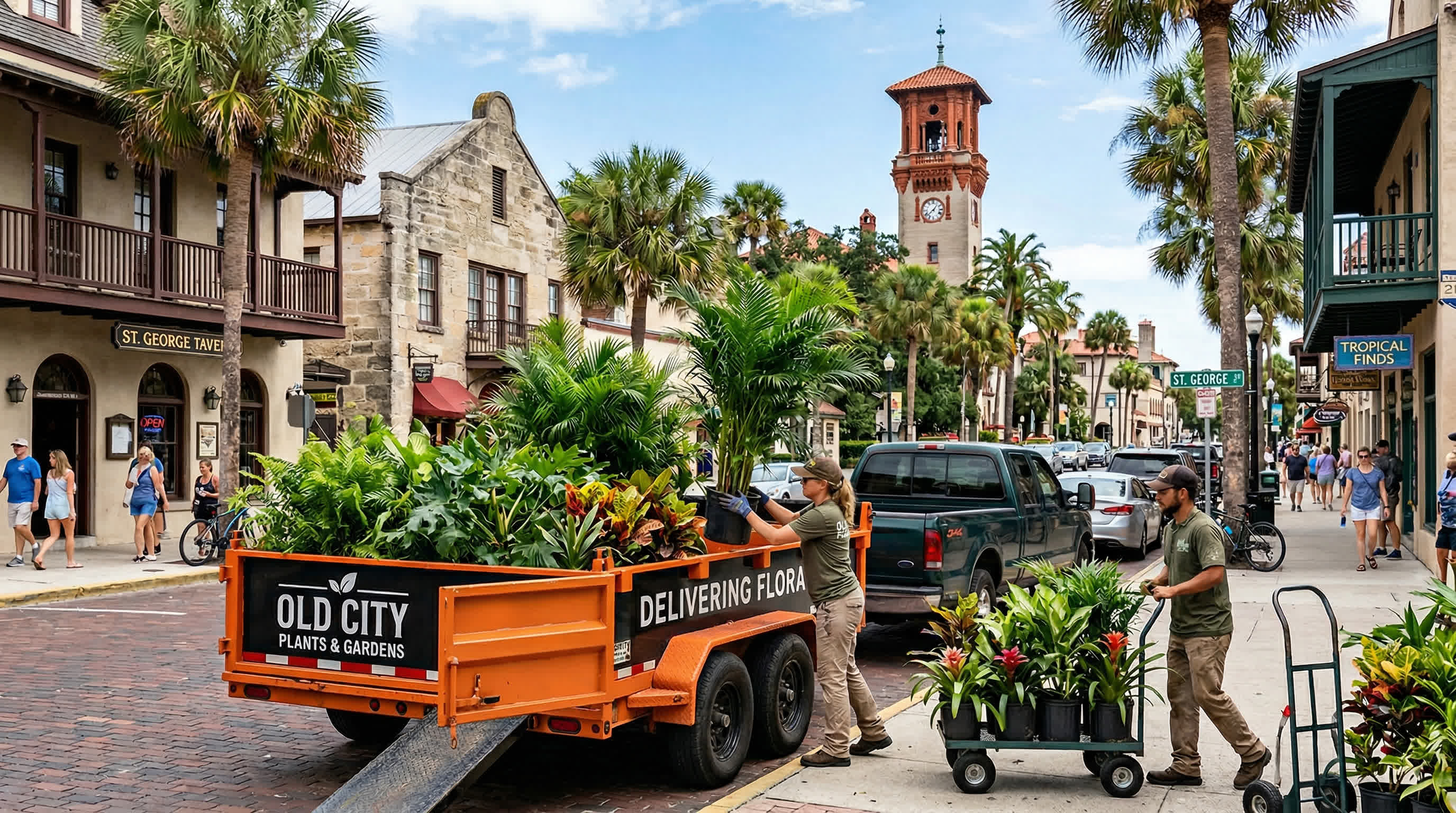
Downtown St. Augustine is unlike any other city in Florida. The historic district, with its Spanish Colonial architecture, brick-paved streets, centuries-old fortifications, and canopy of live oaks draped in Spanish moss, creates a landscape setting that is at once iconic and deeply personal for the homeowners who live here. Adding tropical plants to a property in Lincolnville, Abbott Tract, Fullerwood Park, Uptown, or North City isn't just about improving curb appeal — it's about extending the tropical richness of Florida's best climate into the intimate scale of historic neighborhood yards. This guide covers everything homeowners in downtown and near-downtown St. Augustine need to know about finding, buying, and getting tropical plants delivered to their properties.
St. Augustine's Downtown Neighborhoods: A Landscape Overview
Each of the historic neighborhoods surrounding downtown St. Augustine has a distinct character that shapes the landscape opportunities and constraints for homeowners. Understanding your neighborhood's specific conditions helps you make better plant choices and get the most from your landscaping investment.
Lincolnville
Lincolnville — one of St. Augustine's most historically significant neighborhoods, founded in 1866 by formerly enslaved people and later the site of key Civil Rights Movement events — spans 45 blocks on the southwest peninsula of the city. Properties here range from Victorian-era homes with ornate front porches to modest bungalows, most sitting on standard city lots with front and back yards of modest size.
The dominant landscape feature in Lincolnville is the mature oak canopy. Ancient live oaks line many streets and overhang many yards, creating deep, dappled shade that limits sunlight for sun-loving plants like hibiscus and bougainvillea. The shade is actually a gift for tropical gardeners: it creates perfect conditions for lush, layered tropical shade gardens featuring ferns, bromeliads, ornamental gingers, elephant ears, and ti plants. The protected microclimate under large oaks also tends to run warmer on cold nights, extending the effective growing zone for marginally hardy exotics.
Where south-facing sun exposure exists — on the sides of properties away from large oaks, in open front yards, on south-facing garden beds — full-sun tropicals thrive. A palm tree planted in an open sunny spot in a Lincolnville yard creates a striking contrast with the historic architecture behind it and the ancient oaks around it.
Abbott Tract
Abbott Tract is one of St. Augustine's most architecturally intact historic neighborhoods, roughly bounded by Matanzas Bay, Pine Street, San Marco Avenue, and Shenandoah Avenue. It is listed on the National Register of Historic Places and features beautiful Victorian and Colonial Revival homes dating back to the late 19th and early 20th centuries. Lots are typically small by modern standards — often 50 to 75 feet wide — and properties face narrow streets with limited setbacks.
Landscaping in Abbott Tract calls for plants that provide maximum visual impact at close range and stay appropriately scaled to the small yard dimensions. Dwarf Pygmy Date Palms planted flanking a front gate or entry walkway add tropical elegance without overwhelming a small front yard. Compact hibiscus, container bougainvillea trained on a fence or trellis, and low bromeliads used as edging all work beautifully here. For ground cover in Abbott Tract's shaded beds, coquina shell at $145/yard is historically appropriate — it echoes the shell-based construction materials that have been used in St. Augustine since the 17th century — and dramatically low-maintenance.
Fullerwood Park
Fullerwood Park, located just north of the historic core, features homes from the early 20th century on slightly larger lots than Abbott Tract, with generous front yards and backyards that allow for more ambitious tropical landscaping. The neighborhood has a quieter, more residential feel than the tourist-heavy historic district but is minutes from downtown. Many properties here have established landscapes that benefit from targeted tropical upgrades: replacing tired foundation shrubs with hibiscus and crotons, adding palms as specimen plants in open lawn areas, or creating a dedicated tropical garden in a sunny backyard corner.
Fullerwood's lots often include generous rear yard space with good southern exposure — ideal for bougainvillea on a back fence, a small tropical garden featuring bird of paradise, plumeria, and ornamental gingers, or a palm grove that transforms a flat, boring back lawn into a private tropical retreat.
Uptown
Uptown St. Augustine extends from the historic Abbott Tract to the iconic Fountain of Youth Archeological Park, stretching along San Marco Avenue with boutique shops, art galleries, antique stores, and local eateries. The residential streets behind and around San Marco Avenue feature historic homes on a range of lot sizes, with the area known for its walkability and mix of architectural styles from the 1800s through the 1920s.
The Uptown neighborhood benefits from its proximity to the water — the Matanzas River and the coast are nearby, moderating temperatures and reducing cold extremes. Homeowners in Uptown often find that their tropical plants survive winters with less damage than those in more inland locations, a direct benefit of the urban heat island effect combined with coastal moderation. This means more adventurous plant choices — plumeria in the open garden, bird of paradise in front-yard beds — are more feasible here than in the outlying areas of St. Johns County.
North City
North City is a distinct neighborhood character defined by its views and access to the water. The Vilano Causeway runs through the northern edge of the neighborhood, providing views of the Tolomato River and the marina. Homes here range from modest historic cottages to more substantial properties, and the neighborhood has a maritime character that suits tropical landscaping perfectly.
The proximity to water in North City means salt air is a factor — not the intense salt exposure of oceanfront properties on Anastasia Island, but enough that salt-tolerant species are a good idea for the most exposed spots. Hibiscus, Sabal palms, and bougainvillea all handle salt air well. The tropical atmosphere of a North City yard — boats visible from the back yard, the smell of the river, palms rustling in the breeze — is one of the most complete Florida tropical experiences available.
The Unique Landscape Conditions of Downtown St. Augustine
Historic downtown properties present landscape conditions that differ from newer suburban construction in several important ways:
Mature Tree Competition
Large live oaks and other mature trees that are common throughout the historic district create root competition, shade, and reduced soil moisture in their vicinity. When planting tropical specimens near established trees, choose shade-tolerant species, amend the soil more generously to compensate for root competition, and water more frequently during the establishment period.
Small Lot Dimensions
Historic downtown lots average 40–80 feet wide versus 80–150 feet for typical suburban lots. Every plant choice must account for mature size — a Sabal palm that's charming at 6 feet can become problematic at 25 feet in a small yard. Plan for mature dimensions at planting time, using smaller or slower-growing species where space is genuinely limited.
The Urban Heat Island Effect
Downtown St. Augustine's brick streets, masonry buildings, and dense construction create an urban heat island that raises minimum temperatures by several degrees compared to surrounding rural areas. This is a genuine benefit for tropical landscaping — it effectively pushes the downtown core closer to zone 10a in practice, allowing many plants rated for warmer zones to succeed here. Historic masonry walls in particular absorb and radiate heat, creating warm microclimates directly adjacent to them that can protect cold-sensitive tropicals on all but the coldest nights.
Sandy Native Soil
St. Augustine's soil — sandy, well-draining, low in organic matter — is typical throughout the city. In areas with heavy root competition from large oaks, soil can be drier and more nutrient-depleted than in open areas. Soil amendment with compost at planting time, combined with regular fertilization, is more important in these locations than in open, suburban settings.
Plant Recommendations by Neighborhood Condition
For Deep Shade Under Mature Oaks
The shaded zones under St. Augustine's magnificent live oaks are challenging but beautiful planting opportunities. The best performers:
- Tropical ferns ($17.99): Macho ferns, Boston ferns, and holly ferns thrive in deep shade and create an instantly lush tropical carpet. These are among the best plants for the challenging zone directly beneath large oaks.
- Bromeliads (Neoregelia, Aechmea): Cold-tolerant, shade-loving, and spectacular. A planting of mixed Neoregelia under a large oak creates a colorful, low-maintenance ground display that fills in over time as plants multiply.
- Ornamental gingers: Shell ginger (Alpinia zerumbet) handles shade well and grows dramatically — 6–8 feet — creating tropical scale even in dim conditions.
- Caladiums: For seasonal color in deep shade, caladiums are unmatched — enormous patterned leaves in red, white, and pink combinations that glow in the shade garden from spring through fall.
For Part-Shade to Morning-Sun Exposures
- Hibiscus ($26.99): While hibiscus prefers full sun, it will bloom in dappled morning sun conditions, producing flowers even with 4–5 hours of direct light. East-facing beds with morning sun are viable for hibiscus.
- Ti plants (Cordyline): Tolerant of partial shade, and their vibrant foliage colors — burgundy, red, pink, variegated — provide year-round color in conditions where flowering plants underperform.
- Elephant ears (Alocasia/Colocasia): Spectacular tropical scale plants that tolerate and even prefer partial shade with consistent moisture.
For Full-Sun Spots (South-Facing, Open Areas)
- Palm trees (from $25.99): The definitive full-sun tropical. Even a single palm in the sunniest spot of a downtown St. Augustine yard transforms the entire property's character.
- Bougainvillea ($26.99): Against a south-facing fence or wall in full sun, bougainvillea reaches its peak performance — masses of brilliant color and vigorous growth. It also provides privacy as it fills in along fences.
- Plumeria: Full sun, excellent drainage, and the urban heat island of downtown St. Augustine make this an achievable plant even in what would seem like zone-stretching territory. Plant against a south-facing wall with good drainage for best results.
- Crotons: Maximum foliage color in full sun, growing quickly into dense multi-color shrubs that work beautifully as foundation plantings, dividers, and privacy screens.
Delivery to Downtown St. Augustine and Surrounding Neighborhoods
Tropical Yards delivers via 14-ft dump trailer directly to properties in Lincolnville, Abbott Tract, Fullerwood Park, Uptown, North City, and the Historic District. The St. Augustine flat delivery fee of $250 covers the entire city area regardless of neighborhood. Call 772-267-1611 to schedule, discuss your project, and confirm current plant availability.
A few practical notes for downtown delivery:
- Street access: Some historic district streets are narrow or have overhead obstructions (low-hanging oak branches, utility lines). When scheduling delivery, discuss street access with our team to ensure the dump trailer can reach your property safely.
- Combine plants and coquina shell: The most efficient delivery includes both plants and coquina shell ($145/yard) in the same order. This maximizes the value of the $250 flat delivery fee and means your bed prep and planting can be completed in one day.
- Parking and property access: In tight historic district properties, discuss access to your garden area when scheduling. We can advise on optimal placement and delivery logistics for your specific property.
| Delivery Area | Delivery Fee |
|---|---|
| St. Augustine (all neighborhoods) | $250 |
| Ponte Vedra | $275 |
| Palm Coast | $300 |
| Flagler Beach | $300 |
| Ormond Beach | $350 |
| Daytona Beach | $375 |
Coquina Shell: The Historically Appropriate Ground Cover for Downtown St. Augustine
One landscape material that belongs in downtown St. Augustine above all others is coquina shell. Coquina is the material from which Castillo de San Marcos was built — the same quarried shell that has been part of St. Augustine's built environment for over 350 years. Using coquina shell as ground cover in a historic district garden isn't just a practical choice (it's durable, drainage-friendly, and low-maintenance) — it's historically resonant.
At $145 per cubic yard, coquina shell creates permanent, beautiful beds that complement St. Augustine's Spanish Colonial architecture perfectly. The warm cream and tan tones of the shell against the deep green of tropical foliage and the weathered wood and stucco of historic homes is a visual combination that looks as if it's always belonged here. More practically, coquina shell won't float away in St. Augustine's summer rains, won't provide habitat for termites the way wood mulch can, and won't need replacing every year. Install it once, top it off every few years, and it remains attractive indefinitely.
For a typical 200-square-foot bed at 3 inches depth, you need approximately 1.85 cubic yards of coquina shell — roughly $270 in material. For most downtown St. Augustine properties, a complete landscape transformation with plants and coquina shell can be accomplished with a single delivery.
Landscaping Ideas for Specific Downtown St. Augustine Property Types
Victorian Homes (Abbott Tract, Lincolnville)
The ornate detailing of Victorian homes calls for a rich, layered tropical planting that echoes the architectural complexity of the structures. Think multiple hibiscus varieties in complementary colors along a front fence, bougainvillea trained to arch over a gate, dwarf palms flanking the front steps, and a rich carpet of ferns and bromeliads filling the shaded areas under the porch eaves and large trees. Coquina shell paths between beds add historical authenticity and practical walkability.
Craftsman Bungalows (Fullerwood, Uptown)
Craftsman bungalows typically sit on somewhat larger lots with simple, clean lines that benefit from tropical planting used as bold color masses rather than fussy mixed borders. A row of matching hibiscus along the front of the property provides a unified, colorful welcome. A single large palm anchored in the center of the front yard creates a focal point that the clean bungalow lines can play off beautifully. Bougainvillea rambling over a simple fence or arbor fits the relaxed, craftsman aesthetic perfectly.
Cottages and Smaller Homes (North City, Uptown Side Streets)
Small cottage properties benefit from plants that punch above their weight in color and impact. A single large plumeria or bird of paradise specimen positioned where it's visible from the street creates an "anchor plant" effect — the whole property reads as a tropical showcase even if the rest of the yard is simply lawn. Surround the anchor plant with a ring of coquina shell, edge it with a few bromeliads or low ferns, and the effect is polished and intentional without requiring a large investment in plants or maintenance time.
Frequently Asked Questions
Where can I buy tropical plants near downtown St. Augustine?
Tropical Yards serves downtown St. Augustine and all surrounding historic neighborhoods including Lincolnville, North City, Abbott Tract, Fullerwood Park, and Uptown. Delivery to the St. Augustine area is $250 flat via 14-ft dump trailer. Call 772-267-1611 to discuss your project and schedule delivery. Browse our full tropical plants collection to plan your order.
What tropical plants grow well in downtown St. Augustine's historic neighborhood yards?
Downtown St. Augustine's historic neighborhoods feature mature oak canopies that create dappled shade — ideal for ferns, bromeliads, and ornamental gingers. South-facing sun exposures suit hibiscus and bougainvillea. Palms work well in open areas. The urban heat island effect in the historic district often pushes performance slightly warmer than standard zone 9b, allowing slightly cold-sensitive tropicals to thrive.
Does Tropical Yards deliver to Lincolnville and the historic district?
Yes. Tropical Yards delivers throughout the St. Augustine city limits including Lincolnville, the Historic District, Abbott Tract, Fullerwood Park, North City, Uptown, and Davis Shores. The flat delivery fee to St. Augustine is $250. See our delivery page for more information or call 772-267-1611 to schedule.
What are the best plants for a small yard near downtown St. Augustine?
For the smaller yards common in historic downtown St. Augustine neighborhoods, dwarf or columnar plants work best: Pygmy Date Palms, compact hibiscus, container bougainvillea, dwarf bird of paradise, bromeliads, and ferns. Choose plants that provide maximum color impact without outgrowing their space. Coquina shell ground cover maximizes the perceived size of small beds and adds a historically appropriate aesthetic.
How do I plant tropical plants in downtown St. Augustine's historic landscape?
Historic downtown properties often have small front yards with mature oak shade, limited bed space, and proximity to historic structures. Focus on plants appropriate for your exposure (shade plants under oaks, sun plants in open areas), avoid plants that grow too large for the space, and use coquina shell ground cover for a historically appropriate, low-maintenance aesthetic that complements St. Augustine's Spanish Colonial architecture.
Can I get tropical plant delivery to Fullerwood Park or North City St. Augustine?
Yes. Fullerwood Park, North City, and all other downtown and near-downtown St. Augustine neighborhoods are within the St. Augustine delivery zone. Flat delivery fee of $250. Call 772-267-1611 or request a quote online to schedule your delivery and discuss available plant varieties.
Delivering Tropical Plants to Downtown St. Augustine
Lincolnville, Abbott Tract, Fullerwood, Uptown, North City and all surrounding neighborhoods. Flat $250 delivery fee.