2026-04-07
Tropical Plants for Sale for St. Augustine Beach Homes — Salt-Tolerant Varieties
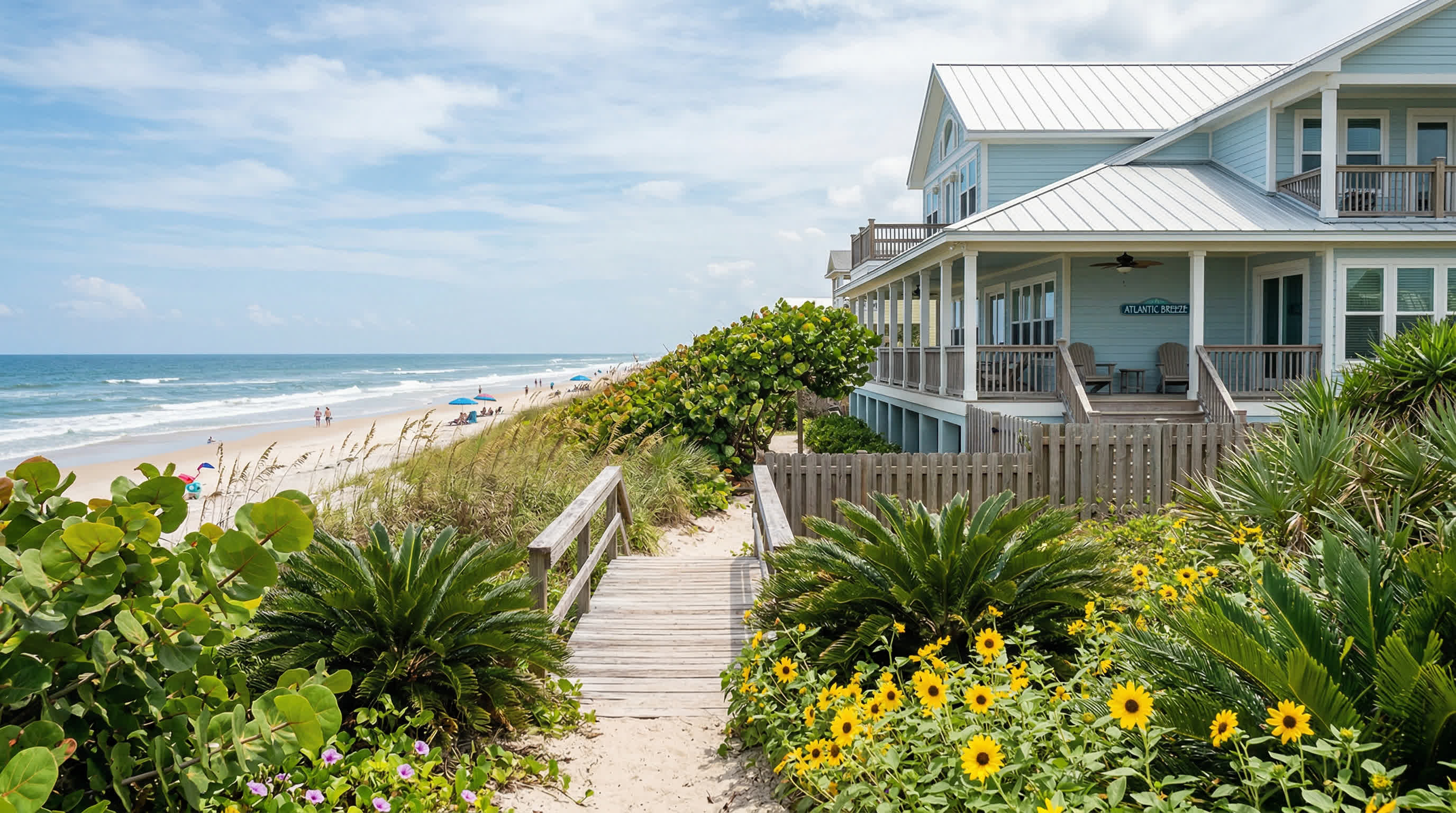
Why Beach Homes in St. Augustine Need Different Plants
If you've ever tried planting a standard nursery selection at your St. Augustine Beach or Anastasia Island home, you already know the heartbreak: brown, crispy foliage within weeks, plants that refuse to establish, and hundreds of dollars washed away with the first offshore wind. Beach landscaping in St. Johns County is a fundamentally different challenge than planting a few miles inland, and the reason comes down to three relentless forces: salt spray, sandy soil, and constant wind exposure.
Homes along A1A from Anastasia Island down through Crescent Beach and Butler Beach sit squarely in USDA Hardiness Zone 9b, which means mild winters — but also direct exposure to Atlantic salt spray year-round. Plants within a quarter mile of the ocean must be able to handle sodium-laden air that coats leaf surfaces, draws moisture out of foliage, and slowly burns tissue that isn't adapted to coastal conditions. The good news: there is a robust selection of tropical and subtropical plants that genuinely thrive in these conditions — and Tropical Yards in St. Augustine carries them.
This guide breaks down the best salt-tolerant tropical plants for St. Augustine beach homes, organized by function: screening and wind protection, colorful focal plants, ground covers, and palms. We'll also address soil preparation, watering strategy, and how to think about your property's specific salt zone — because there's a meaningful difference between planting right on the dune line versus a block back from the beach.
Understanding Salt Zones on Anastasia Island
Not all beach properties have equal salt exposure. Before selecting plants, understand where your lot falls in the coastal gradient:
- Direct oceanfront (0–100 feet from dune): Maximum salt spray, full wind exposure, pure sand. Only the most salt-tolerant species survive here long-term. Focus on native dune plants and proven coastal performers like seagrape and cabbage palm.
- Near-beach (100–500 feet): Heavy salt spray, especially during onshore winds and storms. A wider selection works here, but standard nursery tropicals will still struggle. Hibiscus, plumeria, and bougainvillea need wind protection to thrive at this distance.
- Coastal neighborhood (500 feet to half mile): Moderate salt spray, primarily from storm events. Most of the tropical plants Tropical Yards carries will do well with proper soil prep. This covers much of St. Augustine Beach's residential grid.
- Sheltered inland (half mile+): Occasional salt spray in severe storms only. Near-full range of Zone 9b tropicals available.
Most St. Augustine Beach homes on the residential streets west of A1A fall in the 200–800 foot range from the ocean — meaning moderate to moderate-heavy salt exposure depending on wind direction and tree/structure screening. Strategic windbreaks planted on the eastern side of your property will expand what you can grow on the protected western and interior portions of your yard considerably.
Best Salt-Tolerant Screening Plants
Seagrape (Coccoloba uvifera)
Seagrape is the workhorse of Florida coastal landscaping — a large-leaved coastal shrub or small tree that provides outstanding windbreak and salt protection. Native to Florida's coastline, it produces large round leaves with red veining and clusters of purple fruit that attract birds. Seagrape can be maintained as a dense hedge or allowed to reach 15–20 feet as a multi-trunk specimen. For St. Augustine Beach homes, it's one of the best choices for the eastern property line — plant a row of seagrape and it will shield everything behind it from salt spray within 2–3 growing seasons. Highly recommended for direct oceanfront exposure.
Silver Buttonwood (Conocarpus erectus var. sericeus)
Buttonwood, particularly the silver-leafed variety, is one of the toughest small trees for coastal Florida. Its silvery foliage is striking in the landscape and it tolerates direct salt spray, poor sandy soils, and extended drought once established. Buttonwood works well as a clipped hedge or a specimen small tree. Available in both green and silver forms, the silver buttonwood is a standout in coastal garden designs alongside dark-colored palms and tropical foliage.
Wax Myrtle (Myrica cerifera)
A fast-growing Florida native that handles salt spray and poor soil exceptionally well. Wax myrtle can reach 15 feet quickly and is often used for privacy screens in coastal communities. The aromatic foliage deters some insects, and the berries attract over 40 species of birds. While not a tropical plant per se, it's an excellent backbone screening plant for a St. Augustine beach yard that allows more colorful tropicals to thrive in its wind shadow.
Colorful Tropical Showstoppers That Handle Coastal Conditions
Hibiscus
Tropical hibiscus is moderately salt-tolerant when given some wind protection — it thrives beautifully in St. Augustine Beach neighborhoods one to two blocks from the ocean. The key is placement: plant hibiscus on the west or south side of your property, behind a seagrape or wax myrtle windbreak, or in a courtyard setting. Given protection from direct salt-laden wind, hibiscus from Tropical Yards will reward you with massive blooms in red, orange, yellow, pink, and peach from spring through fall. Starting from $26.99.
Plumeria (Frangipani)
Plumeria is one of the most salt-tolerant flowering tropicals for North Florida coastal properties. With high salt and wind tolerance, plumeria actually thrives in the bright, reflected heat that coastal properties generate. These small trees — reaching 12 feet at maturity — produce the iconic fragrant flowers associated with Hawaii and tropical resorts. Because they go deciduous in winter, they're also unbothered by the occasional cold snap that reaches St. Augustine Beach. Plant in full sun in well-drained sandy soil; little else is needed. Available at Tropical Yards in multiple colors.
Bougainvillea
With moderate salt tolerance and exceptional drought resistance, bougainvillea is a spectacular choice for coastal St. Augustine. The intense magenta, orange, red, or purple bracts provide months of vivid color. In beach settings, bougainvillea performs best on a wall, fence, or trellis where it has physical support and some shelter from the worst salt winds. Used this way — climbing a privacy fence or trained over a pergola — bougainvillea creates a spectacular tropical statement while keeping its foliage protected. Starting from $26.99.
Lantana
Few plants are more bulletproof for coastal St. Augustine than lantana. It handles salt, wind, poor sandy soil, drought, and Florida summer heat with complete indifference, all while producing clusters of vibrant flowers in yellow, orange, red, and mixed bicolor. Butterflies absolutely flock to lantana. It spreads readily and makes an outstanding low-maintenance ground cover for beach properties. The sterile varieties prevent invasiveness while still delivering maximum color.
Palm Trees for St. Augustine Beach Properties
The palm selection for beach properties is specific — not all palms handle salt spray equally, and choosing the wrong species for your proximity to the ocean can be costly. Here's what works best along the St. Augustine coastline:
Sabal/Cabbage Palm (Sabal palmetto)
Florida's state tree is also its most salt-tolerant palm — rated with the highest salt tolerance of any palm species in the state. You'll see them lining A1A directly on the dune line because they genuinely thrive in full ocean exposure. Cabbage palms grow slowly to 40–50 feet, are completely cold-hardy in Zone 9b, and require virtually zero maintenance once established. For direct oceanfront plantings, there is no better palm. Available at Tropical Yards from $25.99.
Windmill Palm (Trachycarpus fortunei)
Windmill palms are cold-hardy to single digits and handle salt spray well — they're excellent for Zone 9b coastal properties. Their distinctive shaggy fiber trunks and fan fronds give a dramatic tropical silhouette. They grow slowly to 20–30 feet and tolerate both full sun and partial shade, making them versatile for beach yards with variable light conditions.
Pindo Palm (Butia capitata)
The pindo palm (also called jelly palm) is one of the most cold-hardy palms available and offers moderate to good salt tolerance — perfect for St. Augustine Beach properties that are a block or two from direct ocean exposure. The silvery-blue arching fronds are beautiful, and the orange fruit is edible. This is a residential favorite across St. Johns County for good reason.
What to Avoid Near the Beach
Sylvester palms, Queen palms, and Coconut palms should NOT be planted within a half mile of direct ocean exposure in St. Augustine. Sylvesters need to be at least half a mile inland from direct salt spray. Queen palms are also cold-sensitive, making them risky in Zone 9a/9b. The 1989 freeze killed every coconut palm in the region — they're simply not the right choice for this climate.
Ground Covers for Sandy Beach Soil
Beach Sunflower (Helianthus debilis)
This sprawling native perennial is one of the best ground covers available for direct beach exposure. It produces cheerful yellow blooms nearly year-round, spreads quickly to stabilize sandy soil, tolerates salt spray, drought, and heat, and attracts pollinators constantly. Plant it along a fence line or property boundary and let it naturalize — it requires essentially zero maintenance.
Railroad Vine (Ipomoea pes-caprae)
Railroad vine is a fast-spreading coastal vine and ground cover that naturally colonizes upper beach and dune areas. Its thick, succulent-like leaves resist salt burn, and it sends runners 30+ feet across open sandy areas. It's excellent for covering large areas of exposed sandy soil on coastal properties quickly and inexpensively.
Dune Sunflower
Similar to beach sunflower but more compact, dune sunflower works as a low ground cover in sandy, sunny beds. It reseeds readily, meaning a small initial planting will spread to fill a bed within a season. No irrigation needed once established on a beach property.
Soil Preparation for Beach Properties
Sandy coastal soil is well-drained but nutrient-poor. Even the most salt-tolerant plants establish faster and perform better with some soil improvement at planting time. Recommendations for beach yards in St. Augustine:
- Amendment at planting: Mix organic compost into the backfill when planting — about 30% compost to 70% existing soil. Do NOT over-amend with clay or dense soils, which will impede the drainage that beach plants need.
- Mulch generously: Apply 3 inches of mulch around all plantings to conserve moisture, moderate soil temperature, and feed soil microbes as it decomposes. Coquina shell is an excellent alternative in coastal settings — it won't blow away like wood mulch in coastal winds, stays put after heavy rain, and has a beautiful coastal aesthetic that complements beach homes perfectly.
- Fertilize on schedule: Sandy soils leach nutrients quickly. Use a slow-release palm and tropical plant fertilizer three times per year (spring, summer, fall) to keep coastal plants healthy and resilient.
- Water establishment period: Even drought-tolerant coastal plants need regular watering for the first 90 days after planting. Once established, most listed species require minimal irrigation beyond Florida's natural rainfall.
Neighborhood-by-Neighborhood Guide: Anastasia Island to Crescent Beach
Different sections of the barrier island have slightly different conditions worth noting for plant selection:
- Anastasia Island (north end, Davis Shores area): Zone 9b, moderated by both the ocean and the Matanzas River. Slightly more sheltered on the western side of the island. Good conditions for hibiscus, plumeria, and bougainvillea with wind protection.
- St. Augustine Beach proper (around A1A beach access): Direct Atlantic exposure. Stick to proven salt-tolerant species: seagrape, cabbage palm, plumeria, lantana, beach sunflower. Hibiscus and bougainvillea need protection.
- Crescent Beach: Slightly more exposed and windswept than St. Augustine Beach's main residential areas. Focus on hardy species; buttonwood and seagrape as windbreaks, then shelter-dependent tropicals behind them.
- Butler Beach: Similar exposure to Crescent Beach. Historic African American beach community with many established yards that demonstrate what works — seagrape hedges and palms predominate on exposed lots.
Delivery Pricing to St. Augustine Beach
Tropical Yards delivers to all areas along Anastasia Island and the barrier island communities. Our 14-ft dump trailer handles large plant orders efficiently — perfect for stocking up a beach property with everything you need in one delivery.
| Delivery Area | Delivery Fee |
|---|---|
| St. Augustine (incl. Anastasia Island, St. Augustine Beach) | $250 |
| Ponte Vedra Beach | $275 |
| Palm Coast / Flagler Beach | $300 |
| Ormond Beach | $350 |
| Daytona Beach | $375 |
Call 772-267-1611 or email sleuthdesigner@gmail.com to discuss your beach property project, ask about current availability, and schedule delivery. We stock 125+ plant varieties and can advise on salt tolerance for your specific location on Anastasia Island or along the barrier island corridor. Visit our delivery page for full details, and browse our complete tropical plant selection.
Transform Your Beach Property
Salt-tolerant tropical plants delivered to Anastasia Island, St. Augustine Beach, Crescent Beach, and beyond.
Frequently Asked Questions
What are the best tropical plants for homes directly on St. Augustine Beach?
For direct beachfront exposure within 100–200 feet of the ocean, choose high-salt-tolerance species: cabbage palm (Sabal palmetto), seagrape, buttonwood, plumeria, lantana, beach sunflower, and railroad vine. These plants are adapted to handle direct salt spray, sandy soil, and constant wind. Hibiscus and bougainvillea should be planted behind a windbreak at this distance.
Can I grow palm trees at my St. Augustine Beach home?
Yes, but species selection matters. Cabbage palms and windmill palms are excellent for direct coastal exposure. Pindo palms work well a block or two from the ocean. Avoid Sylvester palms, Queen palms, and Coconut palms for direct beach properties — they are either insufficiently salt-tolerant or not cold-hardy enough for Zone 9b freezes.
How far from the ocean can I plant hibiscus?
Hibiscus is moderately salt-tolerant — it performs best when given some wind protection and is planted at least 200–400 feet from direct ocean exposure, or on the sheltered (west/south) side of a windbreak. Planted with protection, hibiscus thrives throughout St. Augustine Beach's residential neighborhoods and blooms prolifically from spring through fall.
Does coquina shell work well for beach property landscaping?
Coquina shell is an outstanding mulch choice for beach properties. Unlike wood mulch, it won't blow away in coastal winds or wash out in heavy rain. Its neutral coastal aesthetic complements beach homes beautifully, it drains perfectly in sandy soils, and it doesn't attract termites or pests. At $145/yard delivered, it's a cost-effective, long-lasting ground cover for coastal beds. See our coquina shell page for details.
What causes plants to fail at beach homes in St. Augustine?
The most common causes of plant failure at beach properties are: (1) selecting non-salt-tolerant species for exposed locations, (2) planting directly in pure sand without any organic amendment, (3) failing to water during the establishment period, and (4) not using windbreaks to protect more tender tropicals from direct salt spray. Choose the right species, prep the soil, and provide establishment irrigation, and most coastal plants will thrive.
Does Tropical Yards deliver to Crescent Beach and Butler Beach?
Yes. Crescent Beach and Butler Beach are both within the St. Augustine delivery zone at a flat $250 delivery fee. We deliver via 14-ft dump trailer and can handle large plant orders in a single trip. Call 772-267-1611 to schedule your delivery.