2026-04-07
Tropical Plants for Sale in St. Augustine, FL — Complete Buyer's Guide (2026)
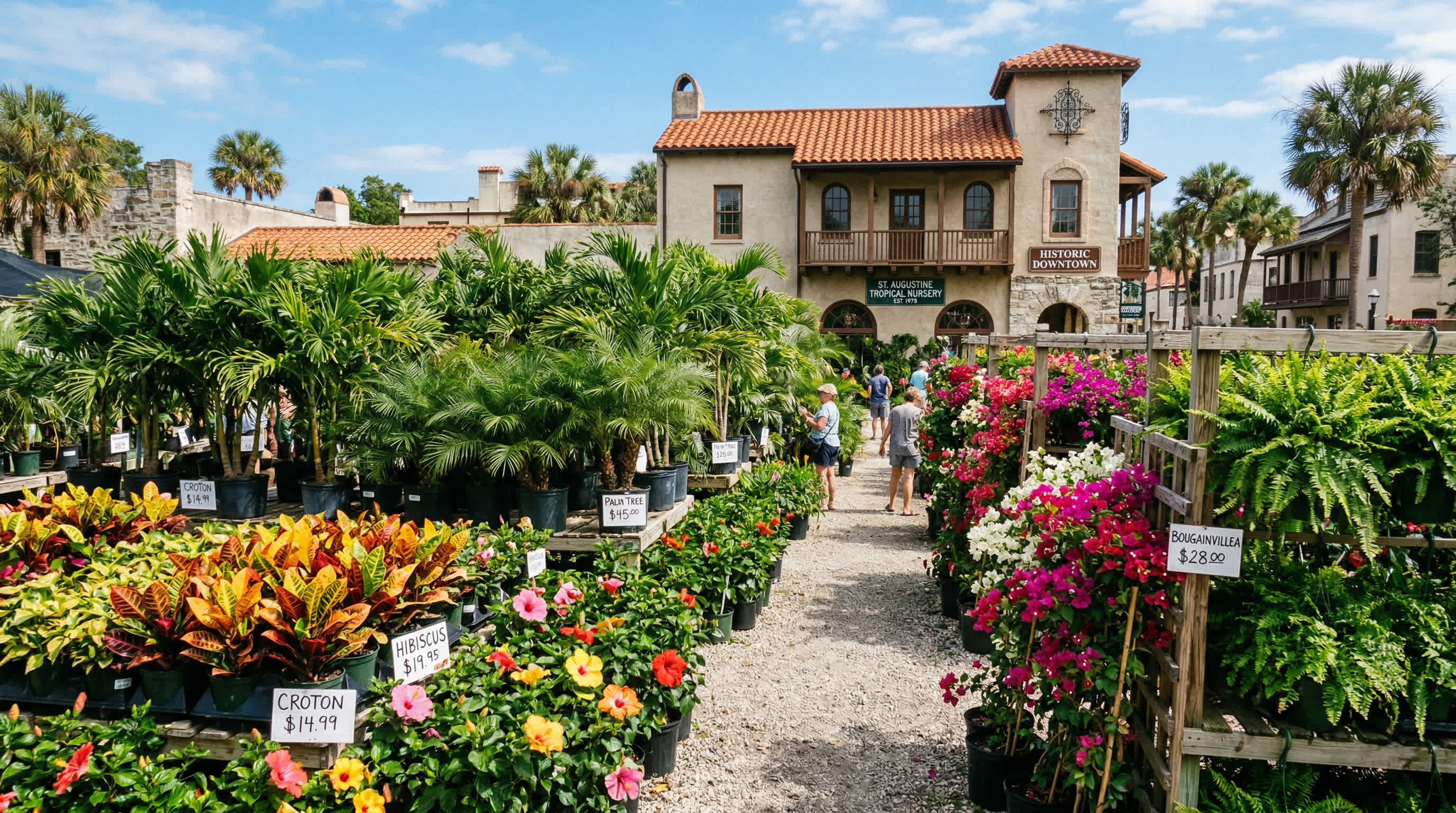
St. Augustine, Florida is one of the best places in the continental United States to grow tropical plants. Nestled in USDA hardiness zone 9b, the Ancient City enjoys long, humid summers, mild winters, and sandy soil that drains well — conditions that allow palms, hibiscus, bougainvillea, bird of paradise, plumeria, and dozens of other tropical species to thrive outdoors year-round. Whether you're starting a brand-new landscape or adding statement plants to an established yard, this complete guide covers everything you need to know about buying tropical plants in St. Augustine in 2026: plant categories, pricing, what to look for when you buy, the best time to plant, delivery options, and how to set your yard up for long-term success.
Why St. Augustine Is Perfect for Tropical Landscaping
Most of the continental United States cannot grow true tropical plants outdoors without bringing them in every winter. St. Augustine is different. Zone 9b means average annual minimum temperatures of 25°F to 30°F — cold enough to eliminate cold-sensitive tropicals during rare hard freezes, but warm enough that the vast majority of popular tropical landscape plants survive and flourish year after year.
The growing season here is nearly eleven months long. Frost is uncommon and typically light, usually occurring only in late December through February. The humid subtropical climate means rainfall is abundant from June through September, reducing irrigation demands during the hottest months. The sandy, well-drained soil common throughout St. Johns County is ideal for palms, bougainvillea, and most tropical shrubs, which prefer good drainage over heavy clay.
Add to this the fact that St. Augustine is surrounded by water on three sides — the Matanzas River, the Tolomato River, and the Atlantic Ocean — and you get a moderating microclimate that keeps the city slightly warmer than inland locations during winter cold snaps. Many homeowners in historic downtown, Lincolnville, and North City report that their tropical landscapes rarely need any winter protection at all.
Plant Categories: What's Available in St. Augustine
Tropical Yards carries over 125 varieties of tropical plants. Here's a breakdown of the major categories available for St. Augustine landscapes and what makes each one worth considering.
Palm Trees
Palm trees are the defining plant of the Florida landscape, and St. Augustine's climate supports a remarkable range of species. Cold-hardy palms like Windmill Palms and Needle Palms survive even zone 8 winters, while Sabal Palms (Florida's state tree), Sylvester Palms, Foxtail Palms, and Queen Palms all thrive in zone 9b conditions. For dramatic architectural impact, Traveler's Palms and Royal Palms make stunning statements in larger yards. Prices start at $25.99 for smaller specimens and scale upward for larger, more established trees. A 10-foot Sylvester Palm can transform the front of a home overnight.
When buying palms, look for healthy green fronds with no browning except at the very base. The root ball should be moist but not waterlogged. Avoid palms with yellowing new growth (center spear), which can indicate nutrient deficiency or root rot. Palms benefit from a slow-release palm fertilizer applied three to four times per year in St. Augustine's nutrient-poor sandy soils.
Hibiscus
Hibiscus is arguably the most beloved tropical flowering shrub in Florida, and for good reason: it blooms almost continuously from spring through late fall, the flowers are spectacular — reaching up to 12 inches in diameter on some varieties — and it requires minimal care in St. Augustine's climate. Tropical hibiscus (Hibiscus rosa-sinensis) comes in hundreds of color varieties: deep red, coral, yellow, peach, white, lavender, and multi-colored combinations. Prices start at $26.99.
Hibiscus thrives in full sun to partial shade and prefers consistent moisture with good drainage. In St. Augustine's sandy soil, adding compost at planting time improves moisture retention. Fertilize regularly during the growing season with a balanced fertilizer — hibiscus is a heavy feeder and will reward consistent nutrition with more blooms. Most tropical hibiscus in St. Augustine will die back slightly during the coldest nights in January but regrow vigorously come March.
Bougainvillea
Bougainvillea is the explosion of color that sets tropical landscapes apart from ordinary ones. These vigorous vining shrubs produce masses of papery bracts in shades of magenta, orange, red, yellow, white, and purple — and when in full bloom, they are among the most eye-catching plants in any landscape. Bougainvillea is drought-tolerant once established, thrives in full sun, and blooms most prolifically when slightly stressed by dry conditions. Starting at $26.99, bougainvillea offers exceptional value as a fast-growing specimen that adds color in just one season.
In St. Augustine, bougainvillea performs best planted against south- or west-facing walls where it gets maximum sun and some heat reflection. It's surprisingly cold-tolerant for a tropical plant — established specimens in zone 9b typically survive all but the hardest freezes and rebound strongly each spring. Plant it where you can appreciate the show from inside the house or from the street, and give it a sturdy trellis or fence to climb.
Tropical Ferns and Ground Covers
Tropical ferns bring lush, layered texture to shaded garden beds and provide the green backbone that makes other flowering plants pop. Macho ferns, Boston ferns, fishtail ferns, and holly ferns all perform well in St. Augustine's humid summers. In shaded areas under palms or large oaks, ferns fill space beautifully and suppress weeds without competing with tree roots. Ferns are available starting at $17.99 — one of the most affordable ways to achieve a full, lush tropical look quickly.
Crotons and Colorful Foliage Plants
For year-round color that doesn't depend on flowers, crotons are unmatched. These tropical shrubs produce leaves in combinations of red, orange, yellow, green, and purple — often on the same plant — and they grow vigorously in St. Augustine's full-sun conditions. Larger croton varieties can reach 6 to 8 feet tall and serve as natural privacy screens. Combined with hibiscus and bougainvillea, crotons create a layered, multi-textured tropical border that looks spectacular every day of the year.
Ornamental Tropical Plants
Beyond the mainstays, tropical plants in St. Augustine extend to bird of paradise (Strelitzia), plumeria, ornamental gingers, ti plants, bromeliads, elephant ears, cannas, and much more. Each of these adds a unique textural element or dramatic bloom cycle that keeps the landscape interesting throughout the year.
Pricing Guide: What to Expect to Pay in 2026
Understanding pricing helps you budget accurately and compare value across sources. Here's what Tropical Yards offers in 2026:
| Plant Category | Starting Price | Notes |
|---|---|---|
| Palm Trees | From $25.99 | Specimen sizes available; price scales with height |
| Hibiscus | From $26.99 | Tropical and hardy varieties; dozens of colors |
| Bougainvillea | From $26.99 | Multiple colors; vine and shrub forms |
| Tropical Ferns | From $17.99 | Best value for quick coverage |
| Coquina Shell (ground cover) | $145/yard | Permanent, low-maintenance mulch alternative |
Delivery Pricing: From St. Augustine to Daytona Beach
Tropical Yards delivers plants and coquina shell via 14-ft dump trailer throughout Northeast Florida. Here's the current delivery pricing by area:
| Delivery Area | Delivery Fee |
|---|---|
| St. Augustine | $250 |
| Ponte Vedra | $275 |
| Palm Coast | $300 |
| Flagler Beach | $300 |
| Ormond Beach | $350 |
| Daytona Beach | $375 |
Delivery makes the most sense when you're ordering a full truckload of plants, coquina shell, or a combination of both. Call 772-267-1611 to discuss your project and schedule a delivery. See the delivery page for full service area details.
What to Look for When Buying Tropical Plants
Knowing what to look for at the point of purchase saves you from bringing home stressed, diseased, or underperforming plants. Here's what to check for each major category:
Roots and Root Ball
For container plants, gently tip the pot to inspect the root ball. Healthy roots are white to tan, firm, and fill the container without being severely circling or pot-bound. Avoid plants with black, mushy roots (root rot) or a root ball that falls apart (roots too underdeveloped for the container). If roots are tightly spiraling around the container base, loosen them at planting to encourage outward growth.
Foliage Health
Leaves should be deep green (for green-leafed varieties) with no yellowing except at the very base of the plant, which is normal senescence. Watch for tiny holes, webbing on the undersides of leaves (spider mites), sticky residue (aphids or scale), or distorted new growth (thrips). Light pest pressure can be treated, but heavily infested plants may never fully recover and can spread problems to established plants.
Stem and Branch Structure
The main stems and branches should be firm and woody, not soft or blackened at the base. For palms, the trunk should be free of wounds, bore holes, or oozing. A healthy spear (the newest unopened frond emerging from the center of a palm) should be firm and green — if it pulls out easily or looks rotted, the palm has a serious disease.
Size vs. Value
Bigger is not always better. A 3-gallon hibiscus purchased in spring will often outperform a 10-gallon specimen planted at the wrong time of year, because the smaller plant has less transplant stress and more time to root into its new home before summer heat arrives. However, for instant impact in high-visibility areas, larger specimens are worth the premium. The key is matching plant size to your goals, budget, and timeline.
Best Time to Plant Tropical Plants in St. Augustine
Timing matters. Here's the seasonal planting guide for St. Augustine's climate:
Spring (March–May): Best Overall Season
Spring is the prime planting window. Overnight lows are consistently above 45°F by mid-March, soil temperatures are warming, and plants have the full growing season ahead of them to establish root systems. Most tropical plants — palms, hibiscus, bougainvillea, bird of paradise, plumeria — should be planted in spring whenever possible. Newly planted tropicals in St. Augustine's spring have six to eight months of warm growing conditions before any potential cold stress in winter.
Summer (June–August): Viable but Requires More Care
Summer planting works, but the combination of intense heat and frequent afternoon thunderstorms means newly planted tropicals need careful monitoring. The abundant summer rainfall reduces irrigation needs, but heat stress can slow root establishment. Water newly planted tropicals deeply every two to three days during the first two weeks, then taper off as the plant establishes. Apply a 3-inch layer of coquina shell or mulch around the root zone to moderate soil temperature.
Fall (September–October): Good for Hardy Varieties
Fall planting gives cold-hardy varieties like Sabal palms, windmill palms, and hibiscus time to root in before the slight winter cool-down. Avoid planting cold-sensitive species like plumeria, croton, or bird of paradise in late October or November — they won't have time to establish before cold weather arrives.
Winter (November–February): Not Recommended
Winter planting is possible for very cold-hardy tropicals but is generally not advised. Cold soil temperatures slow root development dramatically, and the rare hard freeze (typically once or twice per decade in St. Augustine) can kill recently planted tropicals that haven't had time to harden off. Wait for March unless you're planting Sabal palms or other extremely cold-tolerant natives.
Soil Preparation and Planting Tips
St. Augustine's sandy soil is one of the region's greatest assets for tropical landscaping — and one of its biggest challenges. It drains exceptionally well (great for most tropicals, which hate wet feet), but it also dries quickly and holds few nutrients. Here's how to set your plants up for success:
- Amend the backfill: Mix native sandy soil 50/50 with high-quality compost when backfilling planting holes for hibiscus, bougainvillea, and most ornamental shrubs. This improves moisture retention and provides initial nutrient support without creating a drainage barrier.
- Palms are the exception: Most palm species actually prefer to be planted in native sandy soil with minimal amendment. Overly rich amended soil can cause palms to establish slowly and may encourage root disease. Plant palms in native soil, then apply a slow-release palm fertilizer at the root drip line.
- Plant at the right depth: The top of the root ball should be level with — or slightly above — the surrounding grade. Planting too deep is one of the most common causes of tropical plant failure. It promotes stem rot, reduces aeration, and encourages fungal disease.
- Water at planting: Water deeply immediately after planting to settle soil around roots and eliminate air pockets. For the first two weeks, water every other day; after that, taper to once or twice weekly as the plant establishes.
- Mulch or shell the base: Apply 2–3 inches of coquina shell or organic mulch from the edge of the root ball outward to the drip line. Keep mulch pulled back 2–3 inches from the base of the stem or trunk to prevent rot. This single step dramatically improves establishment success by moderating soil moisture and temperature.
Fertilization Schedule for St. Augustine Tropical Plants
Sandy soils leach nutrients quickly. A consistent fertilization program is essential for lush tropical growth in St. Augustine. General guidelines:
- Palms: Apply slow-release palm fertilizer (8-2-12 or similar) four times per year: March, June, August, and October. Never fertilize palms in late fall or winter — nutrient flushes during cold weather can trigger cold-sensitive new growth.
- Hibiscus: Fertilize every 4–6 weeks during the growing season (March–October) with a balanced fertilizer (10-10-10 or hibiscus-specific formula). More frequent feeding = more blooms. Stop fertilizing in November.
- Bougainvillea: Fertilize monthly during the growing season with a low-nitrogen, high-phosphorus formula (like 2-10-10). Too much nitrogen produces lush foliage at the expense of blooms. Keep bougainvillea slightly dry between waterings to maximize flowering.
- General tropicals: A slow-release granular fertilizer applied in March, June, and September is a practical approach for mixed tropical beds. Supplement with liquid fertilizer during rapid growth periods for faster results.
Planning Your Landscape: Layers and Spacing
A successful tropical landscape uses layered planting to create depth, visual interest, and a sense of abundance. The classic approach for St. Augustine yards:
- Canopy layer (15–40+ feet): Palm trees of various heights provide the architectural skeleton of the landscape. Use taller Sabal or Sylvester palms for drama and smaller Pygmy Date Palms for entry points and tight spaces.
- Mid-story layer (4–10 feet): Hibiscus, bougainvillea, crotons, and larger ornamental shrubs fill the middle layer with color and texture.
- Ground layer (under 4 feet): Ferns, bromeliads, caladiums, and low-growing ornamentals provide the carpet that ties the bed together and conceals bare soil.
- Ground cover: Coquina shell at $145/yard provides a permanent, attractive ground cover that ties the whole bed together and suppresses weeds without competing with plant roots.
When spacing plants, resist the temptation to crowd them for immediate impact. Tropical plants in St. Augustine's climate grow faster and larger than their pot size suggests. Give hibiscus 3–4 feet between plants, bougainvillea 5–8 feet depending on the form, and palms at least 6–10 feet from structures and other trees.
Common Mistakes to Avoid
- Planting too close to structures: Bougainvillea and large crotons can damage fences, eaves, and siding as they grow. Plan for mature size at planting time.
- Overwatering established plants: Once established (typically 6–12 months), most tropical plants in St. Augustine are surprisingly drought-tolerant. Overwatering causes root rot and fungal issues, especially in poorly-draining areas. Water deeply but infrequently once plants are established.
- Planting cold-sensitive tropicals in exposed locations: Cold air settles in low-lying areas and around north-facing walls. Plant the most cold-sensitive species (plumeria, bird of paradise) in sheltered, south-facing exposures near thermal mass like fences or structures.
- Neglecting fertilization: Sandy Florida soils don't hold nutrients. Unfertilized tropical plants in St. Augustine will look pale, bloom poorly, and grow slowly. A regular fertilization program is non-negotiable.
- Using regular mulch in high-traffic areas: Wood mulch washes away, floats after heavy rain, and needs annual replacement. For permanent beds and pathways around tropical plants, coquina shell at $145/yard is a more durable, lower-maintenance solution.
Frequently Asked Questions
What tropical plants grow best in St. Augustine, FL?
St. Augustine is in USDA hardiness zone 9b, which supports a wide range of tropical plants including palm trees, hibiscus, bougainvillea, bird of paradise, plumeria, crotons, ornamental gingers, bromeliads, and many more. The combination of sandy soil, high humidity, and long growing season makes it one of the best climates in the continental US for tropical landscaping.
What is the best time of year to plant tropical plants in St. Augustine?
Spring (March through May) is ideal for most tropical plants in St. Augustine. Soil temperatures are warming, frost risk is gone, and plants have the entire growing season to establish roots before any potential cold snaps in December or January. Fall planting (September–October) works well for cold-hardy varieties like hibiscus and certain palms.
How much do tropical plants cost in St. Augustine?
At Tropical Yards, palm trees start at $25.99, hibiscus from $26.99, bougainvillea from $26.99, and ferns from $17.99. Specimen-size plants and rare varieties cost more. The business carries 125+ varieties and offers delivery throughout Northeast Florida. Call 772-267-1611 to inquire about current availability.
Does Tropical Yards deliver tropical plants in St. Augustine?
Yes. Tropical Yards delivers via 14-ft dump trailer throughout Northeast Florida. Delivery pricing: St. Augustine $250, Ponte Vedra $275, Palm Coast $300, Flagler Beach $300, Ormond Beach $350, Daytona Beach $375.
What soil do tropical plants need in St. Augustine?
Most tropical plants thrive in St. Augustine's naturally sandy, well-draining soil. Amending with compost improves moisture retention and nutrients for most flowering shrubs. For palms and cycads, the sandy native soil is often ideal as-is. Hibiscus and bougainvillea prefer slightly acidic to neutral pH, which is typical throughout St. Johns County.
Can tropical plants survive winter in St. Augustine?
Most tropical plants are winter-hardy in St. Augustine's zone 9b climate. Palms, hibiscus, bougainvillea, and bird of paradise survive winters here easily. A few cold-sensitive species like plumeria may lose leaves but typically recover. Mulching roots and covering plants during the rare hard freeze (below 28°F) protects all but the most tender tropicals. Browse our full tropical plants collection to find the right varieties for your yard.
Ready to Start Your Tropical Landscape?
Shop 125+ tropical plant varieties with delivery throughout Northeast Florida. Call us or get a free quote online.