Coquina Shell Delivery Clearance in St. Augustine, FL
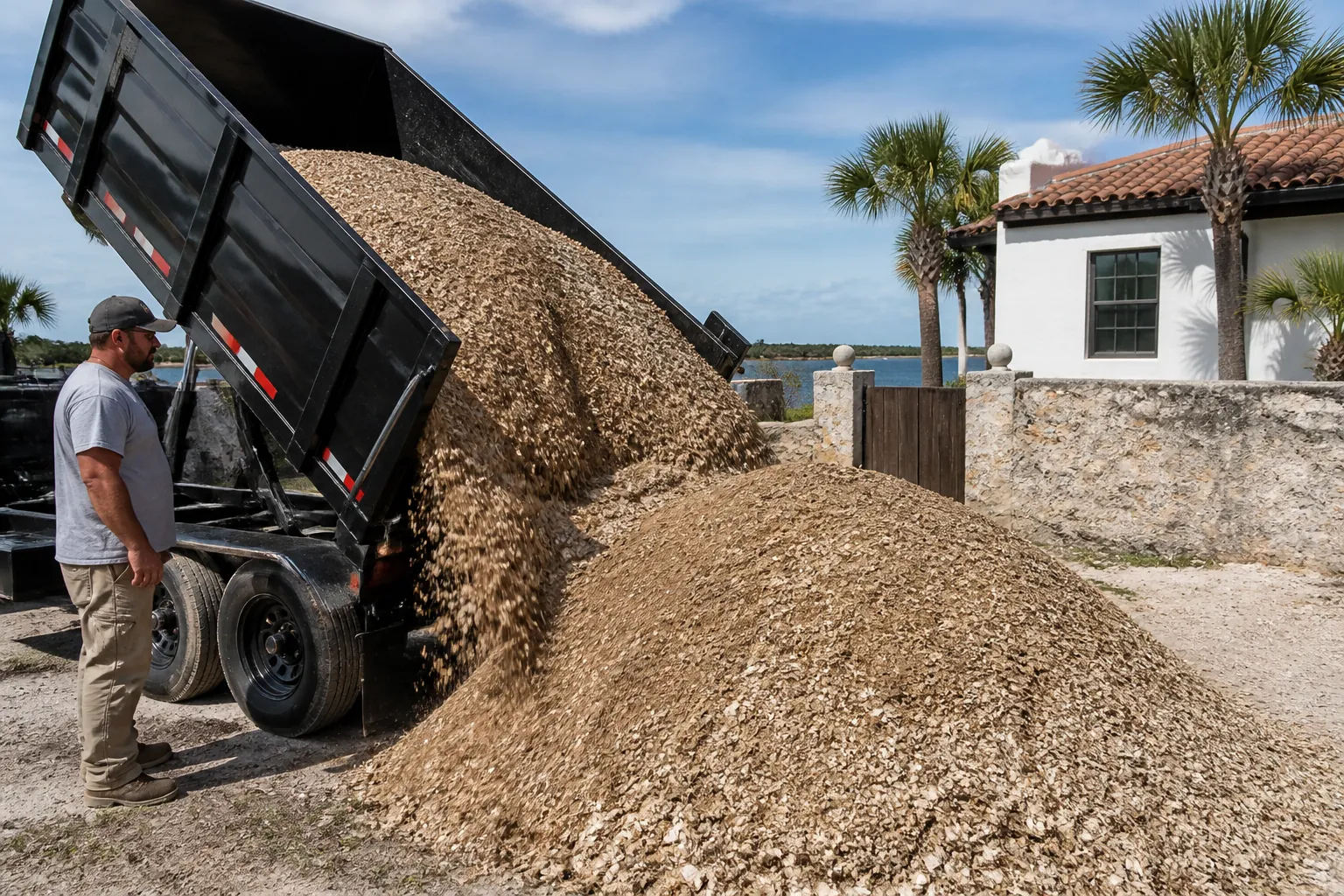
Check dump trailer coquina shell delivery clearance along the whole route, including the unloading space. Measure narrow points, note overhead hazards, and share photos before ordering. Ask Tropical Yards to confirm the delivery setup’s access needs. A clear gate alone doesn’t establish that a loaded trailer can reach your chosen spot.
What dump trailer coquina shell delivery clearance is needed?
Coquina shell delivery clearance includes width, overhead space, turns, and the unloading area. Each part needs review for the actual delivery setup. Use the Northeast Florida coquina shell driveway guide for project context. Then review coquina shell delivery site readiness before sharing access details with Tropical Yards.
Think of access as a route, rather than one opening. It starts where the delivery vehicle approaches your property. It ends where the trailer unloads and then leaves. A wide driveway can still have a tight turn near the drop.
The space needed while driving differs from the unloading space. A dump trailer changes position as its bed rises. The driver must assess that space before unloading. Don’t assume a trailer that fits while lowered can unload there.
There’s no single clearance number that fits every delivery setup. Ask for the width, overhead, turning, and unloading needs for your order. Share your measurements as observations, not as proof of safe access.
For a St. Augustine property, describe the route from the street inward. Include gates, fences, parked cars, trees, and roof edges. Mention shared access or any area you don’t control. Those details help reveal questions before delivery day.
Tropical Yards supplies coquina shell and offers dump trailer delivery. It does not install shell or prepare your yard. Its Coquina Shell Landscaping page describes the material and DIY use. Keep delivery access separate from plans for spreading the shell.
How should you measure gates and narrow spaces?
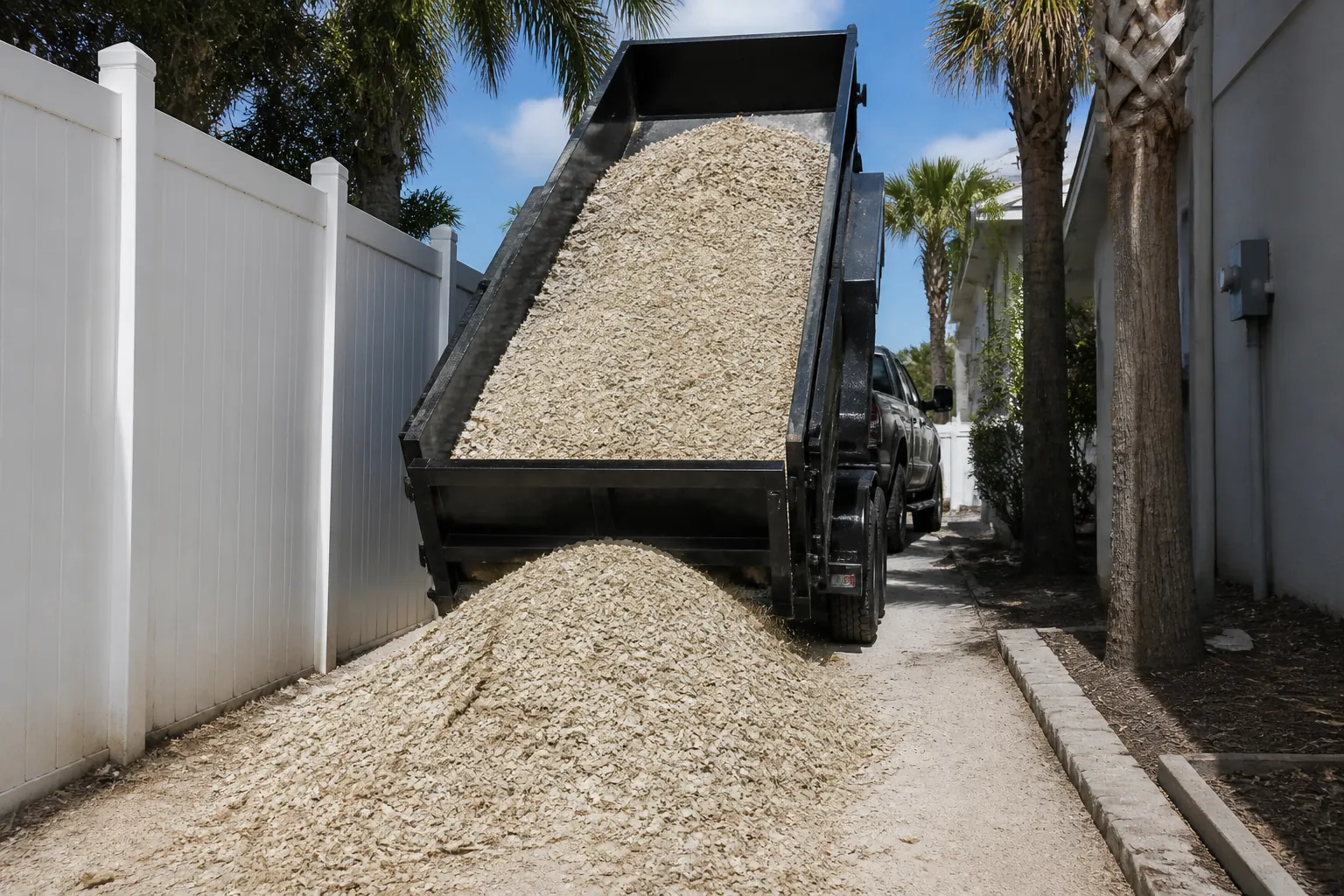
Measure the usable opening at each narrow point along the route. Include fixed objects and gate parts that reduce that opening. Pair your notes with coquina shell delivery site readiness and the Northeast Florida coquina shell driveway guide. Ask Tropical Yards to review them against the actual delivery setup.
A gate’s stated size may differ from its clear opening. Hinges, latches, posts, and partly opened panels can reduce space. Measure between the closest points that the vehicle would pass. Don’t use fence plans as a substitute for current measurements.
Keep width and turning room as separate notes. A trailer may approach a gate at an angle. Nearby walls or parked vehicles can limit that approach. A straight measurement across the opening won’t show the full problem.
Use photos to explain where each measurement was taken. Take a wider view that shows both sides of the opening. Then add a closer view of any latch or post. Stay on foot and away from moving traffic while taking photos.
- Measure the clear gate opening with both panels in their usable positions.
- Record each narrow point between the street and the proposed drop area.
- Photograph the approach angle and any nearby fence, wall, or parked vehicle.
- Label measurements clearly so the supplier knows which opening each number describes.
- Ask which further measurements are needed before treating the route as workable.
What overhead hazards should you flag?
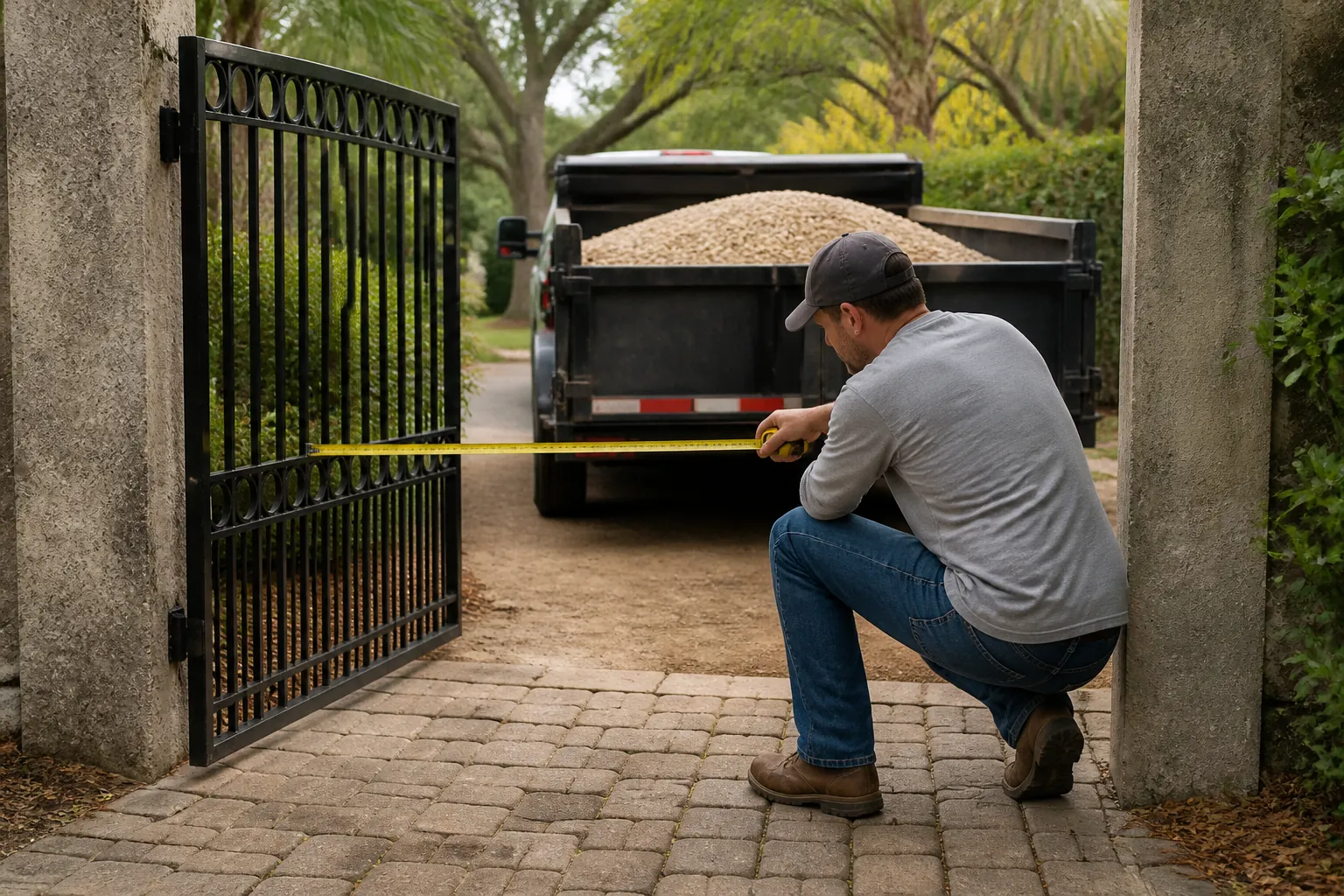
Flag wires, branches, roof edges, and other objects above the route. The unloading spot needs its own overhead review because the trailer bed rises. Use coquina shell delivery site readiness alongside the Northeast Florida coquina shell driveway guide. Leave clearance decisions to the supplier and driver.
Look above the full path, including any planned turning area. A branch beside the driveway may reach across the trailer’s path. A roof overhang may sit above an otherwise wide opening. Note these features without guessing that they will clear.
Utility lines need special care. Don’t touch, lift, tie back, or approach a line for measurements. Don’t assume a line is harmless based on its appearance. Contact the utility when a line raises an access concern.
Take overhead photos only from safe, ordinary standing positions. Include a wide view that shows the proposed unloading area. Tell the supplier if a photo leaves part of the route hidden. A photo cannot establish exact height or safe clearance.
Low branches can raise a separate ownership question. Don’t assume you may cut growth on neighboring or shared land. Resolve access concerns with the proper owner or qualified professional first. Tropical Yards does not trim trees or clear the route.
If overhead space remains uncertain, discuss another drop area before delivery. Moving the planned pile may change how far you carry shell. That extra work is easier to weigh before the truck arrives. Never ask a driver to test clearance by raising the bed.
How do ground conditions affect delivery access?
Ground concerns include soft areas, slopes, hidden features, and surface damage risks. A route that suits a car may need further review for delivery. Check coquina shell delivery site readiness for preparation. Use the Northeast Florida coquina shell driveway guide to keep access planning separate from the finished driveway project.
Describe the current surface along the proposed route. Note grass, loose material, pavement, and any visible ruts. Tell the supplier about recent rain or standing water. Don’t treat a dry surface as proof that the ground can support the load.
Flag slopes and changes in level near the drop. A driveway can look flat from one viewing angle. Photos from more than one position may help explain it. The driver still needs to assess the actual site before unloading.
Mention known septic features, drains, irrigation lines, and other buried systems. Avoid choosing a route over them without proper review. If their locations are unclear, consult the property records or responsible professional. Don’t guess where a heavy vehicle can pass.
Ask about any concern involving pavers, pavement edges, or covers. A delivery access check isn’t a structural review. For load-bearing questions, seek advice from an appropriate qualified professional. Don’t rely on a vehicle’s past use as proof of capacity.
Conditions can change after you send photos. Rain, digging, or other work may alter the planned route. Send an update when that happens, even if the order stays unchanged. The supplier needs the current picture, rather than last week’s view.
Where should you plan to have the shell unloaded?
Choose a proposed drop area with access, unloading room, and later shell handling in mind. Treat it as a request until the driver reviews it. Use the Northeast Florida coquina shell driveway guide for project planning. Review Florida coquina shell material specifications when planning how you’ll use the delivered material.
The closest spot to your project may have poor access. A farther spot may mean more work moving the shell. Discuss that tradeoff before you settle on a location. Don’t assume the delivery can place material across the whole project.
Plan for the pile as well as the trailer. Keep doors, needed paths, drains, and shared access in mind. Ask what information helps the supplier assess the drop area. The load’s amount and the site both matter to that discussion.
A sketch can show the link between the drop and project. Mark the gate, house, planned pile, and route for moving shell. Label the sketch as a planning aid, not a measured site plan. Include photos so the supplier can see the real setting.
- Choose a proposed spot that leaves needed household access clear.
- Identify a backup spot for discussion if the first location raises concerns.
- Check who owns or controls the land beneath the proposed pile.
- Plan how you will move shell from the pile to the project.
- Confirm any street or shared-space use with the responsible authority before ordering.
What should you send before confirming delivery?
Send a brief access summary, labeled photos, and measurements before confirming delivery details. State what you know and what still needs review. Use coquina shell delivery site readiness to organize your notes. Keep the Northeast Florida coquina shell driveway guide handy for questions about the project beyond delivery.
Start with the address and the entrance you expect to use. Explain if a map could point toward the wrong access. Identify any shared drive, closed gate, or restricted entry. Keep the message clear enough to match with your photos.
Use plain labels, such as street approach, gate, and proposed drop. Include one wide photo before adding close views of concerns. State when the photos were taken if conditions may have changed. Avoid sending many unlabeled images that are hard to place.
Ask Tropical Yards to confirm the delivery setup’s needs. Don’t borrow clearance figures from another supplier or trailer model. A past delivery also may have used different equipment. Any unresolved access question should stay open until it gets reviewed.
- Share the intended entrance and explain any alternate access shown on maps.
- Provide measured narrow points with clear labels and matching photos.
- Describe overhead objects without attempting unsafe height checks near utility lines.
- Flag soft ground, slopes, buried features, and concerns about surface strength.
- Show the proposed unloading spot and ask what further review is needed.
- Confirm that you or your contractor will handle spreading and site work.
What if access changes on delivery day?
Tell Tropical Yards about access changes before the vehicle enters the property. New obstacles or wet ground may call for another review. Recheck coquina shell delivery site readiness and the Northeast Florida coquina shell driveway guide. Don’t treat an earlier discussion as approval for a changed route or drop area.
Common changes include parked vehicles, a blocked gate, or new yard work. An agreed entrance may become unavailable because of another delivery. Report the change rather than trying to guide the truck around it. A new route needs its own review.
Keep people, pets, and loose items away from the vehicle’s work area. Don’t stand behind the trailer or beneath raised equipment. Follow the driver’s directions about where to wait. Leave vehicle movement and unloading decisions to the driver.
Weather can change the plan even when the route stays clear. The National Weather Service’s Hurricane Safety Planning guidance supports preparing before severe weather. Follow official weather advice when storms threaten. That guidance does not establish that a delivery site is safe.
If the driver questions the planned spot, discuss the next step. Don’t press for unloading because the shell is already there. A backup area may need review, or delivery arrangements may need revision. Confirm any change directly rather than assuming its terms.
After unloading, your DIY work remains a separate task. Tropical Yards supplies shell and plants with dump trailer delivery. It does not spread material, maintain yards, or provide cleanup labor. Plan your own tools and help before starting that work.
Questions about next steps? Call Tropical Yards at 772-267-1611 or review coquina.
Frequently Asked Questions
Does a successful delivery in the past prove access is adequate?
No. An earlier delivery may have used a different vehicle or load. Gates, branches, and ground conditions may have changed since then. Share the past delivery as useful background, rather than proof of clearance. Ask Tropical Yards to review the current route for the equipment planned for your order.
Can I use an online map instead of sending site photos?
An online map can help explain the entrance and general layout. It may miss gate hardware, low branches, or recent changes. Send current ground-level photos and measurements as well. Tell the supplier when the map shows an old driveway, a closed entrance, or an access route you cannot use.
Should I put boards or sheets down for the delivery vehicle?
Don’t assume boards or sheets make a weak route suitable. They don’t establish that the ground or buried features can bear the load. Discuss surface concerns with the supplier before making changes. Questions about ground support or protective systems need review by an appropriate qualified professional.
Can shell be unloaded on a shared driveway?
A shared driveway needs more than a clearance check. Confirm permission from the relevant owner or responsible group before proposing it. Consider how a pile could affect other users and needed access. The supplier must still review delivery access, and the driver must assess the actual unloading conditions.
Can ordering a smaller load solve a tight-access problem?
A smaller amount of shell doesn’t establish that different equipment will arrive. It also doesn’t remove overhead hazards or a tight turning area. Ask Tropical Yards what delivery arrangements are available for your order. Confirm the actual equipment needs before changing the quantity to address an access concern.
Sources
- Coquina Shell Landscaping, Tropical Yards
- Hurricane Safety Planning, National Weather Service
Call 772-267-1611 to talk through next steps.