
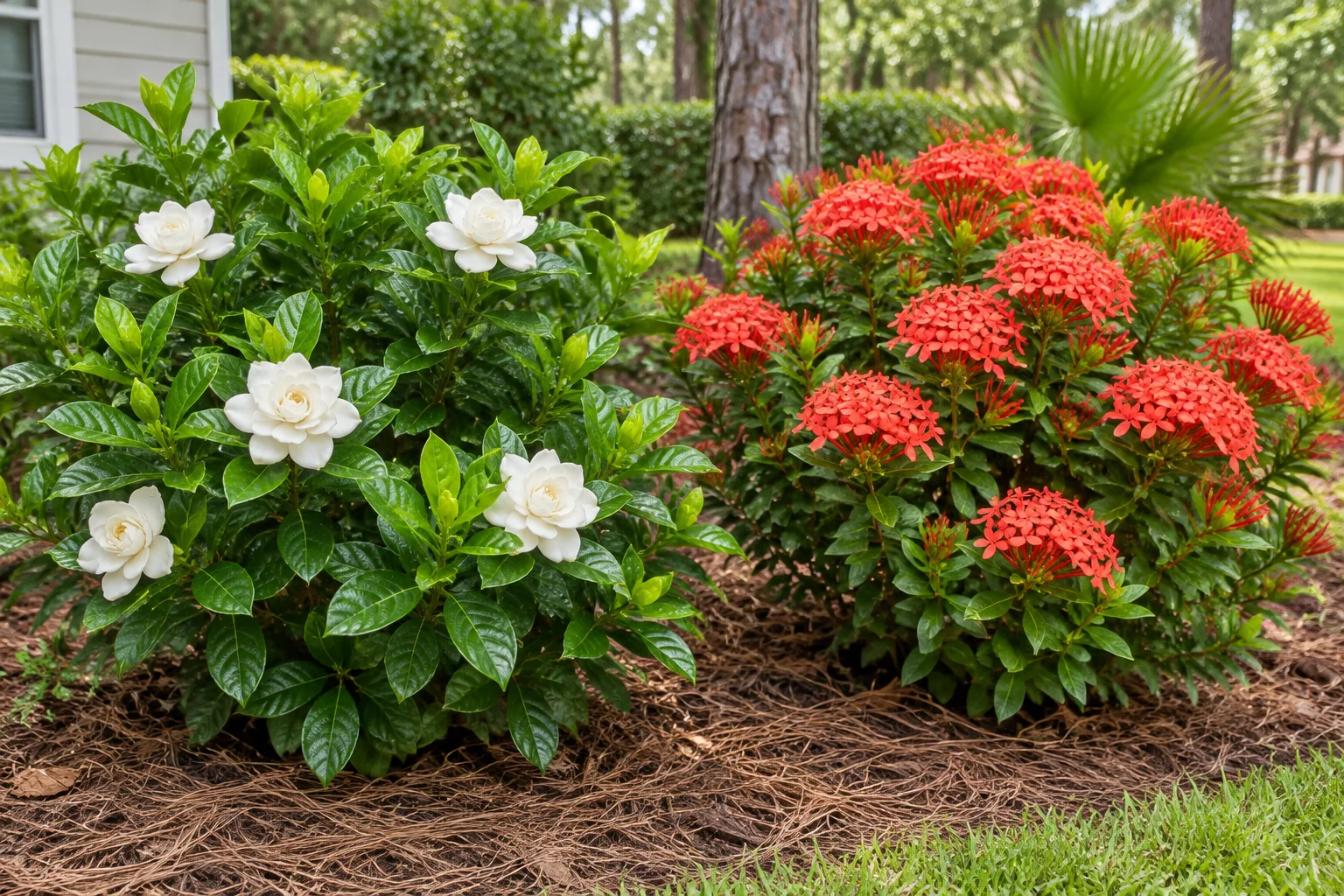
Gardenia and ixora offer different reasons to choose a flowering shrub. Gardenia is a candidate when sweet floral scent leads the wish list. Ixora is a candidate when clusters of colorful flowers are the main goal. For a yard in St. Augustine, FL, though, the better choice starts with the planting space and winter exposure, not the flower photo.
Compare the exact plants offered for sale rather than treating either common name as a complete description. Mature size, variety, and cold tolerance can change the decision. Separate what you know about your planting spot from the conditions you still need to check. That keeps a preference for fragrance or color from becoming an assumption about how a plant will perform.
Measure Your Planting Area Before Choosing a Shrub
Measure the space and record its conditions before comparing plants. Use Best tropical plants by category, palms, hibiscus, bougainvillea, ferns, and privacy hedges as the broader planning guide, then use these tropical plant selection tips to organize the choice around the actual planting area.
A useful site record describes the space at ground level and above it. A bed may have enough open soil for a small nursery pot but too little room for the mature shrub. Include nearby windows, walkways, and other plants when setting the maximum height and width you can accept.
- Direct light: Note when direct sun reaches the proposed spot and when buildings or trees shade it. Record observations from more than one time of day.
- Winter exposure: Describe whether the location is open or sheltered. Include any known history of frost or freeze injury in that part of the yard.
- Soil and drainage: Note standing water after rain and whether soil testing has established the pH. Mark untested conditions as unknown.
- Nearby hard surfaces: Record sidewalks, patios, and foundations, especially when considering ixora. Measure the usable bed rather than its outside edge alone.
- Mature footprint: Write down the greatest acceptable height and width. Allow for access to doors, paths, and anything that needs regular attention.
Give each observation a clear status: measured, observed, or still unknown. A photo can show a narrow bed, but it cannot establish soil pH. A sunny visit to a plant nursery also says little about the light in your yard. This distinction helps you ask focused questions instead of seeking a broad assurance that either shrub will work.
Compare Mature Form, Fragrance, And Flower Display
Choose the intended role first, then check whether the exact plant fits it. Review the tropical plant selection alongside the broader plant selection guidance, but confirm the dimensions and identity of any plant before ordering.
UF/IFAS describes gardenia as an evergreen shrub with glossy, dark green foliage and extremely fragrant, sweet-scented flowers. Its listed height range is 2-15 feet, depending on the cultivar, meaning the named cultivated variety. That range makes the exact selection important. It is not a size prediction for every gardenia offered under the common name.
UF/IFAS describes ixora as a densely branching shrub suited to hedges, borders, screens, or specimen use, depending on the variety. Some types reach 10-15 feet tall and 4-10 feet wide when unpruned. Smaller forms reaching 4-6 feet and petite cultivars are also described. Do not assume a plant is one of those smaller forms because it is sold in a small pot.
| Decision point | Gardenia | Ixora |
|---|---|---|
| Mature scale | The source lists heights of 2-15 feet by cultivar. Confirm mature width separately. | Sizes vary widely. Confirm both height and width for the offered variety. |
| Hedge or screen | Ask whether the exact variety has the dimensions and form needed. | The source supports these uses, depending on variety. |
| Main flower goal | Sweet fragrance is a documented feature. | Colorful clusters are a documented feature. Confirm the offered flower color. |
| Keeping it small | Confirm pruning guidance for the exact variety. | Constant shearing reduces the flower display, according to UF/IFAS. |
The ixora source reports that individual flower clusters can last 6-8 weeks and that flowering can continue under ideal conditions. Those descriptions help explain its appeal, but they do not promise that display in a particular yard. Likewise, gardenia's documented fragrance does not establish its flowering schedule at your address. Choose the desired experience, then check whether the plant and site can support it.
Check Light And Soil Without Filling In Gaps
Compare known site conditions with documented plant needs, and leave unsupported details open. Keep your notes with the plant selection checklist and the Northeast Florida tropical landscaping guide so the shrub choice remains part of the whole-yard plan.
For ixora, UF/IFAS states that full sun is necessary for maximum flower production. It also says the plant, especially large-leaved varieties, can grow in partial shade. These are different outcomes. Being able to grow in partial shade does not mean producing the same flower display as a plant in full sun.
The same source says ixora thrives in moist but well-drained acidic soil. It is not well suited to alkaline conditions, particularly near sidewalks or foundations. UF/IFAS notes that new growth can become chlorotic from iron and manganese deficiencies. Chlorotic means the foliage loses its normal green color. Nearby pavement is one reason to investigate soil conditions before deciding.
Record drainage and soil pH as separate facts. Seeing water leave the surface does not tell you whether the soil is acidic. A soil test can help establish pH, while observations after rain help describe drainage. Share both when asking whether ixora fits the proposed bed. Do not choose a fertilizer or treatment from a comparison article alone.
For gardenia, the captured UF/IFAS guidance supports full sun or partial shade. It does not provide gardenia soil, watering, or pruning instructions. Ask for authoritative care guidance for the exact variety rather than borrowing ixora's requirements. If those details remain unresolved, keep gardenia on the shortlist without treating it as a confirmed match.
Treat Winter Exposure As A Separate Decision
Resolve cold suitability before using flower preference as the deciding factor. Place that question within the regional tropical landscape plan, and use the plant selection guidance to keep the exact variety and site exposure in the discussion.
The regional limit matters for ixora. UF/IFAS says ixora is adapted to South and Central Florida, with zone 9B appearing to be its northern-most limit because frosts or freezes will injure it. This is a reason to verify suitability for a particular site in St. Augustine, FL. It is not a guarantee that every local yard will succeed or a blanket statement that every planting must fail.
Gardenia also needs a variety-specific check. UF/IFAS lists gardenia for USDA Hardiness Zones 7b to 11b, but warns that grafted varieties are less cold hardy and may not suit North Florida. A grafted plant joins one plant's upper growth to another plant's root system. Ask whether the offered gardenia is grafted rather than assuming all plants with the same common name have the same cold tolerance.
If considering a movable container for ixora, make the plan practical before buying. Decide where the plant would go indoors and whether you could move it when needed. Consider its expected size, not just the weight of the nursery pot today. If that plan is not workable, keep winter suitability unresolved rather than counting on a container as an automatic solution.
Make A Shortlist And Confirm The Exact Plant
Compare your measurements and growing conditions with the needs of the identified plant before choosing. Use the plant sales page for purchasing context, with the contact page as secondary navigation when preparing an availability or delivery inquiry.
A simple decision worksheet can keep the comparison focused. Write a brief answer for each step. Where information is missing, record a question rather than assigning the plant a passing score.
- State the main goal. Choose fragrance, visible flower clusters, screening, a border, or a single focal plant. Rank competing goals instead of expecting one shrub to meet every wish.
- Apply your space and growing limits. Compare light, soil information, winter exposure, and available space with the evidence for the exact plant. Flag any mismatch that still needs advice.
- Check maintenance tolerance. Decide whether you want a plant that fits without frequent size control. For ixora, account for the documented loss of flowers with constant shearing.
- Confirm the identity. Ask for the variety, mature dimensions, expected flower color, and gardenia grafted status. Do not fill these blanks from a common name or photograph.
- Close the purchasing gaps. Confirm current availability, the offered plant size, and delivery options. Keep care and suitability questions separate from the question of whether a plant can be supplied.
When shopping for ixora, UF/IFAS recommends plants with a full appearance and multiple branches that can support many blooms. Use that as a shopping observation, not a substitute for checking variety, soil fit, or cold exposure.
Gardenia may lead the shortlist when fragrance is the priority and the exact plant fits your growing conditions. Ixora may lead when clustered color is the priority and its soil, light, space, and winter needs have been addressed. If neither passes those checks, there is no need to force the choice.
Call Tropical Yards at +1 904 526 8345 to ask about current plant availability or delivery. Have your measurements and unresolved questions ready. Tropical Yards supplies plants and offers delivery; this inquiry does not include installation, treatment, or a promise of inventory.
Frequently asked questions
Which growing conditions should I check before comparing gardenia and ixora?
Record direct sun, shade, winter exposure, drainage observations, and soil pH if tested. Measure the maximum mature height and width the space can accept. Note nearby sidewalks and foundations, since UF/IFAS identifies alkaline conditions near these features as a concern for ixora. Keep unknown conditions clearly marked for follow-up.
Does UF/IFAS describe ixora as suitable for every yard in St. Augustine, FL?
No. UF/IFAS describes ixora as adapted to South and Central Florida, with zone 9B appearing to be its northern-most limit. It says frosts or freezes will injure the plant. Treat that regional guidance as a reason to verify the exact site and selection, not as a local performance guarantee or blanket exclusion.
How does using the shrub as a hedge, border, screen, or specimen affect the choice?
The intended role determines the mature dimensions and form you need. UF/IFAS describes ixora for all four uses, depending on variety, and warns that constant shearing reduces flowers. Gardenia heights also vary by cultivar. Confirm the actual plant's height and width rather than assuming its nursery size represents its mature footprint.
What should I ask about a gardenia variety or grafted status before ordering?
Ask for the exact variety, expected mature height and width, and whether the plant is grafted. UF/IFAS lists gardenia for zones 7b to 11b but cautions that grafted varieties are less cold hardy and may not suit North Florida. Request care guidance for that selection instead of assuming ixora instructions apply.
Which plant details should I confirm with the seller instead of inferring from a common name?
Confirm variety, mature dimensions, flower color, offered plant size, current availability, and delivery options. Ask about gardenia grafted status and the evidence for cold suitability. A common name or general plant list does not establish those details. Use the seller inquiry to resolve purchasing questions without treating availability as proof of site suitability.