
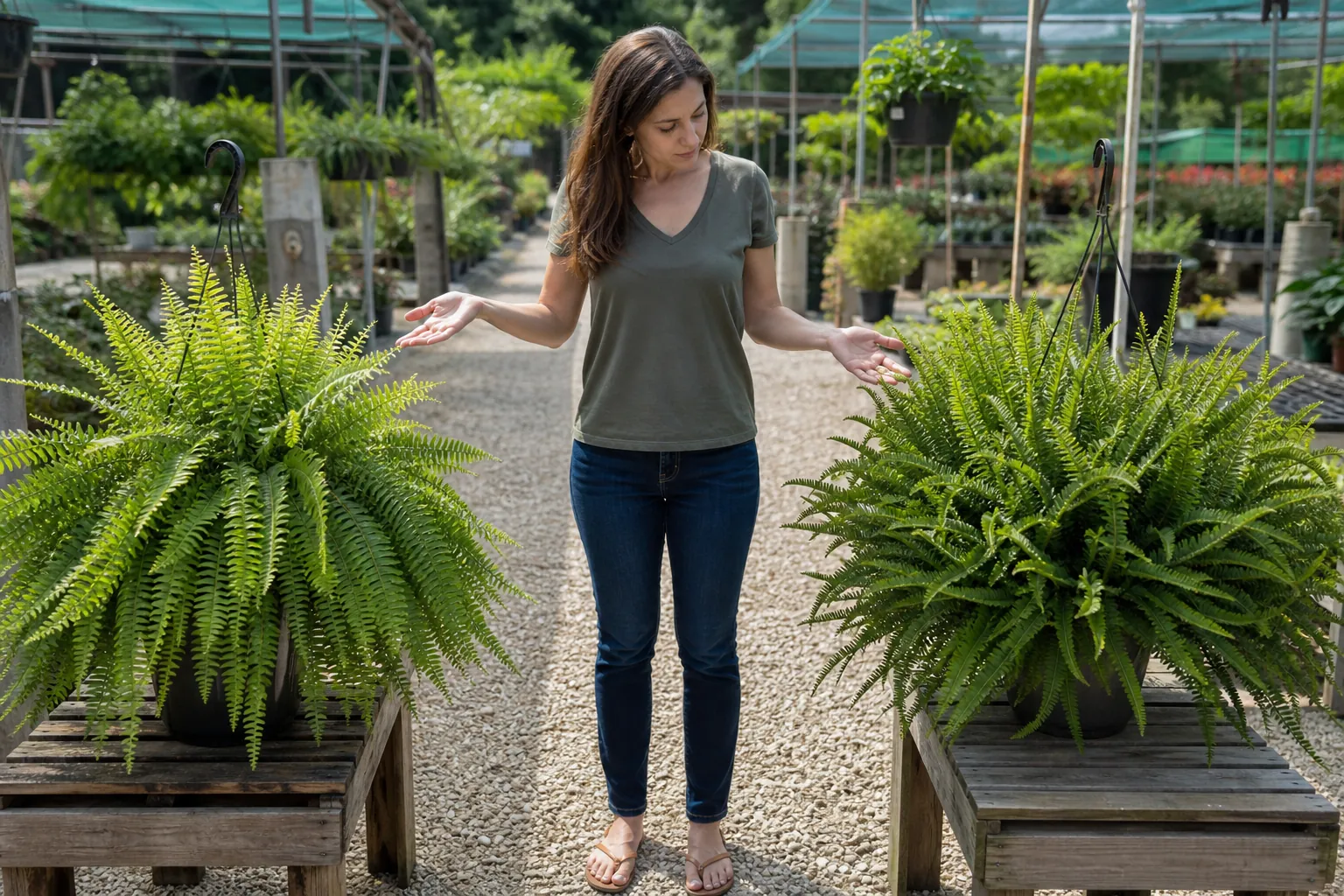
Choosing between 10-inch and 12-inch nursery pots starts with more than the number on the listing. For a plant purchase in St. Augustine, FL, separate four questions: What size is the nursery pot? How large is the plant today? What will fit your decorative planter? Is the plant suited to its intended location?
This matters when buying one plant for an existing porch pot or two plants for a matching pair. Take measurements before requesting a quote. Then ask Tropical Yards to confirm the exact plant, current availability, actual dimensions, and purchase arrangements rather than treating either listed pot size as a complete description.
Separate Pot Size From Plant Size
A nursery pot label does not tell you the plant’s height, spread, or fit inside another container. Use the tropical plant catalog to frame your inquiry, and keep broader display choices separate with these Florida tropical container garden ideas.
The listed 10-inch and 12-inch nursery pot options are starting points for a buying conversation. Ask which option is available for the exact plant you want. Then request the actual outside width and total height of its nursery container. Do not assume the listed number supplies both measurements, or that every plant offered under one label has the same dimensions.
Record the plant’s current height and widest foliage spread separately. Ask how height is measured: from the soil surface or from the bottom of the nursery pot. Those measurements answer different questions. Height from the pot bottom can help you picture a nested display. Height above the soil helps you compare the plants themselves on the same basis.
| Item | What To Record | What It Helps You Decide |
|---|---|---|
| Listed pot size | 10-inch or 12-inch option, confirmed for the exact plant | Which available option to investigate |
| Actual nursery container | Outside width and total height | Whether the container could fit inside your planter |
| Current plant size | Height, measurement starting point, and foliage spread | Whether the purchase suits the available display space |
| Longer-term suitability | Plant identity, expected mature size, and growing needs | Whether the intended location remains a sensible choice |
Keep mature size as a separate question. A plant’s dimensions at purchase do not answer how large it may become. Likewise, a larger nursery pot label is not a promise of a particular plant height. Compare confirmed measurements rather than using the two-inch difference between labels to predict the difference between plants.
Measure The Planter Before Comparing Nursery Pots
Measure the narrowest usable opening and the usable inside depth before asking whether either nursery pot will fit. These are purchase checks, not planting instructions. Find the nursery’s phone number on the Tropical Yards contact page and see the container garden ideas guide for separate display planning.
First decide what you are comparing. If the nursery pot will remain inside the decorative planter, compare the nursery container’s outside dimensions with the decorative planter’s inside space. A possible future transfer is a different decision. Fitting a nursery pot inside an outer planter does not establish that the outer planter provides suitable growing space for that plant.
- Narrowest opening: Measure the clear space inside the rim. Check whether a lip or inward curve creates a smaller opening below the top edge.
- Usable depth: Measure from the intended resting surface inside the planter to the opening. Note any raised base or fixed insert that reduces that space.
- Inside shape: Record whether the planter narrows toward the bottom. An opening measurement alone does not describe the space beneath it.
- Space beside the planter: Measure the available width for foliage, especially near a doorway, chair, wall, or another planter.
- Drainage: Note whether the decorative planter has drainage holes and whether water could collect around a nested nursery pot.
Hypothetical two-measurement example: Your decorative planter has an 11-inch usable opening and 10 inches of usable depth. The seller measures one candidate nursery pot at 10.5 inches wide and 9 inches tall. On those two measurements alone, the differences are half an inch in width and one inch in depth. That is a preliminary comparison, not a fit guarantee. The nursery pot still needs to pass through the narrowest opening and fit the inside shape. You also need to consider whether you can grasp and remove it.
Photograph the empty planter from above and from the side. Include the measurement notes with those views. A photograph can clarify an unusual shape, but it should not replace numbers. If the dimensions leave an uncertain fit, ask what else the seller needs to measure before you commit.
Compare The Same Plant In Two Sizes
Compare the same confirmed plant identity before deciding whether the 10-inch or 12-inch option better meets your goal. Start with the plant catalog, then call the number on the Tropical Yards contact page to ask which sizes and individual plants are currently available.
Hypothetical same-plant pair comparison: Suppose the seller confirms that two candidates are the same named plant. One is offered in a 10-inch nursery pot and measures 24 inches above the soil with an 18-inch foliage spread. The other is offered in a 12-inch nursery pot and measures 30 inches above the soil with a 22-inch spread. These invented measurements illustrate the comparison only. They do not describe current Tropical Yards stock or establish typical dimensions for either pot size.
For a matching porch pair, the difference in current plant size may matter more than the nursery pot labels. Ask whether two available plants can be compared using the same height starting point and width method. If you want a close visual match, say so. If exact symmetry is not important, explain which differences you are comfortable considering.
Then compare each nursery pot with its intended decorative planter. Two plants may look similar but arrive in containers with different measurements. Two containers may fit while the foliage widths differ more than you want. Keep the plant comparison and container comparison on separate lines in your notes so neither gets lost.
If only one listed pot size is available, do not treat that as an automatic substitute. Ask for its actual dimensions and compare them with your original needs. Your choices may include considering that option, asking about another suitable plant, or postponing the purchase. Current availability should guide the discussion, not replace the fit check.
Match Each Purchase To Its Porch Location
Choose for each location’s conditions as well as the planter’s dimensions. The regional tropical landscaping guide for Northeast Florida provides broader planning context, while the tropical container garden ideas guide addresses display choices beyond this purchase measurement check.
For a home in St. Augustine, FL, describe where each plant will stand rather than saying only that both are porch plants. Note the light each position receives and whether a roof or wall shades one location. Matching decorative pots do not establish matching growing conditions. Give the seller enough information to discuss the exact plant rather than relying on appearance alone.
UF/IFAS guidance on selecting plants emphasizes matching plants to their preferred growing conditions. That supports a simple buying question: Is this plant appropriate for the location described? It does not establish that a particular plant is right for your porch, or that either nursery pot size resolves a site mismatch.
If your plan changes from two separate plants to several plants sharing one container, raise that change before ordering. UF/IFAS container gardening guidance says plants sharing a pot should have matching light, water, and fertilizer requirements. It also says the container size should match the plant. A shared arrangement therefore needs more information than a count of nursery pots.
Keep immediate appearance and longer-term suitability separate. Ask about expected mature dimensions, then compare those with the space available around the planter. Bring these measurements when you ask about the fit. They do not replace plant-specific advice or establish how long a particular plant can remain in a particular container.
Send A Clear Plant Quote Request
A useful quote request names the plant, quantity, size preferences, planter limits, and destination. Call Tropical Yards at (904) 526-8345 to discuss the order. Check the contact page for the number, and use the tropical plant catalog to identify the plant you want to ask about.
Put confirmed measurements and unanswered questions in separate parts of the message. For example, your planter opening is something you can measure now. The actual dimensions of an available nursery pot are something the seller must confirm. This distinction makes it easier to see what still needs an answer before purchase.
- Name and count: Give the exact plant name you are asking about and whether you want one plant or a pair. Ask the seller to confirm identity and current availability.
- Size preference: State whether you are comparing the listed 10-inch and 12-inch options. Request actual nursery pot width and height for each available candidate.
- Plant dimensions: Ask for current height and foliage spread. Specify that a matching pair should be measured from the same starting point.
- Planter dimensions and growing conditions: Supply the narrowest opening, usable inside depth, any taper, available foliage space, and light conditions for each location.
- Purchase arrangements: Give your destination, ask for a current quote, and ask which pickup or delivery arrangements are available for that order.
For two decorative planters, label them A and B in your notes and photographs. Do this even when they look identical. Record each planter’s measurements rather than assuming one represents both. Ask the seller to identify which proposed plant and nursery pot measurements belong to each candidate.
Before agreeing to the order, resolve any mismatch between your request and the available option. Confirm the plant identity, count, actual dimensions, price, and agreed purchase arrangements. Tropical Yards is the supplier, not an installation service. Keep any separate planting or landscape labor arrangements outside the plant supply request.
The aim is a clear buying decision, not a guess based on a pot label. Choose the option that meets the confirmed plant, fit, and site requirements. If a key measurement or availability detail is still unknown, ask for clarification before treating the order as settled.
Frequently asked questions
Does the quoted nursery pot size tell me how tall the plant is?
No. Treat the nursery pot label and current plant height as separate details. Ask for actual pot width and height, then request the plant’s height and foliage spread. Confirm whether plant height starts at the soil surface or the pot bottom. Use the same measurement method when comparing two candidates.
What should I measure if a decorative planter has a narrow rim?
Measure the narrowest clear opening, not just the outside width of the rim. Also record usable inside depth and any narrowing below the opening. Compare those figures with the nursery pot’s actual outside dimensions. Passing through the rim does not by itself confirm usable growing room, drainage, or easy removal.
What should I ask when the seller only has one of the two pot sizes?
Ask which size is available for the exact plant, then request its actual container and plant measurements. Compare those with your planter limits and preferred display size. Do not assume the available size is a direct substitute. Ask about another suitable option or a later inquiry if it does not meet your needs.
What details help Tropical Yards confirm a matching pair?
Give the exact plant name, a count of two, and your preferred height and foliage spread. Explain how closely you want the plants to match. Supply measurements for both decorative planters and describe each location’s light. Ask the seller to confirm current availability and compare candidates using the same measurement method.
Does a nursery pot fitting inside my planter settle the drainage question?
No. Physical fit and drainage are separate checks. UF/IFAS says a suitable container needs room for soil and roots and enough drainage holes. Note whether the outer planter has drainage and whether water could collect around the inner pot. Ask about suitability before assuming a nested arrangement is ready for use.