Tropical Plants for Sale in Daytona Beach, FL: Local Delivery & Best Picks
Contact Tropical Yards for current plant availability and a quote. Call 904-526-8345 to discuss your project and delivery needs.
Key takeaways
- Daytona Beach yards do best with sun- and wind-tolerant tropicals.
- Buy by purpose: privacy, shade, or color.
- Choose healthy, well-rooted plants to reduce transplant shock.
- Sandy soil needs wide holes, organic matter, and mulch.
- Water consistently for 4–6 weeks to establish roots.
- Delivery helps you complete the yard in one coordinated install.
Table of Contents
- What are the best tropical plants for Daytona Beach yards?
- Which tropical plants handle salt wind near the beach?
- What plant sizes should you buy for instant impact?
- How should you plant tropicals in Daytona’s sandy soil?
- How often should you water new tropical plants in Daytona?
- How does tropical plant delivery to Daytona Beach work?
- What does tropical plant delivery cost around Northeast Florida?
- FAQ
What are the best tropical plants for Daytona Beach yards?
Answer: Start with palms and privacy plants for structure, then add hibiscus and bougainvillea for color; this mix handles heat and gives a finished “resort” look quickly.
- tropical plants for sale Daytona Beach FL
- best palms for Daytona Beach yards
- hibiscus plants Daytona Beach
- privacy plants Daytona Beach Florida
- tropical landscaping Daytona Beach near beach
Design works better when you buy by purpose instead of by impulse. Pick your “structure layer” (palms and screens) first, because those plants create the silhouette that makes a yard feel tropical from the street.
Then add a color layer near walkways and patios. Flowering tropicals look best when they are closer to where you actually walk and sit, because color is most noticeable up close.
If you want a simple starting point, choose one palm style you like and repeat it. Repetition is what makes a tropical bed look intentional rather than like a collection of leftovers.
Do tropical plants grow well in Daytona Beach?
Yes. Many tropicals thrive in Daytona Beach as long as you match them to sun and salt exposure and keep watering consistent during establishment.
Which tropical plants handle salt wind near the beach?
Answer: Choose salt- and wind-tolerant plants on the outer edge of the yard, and use hedges, fences, or the home itself as windbreaks for more delicate tropicals.
- salt tolerant tropical plants Daytona Beach
- beachfront landscaping plants Volusia County
- wind tolerant palms Daytona Beach
- tropical plants for coastal Florida yards
- Daytona Beach salt spray plant list
Salt exposure shows up as browned leaf edges and slow decline, not always a sudden failure. The fix is usually placement: put tougher plants on the windward side and place showier tropicals in protected microclimates.
A privacy screen does double duty: it blocks views and it blocks wind. Even a partially protected bed often looks dramatically better after a few weeks because leaves stop shredding and plants hold their shape.
If your planting area is a courtyard or behind a screen enclosure, you can be more adventurous because the air is calmer and warmer. In open beach wind, keep your choices tougher and more hedge-forward.
How close to the ocean is “salt exposure”?
If you routinely get wind straight off the beach and see salt residue on outdoor furniture or windows, assume high salt exposure and prioritize windbreaks and salt-tolerant choices.
Ready to Upgrade Your Daytona Beach Yard?
Contact Tropical Yards for current plant availability and a quote. Call 904-526-8345 to discuss your project and delivery needs.
Get a Free Quote Call 904-526-8345What plant sizes should you buy for instant impact?
Answer: Buy fewer but larger anchor plants for the background and corners, then fill the front edge with mid-size plants; this looks finished immediately and establishes faster in sand.
- large tropical plants Daytona Beach
- 7 gallon vs 15 gallon tropical plants Florida
- instant curb appeal plants Daytona Beach
- buy mature palms Daytona Beach
- tropical plants delivered to driveway Daytona
In sandy soil, small plants can struggle if watering is missed. Larger plants have more roots and usually bounce back from transplanting faster, especially when they arrive healthy and well-rooted.
For privacy, sizing matters more than you think. If you need a screen quickly, spacing and plant size determine how fast you get results. A line of tiny plants spaced too far apart can take years to close in.
A good strategy is to buy “background plants” in larger sizes and “detail plants” in smaller sizes. Guests and neighbors notice the background layer first.
How should you plant tropicals in Daytona’s sandy soil?
Answer: Dig wide, improve the backfill with organic matter, keep the root ball slightly above grade, and mulch to hold moisture and protect roots from heat.
- how to plant tropical plants in sandy soil
- Daytona Beach Florida sandy soil planting tips
- best mulch for tropical plants Florida
- tropical landscaping soil amendments Volusia
- planting palms in sand Daytona
Sand drains fast, so the planting hole should be two to three times wider than the pot. The goal is to create a larger “moisture zone” so roots don’t dry out between waterings.
After you plant, build a shallow watering berm and apply 2–3 inches of mulch (not against the stem). Mulch reduces evaporation and keeps the root zone cooler, which is important in Daytona heat.
If you want the most consistent results, decide on irrigation before planting day. A simple soaker line or drip can turn a good plant purchase into a long-term success.
Should you add topsoil to sand for tropical plants?
Yes, but focus on mixing organic matter into the backfill and mulching. A thin layer of topsoil on top of sand won’t hold moisture well by itself.
How often should you water new tropical plants in Daytona?
Answer: Water deeply and consistently for 4–6 weeks, often every 1–2 days in hot, windy weeks, then taper to a few times per week as roots establish.
- watering schedule new tropical plants Daytona Beach
- how long to water new hibiscus Florida
- palm watering schedule coastal Florida
- best irrigation for tropical landscaping Daytona
- prevent transplant shock tropical plants Florida
The number-one cause of failure is irregular watering. In sand, one big weekly soak followed by dry-out is harder on roots than smaller, consistent deep waterings.
Check moisture at the root ball, not the surface sand. If the top inch of the root ball is dry, water; if it is damp, wait. Windy days dry plants faster than you expect.
Once plants are established, many tropicals become more resilient. The early weeks are the critical window where good watering habits prevent transplant shock and leaf drop.
How does tropical plant delivery to Daytona Beach work?
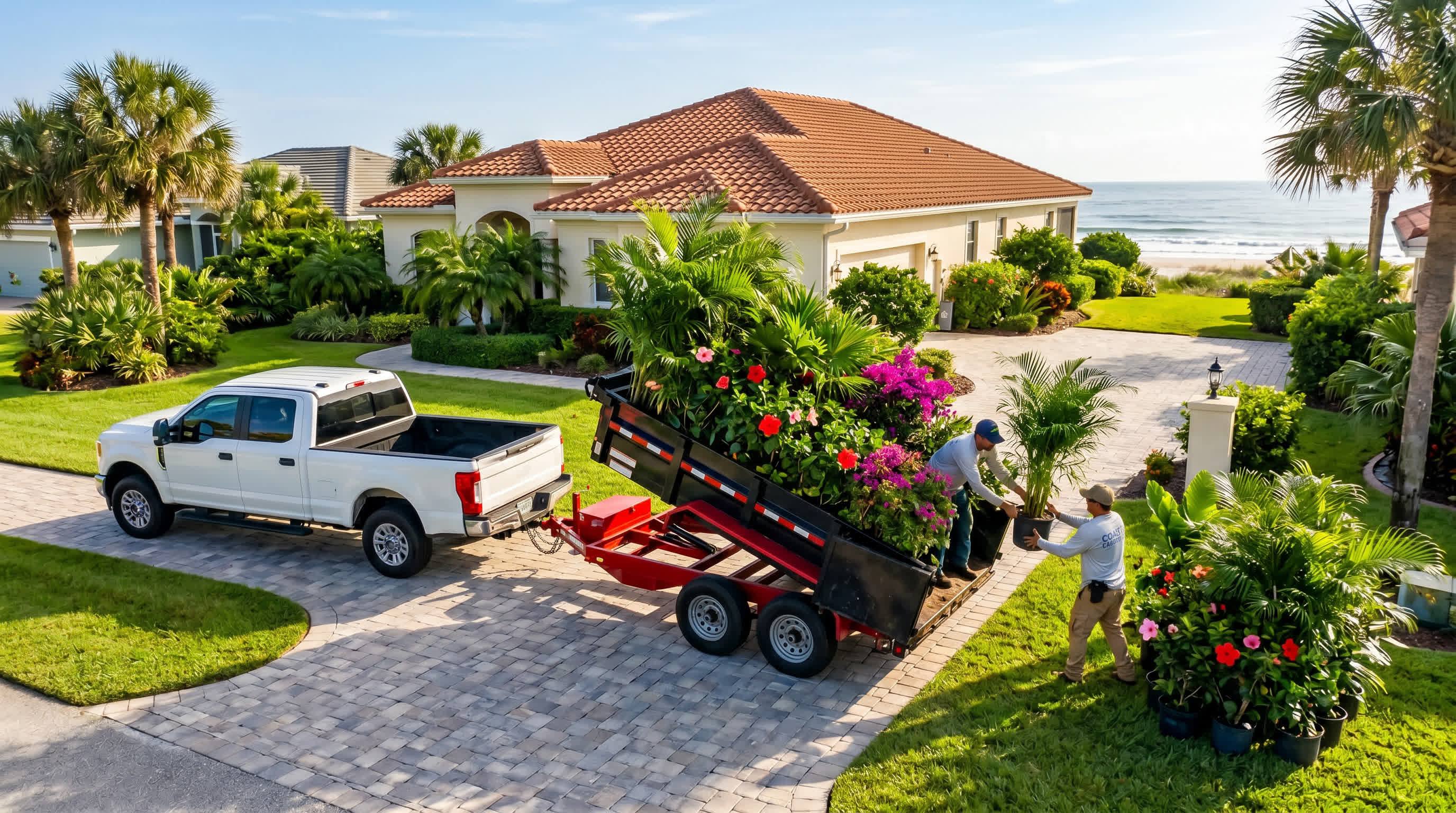
Answer: We stage your order, load it into a dump trailer, and deliver to your driveway so you can layout plants, adjust spacing, and plant everything in one coordinated weekend.
- tropical plant delivery Daytona Beach
- dump trailer plant delivery Volusia County
- buy palms delivered Daytona Beach FL
- bulk tropical plants delivered Daytona
- same week tropical plant delivery Daytona
Delivery is ideal when you want multiple plants at once without borrowing a truck. It also keeps taller plants upright, which reduces breakage and keeps the plants looking clean.
When everything arrives together, you can set plants in place before digging. That layout step makes the finished landscape look better because spacing is consistent and purposeful.
To prep, measure bed lengths and take a few photos from the street and patio. That makes it easier to choose quantities and sizes that match your privacy and curb-appeal goals.
What does tropical plant delivery cost around Northeast Florida?
Answer: Dump trailer delivery pricing depends on drive time and routing. Here are the distance-based delivery rate we use most often.
| Area | delivery at $275 within 25 driving miles of St. Augustine, plus $2 per mile beyond 25 miles, counted both ways |
|---|---|
| St. Augustine | Request a quote |
| Ponte Vedra | Request a quote |
| Palm Coast | Request a quote |
| Flagler Beach | Request a quote |
| Ormond Beach | Request a quote |
| Daytona Beach | Request a quote |
FAQ
What are the easiest tropical plants to grow in Daytona Beach?
Palms, hibiscus, bougainvillea, and many privacy plants are reliable with consistent watering during the first month.
Can you plant tropicals year-round in Daytona Beach?
Yes. Spring through fall is easiest, but winter planting can work with cold protection on the coldest nights.
How do I choose between palms and privacy plants?
Start with privacy if you need screening, then add palms for height and tropical character.
Do I need fertilizer right away?
Focus on watering first. After establishment, use a slow-release fertilizer suited to your plant type.
How far apart should privacy plants be spaced?
It depends on the species and size, but consistent spacing and watering are key for a uniform screen.
Is dump trailer delivery better than loading plants in my SUV?
For multiple large plants, delivery keeps plants upright, reduces mess, and helps you finish in one weekend.
Tropical Plants for Sale in Daytona Beach, FL, Local Delivery & Best Picks
Contact Tropical Yards for current plant availability and a quote. Call 904-526-8345 to discuss your project and delivery needs.
Key takeaways
- Daytona Beach yards do best with sun- and wind-tolerant tropicals.
- Buy by purpose: privacy, shade, or color.
- Choose healthy, well-rooted plants to reduce transplant shock.
- Sandy soil needs wide holes, organic matter, and mulch.
- Water consistently for 4–6 weeks to establish roots.
- Delivery helps you complete the yard in one coordinated install.
Table of Contents
- What are the best tropical plants for Daytona Beach yards?
- Which tropical plants handle salt wind near the beach?
- What plant sizes should you buy for instant impact?
- How should you plant tropicals in Daytona’s sandy soil?
- How often should you water new tropical plants in Daytona?
- How does tropical plant delivery to Daytona Beach work?
- What does tropical plant delivery cost around Northeast Florida?
- FAQ
What are the best tropical plants for Daytona Beach yards?
Answer: Start with palms and privacy plants for structure, then add hibiscus and bougainvillea for color; this mix handles heat and gives a finished “resort” look quickly.
- tropical plants for sale Daytona Beach FL
- best palms for Daytona Beach yards
- hibiscus plants Daytona Beach
- privacy plants Daytona Beach Florida
- tropical landscaping Daytona Beach near beach
Design works better when you buy by purpose instead of by impulse. Pick your “structure layer” (palms and screens) first, because those plants create the silhouette that makes a yard feel tropical from the street.
Then add a color layer near walkways and patios. Flowering tropicals look best when they are closer to where you actually walk and sit, because color is most noticeable up close.
If you want a simple starting point, choose one palm style you like and repeat it. Repetition is what makes a tropical bed look intentional rather than like a collection of leftovers.
Do tropical plants grow well in Daytona Beach?
Yes. Many tropicals thrive in Daytona Beach as long as you match them to sun and salt exposure and keep watering consistent during establishment.
Which tropical plants handle salt wind near the beach?
Answer: Choose salt- and wind-tolerant plants on the outer edge of the yard, and use hedges, fences, or the home itself as windbreaks for more delicate tropicals.
- salt tolerant tropical plants Daytona Beach
- beachfront landscaping plants Volusia County
- wind tolerant palms Daytona Beach
- tropical plants for coastal Florida yards
- Daytona Beach salt spray plant list
Salt exposure shows up as browned leaf edges and slow decline, not always a sudden failure. The fix is usually placement: put tougher plants on the windward side and place showier tropicals in protected microclimates.
A privacy screen does double duty: it blocks views and it blocks wind. Even a partially protected bed often looks dramatically better after a few weeks because leaves stop shredding and plants hold their shape.
If your planting area is a courtyard or behind a screen enclosure, you can be more adventurous because the air is calmer and warmer. In open beach wind, keep your choices tougher and more hedge-forward.
How close to the ocean is “salt exposure”?
If you routinely get wind straight off the beach and see salt residue on outdoor furniture or windows, assume high salt exposure and prioritize windbreaks and salt-tolerant choices.
Ready to Upgrade Your Daytona Beach Yard?
Contact Tropical Yards for current plant availability and a quote. Call 904-526-8345 to discuss your project and delivery needs.
Get a Free Quote Call 904-526-8345What plant sizes should you buy for instant impact?
Answer: Buy fewer but larger anchor plants for the background and corners, then fill the front edge with mid-size plants; this looks finished immediately and establishes faster in sand.
- large tropical plants Daytona Beach
- 7 gallon vs 15 gallon tropical plants Florida
- instant curb appeal plants Daytona Beach
- buy mature palms Daytona Beach
- tropical plants delivered to driveway Daytona
In sandy soil, small plants can struggle if watering is missed. Larger plants have more roots and usually bounce back from transplanting faster, especially when they arrive healthy and well-rooted.
For privacy, sizing matters more than you think. If you need a screen quickly, spacing and plant size determine how fast you get results. A line of tiny plants spaced too far apart can take years to close in.
A good strategy is to buy “background plants” in larger sizes and “detail plants” in smaller sizes. Guests and neighbors notice the background layer first.
How should you plant tropicals in Daytona’s sandy soil?
Answer: Dig wide, improve the backfill with organic matter, keep the root ball slightly above grade, and mulch to hold moisture and protect roots from heat.
- how to plant tropical plants in sandy soil
- Daytona Beach Florida sandy soil planting tips
- best mulch for tropical plants Florida
- tropical landscaping soil amendments Volusia
- planting palms in sand Daytona
Sand drains fast, so the planting hole should be two to three times wider than the pot. The goal is to create a larger “moisture zone” so roots don’t dry out between waterings.
After you plant, build a shallow watering berm and apply 2–3 inches of mulch (not against the stem). Mulch reduces evaporation and keeps the root zone cooler, which is important in Daytona heat.
If you want the most consistent results, decide on irrigation before planting day. A simple soaker line or drip can turn a good plant purchase into a long-term success.
Should you add topsoil to sand for tropical plants?
Yes, but focus on mixing organic matter into the backfill and mulching. A thin layer of topsoil on top of sand won’t hold moisture well by itself.
How often should you water new tropical plants in Daytona?
Answer: Water deeply and consistently for 4–6 weeks, often every 1–2 days in hot, windy weeks, then taper to a few times per week as roots establish.
- watering schedule new tropical plants Daytona Beach
- how long to water new hibiscus Florida
- palm watering schedule coastal Florida
- best irrigation for tropical landscaping Daytona
- prevent transplant shock tropical plants Florida
The number-one cause of failure is irregular watering. In sand, one big weekly soak followed by dry-out is harder on roots than smaller, consistent deep waterings.
Check moisture at the root ball, not the surface sand. If the top inch of the root ball is dry, water; if it is damp, wait. Windy days dry plants faster than you expect.
Once plants are established, many tropicals become more resilient. The early weeks are the critical window where good watering habits prevent transplant shock and leaf drop.
How does tropical plant delivery to Daytona Beach work?
Answer: We stage your order, load it into a dump trailer, and deliver to your driveway so you can layout plants, adjust spacing, and plant everything in one coordinated weekend.
- tropical plant delivery Daytona Beach
- dump trailer plant delivery Volusia County
- buy palms delivered Daytona Beach FL
- bulk tropical plants delivered Daytona
- same week tropical plant delivery Daytona
Delivery is ideal when you want multiple plants at once without borrowing a truck. It also keeps taller plants upright, which reduces breakage and keeps the plants looking clean.
When everything arrives together, you can set plants in place before digging. That layout step makes the finished landscape look better because spacing is consistent and purposeful.
To prep, measure bed lengths and take a few photos from the street and patio. That makes it easier to choose quantities and sizes that match your privacy and curb-appeal goals.
What does tropical plant delivery cost around Northeast Florida?
Answer: Dump trailer delivery pricing depends on drive time and routing. Here are the distance-based delivery rate we use most often.
| Area | delivery at $275 within 25 driving miles of St. Augustine, plus $2 per mile beyond 25 miles, counted both ways |
|---|---|
| St. Augustine | Request a quote |
| Ponte Vedra | Request a quote |
| Palm Coast | Request a quote |
| Flagler Beach | Request a quote |
| Ormond Beach | Request a quote |
| Daytona Beach | Request a quote |
FAQ
What are the easiest tropical plants to grow in Daytona Beach?
Palms, hibiscus, bougainvillea, and many privacy plants are reliable with consistent watering during the first month.
Can you plant tropicals year-round in Daytona Beach?
Yes. Spring through fall is easiest, but winter planting can work with cold protection on the coldest nights.
How do I choose between palms and privacy plants?
Start with privacy if you need screening, then add palms for height and tropical character.
Do I need fertilizer right away?
Focus on watering first. After establishment, use a slow-release fertilizer suited to your plant type.
How far apart should privacy plants be spaced?
It depends on the species and size, but consistent spacing and watering are key for a uniform screen.
Is dump trailer delivery better than loading plants in my SUV?
For multiple large plants, delivery keeps plants upright, reduces mess, and helps you finish in one weekend.
For a bigger-picture layout plan, read our tropical landscaping guide for Northeast Florida.