Best Plants for Florida Landscaping (Zone 9a) in Northeast Florida
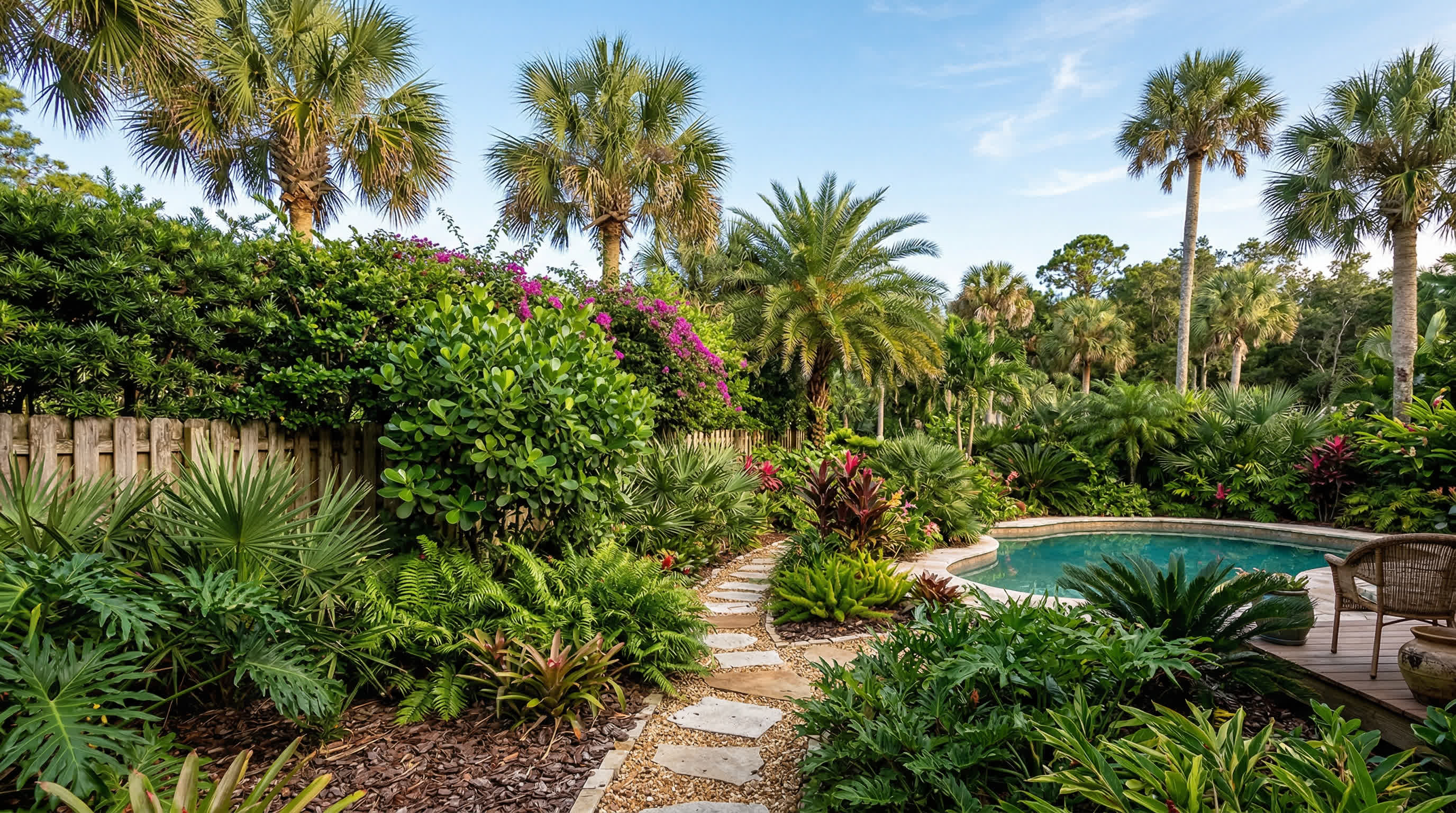
Short answer: Zone 9a in Northeast Florida means minimum winter temperatures of 20 to 25°F, which rules out many tropical plants sold in Central and South Florida but supports a wide range of palms, tropical flowering shrubs, and evergreen hedges that are genuinely cold-hardy. The best Zone 9a plants for Northeast Florida landscaping include Sabal Palm, Windmill Palm, tropical hibiscus, Bougainvillea, Clusia, Podocarpus, Firebush, and Plumbago, all of which are carried by Tropical Yards in 125+ varieties and available for dump trailer delivery to St. Augustine, Ponte Vedra, Palm Coast, and surrounding communities.
Key Takeaways
- Zone 9a in Northeast Florida corresponds to minimum winter temperatures of 20 to 25°F, colder than Zone 9b (25 to 30°F) and significantly colder than Zone 10a and 10b in Central and South Florida, which means many popular tropical plants require freeze protection or are not viable.
- The most reliable full-sun tropical plants for Zone 9a Northeast Florida are Sabal Palm, Windmill Palm, Bougainvillea, Firebush, Plumbago, and Gaillardia, all of which handle the occasional hard freeze without dying back to the ground.
- The best shade-tolerant landscaping plants for Zone 9a Northeast Florida are Podocarpus, Bamboo Palm, Cast Iron Plant, Variegated Ginger, and Camellia, all can form lush plantings under Live Oak and Magnolia canopy.
- Coastal and salt-tolerant Zone 9a picks include Wax Myrtle, Cocoplum, Sea Grape, Yaupon Holly, and Muhly Grass, native or near-native species that thrive in the sandy, salt-exposed soils of coastal Northeast Florida.
- Freeze recovery planning matters in Zone 9a: know which plants die back but regrow (Hibiscus, Bird of Paradise, Plumbago), which need protection (Areca Palm, Agapanthus), and which are fully cold-hardy without intervention (Sabal Palm, Windmill Palm, Podocarpus).
- Tropical Yards carries 125+ Zone 9a-vetted varieties and delivers by dump trailer to all Northeast Florida communities, plants are sourced directly from Florida growers with cold-hardiness appropriate for Zone 9a, not Zone 10 plants mislabeled for Northeast Florida.
In This Article
- What does Zone 9a mean for Florida landscaping in Northeast Florida?
- What are the best full-sun tropical plants for Zone 9a Northeast Florida?
- What are the best shade-tolerant plants for Zone 9a Northeast Florida landscaping?
- What salt-tolerant coastal plants grow best in Zone 9a Northeast Florida?
- How do you plan for freeze recovery of Zone 9a tropical plants in Northeast Florida?
- Where can I buy Zone 9a plants for Florida landscaping in Northeast Florida?
- Frequently Asked Questions
What does Zone 9a mean for Florida landscaping in Northeast Florida?
USDA Hardiness Zone 9a covers the minimum winter temperatures of 20 to 25°F, meaning that plants in this zone must survive at least occasional dips to 20°F without dying. In Northeast Florida, the Zone 9a designation applies to most of St. Johns County, Flagler County, and southern Duval County, including St. Augustine, Ponte Vedra, Palm Coast, and Fleming Island. This is colder than the Zone 9b designation that applies to parts of Jacksonville's urban core and Daytona Beach, and significantly colder than the Zone 10 designations of the Tampa Bay area and Miami, where true tropical plants like Coconut Palm and Plumeria can be grown year-round without freeze risk.
The practical implication of Zone 9a for Northeast Florida landscaping is that you must distinguish between plants that are marketed as "tropical" and plants that are actually cold-hardy enough to survive a Zone 9a winter. Florida garden centers routinely sell plants in Zone 9a that are technically Zone 10 plants, species that will thrive through a warm winter and then die to the ground or die entirely during a hard freeze event. This creates frustration for homeowners who invest in tropical landscaping only to lose plants during a January cold snap. The solution is to build your Zone 9a landscape around a core of genuinely cold-hardy plants and treat temperature-sensitive species as seasonal accents that may need freeze protection.
In practical terms, Zone 9a Northeast Florida experiences hard freeze events, temperatures below 28°F for several hours, on average two to five times per decade. More frequent are mild freezes (28 to 32°F) that occur in most winters and cause tip burn on cold-sensitive plants but do not kill them. Your plant selection strategy should account for both scenarios: the mild freezes that happen most winters and the hard freezes that happen once or twice a decade. Cold-hardy tropical plants that reliably survive both are the backbone of a low-maintenance Zone 9a landscape.
Tropical Yards carries 125+ varieties of plants specifically vetted for Zone 9a performance in Northeast Florida, not Zone 10 plants sourced from South Florida nurseries that look good at the point of sale but underperform in cold weather. When you order from Tropical Yards, plants on the delivery are appropriate for your specific Zone 9a growing conditions in St. Augustine, Ponte Vedra, Palm Coast, or wherever in Northeast Florida you garden.
- Zone 9a plant list for Northeast Florida landscaping in St. Augustine and St. Johns County
- Best Zone 9a Florida plants for Ponte Vedra and Nocatee residential landscaping
- USDA Zone 9a tropical plants for Palm Coast and Flagler County FL yards
- Cold-hardy Zone 9a landscaping plants for Northeast Florida delivered by dump trailer
- Zone 9a plant hardiness guide for St. Augustine Beach and Anastasia Island FL
Is Northeast Florida Zone 9a or Zone 9b?
Most of Northeast Florida, including St. Augustine, Ponte Vedra, Palm Coast, Flagler Beach, and St. Johns County, falls in Zone 9a (minimum temperatures 20 to 25°F). Parts of urban Jacksonville, particularly the warmer urban core, may qualify as Zone 9b (25 to 30°F), but this distinction matters less for plant selection than for planning around hard freeze events that affect the entire region. When in doubt, plan for Zone 9a minimums to ensure your landscape survives the coldest winters Northeast Florida can produce.
What are the best full-sun tropical plants for Zone 9a Northeast Florida?
The best full-sun tropical and tropical-style plants for Zone 9a Northeast Florida are those that combine genuine tropical aesthetics with sufficient cold-hardiness to survive the occasional hard freeze without needing to be replaced. Top performers in full sun include Sabal Palm, Windmill Palm, Bougainvillea, Firebush (Hamelia patens), Plumbago auriculata, Tropical Hibiscus, Muhly Grass, and Ixora, all of which thrive in the long, hot Northeast Florida growing season and handle Zone 9a winters without significant die-back.
Sabal Palm (Sabal palmetto), Florida's state tree, is the gold standard for full-sun Zone 9a landscaping in Northeast Florida. It is cold-hardy to 0°F or lower, far colder than Zone 9a will ever get, and provides the dramatic height and tropical canopy that defines the Florida landscape aesthetic. Sabal Palm tolerates sandy soils, salt spray, drought, and periodic flooding, making it adaptable to virtually every lot type in Northeast Florida. Pair multiple Sabal Palms at different heights for an immediate resort-style landscape that requires almost zero long-term maintenance.
Bougainvillea is the premier flowering accent plant for full-sun Zone 9a gardens in Northeast Florida. Its papery bracts in magenta, orange, red, pink, and white bloom most intensely when the plant is slightly stressed, making Northeast Florida's periodic drought conditions and lean sandy soils actually ideal for flower production. Bougainvillea is technically root-hardy to Zone 9a, meaning even if the top growth dies in a hard freeze, established plants typically regrow from the root crown in spring. This makes Bougainvillea an excellent investment for Northeast Florida landscapes even knowing that an occasional hard freeze may kill the above-ground portion.
Firebush (Hamelia patens) is a native-range Florida shrub that performs beautifully in full-sun Zone 9a gardens, producing clusters of tubular red-orange flowers from spring through first frost that attract hummingbirds and butterflies in extraordinary numbers. It dies back to the ground in hard freezes but regrows vigorously each spring, plants that have been in the ground for several years become large, multi-stemmed shrubs by midsummer that function as impressive landscape specimens. Firebush is one of the most recommended Zone 9a plants for Northeast Florida gardeners who want color, wildlife value, and low-maintenance performance.
- Best full-sun Zone 9a tropical plants for sale in St. Augustine and Ponte Vedra FL
- Full-sun tropical landscaping plants for Northeast Florida Zone 9a yards and gardens
- Bougainvillea and Firebush for Zone 9a full-sun Florida landscaping in Nocatee and Palm Coast
- Zone 9a palms and tropical shrubs for full-sun landscaping in Flagler County FL
- Tropical Hibiscus and Plumbago full-sun Zone 9a plants delivered to Northeast Florida
Does Bougainvillea survive Zone 9a winters in Northeast Florida?
Bougainvillea is root-hardy to Zone 9a, which means the root crown typically survives Northeast Florida's hard freezes even when the above-ground growth is killed back. Established plants, those that have been in the ground for two or more years, almost always regrow from the base in spring after a hard freeze and can reach their pre-freeze size by early summer in ideal conditions. First-year plantings are more vulnerable because the root system is not yet fully established. Plant Bougainvillea in spring and in a sheltered microclimate (against a south-facing wall or fence) to maximize survival chances during the first winter.
125+ Zone 9a Plants Available Now
Palms, hibiscus, bougainvillea, shade plants, and coastal picks, all delivered by dump trailer to Northeast Florida.
Get a Free Quote Call 904-526-8345What are the best shade-tolerant plants for Zone 9a Northeast Florida landscaping?
Shade is a common challenge in Northeast Florida landscaping because mature Live Oaks, Magnolias, and Laurel Oaks cast dense shade over large portions of residential lots. The best shade-tolerant Zone 9a plants for Northeast Florida are Podocarpus macrophyllus, Bamboo Palm, Cast Iron Plant, Variegated Ginger, Camellia, Foxtail Fern, and Aspidistra, species that not only survive in shade but actually prefer it and produce their best growth under a tree canopy.
Podocarpus macrophyllus is exceptional for shaded fence lines and property edges under tree canopy. It maintains dense, dark-green foliage even in two to four hours of dappled light per day, conditions where most other privacy hedge plants become thin and spindly. In shade, Podocarpus grows more slowly than in full sun but remains healthy and maintains its characteristic fine-textured, formal appearance. This makes it the top shade-tolerant privacy hedge for Northeast Florida properties where mature tree canopy makes full-sun hedge planting impossible.
Bamboo Palm (Chamaedorea seifrizii) is one of the most useful shade-tolerant tropical plants in Zone 9a Northeast Florida. It thrives in partial to full shade, reaching 8 to 12 feet as a multi-cane clump, and creates a lush tropical feeling in areas where most plants struggle. Bamboo Palm is also notably cold-hardy for a tropical palm, it handles Zone 9a winters with minimal damage, and its slender, bamboo-like canes and arching fronds bring a tropical sophistication to shady side yards, covered lanais, and the north-facing sides of homes where sunlight is limited. Pair Bamboo Palm with shade-tolerant tropical ferns at the base for a layered planting that transforms a dark, neglected side yard into a lush garden feature.
Variegated Ginger (Alpinia zerumbet 'Variegata') brings dramatic tropical color to shaded Zone 9a landscapes, its large, striped green-and-yellow leaves provide visual interest even when not in bloom, and its fragrant, shell-shaped flowers are stunning in summer. Ginger dies back to the ground in hard freezes but is reliably root-hardy in Zone 9a and regrows quickly from the underground rhizome in spring. Established clumps can reach 6 to 8 feet tall and spread 4 to 6 feet wide, making Variegated Ginger an excellent large specimen for shaded corners, foundation planting under eaves, and areas where you need a bold tropical statement in challenging light conditions.
Camellia japonica and Camellia sasanqua deserve mention as the best flowering shade shrubs for Zone 9a Northeast Florida. Both are winter-blooming, sasanqua flowers October through December, japonica flowers January through March, which means they provide color during the exact months when most tropical plants are dormant or die-back. Camellias are not tropical in the traditional sense, but their glossy evergreen foliage and exotic-looking flowers fit perfectly in a tropical-style landscape, and they are among the most cold-hardy flowering shrubs that can be grown in Northeast Florida.
- Shade-tolerant Zone 9a plants for Northeast Florida landscaping under Live Oak canopy
- Bamboo Palm and Podocarpus shade plants for Ponte Vedra and Nocatee FL yards
- Best shade plants for Zone 9a Florida landscaping in St. Augustine and St. Johns County
- Variegated Ginger and Camellia shade plants for Northeast Florida delivered by dump trailer
- Zone 9a shade-tolerant tropical plants for Palm Coast and Flagler County FL shaded yards
What tropical plants grow in deep shade in Zone 9a Northeast Florida?
For genuinely deep shade in Zone 9a Northeast Florida, areas that receive less than two hours of direct sun per day, the best options are Cast Iron Plant (Aspidistra elatior), Foxtail Fern (Asparagus densiflorus 'Meyersii'), Boston Fern, and Bamboo Palm. Cast Iron Plant is the most shade-tolerant of all, capable of growing in near-total darkness and thriving in the dry shade under Live Oak canopy that kills almost everything else. Foxtail Fern and Boston Fern add texture and movement in deep shade and both handle Zone 9a winters well when planted in sheltered microclimates. Bamboo Palm tolerates deep shade better than any tropical palm available in Northeast Florida.
What salt-tolerant coastal plants grow best in Zone 9a Northeast Florida?
Northeast Florida's coastal communities, St. Augustine Beach, Anastasia Island, Ponte Vedra Beach, Flagler Beach, and Vilano Beach, sit in Zone 9a but face the added challenge of salt spray from the Atlantic Ocean and the Intracoastal Waterway. The best salt-tolerant Zone 9a plants for these locations combine cold-hardiness with the waxy leaves, deep root systems, or genetic coastal adaptation that resists salt burn and dehydration from onshore winds. Top performers include Wax Myrtle, Sabal Palm, Yaupon Holly, Sea Grape, Muhly Grass, Cocoplum, and Walter's Viburnum (on sheltered lots).
Wax Myrtle (Morella cerifera) is the most salt-tolerant fast-growing shrub available for Zone 9a Northeast Florida coastal properties. It colonizes the edges of salt marshes and barrier island dune zones throughout Northeast Florida, environments where salt concentration in the soil would kill most cultivated plants. For coastal Zone 9a yards that need fast privacy screening or wind buffering along the ocean- or Intracoastal-facing side of the property, Wax Myrtle is the most reliable fast-establishment choice. It grows two to three feet per year, tolerates root zone flooding from storm surge, and requires no supplemental irrigation once established in Northeast Florida's climate.
Sabal Palm is the backbone of coastal Zone 9a landscaping across the entire Northeast Florida coast. Its fibrous root system tolerates salt-laden soils and periodic saltwater flooding, its stiff, arching fronds shed salt spray efficiently, and its tolerance for both drought and root-zone saturation makes it the most adaptable large plant for coastal lots. A coastal landscape in Zone 9a Northeast Florida that does not include Sabal Palm is passing on the single most reliable, low-maintenance, high-impact plant available for the conditions.
Muhly Grass (Muhlenbergia capillaris) is a native ornamental grass that thrives in Zone 9a coastal conditions and produces spectacular pink-purple flower plumes in October and November, exactly when most coastal Zone 9a plants stop flowering. It tolerates salt spray, poor sandy soils, drought, and even occasional coastal flooding, and it requires essentially no maintenance beyond an annual cutback in late winter. For coastal Zone 9a properties in St. Augustine Beach, Anastasia Island, and Flagler Beach, Muhly Grass masses at the base of Sabal Palms or along coastal fence lines create one of the most authentic and beautiful Northeast Florida coastal landscapes possible. The combination of Sabal Palm, Muhly Grass, and Wax Myrtle is one of the most recommended coastal yard design formulas for Zone 9a Northeast Florida.
- Salt-tolerant Zone 9a plants for coastal St. Augustine Beach and Anastasia Island FL
- Coastal Zone 9a landscaping plants for Ponte Vedra Beach and Vilano Beach FL oceanfront lots
- Wax Myrtle and Sabal Palm salt-tolerant Zone 9a plants for Flagler Beach and Ormond Beach FL
- Zone 9a coastal plants for Intracoastal Waterway lots in Northeast Florida delivered by dump trailer
- Muhly Grass and Sea Grape salt-tolerant Zone 9a plants for beachside Northeast Florida landscaping
Can you grow Sea Grape in Zone 9a Northeast Florida?
Sea Grape (Coccoloba uvifera) is technically rated to Zone 10a in most references, meaning it is marginally cold-hardy in Zone 9a Northeast Florida. In most Zone 9a winters, established Sea Grape plants come through undamaged. During hard freezes below 26°F, Sea Grape may experience significant defoliation or top kill, but established plants with substantial trunk caliper often regrow from the base. For Zone 9a coastal properties in St. Augustine Beach and Ponte Vedra Beach, Sea Grape is best used as a large accent specimen in a sheltered south-facing microclimate rather than as a primary hedge plant, where a hard freeze killing it would leave a gap in your screening. Wax Myrtle and Cocoplum are more reliably cold-hardy coastal alternatives for Zone 9a hedge planting.
How do you plan for freeze recovery of Zone 9a tropical plants in Northeast Florida?
Freeze recovery planning is an essential part of Zone 9a landscaping in Northeast Florida that separates homeowners who maintain beautiful tropical gardens long-term from those who replace plants after every hard winter. The key is understanding three categories of plant behavior during freezes: plants that are genuinely cold-hardy and need no protection, plants that die back to the ground but regrow reliably from the root, and plants that are marginally hardy and may or may not survive depending on the severity and duration of the freeze event.
Category 1, fully cold-hardy Zone 9a plants that need no freeze protection, includes Sabal Palm, Windmill Palm, Podocarpus, Wax Myrtle, Walter's Viburnum, Camellia, Muhly Grass, Yaupon Holly, and most native Florida shrubs. These plants are the backbone of a low-maintenance Zone 9a landscape, once established, they survive all but the most extreme freeze events without protection and do not require any special treatment before cold weather. Build your Zone 9a landscape with a majority of these plants and you will spend far less time and money on freeze protection and plant replacement over time.
Category 2, die-back but reliable root-hardy plants, includes Tropical Hibiscus, Firebush, Plumbago, Variegated Ginger, Bird of Paradise, and Agapanthus. These plants will lose their above-ground growth in a hard freeze but regrow from the root crown reliably in spring, often reaching their pre-freeze size by midsummer. The strategy for these plants is to leave the dead top growth in place as a mulch layer and insulation for the root zone until March, then cut back and fertilize to encourage vigorous new growth. Do not pull these plants out after a freeze, they are almost certainly alive at the root and will reward your patience with a full recovery.
Category 3, marginally hardy plants that need freeze protection, includes Areca Palm, Bougainvillea (top growth), Croton, and certain tropical gingers. For these plants, keep frost cloth on hand and cover them when temperatures are forecast below 32°F. A standard lightweight frost cloth draped over the plant and secured at the ground provides 4 to 6 degrees of frost protection, enough to protect Category 3 plants through most Zone 9a freeze events. For Areca Palms specifically, wrapping the trunk base with burlap or frost cloth and mounding mulch 6 to 8 inches deep over the root zone provides the critical protection the root zone needs during a hard freeze. Ponte Vedra and coastal Nocatee homeowners generally experience slightly warmer microclimate temperatures than inland St. Johns County, which benefits Category 3 plant survival.
After a freeze event, wait until late March or early April before declaring any plant dead. Many tropical plants that appear completely brown and lifeless after a freeze are actually alive at the root system and will push new growth as temperatures warm in spring. Scratch the bark of a stem, if the tissue underneath is green, the plant is alive. If it is completely brown and dry throughout the stem, that portion is dead but the root may still be viable. Give the plant until early April before removing it.
- Zone 9a freeze recovery guide for tropical plants in St. Augustine and St. Johns County FL
- How to protect Zone 9a tropical plants from freezes in Ponte Vedra and Nocatee FL
- Freeze-hardy Zone 9a plants for Northeast Florida that survive without protection
- Tropical plant freeze recovery tips for Palm Coast and Flagler County FL Zone 9a gardeners
- Which Zone 9a tropical plants regrow after a freeze in Northeast Florida
Should I cut back freeze-damaged tropical plants immediately after a hard freeze in Northeast Florida?
No, resist the urge to cut back freeze-damaged tropical plants immediately after a hard freeze in Zone 9a Northeast Florida. The dead top growth provides some insulation for the root zone and living stem tissue below the damage point, and additional freeze events may occur in February or March before spring warmth is established. Leave freeze-damaged plants in place until late March or early April, then cut back to the first point of green tissue. For palms specifically, do not cut the emerging center spear, if it is still green and intact, the palm is alive and will recover. Cut only dead fronds well below the green growth line.
Where can I buy Zone 9a plants for Florida landscaping in Northeast Florida?
Contact Tropical Yards for current plant availability and a quote. Call 904-526-8345 to discuss your project and delivery needs.
The dump trailer delivery model is what makes Tropical Yards particularly practical for Zone 9a landscaping projects in Northeast Florida. Rather than making multiple trips to a nursery and transporting plants in your personal vehicle, which limits you to small quantities and small container sizes, you can order a complete Zone 9a landscape transformation on a single dump trailer load. That load might include 10 Sabal Palms of varying heights, 30 privacy hedge plants, a dozen flowering accent shrubs, and 4 yards of coquina shell mulch, all delivered and unloaded at your property in a single trip.
Delivery pricing across Northeast Florida is straightforward and flat per delivery, not per plant or per mile. The same trailer fee covers whether you order 10 plants or 100. This structure is most practical when you plan your Zone 9a landscaping project to order everything you need at once rather than making multiple smaller orders.
| City / Area | Dump Trailer Delivery Fee |
|---|---|
| St. Augustine | Request a quote |
| Ponte Vedra | Request a quote |
| Palm Coast | Request a quote |
| Flagler Beach | Request a quote |
| Ormond Beach | Request a quote |
| Daytona Beach | Request a quote |
To order Zone 9a plants for your Northeast Florida landscape, call or text 904-526-8345 or submit a request at www.tropicalyardstaugustine.com/contact/. Describe your project, sun or shade, coastal or inland, specific plants you want or a general landscape goal you are trying to achieve, and Tropical Yards will confirm availability, quantities, and pricing within one business day.
- Buy Zone 9a tropical plants near me in St. Augustine and St. Johns County FL
- Zone 9a Florida landscaping plants for sale with dump trailer delivery to Ponte Vedra FL
- 125+ Zone 9a plant varieties available from Tropical Yards in Northeast Florida
- Zone 9a plants delivered by dump trailer to Palm Coast and Flagler Beach FL
- Where to buy Zone 9a Florida landscaping plants in Ormond Beach and Daytona Beach FL
Frequently Asked Questions
What Zone 9a plants have the best color year-round in Northeast Florida?
For continuous color across the Zone 9a growing season in Northeast Florida, combine Tropical Hibiscus (spring through fall), Firebush (summer through fall), Plumbago (spring through fall), and Camellia sasanqua (fall through winter). This combination provides flowering color in Zone 9a from February through December with minimal gaps. Add Muhly Grass for October and November color from its spectacular pink-purple flower plumes, and Salvia guaranitica (Blue Anise Sage) for late-season hummingbird color. All five of these Zone 9a plants are reliable performers that require minimal fertilization or irrigation once established in Northeast Florida.
Can you grow Bird of Paradise in Zone 9a Northeast Florida?
Strelitzia reginae (Bird of Paradise) is root-hardy in Zone 9a Northeast Florida, meaning established plants survive hard freezes by dying back to the root crown and regrowing in spring. In most Zone 9a winters, the above-ground foliage is not killed, only in the hardest freezes does significant die-back occur. The main limitation is that Bird of Paradise blooms most prolifically in warmer climates, and Northeast Florida's cooler winters can reduce flowering frequency compared to Zone 10 gardens. However, well-established clumps in full sun with excellent drainage do produce the iconic orange-and-blue flowers in Zone 9a, and the bold architectural foliage is a landscape asset year-round even in non-flowering periods.
What palm trees are cold-hardy enough for Zone 9a Northeast Florida?
The most cold-hardy palm trees for Zone 9a Northeast Florida are Sabal Palm (cold-hardy to 0°F or below), Windmill Palm (cold-hardy to 5 to 10°F), Needle Palm (cold-hardy to -5°F), Pindo Palm (cold-hardy to 5 to 10°F), and European Fan Palm (cold-hardy to 10°F). These five palms are genuinely Zone 9a-appropriate and will survive all Northeast Florida winters without protection. Areca Palm, Queen Palm, and Foxtail Palm are marginal in Zone 9a and may experience top kill in hard freeze events, though established plants of the latter two often recover from root-zone survival.
What is the best Zone 9a plant for a Florida-friendly, low-water landscape?
For a low-water, Florida-friendly Zone 9a landscape in Northeast Florida, the best plants are Sabal Palm, Firebush, Muhly Grass, Yaupon Holly, Walter's Viburnum, and Wax Myrtle, all native or near-native species that require no supplemental irrigation once established in Northeast Florida's natural rainfall pattern. These plants have deep root systems adapted to Northeast Florida's periodic drought cycles and do not require the frequent irrigation that many tropical plants demand. A landscape built around these drought-tolerant Zone 9a natives is also more resilient to the irrigation restrictions that St. Johns County and other Northeast Florida municipalities impose during drought periods.
What tropical plants should I avoid planting in Zone 9a Northeast Florida?
Avoid planting these Zone 10 plants in Zone 9a Northeast Florida if you want reliable long-term performance: Coconut Palm, Plumeria (frangipani), Heliconia, Seagrape as a primary hedge (use as an accent only), standard Ficus hedges (vulnerable to both cold and whitefly), and Crotons in exposed locations. These plants may perform well during mild winters but are likely to experience significant cold damage or death during Zone 9a hard freeze events. Use them as seasonal color accents or in heavily protected microclimates, not as the backbone of a permanent landscape design.
How is Zone 9a different from Zone 9b for Florida plant selection?
Zone 9a (20 to 25°F minimum) is 5 degrees colder than Zone 9b (25 to 30°F), a difference that matters for borderline tropical plants. In Zone 9b, plants like Areca Palm, standard Croton, and Queen Palm may survive most winters without protection. In Zone 9a, the same plants are at greater risk of top kill or root kill during hard freeze events. The practical advice for Zone 9a Northeast Florida gardeners is to choose species rated to Zone 8b or Zone 9a hardiness (not just Zone 9b or Zone 10) as the backbone of your landscape, and treat Zone 9b-to-10 plants as accent plants that may need freeze protection.
For a complete guide to building a layered tropical landscape in Zone 9a Northeast Florida, including plant combinations, mulching with coquina shell, and seasonal care schedules, see our Northeast Florida tropical landscaping guide. It covers everything from initial planting through long-term maintenance for Zone 9a conditions.
125+ Zone 9a Plants Delivered to Your Yard
Palms, tropical shrubs, shade plants, coastal natives, all vetted for Northeast Florida's Zone 9a growing conditions and available for dump trailer delivery.
Get a Free Quote Call 904-526-8345