Coquina Shell Delivery Rain Delays in Palm Coast, FL
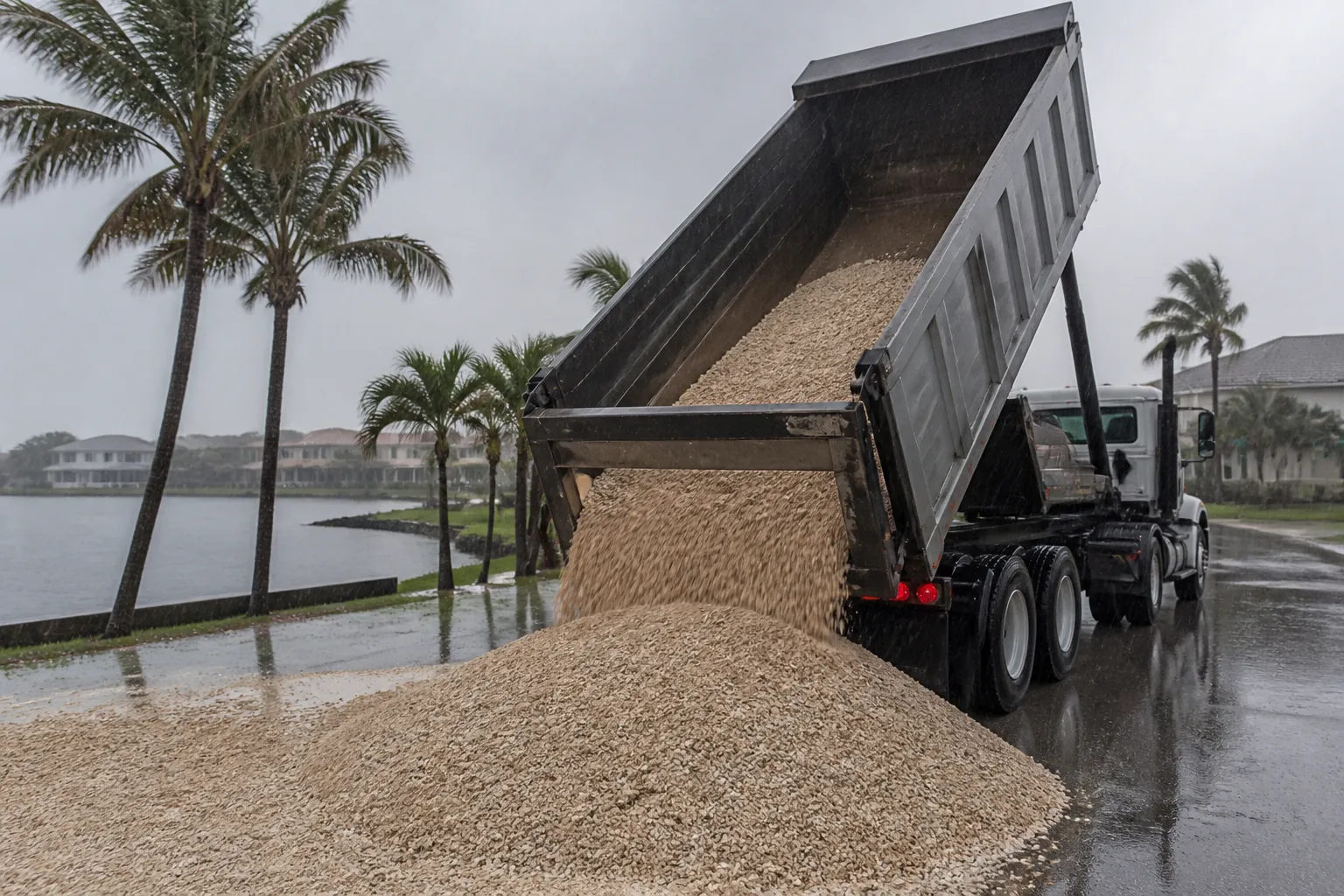
To plan for coquina shell delivery rain delays, check ground conditions as well as the forecast. Rain may leave the truck route or drop spot too soft for use. Share site details before dispatch, confirm any schedule change, and keep your DIY work plans flexible until the load arrives.
Why can rain delay a coquina shell delivery?
Rain can delay a shell delivery when access or unloading conditions become unsuitable. A clear sky does not mean wet ground is ready. Start with the shell delivery site readiness guide and the coquina shell driveway guide to separate delivery needs from your later DIY work.
The key issue is the whole route, not one puddle. A firm street may lead to a soft yard entrance. The chosen drop spot may hold water after nearby ground dries.
Your own vehicle reaching the spot does not settle the question. A loaded delivery setup has different space and ground needs. Let the supplier review the route rather than assuming it will work.
Tropical Yards sells coquina shell and offers dump trailer delivery. Its configured delivery area runs from St. Augustine to Daytona Beach. Palm Coast buyers should confirm the details for their own address.
Rain can affect two separate plans: delivery and spreading. A load might arrive before your work area is ready. Or your work area may be firm while the truck route remains wet.
Keep those decisions separate when booking. Ask what site information is needed before dispatch. Then plan your own work around actual ground conditions, not a fixed weather forecast.
A short shower and a long wet spell need different reviews. Neither sets a fixed waiting period. Site access, standing water, and the next forecast all deserve a fresh check.
What should you check before the delivery leaves?
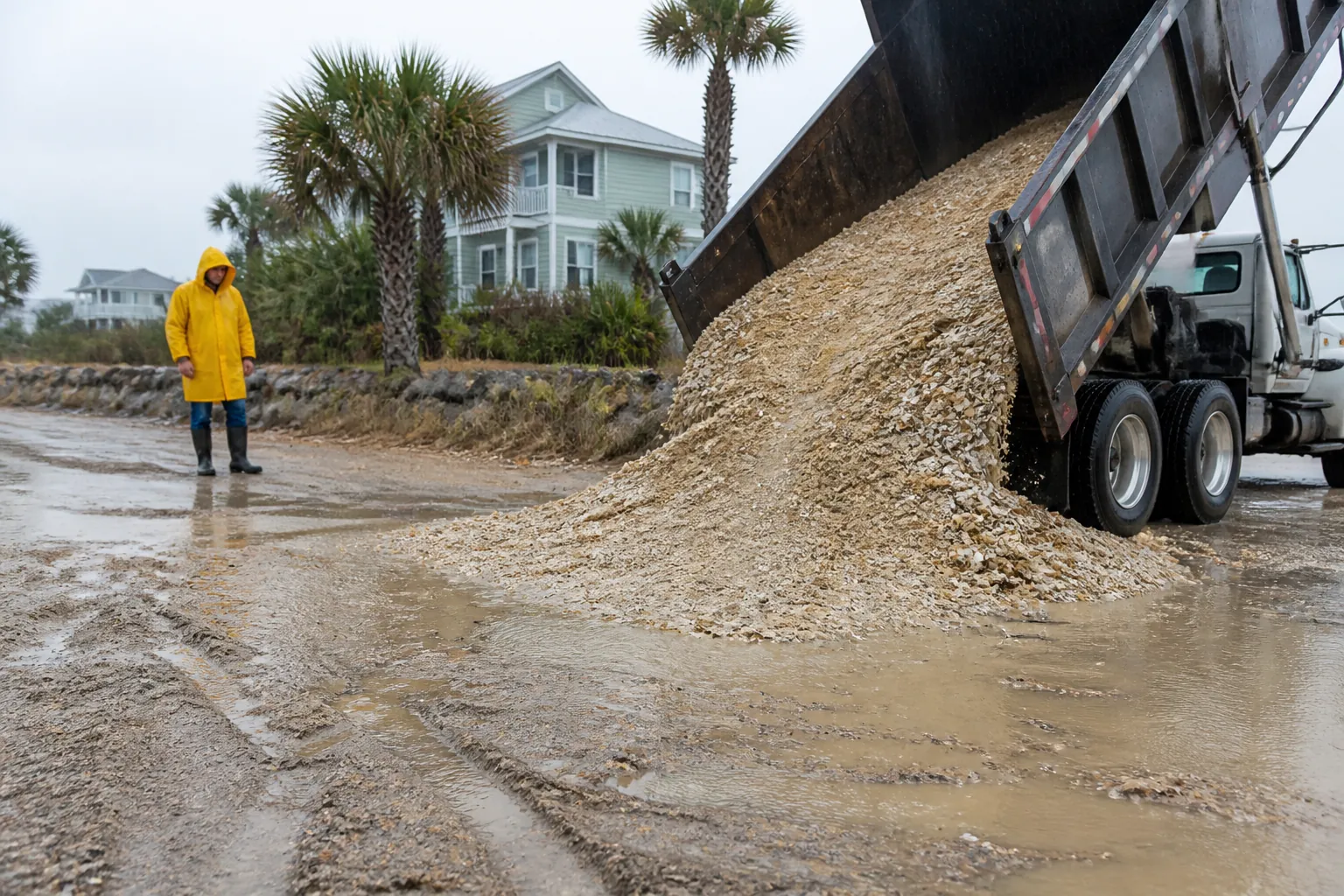
Check the entrance, travel route, turning space, and drop spot before dispatch. Report changes since you first discussed the order. The delivery access preparation guide helps frame that review, while the coquina shell driveway planning guide keeps the intended project in view as you choose a suitable drop location.
Walk the route only when conditions are safe. Look from a firm surface where possible. Do not enter standing water or approach flooded electrical equipment to take photos.
Photos can help explain the layout, but they have limits. They cannot prove that soil can support a load. Share what you see without calling the ground safe for a truck.
Use current photos rather than pictures from the booking date. Show the entrance and the full route along with close-ups. Include the proposed drop spot and any nearby obstructions.
A simple update should cover the main changes. Tell the supplier about water, soft areas, and blocked access. Ask which details need review before the trip proceeds.
- Check for standing water along the proposed route and drop area.
- Report new soft spots, ruts, or washouts near the entrance.
- Confirm that gates and parked vehicles leave the agreed route clear.
- Send current photos from safe ground when the supplier requests them.
- Ask the supplier to review any proposed change before dispatch.
Should you keep the date, move the drop, or wait?
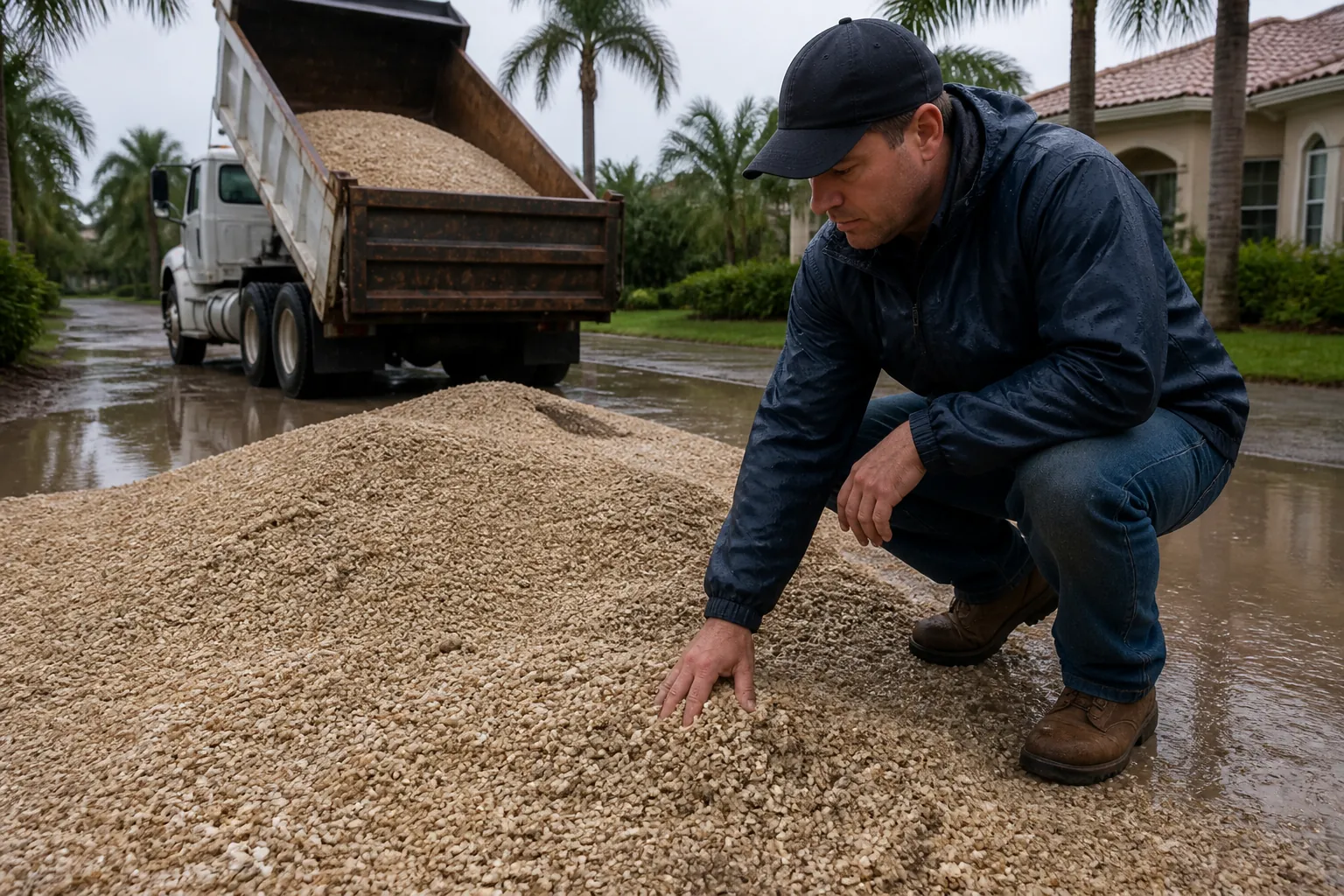
Base the choice on site conditions and the supplier's review. Keeping the date, changing the drop spot, and postponing each have tradeoffs. Use the shell delivery readiness checklist for access questions and the coquina shell driveway project guide to judge how a changed drop affects your own work.
There is no single rain threshold that fits every property. A weather forecast cannot measure firmness at your entrance. A supplier may need more details before discussing the next step.
A different drop spot can change your DIY workload. A firm area farther from the project means more hauling. Think through that distance before agreeing to move the pile.
Waiting may protect your work plan from a poorly timed load. It also means revising any help or tool plans. Confirm the new delivery details before making those bookings.
Ask about the supplier's weather change process before the delivery day. Do not assume a new date is held automatically. Also confirm who should contact whom if conditions change again.
The options below are discussion points, not delivery approval. Any alternate location still needs review. If no suitable route exists, ask about postponing rather than testing soft ground.
| Choice | What to confirm | Main tradeoff |
|---|---|---|
| Keep the planned date | Route and drop spot remain suitable. | DIY spreading may still need to wait. |
| Use another drop spot | Supplier accepts the revised location. | More material hauling may be needed. |
| Postpone the load | New date and contact steps are confirmed. | Other project plans may need to move. |
How can you prepare a drop spot before rain?
Choose a drop spot that keeps the pile out of active drainage routes and essential access. Discuss that location before delivery, especially if rain is expected. Review the coquina delivery site preparation guide alongside the coquina shell driveway planning guide so the drop supports your intended project.
Keep your planned pile clear of doors, gates, and paths. Leave room for people to move around it. Remember that a pile can spread beyond a small marked point.
Do not choose a low spot simply because it is unused. Water may collect there during a storm. A dry-looking area can still be part of the yard's runoff route.
Ask about the likely pile footprint for your order. Then compare that space with your chosen location. Do not assume the load will fit a tarp or marked square.
A tarp does not make soft ground suitable for truck access. It may help keep material separate from soil in some setups. Confirm its use and placement with the supplier first.
Do not improvise boards or ramps for a loaded delivery setup. Site access needs a separate review. For drainage or structural concerns, consult a qualified local professional before delivery.
Prepare only what you can do safely yourself. Tropical Yards supplies material and delivery, not yard preparation or cleanup. Arrange any needed site work separately.
- Choose a proposed drop spot away from drains and essential walkways.
- Confirm the location and expected pile space with the supplier.
- Move loose tools and personal items out of the agreed area.
- Discuss any ground cover before placing it at the drop spot.
Does wet weather change how you judge the shell?
Wet shell may look different from dry shell, so judge appearance with care. Rain alone does not settle questions about material type or order size. Use the coquina shell material specifications guide and the shell sample before buying guide to ask clear product questions before placing your order.
If color matters to your project, ask to compare samples thoughtfully. A wet sample may give a different impression than a dry one. Ask what variation to expect in the supplied material.
Keep appearance separate from order quantity. Measure the intended project area before ordering. Confirm how the material is sold and what project details the supplier needs.
Do not add extra shell merely because rain is forecast. Rain does not define the amount your project needs. Layout, intended depth, and ground preparation still need their own review.
The Tropical Yards coquina shell page describes the product and DIY use. It does not establish your site's drainage needs. Nor does it replace a review of a weak driveway base.
Ask product questions before dispatch rather than judging a wet pile alone. Confirm the material description and any relevant size details. Keep those answers with your order notes.
If the planned use involves vehicles or drainage changes, seek qualified guidance. Material choice is only one part of that project. Do not treat a shell top layer as a repair for underlying ground problems.
When should you start spreading shell after rain?
Start your DIY work when the work area is suitable, not after a set number of hours. Delivery timing and spreading timing may differ. The coquina shell driveway guide explains the broader project context, while the shell material specifications guide helps you keep product questions separate from ground conditions.
Look for signs that the surface still needs time. Standing water, deep footprints, and fresh ruts call for caution. These checks do not prove that a vehicle base is ready.
Avoid moving shell into puddles just to keep the project going. You may hide low spots that need review. Stop and ask a qualified professional if drainage or base concerns remain.
Plan your work in stages rather than one tight workday. Delivery can be one stage, with spreading scheduled later. Keep rented tools and outside help flexible where possible.
Before hauling from the pile, check your walking route. Wet ground and loose shell can make footing less secure. Follow the instructions for your tools and use suitable protective gear.
Keep unused material clear of routes that must stay open. Check the pile after more rain from a safe location. Do not push loose shell into drains or roadside channels.
If plants border the project, keep their growing needs in mind. Do not use excess shell to fill planting beds without checking suitability. UF IFAS Extension's regional plant care guidance can help you frame those questions.
How should you handle a worsening forecast?
Contact the supplier when the forecast or site conditions change. Ask for a clear status update before planning around the load. Keep the shell delivery site readiness guide handy, and revisit the coquina shell driveway planning guide if weather changes the scope or order of your DIY work.
Use official weather information rather than a single app symbol. Forecast rain is one part of the decision. Current ground conditions and local alerts matter as well.
For tropical weather, follow National Weather Service hurricane safety planning guidance. Protecting people comes before receiving landscape material. Follow local officials' directions if severe weather threatens.
Do not rush a delivery to beat an approaching storm. A new pile can complicate access and storm preparation. Discuss timing early instead of creating a last-minute unloading deadline.
Keep your message brief and specific. State what changed, when you checked, and where water remains. Ask what further details are needed before a delivery decision.
Keep a written note of the confirmed plan. That avoids confusion when several project dates change. Do not treat a request for another date as a confirmed booking.
- Confirm whether the planned delivery is still under review or scheduled.
- Ask how and when to share another site condition update.
- Confirm any revised drop location before moving other project plans.
- Record the agreed next step and the person responsible for contact.
Questions about next steps? Call Tropical Yards at 772-267-1611 or review coquina.
Frequently Asked Questions
Should I stay home all day if rain is forecast?
Ask the supplier what presence or contact arrangements the delivery needs. Do not assume you must wait outside or remain home all day. Confirm how a weather change will be shared. Keep your phone available as agreed, and avoid making a separate work commitment until the delivery status is clear.
Can shell be dropped in the street instead of a wet yard?
Do not treat the street as an automatic backup location. Public rights of way, traffic access, and local rules may apply. Ask the relevant local authority about restrictions, then discuss any allowed location with the supplier. The supplier still needs to review unloading access and the proposed drop spot.
Should I cover the shell pile when more rain is expected?
Ask about cover needs for the supplied material and your setup. A loose cover can create problems in windy weather. Do not climb an unstable pile or work outside during hazardous conditions. If a cover is appropriate, follow its instructions and keep it clear of paths, drains, and access routes.
What if my homeowners association limits material storage?
Check the rules before setting a delivery date. Ask about approved pile locations, storage periods, and any notice needed. Share those limits when discussing the drop spot. If rain may extend the project, seek clarification from the association early rather than assuming the original permission covers a longer storage period.
Does a rain delay mean I should switch to another landscape material?
A delivery delay alone is not a reason to change materials. First review your intended use, site conditions, and project goals. Access problems may affect other bulk materials too. If your concern is drainage or the ground beneath the surface, seek qualified guidance before choosing a different top layer.
Sources
- Hurricane Safety Planning, National Weather Service
- Coquina Shell Landscaping, Tropical Yards
- St. Johns County Horticulture Fact Sheets, UF IFAS Extension
Call 772-267-1611 to talk through next steps.