Coquina Shell Drainage Uses in Palm Coast, FL
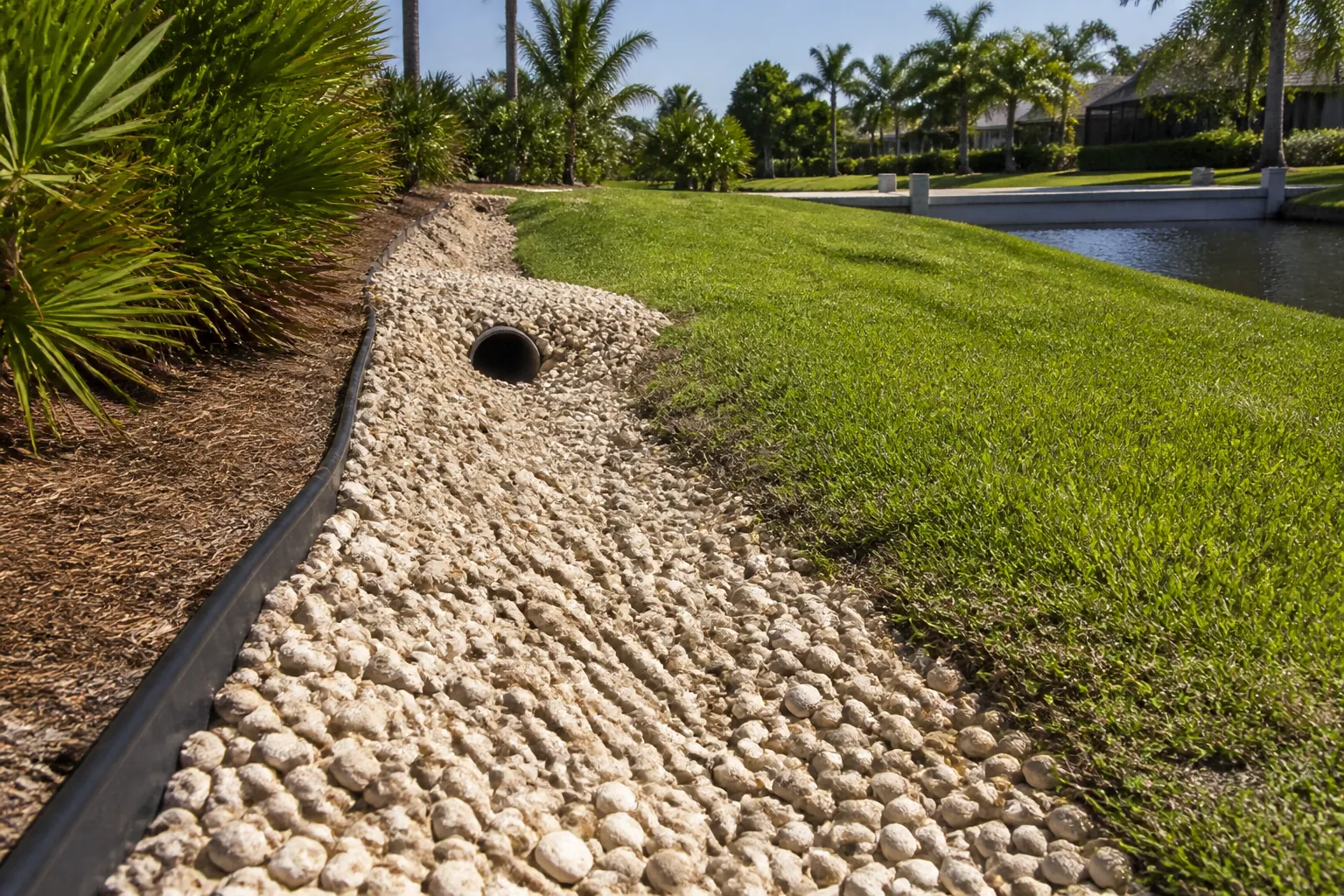
Common coquina shell drainage uses involve surface cover within a broader yard plan. Shell alone does not resolve standing water or poor grading. Before buying, check where rain collects and where it can go. Palm Coast homeowners should confirm the base, material mix, and intended use before placing an order.
Where do coquina shell drainage uses fit?
Shell may serve as surface cover where the full site plan supports that use. It should not be treated as a drain by itself. Start with the coquina shell driveway guide for surface planning. Review coquina shell material specifications before assuming the supplied mix will suit your drainage goal.
Separate the look you want from the water problem. A shell finish may suit a yard path or open area. That does not establish how water will move through the finished surface. The soil and base beneath it still matter.
Ask what the proposed shell layer is meant to do. Is it simply replacing bare ground? Is it part of a path with a planned base? Or are you hoping it will remove a puddle? Each goal calls for different checks.
Tropical Yards supplies coquina shell and tropical plants. It offers dump trailer delivery from St. Augustine to Daytona Beach. It does not design drainage systems or provide yard installation labor. Keep material ordering separate from site design and construction.
The Tropical Yards Coquina Shell Landscaping page supports its product and DIY context. It does not establish a tested drainage rate for your yard. Ask about current material details rather than relying on broad claims about shell.
For a small surface project, begin with a clear use statement. For example, describe a yard path away from persistent wet spots. If the real goal is to stop flooding, seek a qualified drainage assessment before choosing the finish material.
What should you check before covering a wet area?
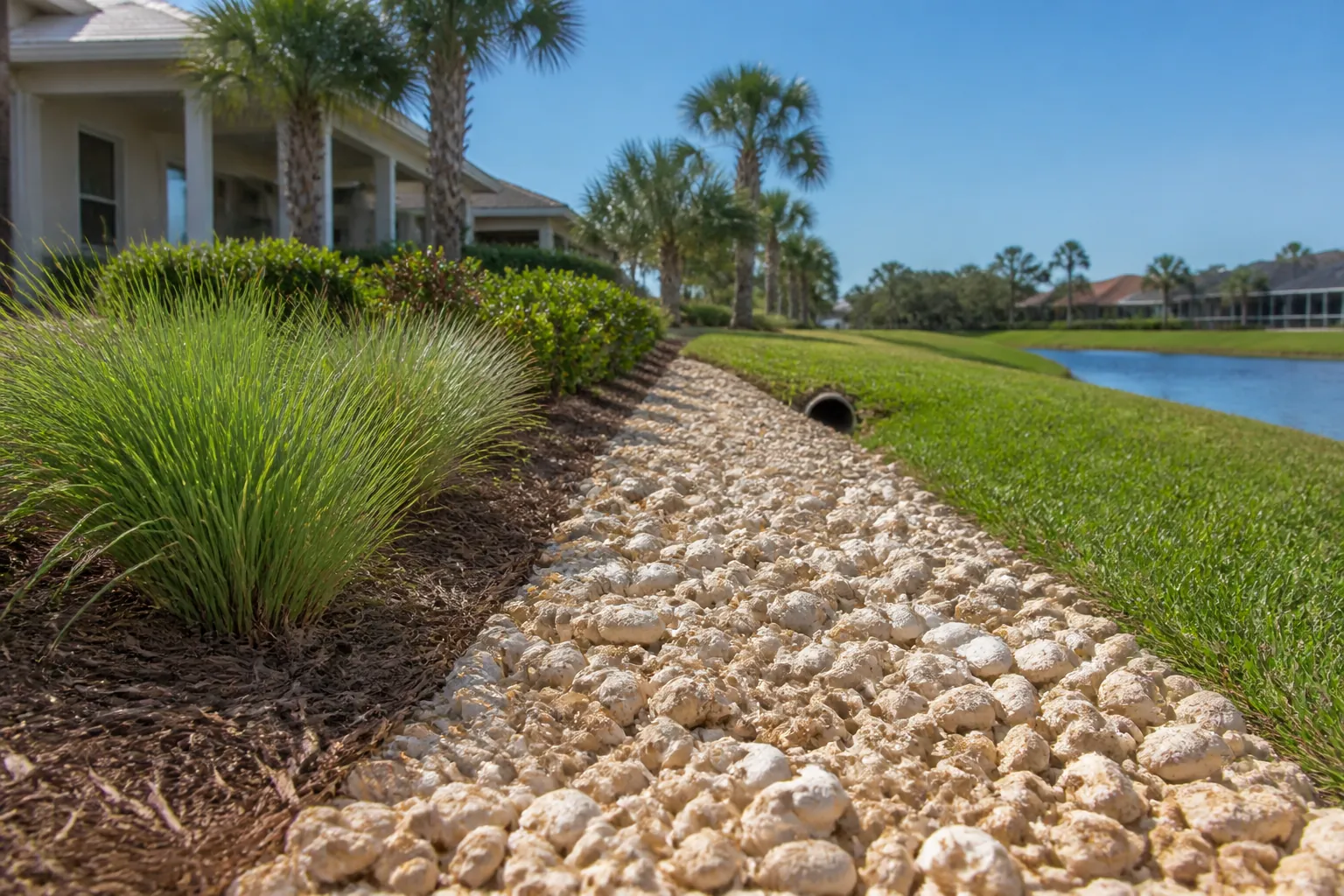
Check the source, route, and reach of the water before adding shell. A dry surface view can hide the real issue. Use sampling coquina shell before buying to assess the material itself. Pair that with coquina shell material specifications when discussing your intended use and the site's condition.
Watch the area during ordinary rain from a safe place. Note where water first appears and how it moves. Look again after the rain ends. Record what remains wet and what dries sooner, without assuming either pattern explains the cause.
Water may arrive from more than one place. Roof runoff, nearby hard surfaces, and low ground can all deserve review. A shell layer does not tell you which source matters most. Photos and brief notes help explain the pattern to a qualified professional.
Use a simple site record before seeking advice or ordering material. Keep each note tied to a visible feature. Mark uncertain points as questions rather than treating a rough sketch as a drainage design.
Do not dig test holes near buried lines or unknown services. Use the proper utility location process before any digging. Where water affects a building, septic area, or neighboring land, ask the relevant qualified professional to review the site first.
- Mark the spots where water first collects during normal rain.
- Note nearby roof outlets, paved edges, beds, and low areas.
- Photograph the same locations before rain and after it ends.
- Record any flow toward buildings, property lines, or shared drains.
- List past changes that may have altered the ground level.
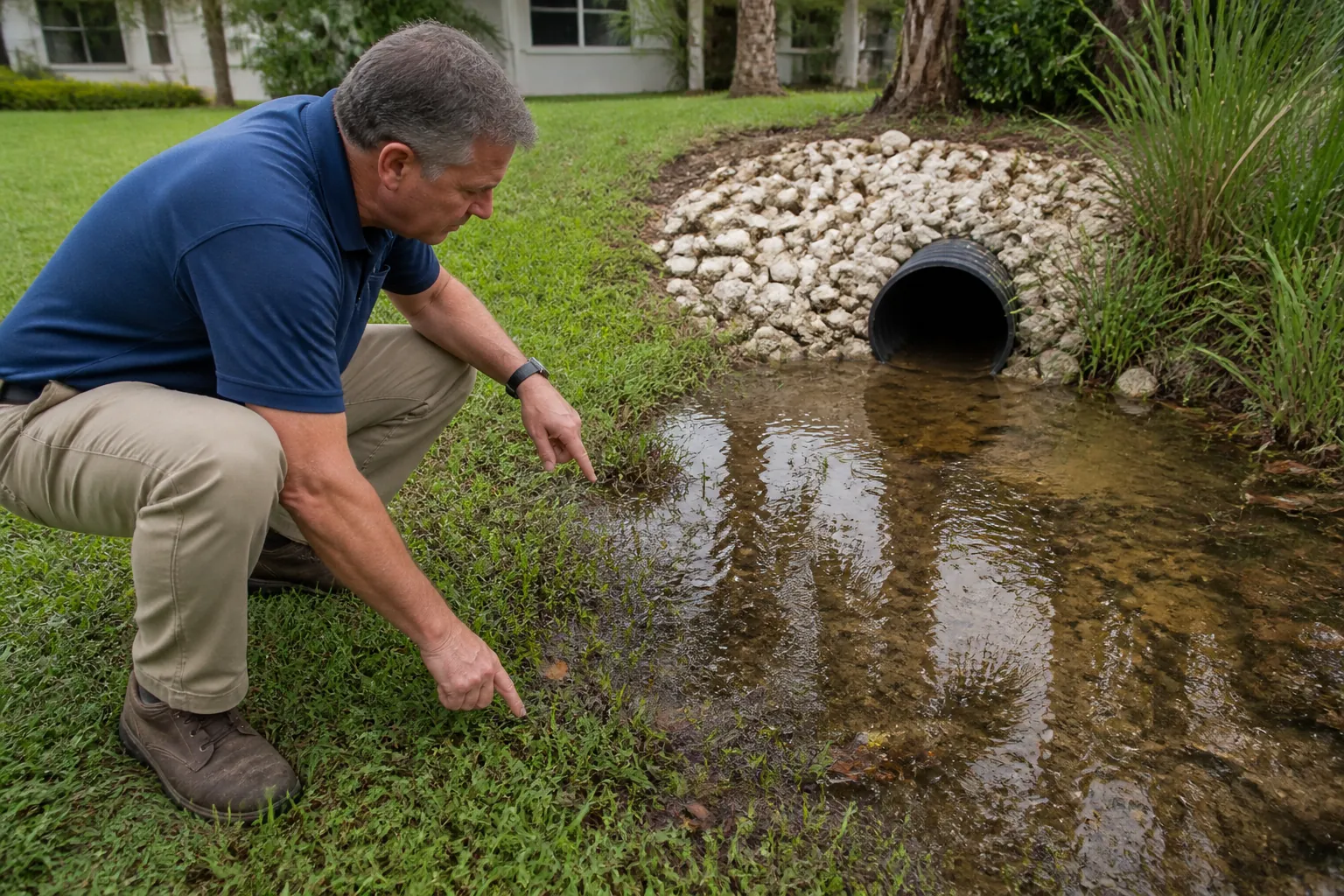
Will shell fix standing water or replace a drain?
Do not assume shell will fix standing water or replace a designed drain. Those jobs require a clear water route and site review. The coquina shell driveway guide addresses a surface use. Check coquina shell material specifications separately before assigning the material a drainage role it has not been shown to meet.
Think of surface cover and water management as separate decisions. One concerns what lies underfoot. The other concerns where rain goes and how it leaves an area. A project can need both decisions, even when the final surface looks simple.
Adding material also changes the finished ground level. That change deserves care near walls, doors, paved edges, and drains. Do not choose a fill depth from a general blog post. A qualified professional should assess any effect on nearby structures or water routes.
A drain trench is a different project from spreading shell. Its materials, route, outlet, and other parts need a suitable design. Do not substitute shell for specified drain material unless the responsible professional confirms that choice for the project.
Avoid covering an unknown problem to make the yard look dry. Once material is spread, the original ground surface becomes harder to inspect. Keep photos and measurements before work starts. These records can help if a professional needs to review the area later.
Persistent ponding, recurring water near a building, or flow across boundaries calls for further advice. Confirm any local review or permission needs with the appropriate authority. Buying a surface material should come after those questions, not stand in for answering them.
Which shell uses need different checks?
A path, planted bed, and drainage trench need different checks. They should not share one material decision by default. Compare the coquina shell driveway guide with your actual project goal. Use sampling coquina shell before buying to examine the finish, while keeping drainage design questions separate from appearance and feel.
Start by naming the part of the project you are buying. Surface cover is different from a base layer. A decorative edge is different from a water outlet. Clear terms help prevent an order based on two different ideas of the same job.
The table below is a planning aid, not an approved design. It shows which question comes first for each use. It does not establish that shell suits every listed setting or that one layer can serve several roles.
For planted spaces, check the needs of the plants before changing the ground cover. UF IFAS Extension's St. Johns County Horticulture Fact Sheets provide regional plant care education. They do not approve a shell layout or establish what a particular yard needs.
Where a yard project has several parts, ask for a plan that labels them. Keep the finished surface, base, edging, and drainage parts distinct. Then order materials against those labels, rather than using one broad estimate for the whole area.
| Proposed use | First check | Decision limit |
|---|---|---|
| Yard path surface | Base and intended foot traffic | Appearance does not establish drainage. |
| Driveway surface | Vehicle use and full surface plan | Shell alone does not define the base. |
| Cover near plants | Plant needs and bed layout | Do not assume every plant suits it. |
| Drain trench material | Qualified design and material specification | Do not substitute without review. |
How can you check the material before ordering?
Ask what the current shell product contains and how it is sold. Then compare those details with your project's stated needs. Review coquina shell material specifications before asking product questions. Use sampling coquina shell before buying to plan a closer look, without treating a sample as a drainage test.
Do not assume that the word shell describes a fixed mix. Ask about piece size, smaller material, and other relevant product details. If your plan names a specific material standard, share it with the supplier before deciding what to buy.
Ask how closely a sample reflects the material available for your order. A sample helps you discuss texture and appearance. It does not prove how a full area will behave after placement, use, or rain. Keep those separate questions in your notes.
A home jar test or a bucket of shell cannot validate a yard drainage design. The full ground profile and water route are missing. If a project requires measured drainage performance, ask the responsible professional what evidence and material checks are needed.
Make a short buying checklist before you call. It helps keep the discussion focused on facts the supplier can confirm. Leave open items marked as open, and resolve design questions with the person responsible for the site plan.
- Describe the exact surface use and the planned project area.
- Ask about current shell size, smaller pieces, and product variation.
- Confirm the sales unit before comparing it with your quantity estimate.
- Ask what sampling options exist before making the purchase decision.
- Share any written material specification before placing your shell order.
How should delivery fit into a drainage project?
Plan delivery after the site questions and material choice are settled. A delivery load still needs a suitable place to unload. Review coquina shell delivery site readiness before arranging access. Keep coquina shell material specifications handy so the order describes the material you intend to use, rather than an assumed substitute.
Tropical Yards offers dump trailer delivery of plants and coquina shell. Its stated delivery range runs from St. Augustine to Daytona Beach. Confirm the details for your Palm Coast address and proposed order. Do not assume a date or unloading arrangement is available.
Discuss the route onto the property before the delivery is set. Describe gates, turns, overhead obstacles, slopes, and soft ground. Ask the supplier what access information it needs. The delivery team must assess what is suitable for its equipment.
Choose a proposed unloading area without blocking drains or needed access. Keep it clear of the area still awaiting drainage review. A large pile can make later work harder to organize. Confirm the final unloading location with the supplier before arrival.
Delivery is not spreading, grading, trench work, or cleanup. Plan who will move the shell after unloading and what tools they will use. For larger or more complex work, arrange a separate qualified contractor. Do not include that labor in the supplier's role.
Check weather forecasts as the date approaches and discuss concerns with the supplier. National Weather Service Hurricane Safety Planning guidance is relevant to broader storm preparation. It does not establish local delivery conditions. If severe weather threatens, follow official guidance and revisit the project schedule.
What should you settle before starting DIY work?
Settle the water plan, material choice, quantity basis, and work roles before starting. Leave uncertain drainage decisions with a qualified professional. Revisit the coquina shell driveway guide if the project includes vehicle use. Check coquina shell delivery site readiness so the delivery plan supports the work without blocking access.
A useful DIY plan states what the project will and will not change. It should name the finish area and its edges. It should also identify any nearby water route that must remain open. Do not treat a rough sketch as approval for grading changes.
Measure the area only after its boundaries are clear. The planned depth must come from the project requirements, not a guessed drainage benefit. Confirm the supplier's sales unit before converting your measurements. Ask for help if the quantity calculation remains unclear.
Decide how you will check the work after placement. Record the finished edges and nearby drains with photos. Observe the area during later rain from a safe place. If new pooling or flow appears, pause further changes and seek qualified advice.
Keep your final notes with the order details and any separate contractor plan. That makes later questions easier to answer. For Palm Coast buyers, the goal is a clear purchase and work scope, with no assumption that shell alone solves a wet yard.
- Confirm the drainage questions before choosing the final surface material.
- Check any required permissions with the appropriate local authority.
- Match the product details to the agreed purpose and plan.
- Confirm measurements, sales units, delivery access, and the unloading location.
- Arrange separate labor and review any concerns before work begins.
Questions about next steps? Call Tropical Yards at 772-267-1611 or review coquina.
Frequently Asked Questions
Can I place coquina shell over landscape fabric?
Do not choose fabric without considering the whole project. Its suitability depends on the planned surface, base, soil, and intended use. Ask the project professional or material manufacturer about the proposed layer arrangement. Fabric should not be treated as proof that a shell surface will drain well or remain free of weeds.
Can shell go around a buried drain cleanout?
Keep the cleanout identifiable and accessible, and ask the responsible professional about the proposed finish level. Do not bury caps or cover inspection points during a surface project. Mark their locations before unloading material. If you cannot identify a fitting, have it checked before placing shell around it.
What if I do not know where underground pipes run?
Pause any work that involves digging or disturbing the ground. Use the proper utility location process and ask about lines that may need separate locating. Do not assume an old yard sketch shows every pipe or cable. Resolve unknown services before setting the work area or choosing where to excavate.
Can I reuse shell already in the yard?
Possibly, but first identify its condition and intended new use. Existing material may include soil, roots, or other debris. Do not assume it matches a new product or a written material specification. Ask a qualified project professional if reuse would affect the plan, and keep quantity estimates separate until that question is settled.
What should I tell a separate drainage contractor?
Explain where water appears, how long it stays, and what you want to change. Share photos, a rough site sketch, and any known past work. State that you are considering shell as a surface material. Ask the contractor to distinguish drainage work from surface work and identify who supplies each material.
Sources
- Coquina Shell Landscaping, Tropical Yards
- St. Johns County Horticulture Fact Sheets, UF IFAS Extension
- Hurricane Safety Planning, National Weather Service
Call 772-267-1611 to talk through next steps.