Coquina Shell Vs Marble Chips in Flagler Beach, FL
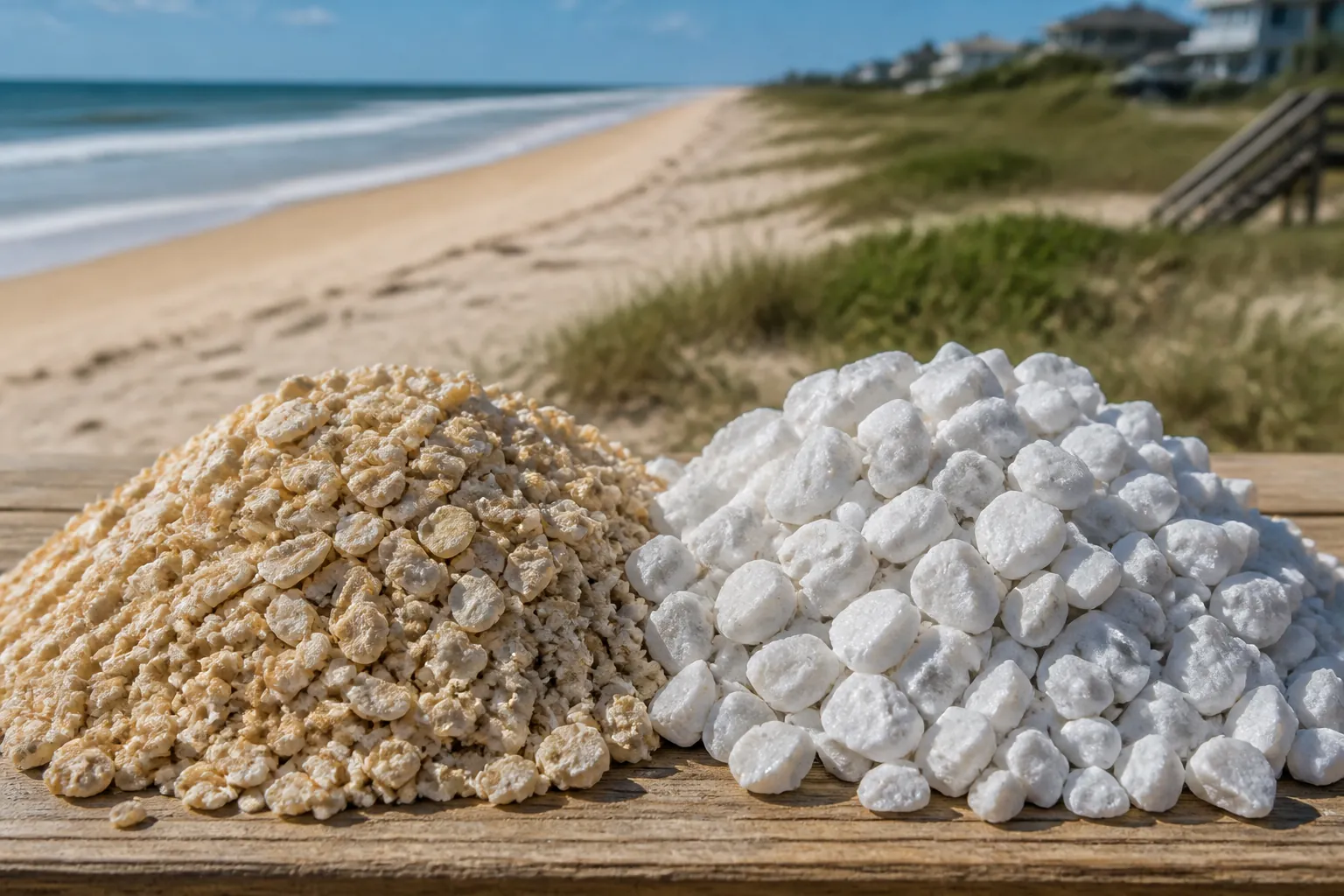
The choice of coquina shell versus marble chips starts with your intended use, preferred look, and site conditions. Compare actual samples before choosing either material. For Flagler Beach projects, also check plant needs, foot traffic, edging, and delivery access. Tropical Yards supplies coquina shell, but does not install it.
How do coquina shell vs marble chips compare?
Coquina shell and marble chips differ in their material, shape, and visual effect. Neither is the best choice for every yard use. Start with the job each must do. Review coquina shell material specifications for product details, and sampling coquina shell before buying for a closer look before ordering.
Coquina shell is a shell-based landscape material. Marble chips are pieces of crushed marble stone. Product names alone won't tell you the size range, amount of fine material, or exact color. Ask each seller for those details.
Choose a purpose before you choose a look. A planted bed, walking path, and vehicle area have different demands. A material that looks right beside a wall may feel wrong underfoot. A loose sample can't show how a full surface will perform.
Use the comparison below to build questions for each supplier. It isn't a ranking of strength or useful life. Those judgments need details about the actual product and how the site will be prepared.
Tropical Yards sells coquina shell and tropical plants. Its configured services don't establish marble chip sales. Use the marble column as a shopping checklist for another supplier, rather than a statement about Tropical Yards stock.
| Factor | Coquina shell | Marble chips |
|---|---|---|
| Material | Shell-based landscape material. | Crushed marble stone. |
| Appearance | Inspect shell forms and color. | Inspect stone shape and color. |
| Size range | Ask about fragments and fines. | Ask about chip sizes and fines. |
| Intended use | Confirm fit for your project. | Confirm fit for your project. |
| Order planning | Confirm quantity and delivery terms. | Confirm quantity and delivery terms. |
Which material looks right in your yard?
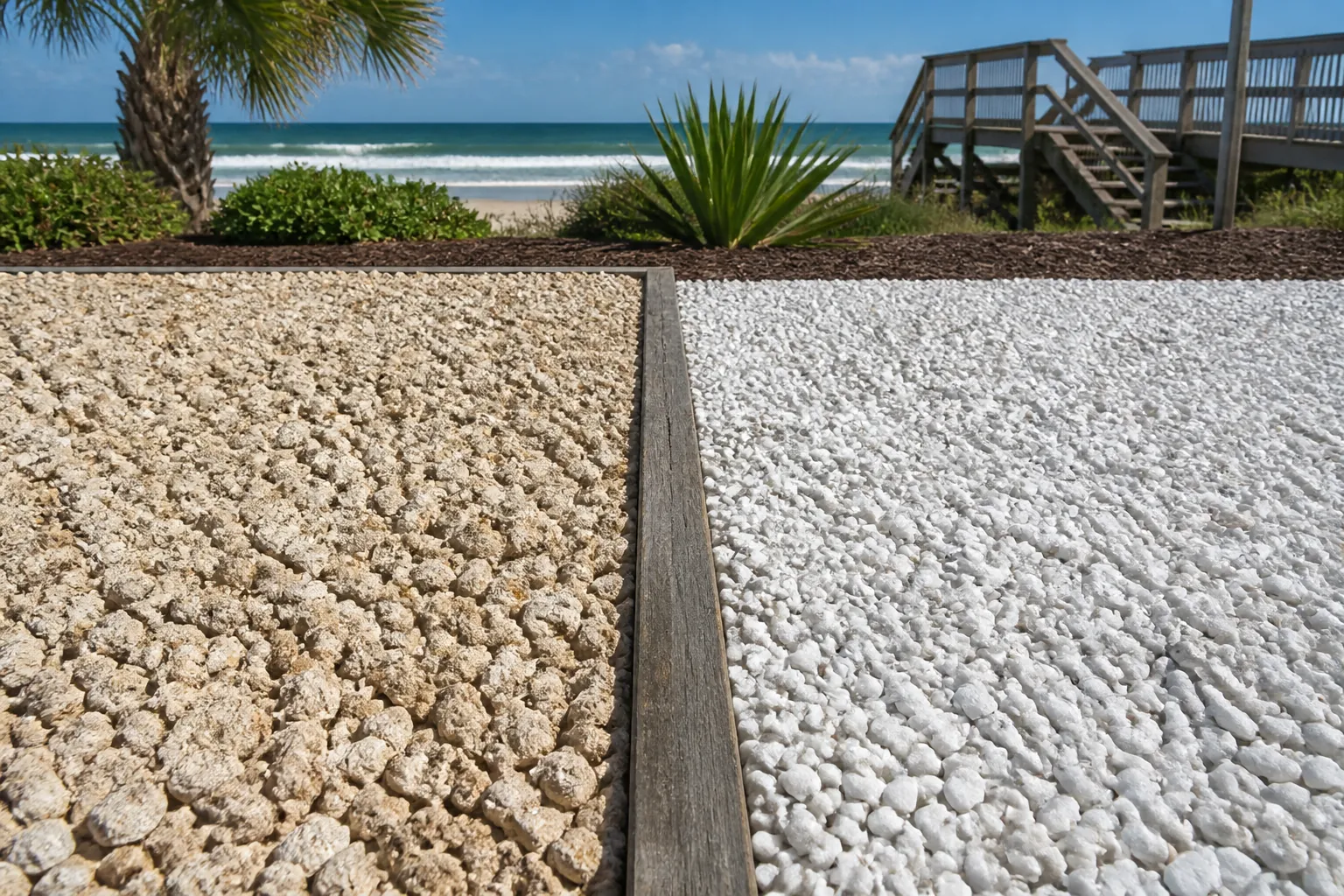
The better look is the one you prefer beside your home's fixed features. Compare real samples against walls, paving, and edging in natural light. Use sampling coquina shell before buying to plan that check. Then read coquina shell material specifications so the product description matches what you expect.
Photos help you collect ideas, but screens change how colors appear. Shade, wet weather, and nearby surfaces can change your view too. Set samples where the finished material would sit. Look from the street and from the rooms facing that area.
Compare both close-up texture and the view from a distance. Distinct shell pieces may stand out nearby. Across a broad bed, the overall tone may matter more. Ask yourself which view you will see most often.
Check the sample while it is dry and after wetting it. This helps you judge appearance in both states. It does not test drainage or predict long-term wear. Keep those questions separate from the color choice.
A small sample may miss some variation in a bulk load. Ask how well it represents the current product. Confirm which traits can vary, such as color and piece size. Don't build a whole design around one unusual piece.
- Place each sample beside the wall, border, or paving it will touch.
- View both samples in sun and shade before choosing your preferred tone.
- Ask each supplier how closely a sample reflects the material being sold.
What should you check for paths and vehicle areas?
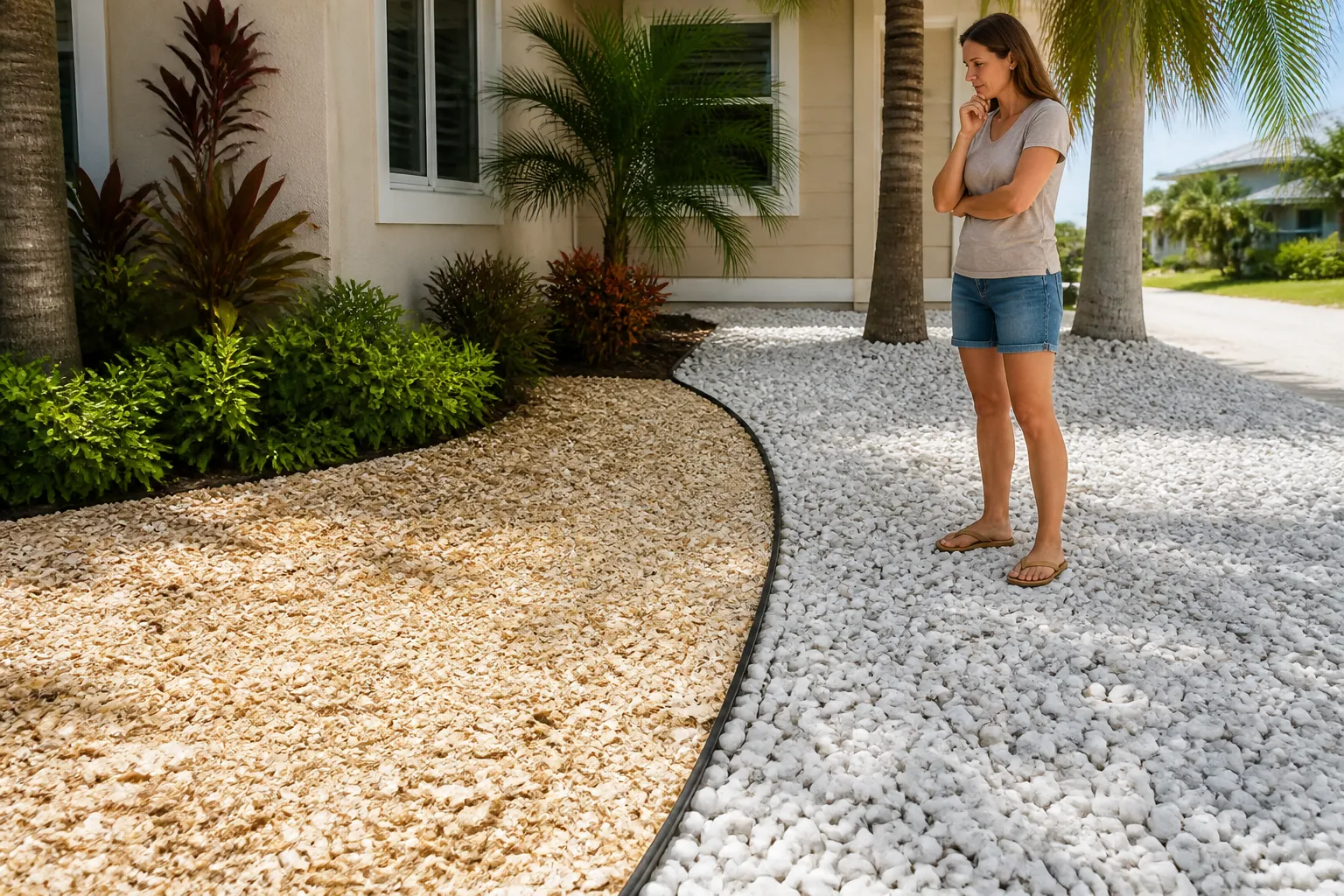
For paths and vehicle areas, judge the whole surface plan, not color alone. Ask how the chosen material fits the expected traffic and base. The coquina shell driveway guide covers the driveway topic. Pair that reading with coquina shell material specifications before deciding what product to order.
A garden path and a driveway serve different loads. They may need different preparation and edge support. Don't assume a decorative ground cover suits vehicle use. Ask a qualified site contractor to assess the project when loads or drainage are involved.
For a walking path, think about the people using it. Loose pieces can shift, and uneven pieces may feel rough underfoot. A hand sample won't show how a finished path feels. Consider access needs before choosing a loose surface.
Think about the places where materials meet. Shell or chips may move onto paving, grass, or steps. Plan how you will keep those edges clear. Ask about suitable edging without assuming one border works for every site.
Look at slopes, gates, downspouts, and low spots before ordering. These may affect the surface plan or reveal a drainage concern. Loose ground cover is not a substitute for fixing a water problem. Get site-specific advice where the cause is unclear.
Don't treat a layer of shell or marble as a tested pavement system. Depth, base, and preparation depend on the use and site. For projects that affect access or drainage, confirm requirements with the relevant local authority or qualified professional.
Can shell or marble chips work around plants?
Plant needs should guide any choice of ground cover near roots. Don't assume shell or marble will suit every plant bed. Check the actual material through coquina shell material specifications and inspect it through sampling coquina shell before buying. Get plant and soil advice before changing a sensitive bed.
Start with the plants already growing there. Note their names, condition, and watering setup. A bed that needs frequent digging may be awkward to cover with loose mineral material. Moving pieces aside adds work each time you plant or divide.
Soil conditions matter as much as appearance. Don't choose shell or marble to change soil pH by guesswork. Ask UF IFAS Extension about soil testing and how to read the results. Its St. Johns County Horticulture Fact Sheets offer regional plant-care education.
Keep water needs separate from the surface choice. Decorative material doesn't tell you when a plant needs water. Check how you will reach irrigation lines, inspect the soil, and tend plants. Avoid burying parts that need routine access.
Allow for growth when planning the covered area. Small plants may fill more space later. Leave room to work without stepping on plants or piling material against stems. Ask for plant-specific guidance where placement or depth is unclear.
Tropical Yards sells palms, hibiscus, bougainvillea, ferns, and other tropical plants. That does not mean each plant suits every shell-covered bed. Confirm the needs of the exact plant you plan to buy. The material choice should support that plan, rather than drive it.
What affects the full project cost?
Compare the whole project scope rather than the material quote alone. Quantity, delivery access, site preparation, and future care all shape the work involved. Use coquina shell material specifications to clarify the product. Check coquina shell delivery site readiness before asking for delivery details and making your buying decision.
Measure each area on its own, then sketch the layout. Separate paths from beds and any vehicle area. These spaces may call for different plans. Ask how the supplier converts your measurements into an order for the intended use.
Check the unit used in each quote. A bag, weight, or volume is not interchangeable without more information. Make sure both quotes cover comparable amounts and clearly name the product. Ask what is included rather than filling gaps with assumptions.
Preparation can change the scope of a DIY job. Existing material may need to move before the new cover arrives. Edging may need work too. Tropical Yards does not provide removal, installation, or cleanup labor, so arrange those tasks separately.
Avoid choosing a universal depth from a photo or broad online rule. The right plan depends on material, purpose, and site conditions. Get the needed guidance first, then confirm the quantity. An unclear plan makes quotes harder to compare.
- Compare quotes that name the product, quantity, unit, and delivery details.
- Include separate preparation and edging work when planning the full project.
- Confirm how leftover material will be stored or handled after spreading.
- Ask what future topping up would involve without assuming a fixed schedule.
How should you plan delivery and DIY spreading?
Plan where the load can be placed before you place an order. Dump trailer delivery still needs suitable access and a clear drop area. Read coquina shell delivery site readiness for planning questions. Use coquina shell material specifications to confirm what is coming and how you intend to use it.
Tropical Yards offers dump trailer delivery of plants and coquina shell from St. Augustine to Daytona Beach. For a Flagler Beach project, confirm the delivery details directly. Don't assume a date, placement option, or access route has been accepted.
Describe the site as it is, including gates, turns, slopes, and overhead limits. Tell the supplier about surfaces the trailer would cross. The delivery operator must assess what access is workable. Don't direct equipment onto an unconfirmed route.
Choose a proposed drop spot that keeps needed access clear. Think about how far you must move the material afterward. A convenient dump point may still leave a large hand-spreading task. Delivery does not include that work.
Plan storage if the material cannot be spread right away. Keep the pile from blocking daily access or mixing with unwanted debris. Ask the supplier about suitable temporary handling. Follow product guidance for tools and protective gear.
The Tropical Yards Coquina Shell Landscaping page is a first-party source for its shell product and DIY use. It does not establish an installation service. Have your own labor plan ready before arranging delivery.
- Measure the project area and confirm the intended use before requesting a quantity.
- Describe the access route and proposed drop area to the delivery supplier.
- Arrange the people and tools needed to move and spread the material.
- Confirm delivery details after the supplier has reviewed your site information.
What upkeep should you expect after spreading?
Plan to check either material for displaced pieces, leaf buildup, and unwanted growth. The amount of care depends on the site and how it is used. Review coquina shell material specifications for product details. Revisit the coquina shell driveway guide if your project must serve vehicles as well.
Neither choice removes the need to watch the area. Windblown seeds and debris can collect on a loose surface. Nearby trees and lawn edges may add work. Base your care plan on what reaches that part of your yard.
Decide how you will pick up leaves without removing too much material. Test any method in a small area first. Check edges after routine yard work. Pieces moved onto walkways or lawn may need to be put back.
Look for bare patches, mixed soil, or pieces moving beyond the border. Find the cause before adding more material. Repeated movement may point to traffic, runoff, or an edge problem. More shell or chips may not solve that cause.
Keep a record of the product you bought. Save the description, quantity, and a few clear photos. This can help when discussing a later order. A future batch may differ, so compare a fresh sample before adding it.
Choose shell if its actual look and confirmed use fit your plan. Choose marble if that product better meets the same checks. If neither sample feels right, pause the order. Revising a small plan is easier than changing a full yard.
Questions about next steps? Call Tropical Yards at 772-267-1611 or review coquina.
Frequently Asked Questions
Does Tropical Yards sell and install both materials?
The supplied service facts establish coquina shell sales, tropical plant sales, and dump trailer delivery. They do not establish marble chip sales. Tropical Yards does not install, design, maintain, trim, or clean up yards. Buy marble through a supplier that confirms that product, and arrange any needed labor separately.
Can I mix shell and marble chips in one bed?
You can consider a mixed look, but first test a small sample. Once spread together, the materials may be hard to separate. Ask each supplier about the intended use and product traits. Separate bordered areas may make sense if you want two looks without blending the materials throughout the bed.
Should I put landscape fabric beneath either material?
There is no single answer for every site. The choice depends on the use, soil, plants, and planned upkeep. Fabric can complicate later digging or changes, so think through those tasks first. Ask a qualified landscape professional or Extension educator about your site rather than treating fabric as a required step.
Are either of these materials suitable for pets or bare feet?
Don't assume either product is soft underfoot or suitable for every pet. Inspect actual pieces and consider where people and animals will walk. Loose, rough, or sharp pieces may be a concern. Choose another surface where needed, and ask your veterinarian about risks tied to a pet's habits or health.
Do I need local approval before changing a driveway?
Confirm local requirements before changing a driveway or work near a road. Rules may depend on the property and project scope. Ask the relevant Flagler Beach or county authority which office handles your address. A material supplier's product guidance does not replace approval, drainage review, or advice from a qualified professional.
Sources
- Coquina Shell Landscaping, Tropical Yards
- St. Johns County Horticulture Fact Sheets, UF IFAS Extension
Call 772-267-1611 to talk through next steps.