Coquina Shell Weight Per Yard in Ormond Beach, FL
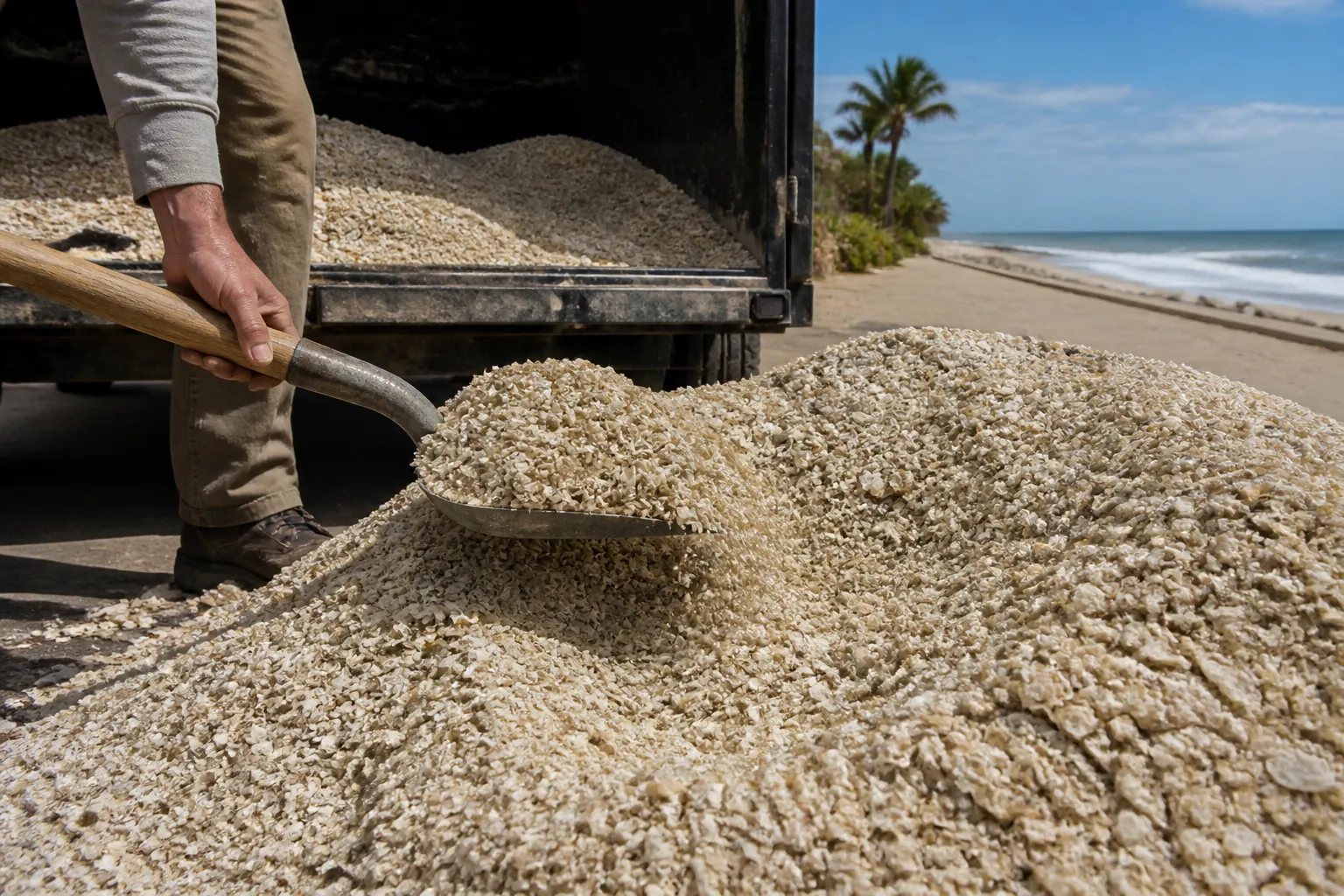
There is no single coquina shell weight per cubic yard that fits every load. Moisture, shell size, fines, and how tightly material settles can change its weight. Ask for a current estimate for the shell you're buying. Use that figure for load planning, while keeping volume and weight separate.
What does coquina shell weight per yard tell you?
Shell weight per yard connects material volume with estimated load weight. It helps you discuss hauling limits, but it doesn't tell you how much ground a load will cover. Start with coquina shell driveway planning for project context. Then review coquina shell material specifications to frame questions about the product.
A cubic yard measures space, not weight. It equals 27 cubic feet. A pound or ton measures weight. You need a product-specific link between those units before converting an order.
That link is often called bulk density. In plain terms, it's the weight of shell within a given space. The space includes small gaps between pieces. Those gaps help explain why solid-rock weight isn't a useful substitute.
For an Ormond Beach project, begin with the area's size and planned depth. Those figures give you a volume estimate. A supplier's current weight estimate can then help with transport planning.
Ask which unit appears on the quote and order record. Don't assume a sale by volume includes a scale weight. Tropical Yards sells coquina shell, but you should confirm how your specific order will be measured.
Keep the units beside each number in your notes. A bare number such as three could mean yards, tons, or loads. Clear units prevent that confusion.
| Measurement | What it tells you | What it doesn't establish |
|---|---|---|
| Cubic yards | Bulk material volume | Exact load weight |
| Pounds | Material weight | Coverage without depth |
| Tons | Weight in a stated ton unit | Volume without bulk density |
| Load count | Number of trips | Equal weight on each trip |
Why can two shell loads weigh different amounts?
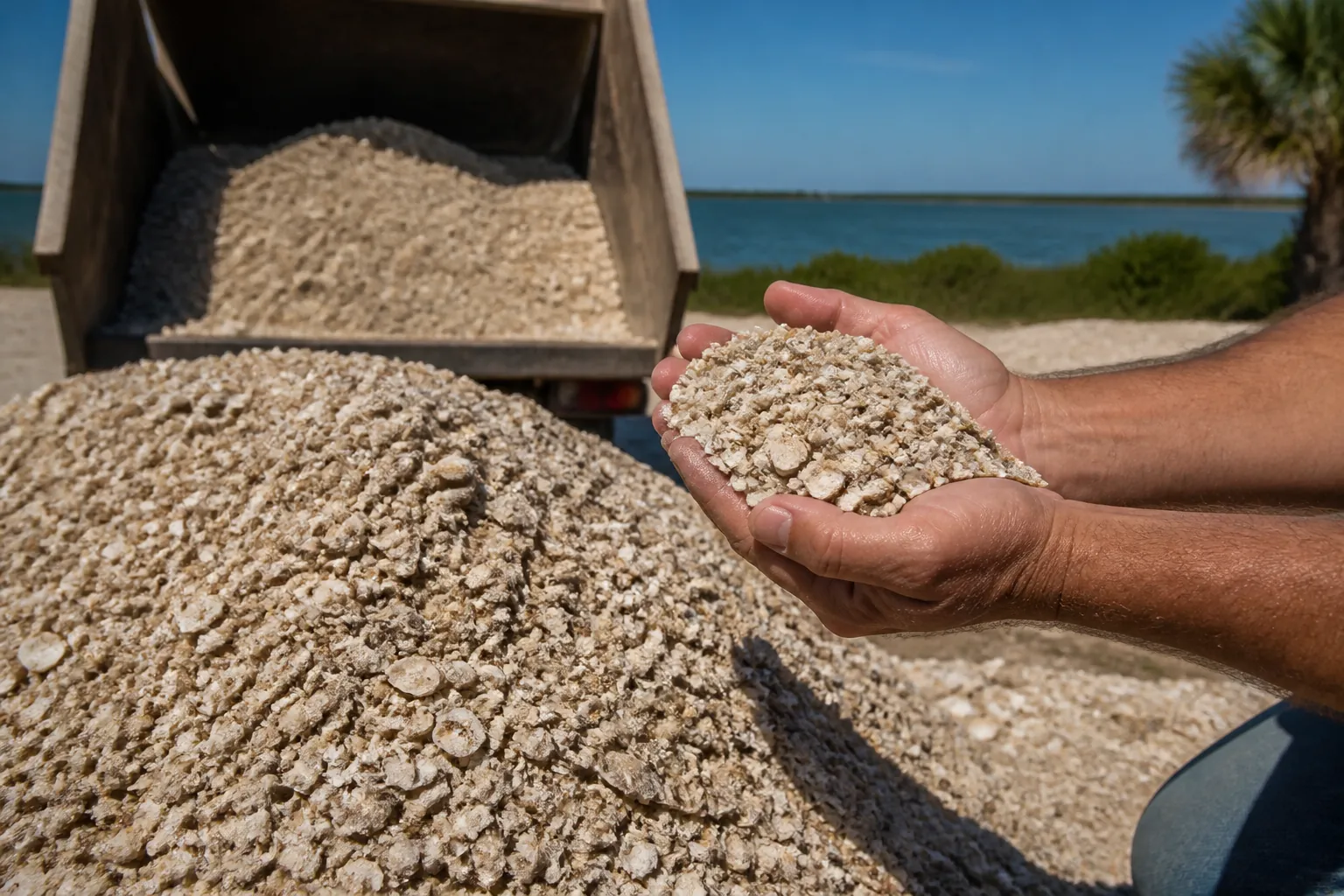
Loads with the same volume can have different weights because their contents and condition differ. Water adds weight, while piece size and fines affect how shell packs. Use coquina shell material specifications to guide product questions. A coquina shell sample before buying can help you compare visible texture.
Small shell pieces can fit into spaces between larger pieces. Fine material may fill more of those gaps. A densely packed yard can therefore weigh more than a loosely filled yard of another mix.
Water changes the picture too. Damp shell includes water within the load. A dry sample won't tell you the weight of wet bulk material. Ask what moisture condition the supplier's estimate describes.
Loading and settling can change the space a batch occupies. Material may shift during handling or travel. This is why a loose-volume figure and a settled-volume figure need clear labels.
A sample is useful for checking color, texture, and the range of pieces. It is less useful for proving full-load weight. A small scoop may not reflect the mix across an entire pile.
Avoid using a generic crushed-stone figure as a shell figure. Even two shell products may differ. Ask about the actual material being ordered, and note if the weight is estimated or measured.
How do you turn project size into shell volume?
Measure the area first, then choose a planned depth suited to the project. Convert those measurements into cubic yards before estimating load weight. Use coquina shell driveway planning for the broader project. Review coquina shell material specifications before treating any coverage figure as a match for your chosen shell.
For a rectangle, multiply length by width to find square feet. Use feet for both measurements. Divide odd shapes into smaller rectangles, then add their areas. Keep separate notes for areas with different planned depths.
When depth is in inches, divide area times depth by 324. The result is cubic yards. This is a unit conversion, not a claim about shell performance. Your chosen depth still needs its own project review.
For example, a 12-foot by 9-foot space has 108 square feet. At a hypothetical two-inch depth, the volume is about 0.67 cubic yard. That example explains the math; it doesn't recommend two inches.
Loose shell may settle, and the ground may have low spots. Ask how those factors affect the order estimate. Don't add an arbitrary allowance without knowing what it covers.
- Measure each project area and record all lengths in feet.
- Choose a planned depth after reviewing the use and site conditions.
- Multiply square feet by depth in inches, then divide by 324.
- Ask how settling, uneven ground, and handling affect the final order.
- Apply a confirmed weight estimate only after establishing the needed volume.
Can your truck or trailer carry the shell?
A truck bed or trailer may have room for more shell than it can carry. Check weight limits before planning pickup, and confirm that pickup is offered. Compare coquina shell material specifications with the load estimate. Review coquina shell delivery site readiness if delivery may be the better choice.
Space is not the deciding limit. A full bed can exceed a vehicle's rated load capacity. The safe load depends on the exact vehicle, trailer, hitch, tires, and other equipment in use.
Read the vehicle labels and owner's manual. Account for people, tools, and other cargo as instructed. If the ratings are unclear, ask the manufacturer or a qualified hauling professional before loading.
An estimated shell weight is a planning input, not proof of a safe load. Don't plan to use every last pound of capacity based on a rough density figure. An actual load can differ from that estimate.
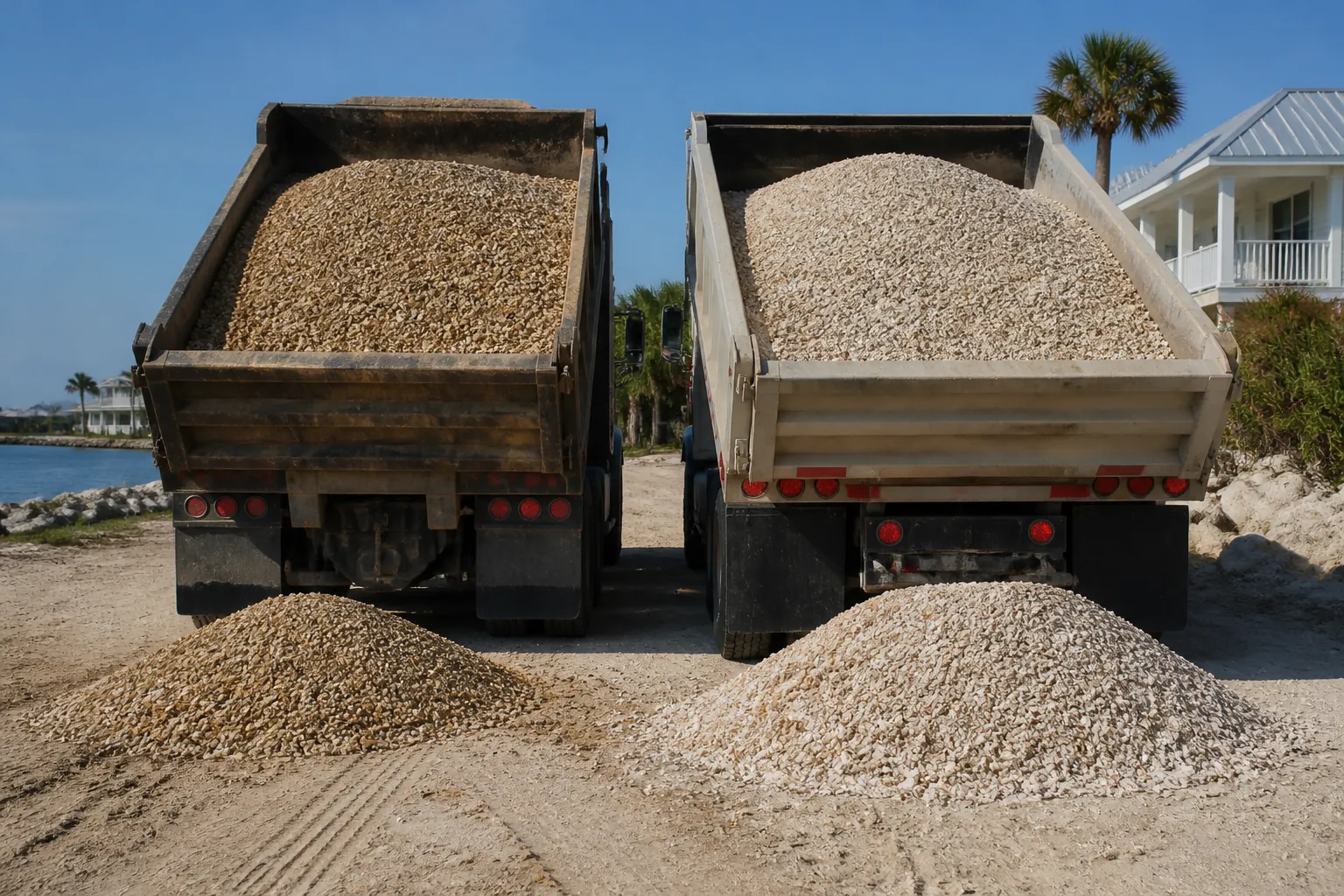
Tropical Yards offers dump trailer delivery of shell and plants from St. Augustine to Daytona Beach. Ask about delivery for your Ormond Beach address. Confirm order details and site access before deciding how to move the material.
- Check the rated limits for the exact vehicle and trailer combination.
- Include other cargo and occupants when reviewing the vehicle's load allowance.
- Ask what material condition the quoted shell weight estimate describes.
- Confirm pickup terms, loading arrangements, and load securing needs before travel.
- Choose delivery when you cannot establish a suitable transport plan.
What should you confirm before dump trailer delivery?
Confirm access, the proposed drop area, and who will move shell afterward. Load weight matters because delivery equipment needs a suitable place to travel and unload. Start with coquina shell delivery site readiness for access questions. Use coquina shell driveway planning to separate delivery needs from the finished project.
Describe the route from the street to the proposed drop spot. Mention gates, tight turns, slopes, trees, and overhead lines. Share measurements or photos if requested. Let the delivery provider judge access for its equipment.
A surface that supports a car may not suit delivery equipment. Don't assume pavers, turf, covers, or buried structures can bear the load. Tell the provider about known concerns before the delivery plan is set.
Ask what clear space is needed for unloading. Keep children, pets, and bystanders away from the work area. Follow the driver's directions rather than approaching moving equipment to guide it.
Weather can change the plan. The National Weather Service's Hurricane Safety Planning guidance supports preparing before severe weather arrives. Check forecasts and ask how unsafe weather or poor ground conditions may affect delivery.
Dump trailer delivery does not include spreading shell across your yard. Tropical Yards is a supplier, not an installer. Plan your DIY work or arrange separate qualified help before material arrives.
- Confirm the delivery address and describe the full approach route.
- Identify gates, overhead obstacles, buried features, and areas with soft ground.
- Agree on a proposed drop location before the truck arrives.
- Ask what happens if the driver finds the site unsuitable.
- Have a separate plan for moving and spreading the delivered shell.
Which weight and volume details belong on your order?
Keep the product name, order unit, quantity, and weight basis together. That record makes it easier to spot a mismatch before delivery. Use coquina shell material specifications to describe the shell clearly. Consult coquina shell delivery site readiness when adding access details and drop instructions to your order.
Write down what you're buying and how much. State cubic yards if that is the agreed unit. If the order uses weight, confirm the unit and how it will be measured.
The word ton needs care. A US short ton is 2,000 pounds. A metric tonne is 1,000 kilograms. Confirm the intended unit rather than converting from an unlabeled figure.
Ask how the supplier reached any estimated weight. Was it based on current material, past loads, or a broad planning range? Record the answer without treating an estimate as a measured ticket.
If you're given pounds per cubic yard, multiply that by the ordered yards. This produces estimated total pounds on the same basis. Don't use that result if the supplier says conditions have changed.
Keep transport and material questions separate. Confirming a shell quantity doesn't confirm that your trailer can carry it. Confirming a delivery address doesn't mean the proposed drop spot has been accepted.
How should you check the shell once it arrives?
Check the order record and visible material before you begin spreading shell. Raise questions promptly, while the pile remains easy to inspect. Compare the product description with coquina shell material specifications. If you reviewed a coquina shell sample before buying, use it as a reference for appearance, not load weight.
Read the delivery record for the agreed product and quantity. Check any stated units. If a figure is unclear, ask what it means before using it in your project notes.
A pile's shape cannot prove its weight or exact volume. Height, width, and slope can vary. Photos may help explain a concern, but they aren't a substitute for the agreed measurement method.
Keep any weight ticket or order record that is provided. If the quantity seems wrong, ask how it was determined. Avoid drawing a firm conclusion from wheelbarrow counts or visual estimates alone.
Once work begins, track the area covered and the depth you achieve. If coverage differs from your plan, review measurements and ground levels. An uneven base or changed depth can use material faster than expected.
Use those notes before ordering more shell. Recheck the remaining area rather than repeating the first estimate. Keep the supplier's role clear: material sales and delivery are separate from design, installation, and yard care.
Questions about next steps? Call Tropical Yards at 772-267-1611 or review coquina.
Frequently Asked Questions
Can I weigh a bucket of shell to estimate a full yard?
A bucket test can give a rough check, but it has limits. You need the bucket's true volume and empty weight. Moisture and packing must also match the bulk material. A small sample may miss larger pieces or fines. Don't use a home test alone to approve a vehicle load.
Does heavier shell mean better quality?
No. More weight per yard can reflect water, finer pieces, or tighter packing. It doesn't establish that the shell suits your project. Judge the material by its stated traits and your intended use. Ask about piece size, fines, and appearance rather than treating the heaviest option as the best one.
Can one weight figure apply to shell and mulch?
No. Shell and mulch have different bulk densities and moisture behavior. A weight figure for one cannot establish the other's load weight. Even equal volumes can create very different hauling needs. If you're comparing materials, calculate each volume need first. Then request a separate weight basis for each product.
Should I spread the full order immediately after delivery?
Check the order and material first. Then follow your project plan and work within your limits. A large pile can require many small trips to move by hand. Arrange suitable tools and help in advance. Tropical Yards supplies material and offers delivery; it does not provide spreading or yard cleanup.
What if the supplier cannot give an exact weight per yard?
Ask whether a planning range or measured load weight is available. Confirm what the estimate covers and how the order is sold. Don't create a precise figure from an unrelated online chart. If transport capacity is uncertain, discuss delivery rather than sizing a load from an unverified number.
Sources
- Coquina Shell Landscaping, Tropical Yards
- Hurricane Safety Planning, National Weather Service
Call 772-267-1611 to talk through next steps.