 Tropical
 2026-04-03
Complete Hibiscus Care Guide for Florida
Complete Hibiscus Care Guide for Florida
Hibiscus is one of the most spectacular flowering plants you can grow in Florida — and one of the most misunderstood. With the right variety selection, fertilization, pruning, and seasonal care, a hibiscus can bloom nearly every day of the year in our climate. With the wrong variety or neglected care, it sulks, drops buds, and invites pest infestations. This comprehensive guide covers everything: variety selection, a month-by-month care calendar, fertilizer recommendations, pruning techniques, pest and disease identification and treatment, propagation, container growing, and landscape design ideas.
Browse our full selection of hibiscus plants at Tropical Yards in St. Augustine, or call 772-267-1611 for delivery from St. Augustine to Daytona Beach.
Hibiscus Variety Selection Guide
Not all hibiscus are created equal for Florida gardens. The three main groups you'll encounter at Florida nurseries each have different care needs, cold tolerance, and appearance.
Tropical Hibiscus (Hibiscus rosa-sinensis)
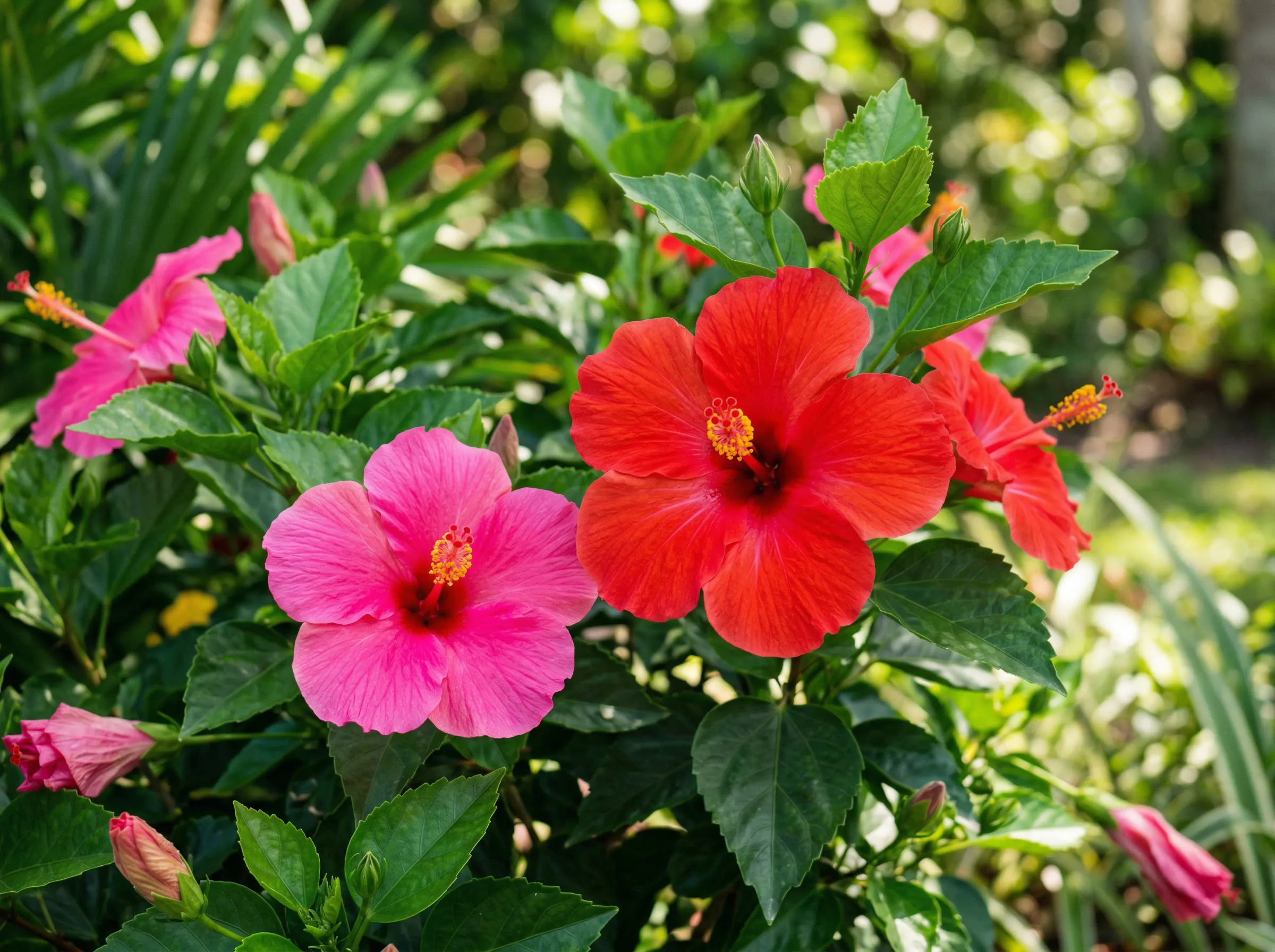
Tropical hibiscus is the showstopper — the one with enormous blooms in every color imaginable: fiery red, neon pink, peach, salmon, yellow, white, and hundreds of bi-color varieties. Individual flowers can reach 6–12 inches across on modern cultivars. Tropical hibiscus blooms almost continuously from spring through fall when properly cared for and needs temperatures above 50°F to thrive. It is the right choice for most Florida homeowners in zones 9–11 who want maximum bloom impact and are willing to provide modest freeze protection in cold winters. Plant in full sun (6+ hours) for best flowering. Partial shade results in more foliage and fewer blooms.
Hardy Hibiscus (Hibiscus moscheutos)
Hardy hibiscus produces dinner-plate sized flowers — some exceeding 12 inches in diameter — on plants that die back to the ground in winter and regrow from the roots in spring. This deciduous nature is unfamiliar to Florida gardeners used to evergreen plants, but the tradeoff is excellent cold hardiness (to Zone 4) and spectacular summer flowering. Hardy hibiscus varieties like 'Cranberry Crush', 'Midnight Marvel', and 'Summer Storm' are increasingly available at Florida nurseries. They prefer moist, rich soil and full to partial sun. In Florida, they perform best in slightly elevated, well-drained locations that don't stay wet in summer.
Rose of Sharon (Hibiscus syriacus)
Rose of Sharon is a multi-stem shrub hibiscus that grows 8–12 feet tall, produces abundant smaller flowers (2–4 inches) in white, pink, purple, and bi-color patterns, and is much more cold-hardy than tropical hibiscus (Zone 5–8). In northeast Florida it's grown as a landscape shrub that provides vertical interest and summer color. It's less fussy about soil and water than tropical hibiscus, making it a good choice for lower-maintenance situations where you still want hibiscus character.
Month-by-Month Care Calendar
- January: Hold fertilizer — cold weather slows hibiscus metabolism and fertilizer applied now encourages tender growth vulnerable to frost. If a freeze is forecast, cover plants with frost cloth. Do not prune freeze-damaged stems until you can see new growth emerging, which confirms where living tissue begins.
- February: Continue holding fertilizer if nights remain below 55°F. Clean up any accumulated dead leaves around the base of plants, which harbor fungal spores and insects. As temperatures warm toward month's end, assess whether any cold-damaged stems need removal.
- March: Resume fertilization as temperatures warm above 60°F consistently. This is the best time to prune — cut plants back by one-third to one-half to stimulate a flush of new growth and early-season blooms. Apply the first dose of slow-release fertilizer.
- April: Peak spring bloom begins. Begin a regular fertilization schedule (every 4–6 weeks). Watch for aphids on new growth and treat early. Transplant or plant new hibiscus — spring establishment gives roots all summer to get established.
- May–June: Fertilize and maintain irrigation. Spider mites become active as heat intensifies — check the undersides of leaves for fine webbing. Begin supplemental watering if rainfall is insufficient (hibiscus needs 1 inch of water per week).
- July–August: Peak summer heat can briefly slow blooming — this is normal. Maintain irrigation consistently, as drought stress during flowering causes bud drop. Whiteflies are most active now; treat with insecticidal soap or neem oil as needed.
- September–October: A second flush of heavy blooming typically occurs as temperatures moderate slightly. Apply the final fertilizer application no later than October 1. Lightly prune to shape plants after the fall bloom flush.
- November: Reduce irrigation as growth slows. Move containerized hibiscus to protected locations. Prepare frost cloth for cold nights below 35°F. Do not fertilize.
- December: Protect from frost. Hibiscus can survive brief dips to 28°F with frost cloth protection, but sustained temperatures in the mid-20s will cause significant damage. Keep soil slightly moist even during dormancy — don't let roots completely dry out.
Fertilizer Recommendations
Hibiscus are heavy feeders that respond dramatically to proper fertilization. The wrong fertilizer — or the wrong timing — produces all leaves and no flowers. Follow these specific guidelines:
Best product choices:
- Peters Professional Hibiscus Food (17-5-24): A water-soluble fertilizer designed specifically for hibiscus. High potassium encourages blooming. Apply every 2 weeks during active growing season.
- Osmocote Plus (15-9-12): A slow-release granular option that feeds for 6 months. Apply in spring and fall. Good for gardeners who prefer a set-it-and-forget-it approach.
- Espoma Flower-tone (3-4-5): Organic option. Lower potency means more frequent application (every 4–6 weeks) but excellent long-term soil health benefits.
Key rules: Never use fertilizers high in phosphorus (the middle number) on hibiscus — high phosphorus inhibits blooming. Never fertilize drought-stressed plants — water thoroughly 24 hours before applying fertilizer. Never fertilize within 60 days of expected frost.
Pruning Techniques
Pruning hibiscus correctly is one of the highest-leverage maintenance tasks you can do. Hibiscus blooms on new growth — the more actively growing stems you have, the more flowers you get. Here's how to prune effectively:
Spring hard pruning (March): Cut the entire plant back by one-third to one-half its total height. Make cuts at 45-degree angles just above a node (the point where a leaf or branch emerges from the stem). This stimulates a flush of multiple new shoots from each cut, dramatically increasing the plant's branching and total blooming surface area. A well-pruned hibiscus will have 2–3 times more flowers than an unpruned one.
Mid-season shaping (June–July): Remove any crossing or inward-growing branches to improve air circulation and light penetration. Cut back any branches that have grown excessively long and leggy. These "tip prunings" also trigger new bud formation quickly.
Fall light pruning (after October bloom flush): A light shaping after fall flowering prepares the plant for winter without stimulating tender new growth that a freeze would damage. Remove spent bloom stalks and tidy the overall shape but avoid any aggressive cutting this late in the year.
Never prune more than one-third at a time during the growing season — excessive pruning during summer stresses the plant and can trigger mite and aphid attacks on the stressed new growth.
Pest and Disease Identification and Treatment
Aphids
Small, soft-bodied insects clustered on new growth and buds. They suck plant sap and excrete honeydew that promotes sooty mold. Treatment: Strong stream of water to dislodge, followed by insecticidal soap spray (2 tablespoons per gallon of water) every 5–7 days for 3 applications. For severe infestations, use a systemic insecticide like Imidacloprid applied to the soil as a drench.
Spider Mites
Tiny mites on leaf undersides creating stippled, bronzed foliage and fine webbing. Most active in hot, dry conditions. Treatment: Increase irrigation (mites thrive when plants are drought-stressed), apply miticide (Forbid or Floramite), or use neem oil solution every 5–7 days. Do not use broad-spectrum pyrethroids, which kill natural predators and worsen mite outbreaks.
Whiteflies
Tiny white flying insects that cloud up when leaves are disturbed. They excrete honeydew and weaken plants with heavy infestations. Treatment: Yellow sticky traps for monitoring, insecticidal soap spray on leaf undersides, or systemic treatment with Imidacloprid for severe cases.
Root Rot (Phytophthora)
Caused by overwatering or poor drainage. Symptoms include wilting despite moist soil, yellowing lower leaves, and soft, brown roots. Prevention: Plant in well-drained soil, avoid overwatering, and use raised beds in heavy clay. Treatment: Improve drainage immediately, apply a phosphonate fungicide (Agri-Fos) as a soil drench, and remove severely damaged roots when repotting container plants.
Bud Drop
Hibiscus drop buds due to drought stress, overwatering, sudden temperature changes, or inconsistent fertilization. Consistent watering and a regular fertilization schedule prevent most bud drop issues. Moving a blooming plant to a new location also causes temporary bud drop — let it acclimate before expecting flowers.
Propagation Methods
Stem cuttings (easiest method): Take 4–6 inch cuttings from healthy, non-blooming stem tips in spring or early summer. Remove lower leaves, dip the cut end in rooting hormone powder, and insert into a moist mix of perlite and peat (50/50). Keep cuttings in a warm (75–85°F), humid location out of direct sun. Roots form in 3–6 weeks. Pot up in well-draining potting mix once roots are 1–2 inches long.
Air layering: For larger propagules from established plants, select a healthy stem, remove bark in a 1-inch ring, apply rooting hormone, wrap with moist sphagnum moss, and cover with plastic film. Roots develop in 4–8 weeks without removing the stem from the parent plant — cut when roots are visible through the moss.
Container Growing Tips
Hibiscus performs exceptionally well in containers, which allows Florida gardeners to move plants under protection during cold snaps and customize soil conditions. Use containers at least 15–20 gallons for mature plants — hibiscus develops an aggressive root system. Use a well-draining potting mix (standard potting mix amended with 25% perlite works well). Container plants need watering more frequently — check daily in summer, as large hibiscus in small containers can dry out within 24 hours on hot days. Fertilize container hibiscus every 2–3 weeks with a water-soluble fertilizer rather than relying on slow-release granulars, which can cause salt buildup in container soil over time. Repot every 2–3 years into a slightly larger container to prevent root-binding.
Hibiscus Landscape Design Ideas
Hibiscus is a versatile landscape plant beyond simply being "a flowering shrub." Here are design applications that work beautifully in Florida yards:
- Mixed tropical border: Plant hibiscus as mid-story shrubs between tall palms and low ground covers like ornamental grasses and plumbago.
- Screen and hedge: Larger tropical hibiscus varieties grow 6–8 feet tall and wide. Planted 4 feet apart, they create a flowering privacy screen that needs only 1–2 annual prunings.
- Focal point specimen: A single large, well-maintained hibiscus in a prominent bed location — surrounded by coquina shell ground cover and lower companion plants — creates a stunning focal point.
- Companion planting: Hibiscus pairs beautifully with bougainvillea (contrasting flower textures), mandevilla (vertical climbing element), and colorful croton foliage that provides interest when hibiscus isn't actively blooming.
For design help creating a tropical yard with hibiscus as a centerpiece, visit our tropical yard design guide or browse best tropical plants for Florida.
Frequently Asked Questions
Why won't my hibiscus bloom?
The most common causes of non-blooming hibiscus in Florida are: too much shade (needs 6+ hours of direct sun), high-phosphorus fertilizer (inhibits flower production), drought stress causing bud drop, or heavy pest pressure. Review all four factors if your plant has healthy foliage but no flowers.
How often should I water hibiscus in Florida?
During the growing season, hibiscus needs approximately 1 inch of water per week. In containers or during drought, this may mean watering every 1–2 days. In-ground established plants in Florida typically need supplemental irrigation only during dry spells longer than 1–2 weeks, as our rainy season provides adequate moisture.
When should I prune hibiscus in Florida?
The best time for major pruning is in late February or early March, just as temperatures are warming and before the main spring bloom flush. Light shaping can be done throughout the growing season. Avoid heavy pruning after October 1 — late pruning stimulates new growth that can be damaged by winter cold.
Are hibiscus cold hardy in St. Augustine?
Tropical hibiscus (Hibiscus rosa-sinensis) is cold-sensitive and can be damaged below 28°F. In St. Augustine's Zone 9 climate, most winters are manageable with simple frost cloth protection during cold nights. Established plants often recover from light freezes even when top growth is damaged, regrowing from the root crown. For cold-hardy alternatives, consider Hardy Hibiscus (H. moscheutos) varieties that survive to Zone 4.
Can I grow hibiscus in a pot in Florida?
Yes — hibiscus is an excellent container plant for Florida. Use a 15-20 gallon pot with excellent drainage, water-soluble fertilizer every 2–3 weeks, and daily watering checks in summer heat. Container growing allows you to move plants under shelter during freezes, extending their lifespan in colder inland zones.
Where can I buy hibiscus plants near St. Augustine?
Tropical Yards in St. Augustine carries a wide selection of tropical hibiscus varieties. We deliver from St. Augustine to Daytona Beach. View our hibiscus selection or call 772-267-1611 to ask about current availability.
Ready to Transform Your Yard?
Get the lowest prices on tropical plants and coquina shell in Northeast Florida.