 Tropical
 2026-04-04
7 Low-Maintenance Tropical Plants for Busy Florida Homeowners
10 Low-Maintenance Tropical Plants for Busy Florida Homeowners
The promise of a lush, tropical Florida yard often runs headlong into the reality of a busy schedule. The good news: many of the most beautiful tropical plants available in Northeast Florida need surprisingly little attention once established. The key is choosing the right plants from the start — species that are heat-tolerant, drought-tolerant after establishment, and naturally resistant to the pests and diseases common in our climate.
This guide covers 10 proven low-maintenance tropical plants for Florida yards, with detailed care information, water and sun requirements, a seasonal maintenance calendar, and guidance on combining these plants in landscape designs. Browse our full tropical foliage collection and flowering plants selection at Tropical Yards in St. Augustine.
What Makes a Plant Truly Low-Maintenance in Florida?
In Florida's climate, "low-maintenance" means the plant handles heat, humidity, periodic drought, and occasional cold snaps without constant intervention. True low-maintenance plants share several traits: established drought tolerance, pest and disease resistance, natural growth habits that don't require constant pruning, and adaptability to Florida's sandy, often nutrient-poor soils. The plants on this list meet those criteria and look great doing it.
The 10 Best Low-Maintenance Tropical Plants
1. Bougainvillea
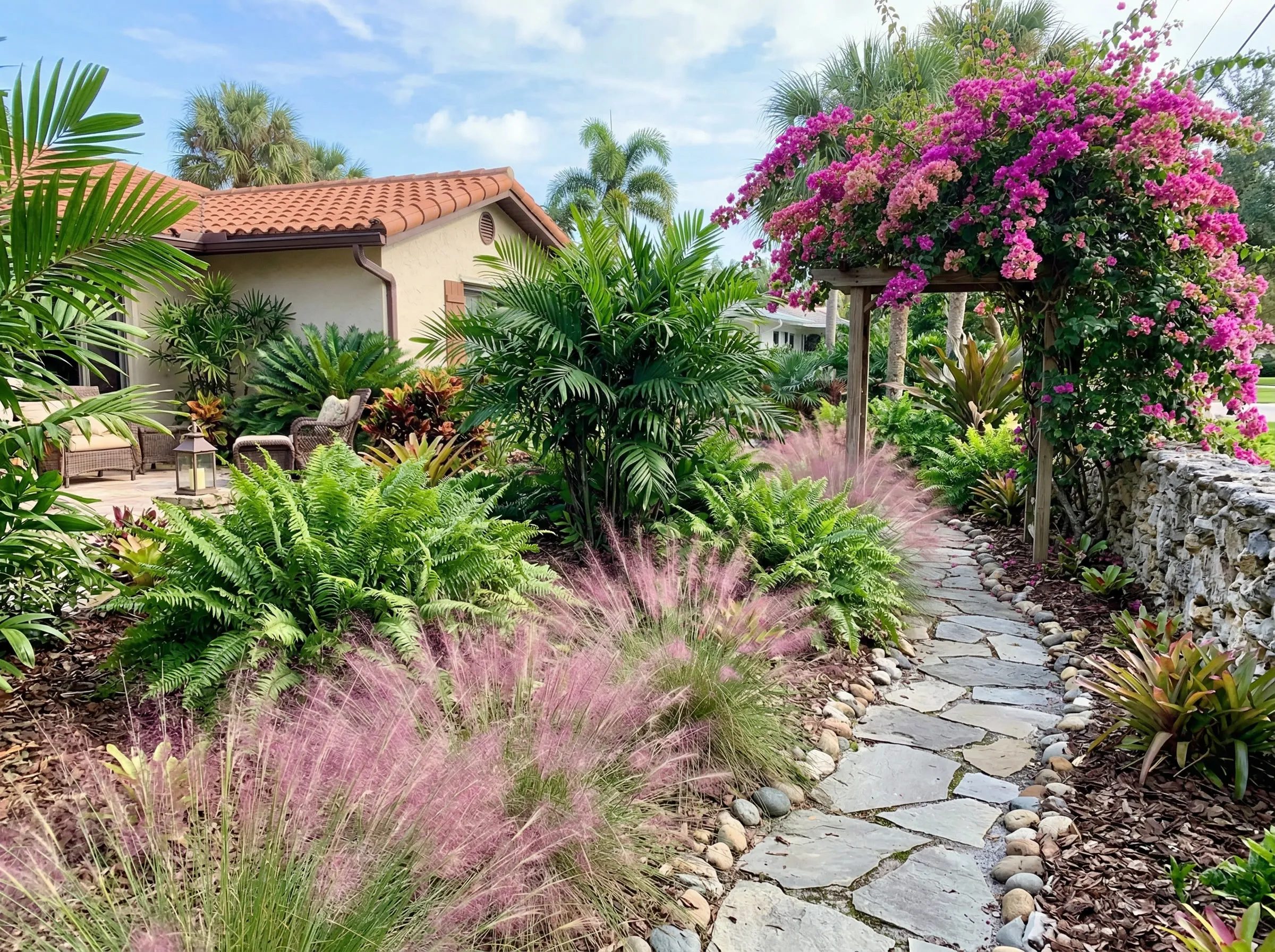
Bougainvillea is the quintessential low-effort, high-reward tropical plant. Once established — typically after the first summer — it requires almost no water, no special fertilizer, and actually blooms more when slightly stressed. The showy "flowers" are actually bracts (modified leaves) in blazing shades of magenta, orange, red, white, and purple. Bougainvillea thrives in full sun and sandy, well-drained soil — conditions that Florida provides in abundance. It can be trained on trellises, arches, and fences, or allowed to cascade over walls. Prune once or twice a year to control size and stimulate new bract growth. Cold tolerance extends to about 28°F; protect or plan for replacement in hard freeze years. Visit our bougainvillea page for available varieties and sizing.
2. Plumbago (Plumbago auriculata)
Plumbago is one of the hardest-working landscape shrubs in Florida. It produces a continuous flush of delicate sky-blue or white flowers almost year-round, attracts butterflies, grows 3–4 feet tall and wide without constant pruning, and tolerates drought, heat, and full sun with ease. Plumbago works beautifully as a hedge, a border plant, or a mixed-bed companion. It can be kept compact with occasional shearing or allowed to mound naturally. Established plants need only supplemental watering during extended dry spells. The blue varieties complement nearly every other tropical plant on this list and work particularly well alongside orange bougainvillea or red ixora. Cold hardy to about 25°F.
3. Ixora
Ixora is a Florida landscape staple for good reason: it produces dense clusters of fiery red, orange, yellow, or pink flowers almost continuously from spring through fall, requires minimal pruning if given space to grow naturally, and handles Florida's heat better than almost any other flowering shrub. Ixora prefers acidic, well-drained soil and full to partial sun. In the alkaline soil conditions common near St. Augustine's coquina-heavy ground, occasional soil acidifier applications keep Ixora performing at its best. Compact varieties like 'Nora Grant' stay 3–4 feet tall and are ideal for foundation plantings and borders. Dwarf varieties work well as low hedges. Browse our full selection under shrubs and hedging plants.
4. Mandevilla
Mandevilla vines are one of the fastest ways to add a lush, tropical look to fences, trellises, and pergolas in Florida yards. They produce large, trumpet-shaped flowers in shades of pink, red, and white from spring through fall, growing vigorously with minimal attention. Mandevilla needs full to partial sun, regular water during establishment, and then becomes relatively drought tolerant. Fertilize every 6–8 weeks during the growing season with a bloom-boosting fertilizer to maximize flowering. In zones 9A–9B, Mandevilla may die back in winter but will regrow from the roots in spring. See our Mandevilla collection for climbing and shrub varieties.
5. Coontie (Zamia integrifolia)
The Coontie is Florida's only native cycad and one of the most drought-tolerant, pest-resistant, and cold-hardy tropical-looking plants available. Its dark green, fern-like fronds grow 2–3 feet tall and wide, creating a clean, architectural ground-level plant that needs almost nothing once established. Coontie handles full sun to deep shade, poor soils, drought, and temperatures down to 15°F without complaint. It is also the exclusive larval host plant of the Atala butterfly, making it an excellent choice for wildlife-friendly landscapes. Plant it as an edging plant, mass ground cover, or understory filler beneath palms and large trees. Virtually no pruning required — simply remove the occasional dead frond.
6. Liriope (Liriope muscari)
Liriope, commonly called monkey grass or lilyturf, is one of the most reliable edging and ground cover plants in Florida. Its dark green or variegated grass-like foliage grows 12–18 inches tall, forms tidy clumps, and produces attractive purple flower spikes in summer. Liriope tolerates drought, shade, salt spray, and poor soils. It is essentially maintenance-free once established — trim it back hard in late winter to remove any winter-burned foliage and it will flush out lush and fresh every spring. Use it to edge walkways, define landscape beds, fill under trees where grass won't grow, and create contrast between larger tropical plants. Pairs beautifully with tropical ferns in shaded areas.
7. Firebush (Hamelia patens)
Firebush is a Florida native that brings authentic tropical energy to any yard with its tubular red and orange flowers that bloom prolifically from spring through fall, attracting hummingbirds and butterflies constantly. It grows fast — up to 8–10 feet — in full sun with minimal water, handles sandy soil well, and self-prunes naturally by dropping spent branches. Hard-prune it in late winter to maintain a neater form and stimulate vigorous new growth. Firebush is cold-sensitive below 28°F but typically regrows from the roots in Zone 9. As a fast-growing, wildlife-supporting, nearly zero-care shrub, it earns its place in any low-maintenance Florida landscape.
8. Ornamental Grasses (Muhly Grass, Fakahatchee Grass)
Florida-native ornamental grasses bring movement, texture, and seasonal drama to landscapes with almost no care required. Muhly Grass (Muhlenbergia capillaris) produces clouds of pink-purple flowers in fall that are breathtaking in mass plantings. Fakahatchee Grass (Tripsacum dactyloides) grows 4–6 feet tall with bold, arching blades that add tropical scale. Both handle drought, poor soil, full sun, and saltwater spray. Plant in masses for maximum effect — a sweep of Muhly Grass in bloom is one of the most spectacular sights in a Florida fall garden. Cut back once in late winter and that's essentially all the care they need. Explore our full ornamental grasses selection.
9. Croton (Codiaeum variegatum)
For pure color impact with minimal effort, croton is unmatched. Its large, leathery leaves come in extraordinary combinations of red, orange, yellow, green, and purple — no two leaves look exactly alike. Croton thrives in full to partial sun and Florida's humid heat, growing 3–6 feet tall depending on variety. It needs regular water during establishment but is moderately drought tolerant once rooted. The bolder the sun exposure, the more vivid the foliage color. Croton is cold-sensitive (damaged below 32°F) but recovers quickly from light frost and is worth replanting as an annual in colder inland locations. Use it as a focal accent, a hedge, or a dramatic container plant on patios and entryways. Part of our tropical foliage collection.
10. Agapanthus (Lily of the Nile)
Agapanthus produces bold stalks of blue, purple, or white globe-shaped flowers in summer that stand 2–3 feet tall above strappy green foliage. Once established, it is exceptionally drought tolerant, cold hardy to about 20°F, and essentially pest-free. Agapanthus works beautifully as a border plant, in mass plantings along driveways and walkways, or as accent clumps amid lower ground covers. It requires minimal division (every 4–5 years when clumps become crowded), no regular pruning, and only occasional fertilization. After a summer-long flowering display, simply remove spent flower stalks and enjoy the tidy foliage through winter.
Water and Sun Requirements Summary
- Full Sun, Drought Tolerant: Bougainvillea, Plumbago, Firebush, Ornamental Grasses, Agapanthus
- Full to Partial Sun, Moderate Water: Ixora, Mandevilla, Croton
- Adaptable (Sun to Shade), Drought Tolerant: Coontie, Liriope
Seasonal Maintenance Calendar
- January–February: Cut back ornamental grasses, Liriope, and any cold-damaged Mandevilla or Firebush. Hold fertilizer until temperatures warm. Mulch or apply coquina shell around beds to protect root zones.
- March–April: Begin fertilizing as growth resumes. Plant new additions — spring is the ideal establishment window. Prune Bougainvillea lightly to shape and encourage blooming. Divide Agapanthus clumps if needed.
- May–June: Apply second fertilizer application. Monitor for aphids on Plumbago and Ixora. Water newly planted specimens daily during establishment.
- July–August: Reduce pruning — let plants grow. Supplemental watering only during drought. Deadhead spent Agapanthus stalks. Enjoy peak flowering on most species.
- September–October: Final fertilizer application (no later than October 1). Ornamental grasses begin their fall color show. Assess any overgrown shrubs for fall shaping — avoid heavy pruning that stimulates new cold-tender growth.
- November–December: Prepare frost cloth and covers for cold-sensitive plants (Mandevilla, Croton, Bougainvillea). Reduce irrigation. No fertilizer until spring.
Container vs. In-Ground Advice
Several of these plants perform excellently in containers, giving you the flexibility to move them to protected locations during freezes or rearrange your patio design seasonally. Best container choices: Mandevilla (in large pots on trellises), Croton, Ixora dwarf varieties, and Agapanthus. Containers require more frequent watering and fertilization than in-ground plants — typically water when the top inch of soil is dry, and fertilize every 4–6 weeks during the growing season with a balanced slow-release fertilizer.
For in-ground planting, ensure proper drainage — most of these plants tolerate drought but not waterlogged roots. In Florida's flat landscapes, raised beds (4–6 inches above grade) or amended soil with coarse sand and perlite added can prevent root rot issues during our wet season. For design help combining these plants into a cohesive landscape, visit our tropical yard design guide or browse our best tropical plants for Florida page.
Combining These Plants in Landscape Designs
The most visually satisfying tropical landscapes layer plants by height and texture. A proven combination for Northeast Florida: anchor the bed with a Sabal or Sylvester Palm for height, add mid-layer shrubs of Ixora, Croton, and Firebush for color, use Plumbago and Agapanthus at the front edge for cascading flowers, and finish the bed with Liriope edging and coquina shell ground cover. This planting combination covers every season with color, needs irrigation only during establishment, and requires pruning just 1–2 times per year. For shaded areas, replace the sun-lovers with Coontie, Liriope, and tropical ferns for an equally lush, zero-effort understory. Explore the full range at our Ponte Vedra and Palm Coast service pages.
Frequently Asked Questions
What is the easiest tropical plant to grow in Florida?
Coontie (Zamia integrifolia), Florida's native cycad, is arguably the easiest. It tolerates full sun to deep shade, drought, poor soil, and temperatures as low as 15°F. Once planted, it needs virtually no attention. Liriope and Plumbago are close runners-up for total ease of care.
What low-maintenance tropical plants work in shade?
Coontie, Liriope, and tropical ferns thrive in shade with minimal care. In partial shade (3–4 hours of sun), Ixora, Croton, and even Plumbago perform well, though flowering may be reduced compared to full sun conditions.
How often do I need to water these plants once established?
Most established plants on this list need supplemental irrigation only during extended dry periods (more than 2 weeks without rain). During Florida's rainy season (June–September), rainfall typically provides adequate moisture for all of these species with no irrigation needed.
Which of these plants are safe around children and pets?
Plumbago, Firebush, Coontie (caution: seeds are toxic if ingested), Liriope, and Ornamental Grasses are generally safe landscaping plants. Bougainvillea has thorns that can scratch. Croton and Mandevilla have milky sap that can cause skin irritation. Always research specific toxicity before planting in yards frequented by children or pets, and contact your veterinarian or poison control for specific concerns.
Where can I buy these plants near St. Augustine?
Tropical Yards in St. Augustine carries all of these species and many more. We deliver throughout northeast Florida from St. Augustine to Daytona Beach. Contact us at 772-267-1611 or visit our St. Augustine tropical plants page to learn more about availability and delivery.
Ready to Transform Your Yard?
Get the lowest prices on tropical plants and coquina shell in Northeast Florida.