Screened Vs Unscreened Coquina Shell in Palm Coast, FL
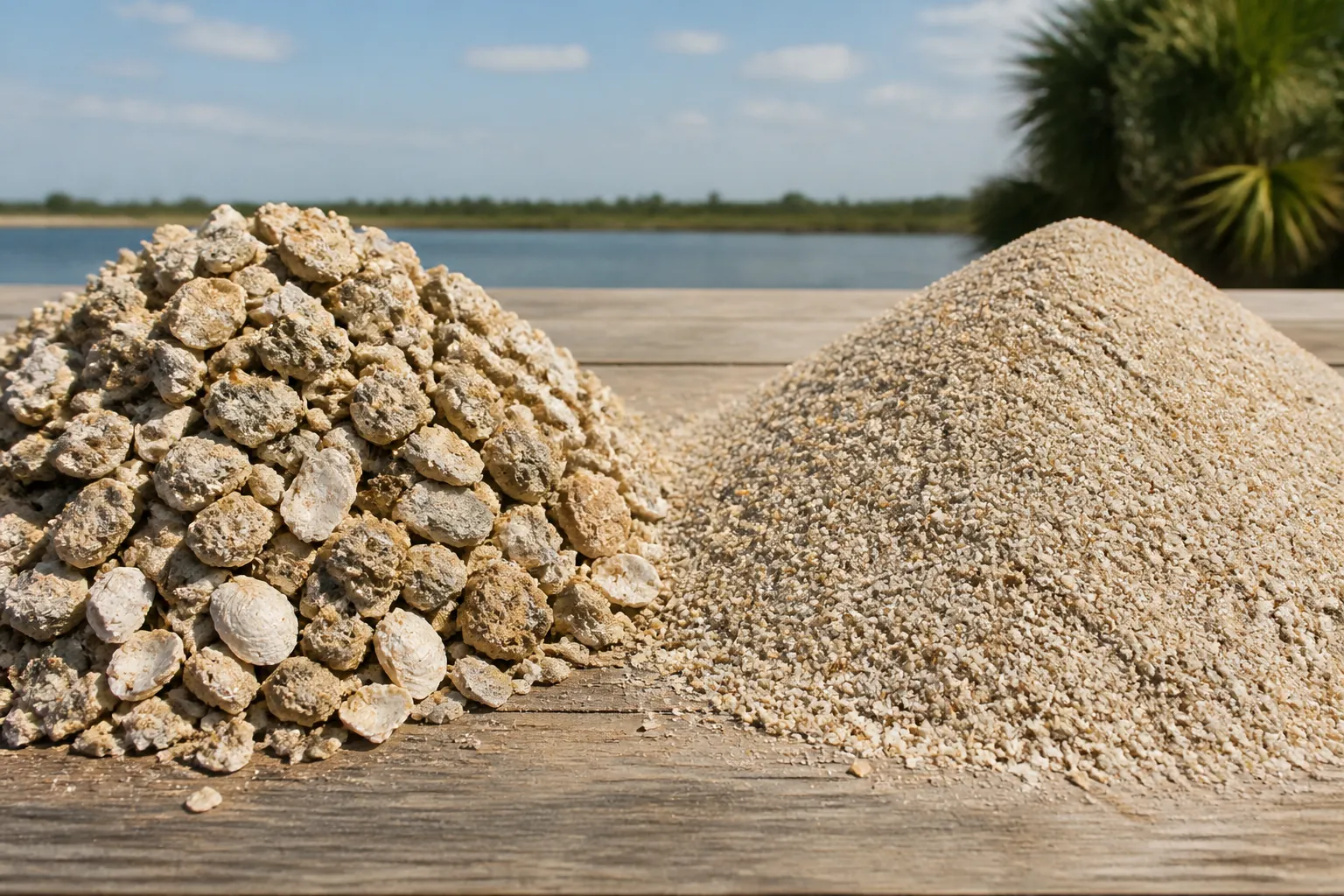
The main difference in screened vs unscreened coquina shell is sorting. Screening separates material by size, while unscreened shell may contain a wider mix. Neither label proves a load suits your project. For a Palm Coast purchase, compare a current sample, stated size range, fine content, and intended use.
How do screened and unscreened coquina shell differ?
Screened shell has passed through a size sorting step. Unscreened shell has no stated screening step, so ask what processing it received. Neither name gives a full product description. Check the coquina shell material specifications and review coquina shell driveway guidance before matching a product to your plans.
A screen sorts material through openings of a chosen size. The result depends on those openings and the sorting method. Ask what passed through the screen and what stayed behind.
Screened does not mean washed, dust free, or free of small pieces. It does not mean every piece shares one shape. Those are separate details that need clear answers from the seller.
Unscreened does not automatically mean poor quality or unsuitable material. It means you need more detail about the mix. A broad range of pieces may suit one use but conflict with another.
Treat the product name as a starting point, not a full specification. Ask for a plain description tied to the current material. This helps you compare two quotes without relying on labels alone.
The table shows what each label leaves open. It does not describe confirmed Tropical Yards stock. Ask which shell products are offered before choosing between them.
| Buying detail | Screened shell | Unscreened shell |
|---|---|---|
| Size sorting | A screening step is stated. | No screening step is stated. |
| Piece sizes | Ask for the screened range. | Ask about the full mix. |
| Fine material | May still be present. | Amount needs confirmation. |
| Washing | Not proved by the label. | Not proved by the label. |
| Project suitability | Needs a use-specific review. | Needs a use-specific review. |
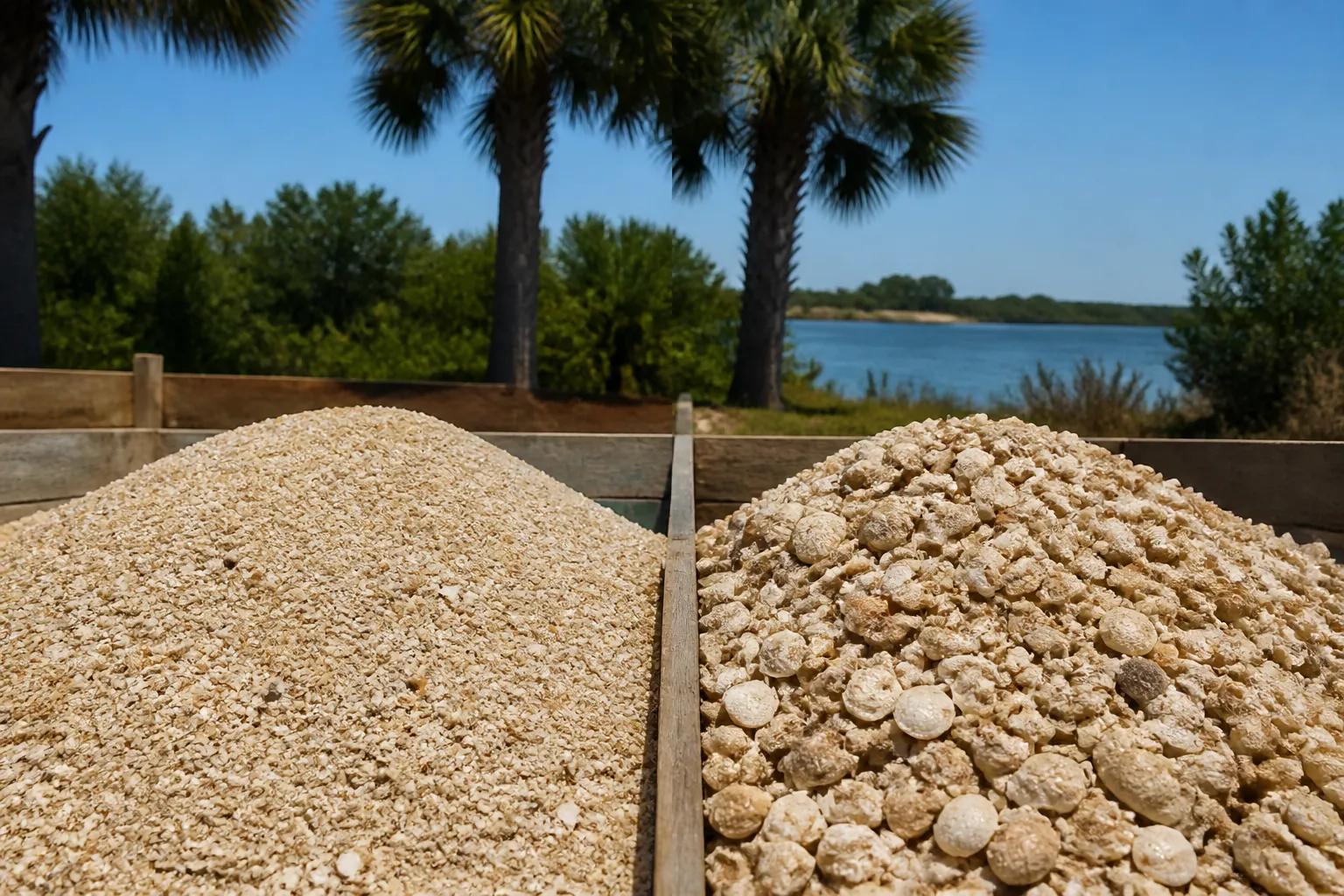
What should you ask before choosing either type?
Ask for details that describe the load, rather than a broad grade name. Start with piece sizes, small particles, washing, and intended use. The coquina shell material specifications explain useful buying terms. Then use checking a shell sample to see how those terms match the material.
Fine material means the small particles mixed among larger pieces. Sellers may use the word fines in different ways. Ask how they describe that part of the load.
A stated maximum size can leave other questions open. It may not tell you how much smaller material is present. Ask about the full size range, including the smaller pieces.
Keep screening and washing as separate questions. A seller may use one process, both, or neither. Avoid filling gaps with what you saw from another source.
Use the same questions for each product you compare. Save the answers with the product name and date. That record helps if you discuss the purchase with a contractor.
These questions keep the discussion tied to things you can check. If an answer is unclear, ask for a simpler description. Do that before deciding the two products are equal.
- Ask what size range describes the material currently being offered.
- Ask how much small material is mixed with larger shell pieces.
- Confirm whether the shell is screened, washed, both, or neither.
- Ask whether a sample represents the material available for your order.
- Confirm the sales unit and what the written quote includes.
How can a sample help you compare shell?
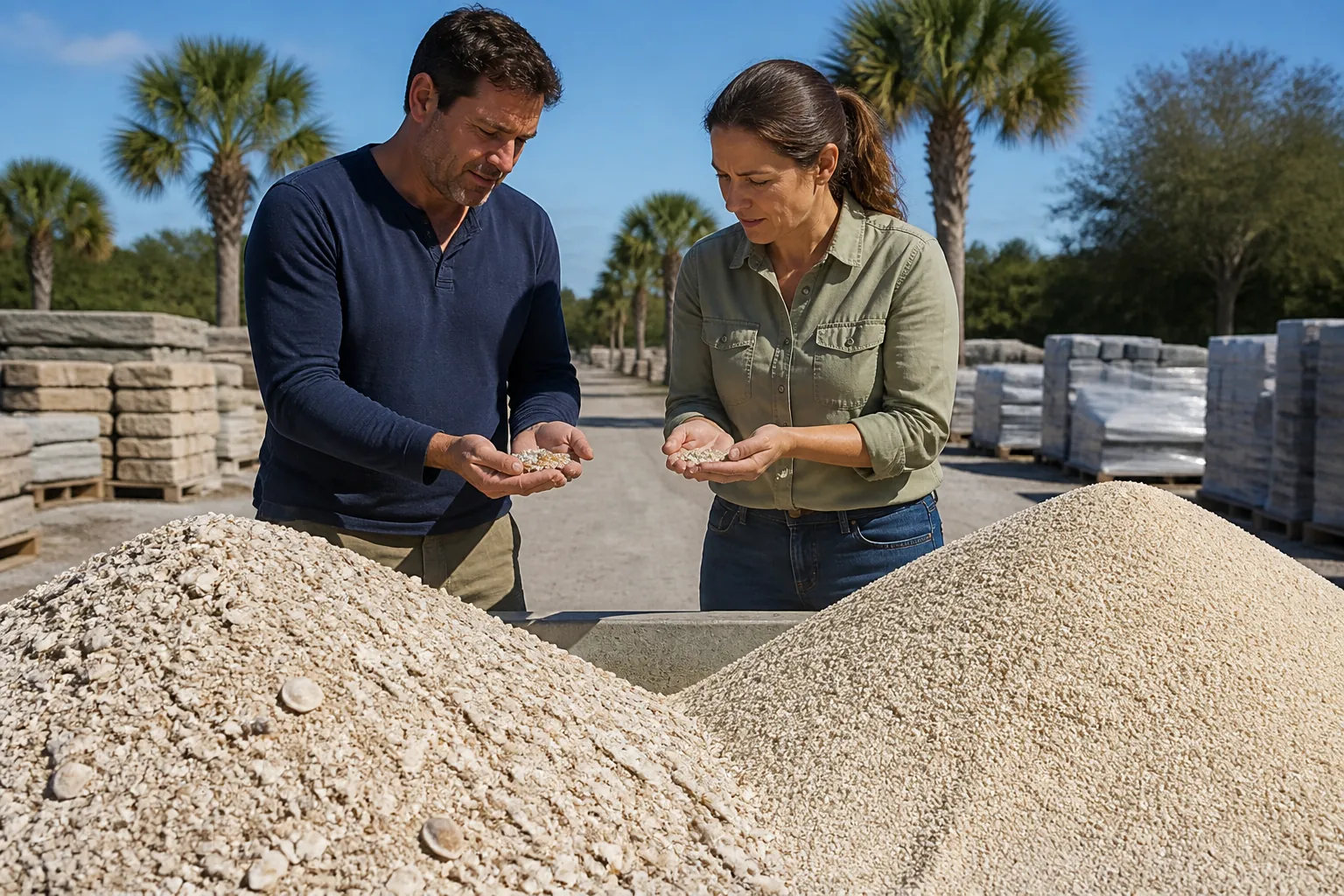
A sample helps you judge the mix, texture, and look before ordering. It cannot prove how a full load will perform. Follow the coquina shell sample guide for a closer review, then compare your notes with the coquina shell material details supplied for the product.
Ask for a sample tied to current material, if one is available. An old display sample may show a different mix. Confirm what the sample represents before using it to choose.
Place both samples on the same plain tray. Compare them in the same light and at the same depth. This gives you a fairer view of color and piece size.
Look beyond the largest shell pieces on top. Gently move the material to see the smaller parts beneath. Use gloves when handling shell, and keep loose pieces off walking surfaces.
A photo can help you keep notes, but it has limits. Light and camera settings can change the color shown. Include a ruler in your photo to give the pieces scale.
A small sample cannot show every part of a bulk load. Ask how much variation the seller expects within that product. Decide which differences would matter to your finished area.
Do not use a sample to judge vehicle support or drainage. Those depend on the site and the full surface plan. A contractor can review those questions with the proposed material.
Write down what you liked and what concerned you. For example, note visible small particles or uneven pieces. Clear notes are more useful than calling one sample simply better.
Which material fits your planned use?
Choose by the job the shell must do, not by screening alone. A decorative area and a vehicle surface raise different questions. Read planning a coquina shell driveway for driveway scope, and compare coquina shell material specifications before asking a qualified contractor about site needs.
For a decorative area, the visible mix may guide your choice. Think about borders, nearby paving, and how the shell will look. Still confirm that the product suits the planned use.
For a path, consider who will use it each day. Walking, wheeled bins, and mobility aids raise different surface needs. A loose sample cannot show how a finished path will behave.
For a driveway, screening is one part of a larger decision. Ground conditions, grading, drainage, and traffic need a separate review. A product label cannot settle those site questions.
Do not assume more fines will solve a soft ground problem. Do not assume larger pieces will solve a drainage problem. Ask a qualified contractor to assess the cause and plan.
Your project notes should describe use before they name a product. Share those notes when asking about material fit. If a permit or code question applies, ask the proper local authority.
- State whether the area will serve plants, foot traffic, or vehicles.
- Describe any wheeled equipment that must move across the finished surface.
- Note where loose shell could meet paving, lawns, or public walkways.
- Ask a qualified contractor about ground conditions and drainage needs.
Does screening change the amount or total cost?
Screening alone does not tell you the order size or total cost. Compare the sales unit, material description, delivery terms, and project scope. Use understanding coquina shell specifications to clarify the product, and review coquina shell delivery site readiness before comparing complete quotes fairly.
First, confirm how the seller measures the material. A volume unit and a weight unit are different measures. Do not treat them as equal without a supported conversion for that material.
Next, confirm the area and planned depth with your project lead. These details shape the quantity request. Keep depth decisions separate from claims about screening or shell appearance.
There is no single conversion that fits every shell mix. Small particles, moisture, and empty space can affect the relationship. Ask the supplier how its stated unit should be understood.
Use the same scope when requesting two quotes. Record the product, quantity, delivery destination, and any stated terms. A lower total may reflect a smaller amount or a different product.
Ask whether delivery is included or listed as a separate charge. Confirm what the drop-off covers before accepting the quote. Do not assume the load will be spread after unloading.
DIY tools, edging, and paid help may be separate project costs. They should not be confused with the shell purchase. Only include work you actually plan to do or hire.
Avoid ordering extra material simply because one mix looks less uniform. Ask how the quantity was worked out first. If site measurements change, review the order before it is placed.
What should Palm Coast buyers confirm before delivery?
Confirm the load description, delivery scope, and proposed unloading area before ordering. Tropical Yards supplies coquina shell and offers dump trailer delivery from St. Augustine to Daytona Beach. Review preparing your shell delivery site and checking shell before buying to keep material questions separate from access planning.
Tropical Yards is a supplier, not a yard labor service. It does not install, design, spread, maintain, trim, or clean up yards. Arrange your own DIY work or separate contractor as needed.
For a Palm Coast order, describe the intended drop area clearly. Share known access limits before delivery plans are set. Ask the supplier to confirm its vehicle needs and unloading limits.
Do not guess at gate width or the space available for access. Measure what the supplier asks you to measure. Tell the supplier about overhead lines, low branches, and other visible limits.
Keep people, pets, and parked vehicles away from the unloading area. Follow the delivery operator's directions while the vehicle is present. Do not stand behind or beside raised unloading equipment.
Weather can change both access and your DIY work plans. Check current forecasts rather than relying on a set date alone. Ask how changing conditions would affect the delivery plan.
The National Weather Service's Hurricane Safety Planning guidance supports preparing before severe weather. If storms threaten, follow official local instructions. Do not rush a shell delivery to beat unsafe conditions.
Tropical Yards' Coquina Shell Landscaping page describes its shell product and DIY use. That first-party description does not establish screened or unscreened stock. Confirm the current product details directly.
Make the final choice with a written comparison
Choose only after the product details match your intended use and delivery plan. If key facts are missing, pause and ask. Keep the coquina shell specification guide beside your notes, and use shell delivery site preparation to check what remains unresolved before placing the order.
A simple comparison sheet can prevent a rushed choice. Give each product its own column. Record facts from the seller rather than filling blanks with assumptions.
Separate facts from preferences as you write. The stated size range is a product fact. Liking one sample's color more is a preference, and both can matter.
Mark any detail that still needs an answer. Missing information is a reason to ask another question. It is not proof that either product is unsuitable.
If you plan to hire help, share the same details with that person. Confirm who chooses the material and who orders it. This reduces confusion over what arrives and who handles it.
Keep a copy of the final description and order terms. Check them against the agreed product before work begins. Ask the supplier about any concern rather than trying to explain it yourself.
There is no universal winner between these two labels. The better choice is the one supported by clear product facts. It must also fit the use and scope you have confirmed.
- Write down the intended use and get site questions reviewed.
- Compare current product details and samples using the same checks.
- Confirm the quantity unit, order scope, and delivery access requirements.
- Resolve unclear points before approving the material and placing the order.
Questions about next steps? Call Tropical Yards at 772-267-1611 or review coquina.
Frequently Asked Questions
Is screened coquina shell the same as crushed shell?
No. Screening sorts material by size, while crushing breaks material into smaller pieces. A product may undergo more than one process. Ask the seller which steps apply to the shell being offered. Do not use either name as proof of the final size range or texture.
Does screened shell mean there will be no weeds?
No. Screening describes material sorting, not long-term weed control. Seeds can reach an outdoor surface after the shell is placed. Ask for site-specific advice on managing the area without harming nearby plants. Keep that care plan separate from your choice between screened and unscreened material.
Can I screen unscreened shell myself?
Sorting a small amount may be possible, but discuss the task before buying. Ask what tools, handling, and leftover material it would involve. Do not assume DIY screening will reproduce a supplier's product grade. For a bulk order, compare the full effort with buying material already suited to your use.
Will shell color change between samples and loads?
Some variation may be present, so ask what to expect from the current material. A photo or small sample cannot show every piece in a bulk order. If a close visual match matters, explain that before purchasing. Ask how the seller can help you assess the expected range.
Should I mix screened and unscreened shell together?
Do not assume mixing will produce the benefits you want. It creates a new blend whose size range may be unclear. Explain the goal to the supplier and, for a load-bearing surface, a qualified contractor. Confirm the material plan before ordering separate products to blend yourself.
Sources
- Coquina Shell Landscaping, Tropical Yards
- Hurricane Safety Planning, National Weather Service
Call 772-267-1611 to talk through next steps.