 Tropical
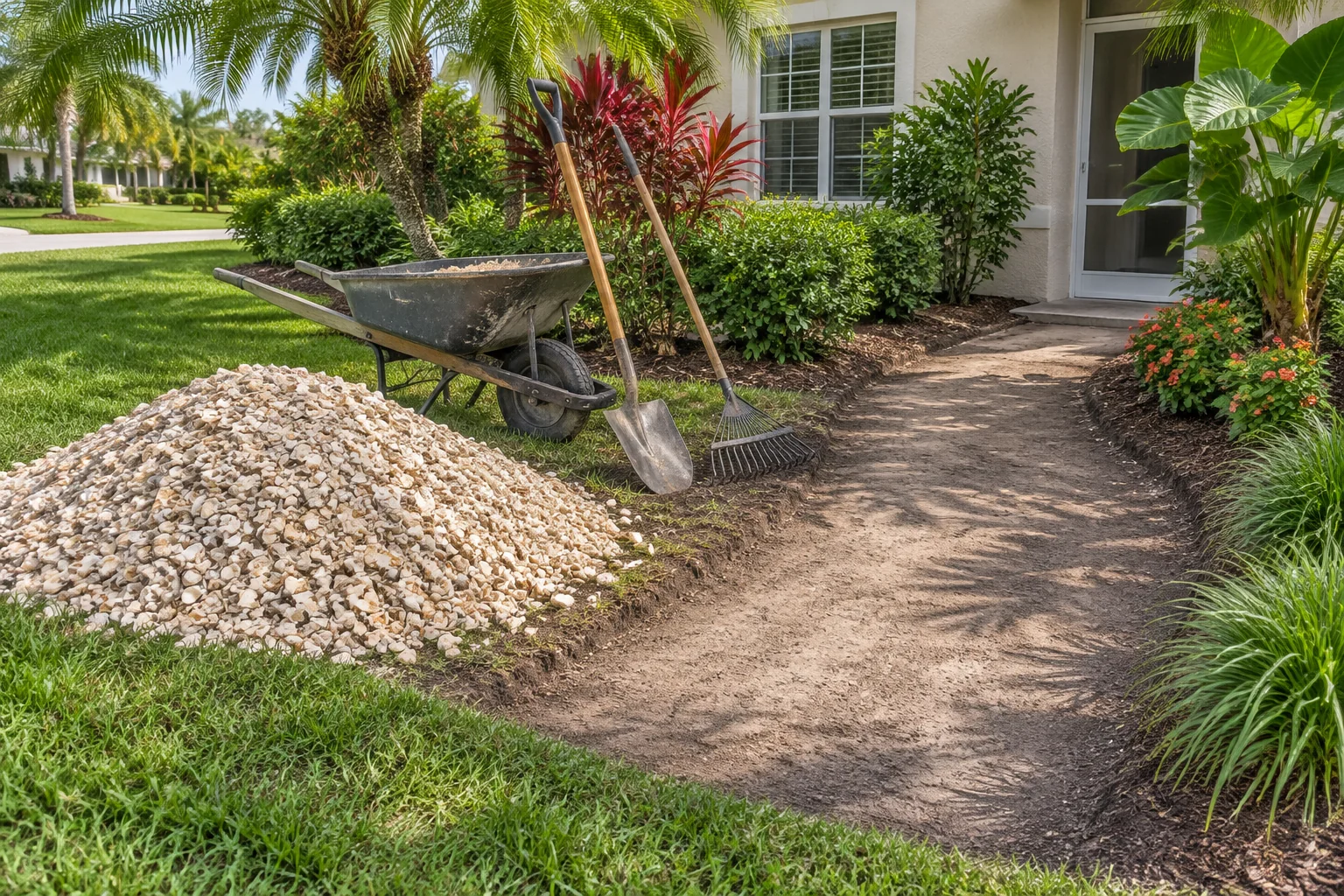
Before delivered coquina shell is spread at an Ormond Beach, FL property, the buyer needs a clear work plan, not just an order confirmation. Decide who will move the material, which areas will receive it, what tools are needed, and who can answer questions when the delivery arrives. This checklist concerns readiness for small DIY surface projects, not driveway construction or property-specific design.
Tropical Yards supplies coquina shell and plants and offers dump trailer delivery. The customer or a separately engaged installer handles spreading and other installation labor. For the broader purchase decisions, use the bulk coquina shell buying guide to connect your material choice and order details with the work-readiness decisions below. The optional worksheets described here are planning examples, not delivery approvals or guarantees of project results.
Record Two Acceptable Drop Options And Each Manual Route
Compare only staging points already judged acceptable, independently of this ledger, by the supplier for delivery and by the people doing the work for their arrangements. Confirm Tropical Yards' dump trailer delivery arrangements and the coquina shell product separately from installation. Distance arithmetic cannot approve an unsafe route or override supplier requirements.
Label the destination zones A and B and the possible piles P and Q. Keep each zone's work limits and installation specifications on the same sketch. Compare the manual travel implied by both alternatives for the same work mix, rather than choosing whichever pile looks closest to one destination.
- Measure four routes: Record P-to-A, P-to-B, Q-to-A and Q-to-B in feet along the actual usable walking paths, including turns and detours. Do not substitute straight-line map distances.
- Separate restrictions: Note gates, blocked passages and access needed by others beside the measurements. Remove an unavailable route and its staging option from this comparison before totaling distances.
- Obtain planned counts: Ask the person moving material for the planned trips to each zone. Mark these counts tentative unless confirmed for their arrangements; do not derive them from an assumed cart volume.
- Identify decisions: Name who confirms measurements, trip assumptions, tools and installation instructions. Keep the supplier's delivery contact distinct from the person directing spreading.
A usable manual path does not establish trailer access. Both piles remain alternatives, not permission to redirect unloading. Keep delivery approval attached to the agreed approach and staging location, and arrange tools, movement and spreading yourself or through an independent installer.
Confirm The Work Zone And Installer Specifications
Define exactly where shell will go and obtain any installer specifications before preparing to spread it. The shell buying checklist provides purchase context, while the coquina shell product information helps identify the material being discussed. Neither replaces a plan for your particular surface.
Start with a simple sketch showing the intended project boundaries. Label existing paving, lawn, planting areas and any sections excluded from the work. A narrow path and an adjacent decorative strip should be shown separately if they have different purposes. The point is to give the person spreading shell a shared picture of where the task begins and ends, not to create a structural drawing.
If an installer has specified a material, intended depth or finished condition, obtain that wording before ordering. Ask the installer to resolve unclear terms rather than selecting a generic instruction from a product description. Keep the measured area connected to the agreed boundaries. If the layout changes, ask whether the quantity or work plan also needs revision.
Check planting areas separately. UF/IFAS guidance on choosing and installing mulches does not recommend inorganic mulches, including shells, as garden-bed mulch. It also states that crushed shells do not contribute nutrients or water-holding capacity and do not prevent weeds. Do not transfer the benefits described for organic mulch to shell. If your proposed work extends around plants, resolve that material-selection question before including the bed in the spreading task.
Identify places that need an installer decision before work can proceed. An uncertain boundary, unresolved ground condition or unclear transition to existing paving belongs on that question sheet. Treat it as an open issue, not as permission to cover the area and decide afterward.
Compare Trip-Weighted Route Distance With A Worked Example
Compare total route feet by multiplying each one-way distance by its planned trip count and by two, then adding the destination subtotals for each pile. Pair this ledger with the shell buying guide and confirmation of the coquina shell material, without treating material delivery as installation.
Assume every counted trip includes a loaded outward journey and an empty return to the same pile, including the last trip. The formula is route feet = 2 × one-way feet × trips. A different return arrangement needs its own row rather than automatic doubling. Start with 8 planned trips to A and 12 to B; calculate the original columns first. The revised column preserves the later change for comparison.
| Pile and destination | One-way route | Original plan | Revised plan |
|---|---|---|---|
| P to A | 20 ft; confirmed within example | 8 tentative trips: 2 × 20 × 8 = 320 ft | 8 trips unchanged: 2 × 20 × 8 = 320 ft |
| P to B | 50 ft; confirmed within example | 12 tentative trips: 2 × 50 × 12 = 1,200 ft | 4 tentative trips: 2 × 50 × 4 = 400 ft |
| Q to A | 35 ft; confirmed within example | 8 tentative trips: 2 × 35 × 8 = 560 ft | 8 trips unchanged: 2 × 35 × 8 = 560 ft |
| Q to B | 25 ft; confirmed within example | 12 tentative trips: 2 × 25 × 12 = 600 ft | 4 tentative trips: 2 × 25 × 4 = 200 ft |
| P total | Not applicable | 320 + 1,200 = 1,520 ft | 320 + 400 = 720 ft |
| Q total | Not applicable | 560 + 600 = 1,160 ft | 560 + 200 = 760 ft |
P is closer to A, but Q's original total is 360 ft lower: 1,520 − 1,160 = 360. Weighting both destinations by their planned trips changes the comparison. This result concerns distance only; it predicts neither time nor effort and cannot select a supplier-approved unloading point by itself.
Agree On Delivery Access And The Material Handoff
Discuss access and the proposed unloading point with Tropical Yards before treating the handoff as settled. Use the supplier's current quote information together with the bulk shell order checklist to prepare your questions. Your preferred pile location still needs delivery confirmation.
Provide the exact delivery address and describe known restrictions. Photographs or a simple sketch can help explain the approach, gates and proposed drop area. Do not assume a regional service description confirms every address or that a pile can be placed wherever it would be most convenient for spreading. Ask the business to confirm the arrangements for your order.
Before the appointment, collect the information your delivery contact may need:
- Entry instructions: Explain gates, community access procedures and any delivery-hour restrictions that apply to the property.
- Known access concerns: Describe tight approaches, overhead obstructions, slopes or soft areas rather than leaving them for arrival.
- Proposed unloading point: Show the requested location and what surrounds it, without treating a photograph as approval.
- Contact responsibility: Agree who will answer questions if the proposed arrangement needs discussion.
- Household access: Identify routes and spaces that need to remain usable while the delivered material awaits spreading.
Record the agreed purchase and delivery details in a short order summary. Include the product, quantity, address and delivery terms discussed. Keep this separate from the installer agreement so nobody mistakes the delivery scope for a promise of spreading labor. If site conditions or the proposed drop location change, contact the supplier rather than relying on an earlier conversation.
Include nearby stormwater routes in your project notes. The UF/IFAS Florida-Friendly Landscaping principles identify debris and eroded soil carried in stormwater as water-quality concerns. As a planning precaution, flag nearby drains or water routes for discussion when proposing material storage. This guidance does not establish shell drainage performance or endorse a supplier.
Recalculate When The Work Mix Or Route Changes
Recalculate affected rows whenever planned trips or usable routes change; reducing B from 12 to 4 trips reverses this example's distance preference. Recheck the purchase against the shell buying guide and reconfirm any changed unloading arrangement with Tropical Yards.
Change only B's tentative count to 4; A remains at 8 and all four route measurements stay unchanged. For P, retain A's 320 ft and replace B's subtotal with 2 × 50 × 4 = 400 ft, giving 720 ft. For Q, retain A's 560 ft and replace B's subtotal with 2 × 25 × 4 = 200 ft, giving 760 ft. P now has 40 ft less route distance, rather than Q having 360 ft less.
Preserve both versions in the table. Its measurement cells distinguish the example's confirmed dimensions from tentative trip counts, while the revised column records the changed work mix. If a path becomes unavailable, withdraw that alternative rather than entering zero distance. Remeasure an altered path before recalculating its row.
- For the person doing the work: Share the measured alternatives, return-trip assumption, revised counts and unresolved tool or route questions.
- For the supplier: Share proposed staging locations and changed access conditions; request approval before changing the agreed unloading point.
- For the project decision-maker: Retain original and revised work boundaries, specifications and totals so everyone uses the same version.
Keep cleanup and drainage constraints separate from the distance ranking. Debris and eroded soil carried in runoff can harm water quality under UF/IFAS stormwater principles; keep loose material and debris out of drainage paths. Those principles do not endorse this route ledger.
For your Ormond Beach project, confirm current material availability, order conditions and delivery arrangements separately from installation. Neither distance total promises a best work plan or changes the supplier's delivery-only handoff.
Frequently asked questions
Does Tropical Yards spread the coquina shell after delivery?
No. Tropical Yards supplies coquina shell and offers dump trailer delivery, but spreading and installation remain with the customer or an independently hired installer. Before ordering, identify who supplies the tools, moves material from the pile and performs the work. Keep those arrangements separate from the material and delivery quote.
What should be decided before shell spreading begins?
Confirm the work boundaries, intended use, installer instructions, tools and responsible workers. Also agree on how shell will move from the approved unloading point into each project zone. An optional sketch and responsibility sheet can organize these decisions, but they do not replace project-specific specifications or delivery approval.
Can the delivery pile go beside the project area?
You can propose a convenient location, but ask Tropical Yards to confirm access and unloading arrangements before relying on it. Share photographs, gates, restrictions and known access concerns. A route suitable for moving shell by wheelbarrow does not establish that a dump trailer can reach the same location.
Which tools should be ready for a DIY spreading project?
The work may involve a shovel, wheelbarrow and rake, but the actual tool list depends on your agreed task. Confirm equipment with whoever will perform the work, including who supplies it and when it will be available. Do not assume tools or spreading labor are included with shell delivery.
Should planted beds automatically be included in the shell work zone?
No. Review planted areas as a separate material-selection decision. UF/IFAS does not recommend inorganic mulches, including shells, as garden-bed mulch and states that crushed shells do not contribute nutrients or water-holding capacity. Resolve the intended treatment around plants before adding those areas to the spreading plan.