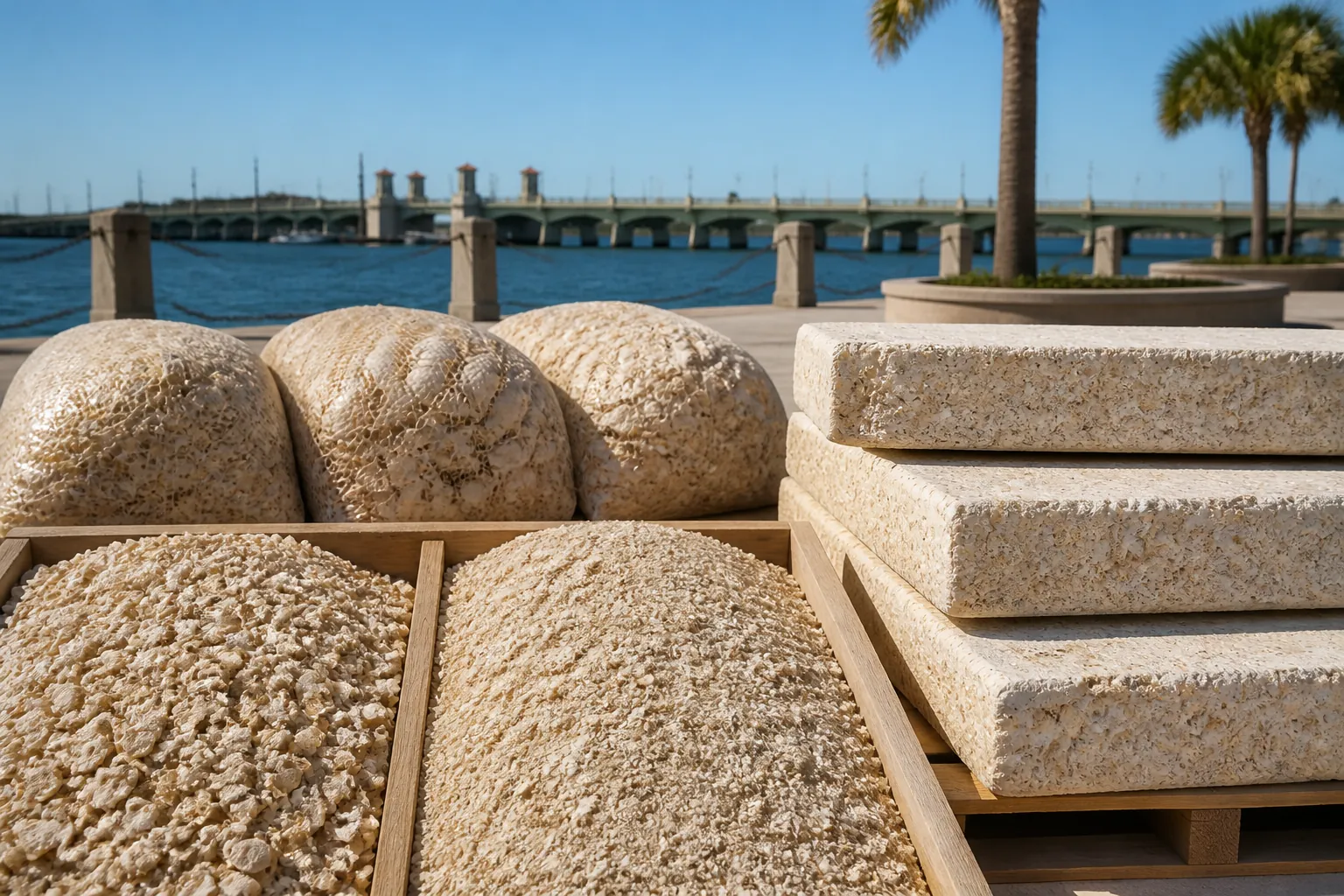
A coquina shell border around a curbside mailbox should leave the mailbox, its post, address numbers, and the carrier’s approach easy to see and reach. USPS gives general mailbox placement guidance and tells customers to contact the local post office before installing a mailbox. Keep the existing placement unchanged while planning ground cover, and verify property and local rules before working near the road.
What should you identify before planning a mailbox border?
Start by identifying the mailbox type and how it is served. A curbside box may be reached from the carrier’s vehicle, while another mailbox may require a different approach. The coquina shell and sidewalk guide addresses a nearby surface issue, and the landscape border guide covers containment. Neither sets mailbox placement requirements.
Take a photo from the road and another from the property side. Note the box, post, flag if present, address numbers, curb or road edge, sidewalk, driveway, and any nearby plants or signs. Do not include private account or mail details in a public photo. The goal is to understand the physical area before deciding whether any ground cover belongs there.
Check whether the mailbox is on your property, in a shared area, or within a public right of way. A visible strip beside the road doesn’t show who controls it. Review your property documents and contact the relevant local authority or association when the boundary or permissions are unclear. A supplier cannot check legal boundaries or permission to alter public space.
Keep the mailbox position itself separate from the landscape project. USPS gives general setup rules for mailbox height and setback. It says to contact the local postmaster. A shell project is not a reason to raise, lower, move, or rebuild the box or post. Ask USPS and the relevant local authority before any placement change.
- Identify the mailbox type and its current delivery approach.
- Photograph the area without disturbing the post or mailbox.
- Check property boundaries and any association or public-space rules.
- Record unclear points for USPS or the responsible local authority.
How can you keep the carrier approach clear?
The USPS Postal Operations Manual says customers must keep the approach to the mailbox clear for delivery. Use the sidewalk access guide and border containment guide to consider nearby shell movement.
Watch the route from the carrier’s point of view. A low mound or border might seem minor when viewed from the yard but can affect a vehicle’s approach or the place where a carrier reaches the box. The path depends on the street, mailbox, and how mail arrives. Do not infer a safe or approved layout from a different property.
Keep enough open space for ordinary access and maintenance. Household members may need to retrieve mail, clear leaves, or reach the post. Postal staff may need to reach the box from the road. The correct arrangement should preserve those uses without asking a carrier to step over a border or work around a pile.
Do not put shell on a sidewalk, roadway, curb ramp, drainage opening, or shared path as a shortcut to make a border look continuous. Check local rules for any area beyond your property line. If a planned layout could affect public access or visibility, pause and get guidance before ordering material.
- Trace the carrier’s usual approach and exit path on a simple sketch.
- Mark the roadway, curb, sidewalk, driveway, and any shared access separately.
- Keep the planned shell footprint outside the approach and mailbox operating space.
- Ask USPS or local officials about unclear access or boundaries.
Should coquina shell change the mailbox height or setback?
A shell project should leave mailbox height, setback, and post position unchanged. USPS general mailbox setup guidance governs placement; see the supplier delivery checklist and coquina shell product page for their separate scopes.
Adding surface material can change the visible ground level at the post. If the existing mailbox appears low, high, tilted, loose, or incorrectly placed, do not try to correct it by adding or removing shell around the base. Ask the local post office and property owner what steps apply. If the post needs repair, arrange that work separately from material supply.
Do not dig near the post without first checking for buried utilities and checking that the work is permitted. A post may have been installed by a previous owner or may sit close to a road or sidewalk. If the project requires excavation, locate underground utilities through the appropriate process before digging and follow instructions from the property owner or authorities.
Keep address numbers easy to see. USPS guidance includes address identification as part of mailbox placement details. A low planting, shell pile, seasonal decoration, or post wrap should not conceal the numbers from the street. If the address is already hard to read, address that issue independently before proceeding with a border.
- Do not add material to adjust the box’s height or position.
- Check utilities and permission before digging or moving the post.
- Keep the address and mailbox door visible and reachable.
- Refer placement concerns to USPS and the responsible property owner or authority.
How should you think about the shell boundary?
Sketch a small, clearly defined surface area only after the mailbox approach and property boundary are understood. The guide to keeping coquina shell inside landscape borders covers general containment, while the sidewalk spillover guide discusses a nearby public-facing edge. Your own layout still needs to follow the limits of the property and local rules.
Do not assume a border is automatically permitted just because it is low or temporary. A border can still narrow a walking path, encroach into a right of way, or create a trip concern. Ask the local authority or association about the space before installing anything near the road. Do not use a supplier’s product description as permission for a particular placement.
Keep coquina shell and the mailbox post visually distinct. Avoid building a mound that hides the bottom of the post or makes it hard to see whether the post is leaning. A neat edge is useful only if it leaves the box, support, and ground conditions easy to inspect.
Plan how loose material will be contained over time. Rain, yard work, foot traffic, and vehicles can move surface material. Do not claim that shell will stay in place or remain out of a sidewalk or roadway. If material moves beyond the approved footprint, clean it up and revisit the plan before adding more.
For a narrow verge, the best decision may be to keep the area simple and avoid a shell border. A small design does not need to cover every open patch. Preserve access and visibility first, and use material only in a place that can be maintained without affecting delivery or public space.
What local checks matter in St. Augustine?
Check the property line, who owns the space, and neighborhood rules before marking a shell footprint. The sidewalk planning page and delivery readiness checklist cover nearby but separate access questions.
Check whether the mailbox is part of a shared cluster or a neighborhood arrangement. A community may have rules about its appearance, maintenance, and access. Do not assume an individual homeowner can change a shared mailbox area. Obtain direction from the responsible owner or association before making a plan.
Consider visibility from the street. Keep the mailbox, address, and carrier approach unobstructed. Do not add signs or tall plants that could obscure an address or interfere with a driver’s view. Local requirements may apply to sight lines and work near a road, so ask the relevant authority rather than relying on a general landscaping diagram.
If the location has a sidewalk, curb ramp, drainage inlet, or other public feature, treat it as a separate boundary question. Avoid placing loose material where it could spill into those areas. Do not redirect water or alter a public drainage feature as part of a small planting or ground-cover project.
- Check the property line and road right-of-way owner.
- Ask whether a neighborhood or shared-mailbox rule applies.
- Check local requirements for landscaping near sidewalks and streets.
- Keep public paths and drains clear unless officials approve changes.
How do you plan product supply and delivery?
After mailbox and public-space questions are resolved, check a supplier drop spot. Use the delivery readiness guide and the material details guide; neither authorizes changing the mailbox or right of way.
Tell the supplier that the planned project is near a curbside mailbox. Describe the route, the intended drop spot, the sidewalk or curb, and the area that must stay open. Ask whether the planned drop location works for delivery. Do not expect a driver to choose a new location or place material around the post without an agreed plan.
Keep the delivered pile away from the mailbox and carrier approach. A delivery pile can temporarily obstruct access even if the finished border is small. If there is no suitable drop spot that avoids the mailbox route, ask about other arrangements before you book delivery.
Check the current material price, order minimum, delivery charge, address coverage, and any applicable details directly with Tropical Yards. The website currently lists $145 per cubic yard, a four-cubic-yard minimum, and $275 delivery when those prices apply; verify current terms before ordering. The material order does not include placement, installation, mailbox adjustment, or public-area permission.
Tropical Yards is a plant and coquina shell supplier. Customers or their separately arranged landscapers handle installation and maintenance. If the project includes excavation, a new border, or work near a road, arrange qualified labor and approvals separately.
What is a useful pre-project checklist?
Check who controls the area, ask USPS about placement, then keep carrier and public access clear. Use the sidewalk checklist and delivery checklist to review those separate routes.
Take a photo of the existing condition and keep a sketch with measurements that you have verified. Mark the mailbox, post, address numbers, property line if known, carrier path, road, curb, sidewalk, and planned shell boundary. Label unknowns clearly. A sketch is a planning aid, not a survey or approval.
Before delivery, check a separate drop spot and keep the mailbox route accessible. After the material is placed, inspect the area from the street and from the property side. Check that mail can be delivered, the address can be read, the sidewalk remains open, and loose shell has not moved into public space.
If any part of the plan changes, pause the affected work and ask the responsible person. A moved mailbox, new border, or different drop location may need a new review. A supplier’s delivery confirmation covers logistics only; it does not replace USPS placement guidance or local authorization.
- Verify who controls the planned area and obtain any required permission.
- Ask USPS about mailbox placement before changing the box or post.
- Protect carrier access, address visibility, sidewalks, and road access.
- Check the product, order details, and a separate delivery drop location.
- Check the finished area for displaced material and clear access.
Frequently Asked Questions
Can I put coquina shell around my curbside mailbox?
Possibly, if the area is yours to change and the shell does not interfere with mailbox placement, carrier access, the visible address, or public access. Check the property boundary and applicable rules first. Do not alter the mailbox or post as part of a ground-cover project.
How close can shell be to the mailbox post?
There’s no one-size-fits-all setback for shell. Keep the post and its condition visible, avoid changing mailbox height or support, and do not cover a base or dig nearby without checking the relevant instructions and permissions. Ask USPS or the property owner about placement concerns.
Can shell be placed in the street-side area between a sidewalk and road?
Do not assume that strip is private property. Check who controls it and whether landscaping or material placement is allowed. Contact the local authority or property association if the boundary is unclear. Keep sidewalks, curb ramps, road access, and drainage features clear.
Does the USPS installation height apply to the shell surface?
No. USPS placement guidance concerns the mailbox and its relationship to the road surface. It is not a recommended depth or height for ground cover. Do not use shell to adjust the mailbox position. Contact the local post office if the existing placement needs review.
What should I tell the supplier before delivery?
Explain that the planned work is near a curbside mailbox, identify the agreed delivery route and drop location, and point out areas that must remain clear. Check current product and delivery details directly. Tropical Yards supplies material and delivery; installation and site permissions are separate.
Tropical Yards supplies and delivers coquina shell. Customers or their landscapers handle installation. Call 904-526-8345 to request current material and delivery details.
This article uses AI-assisted drafting. It includes no images of Tropical Yards projects or current inventory.
Sources
- How to Install a Mailbox, United States Postal Service
- Postal Operations Manual, Section 632, United States Postal Service
- Coquina Shell Landscaping, Tropical Yards