 Tropical
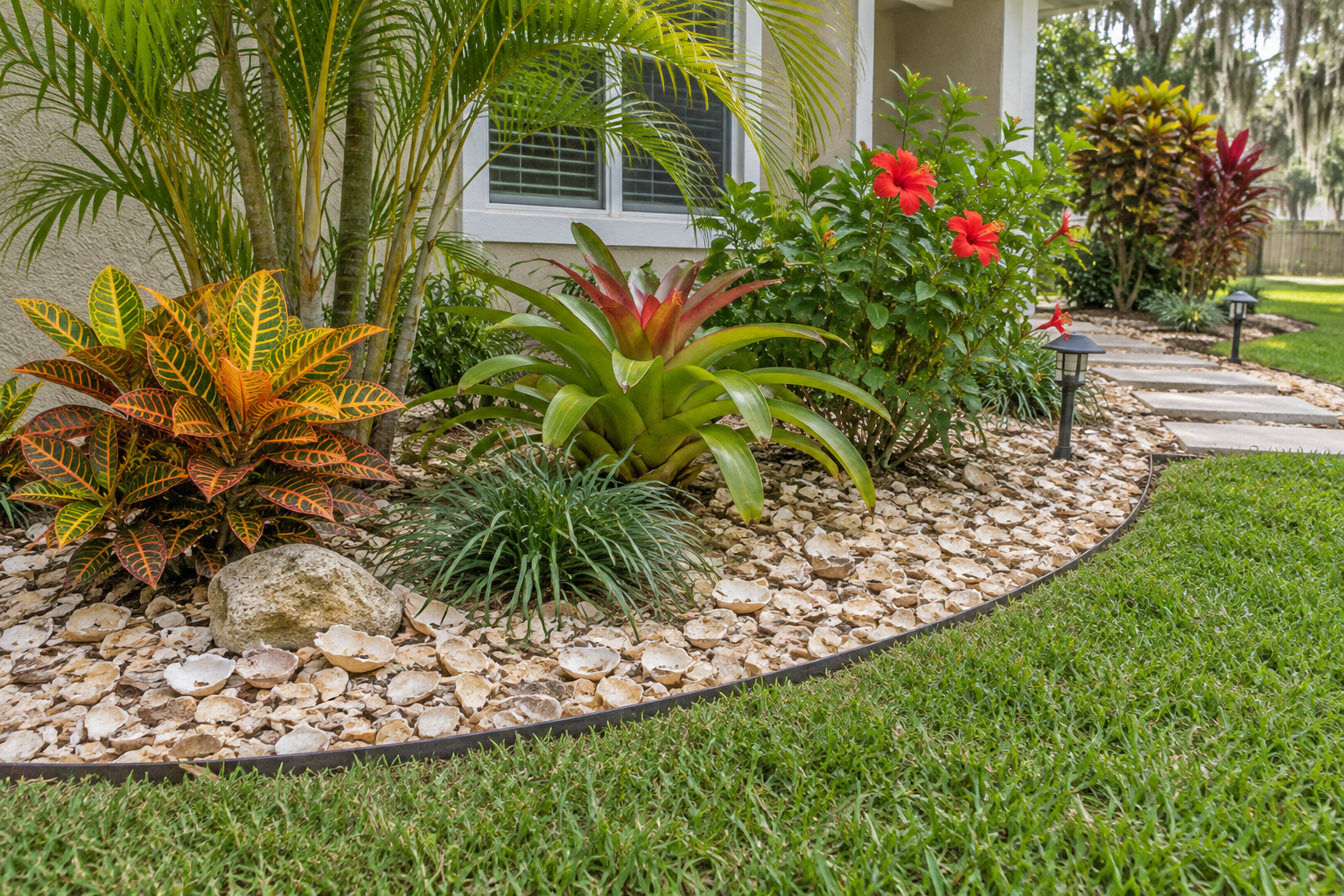
Where an artificial-turf area meets a proposed coquina shell bed, agree exactly where each surface begins and ends before ordering material or starting work. Treat the boundary, preparation, responsibilities, and finished appearance as project-specific questions for the people involved—not assumptions about how shell and turf perform together. For broader context on coquina shell applications and planning, see the complete coquina shell guide for Northeast Florida.
Tropical Yards supplies and delivers bulk coquina shell in the St. Augustine-through-Daytona Beach corridor; customers or their landscapers handle installation. For artificial-turf installation, ask the professionals involved who will handle that work and coordinate the boundary. Product availability, quantity, specifications, current charges, and scheduling must be confirmed directly. This guide helps you prepare a clear scope and useful questions without prescribing a technical turf-shell assembly.
Start with a shared definition of the border
“Add shell beside the turf” can mean several different finished layouts. It might mean a narrow decorative band, a wider planted bed, or a larger area that meets the turf along one or more sides. The phrase alone does not settle the edge’s location, shape, width, or construction. Draw the proposed boundary on a simple yard sketch and mark fixed reference points, such as a patio corner, fence line, or path junction. How will the turf professional and the person responsible for shell installation confirm they are working from the same outline?
Keep the plan focused on what can be observed and agreed: which area remains turf, which area is intended for loose coquina shell, where transitions occur, and what outcome you expect at the visible edge. If the proposal changes after work begins, pause to document the revised outline and confirm whether the change affects quantities, scope, or charges. What written description or marked plan will each person use to understand the proposed border?
- Label the existing turf footprint and the proposed shell footprint separately.
- Mark every place where the border turns, narrows, or meets another landscape feature.
- Note which areas are existing and which are part of the new work.
- Ask each professional to confirm what they are responsible for, and what is outside their scope.
- Record any agreed revision in writing before authorizing related work or ordering additional material.
Questions to resolve before choosing an edge detail
A boundary can be visually crisp, softly curved, or shaped to follow a feature. What edge detail, if any, is appropriate for your project? Ask the turf installer what border details are compatible with the existing turf and whether anything could affect its installation or warranty. Ask the shell installer how the proposed edge will be defined and what work is included in that person’s scope. If neither professional is responsible for designing the interface, ask who should advise you before approving the work.
Avoid choosing a separator, fastener, base, or construction method from a general online description alone. The available evidence does not establish a universally suitable technical detail for every artificial-turf and loose-shell boundary. Request a project-specific recommendation from the relevant installer, and ask each person to identify assumptions or exclusions in the proposed scope. If the installers disagree, ask them to explain the concern directly to one another before work proceeds.
Compare the questions by responsibility
The table is a meeting aid, not a specification. Use it to make sure the right person answers each question for your property. An answer should identify who is responsible and what has been included; it should not be inferred from the fact that someone supplies one of the materials.
| Planning topic | Ask the turf professional | Ask the shell installer | Record in the project plan |
|---|---|---|---|
| Boundary location | Where does the existing turf work end? | Where does the shell work begin? | A shared, marked outline |
| Edge detail | What details are compatible with this turf installation? | What edge work is included in the shell scope? | Agreed responsibilities and exclusions |
| Preparation | What preparation is needed on the turf side? | What preparation is included on the shell side? | Who does each task, and when |
| Quantity | Does the turf scope affect the measured outline? | What area and quantity should be quoted? | Measurement assumptions and confirmed amount |
| Delivery and access | Will the work area need to remain accessible? | What delivery access and placement details need confirmation? | Access plan, placement, and confirmed timing |
| Changes or concerns | Who should review a concern about the turf? | Who should review a concern about delivered shell or shell work? | Contact path and written notes |
Measure the proposed shell area separately
Do not estimate shell quantity from a photograph or from the length of the turf edge alone. A border may change width, follow a curve, or extend into a bed, so consider its area separately. Make a sketch, divide the proposed shell footprint into simple shapes where practical, and write down the dimensions and assumptions. If the outline is irregular or the intended depth is undecided, ask the installer what information is needed for a meaningful quantity estimate.
Ask the installer to confirm the proposed area and any depth assumptions used for the requested quantity; do not treat an online calculator as a substitute for a site-specific scope. Then ask the supplier to confirm product availability, specifications, the quantity they can provide, current product and delivery charges, and scheduling. Keep your measured estimate, the installer’s requested amount, and the supplier’s confirmed order quantity distinguishable in your notes.
- Sketch the proposed shell footprint and label its separate sections.
- Measure each section and note the units used; keep the turf dimensions separate.
- Mark curves, corners, and any areas whose final outline is not yet settled.
- Ask the installer to confirm the area and depth assumptions used for the requested quantity.
- Confirm product specifications, availability, quantity, charges, and scheduling directly with the supplier before treating them as settled.
Coordinate installation responsibilities and sequence
When turf already exists, clarify whether the proposed shell work is limited to the neighboring area or includes any alteration to the turf edge. Do not assume that a shell supplier will change, trim, repair, or warranty turf, or that a turf installer will prepare or place shell. Tropical Yards supplies and delivers coquina shell; customers or their landscapers handle installation. Define who will mark the boundary, prepare each work area, carry out the shell installation, and review the completed transition.
Ask the professionals to agree on a practical sequence for this specific property. The sequence may depend on their scopes, access, and the condition of the work area; there is no universal schedule established here. Confirm whether one task needs to be completed or reviewed before another begins. If the shell is to be delivered before installation, discuss the intended placement with the supplier and installer in advance. Delivery uses a 14-foot dump trailer for bulk coquina shell, so confirm access and placement details directly rather than assuming a particular unloading arrangement will suit the property.
Prepare for the delivery conversation
Before requesting a delivery plan, have the proposed shell area, requested quantity, and placement preference ready. Describe any access constraints you know about and ask what additional information the supplier needs. Confirm delivery availability and scheduling directly; do not assume a date from a general service-area description. If the plan changes, contact the supplier and installer to confirm whether the revised quantity, location, or timing can be accommodated.
For a clearer request, explain whether the outline is final or still tentative. Share a simple sketch if useful, but label it as a planning drawing unless the professionals have approved it as the final scope. Ask whether the quoted amount covers only supply and delivery or includes any other work; do not infer installation from a material order. The coquina shell service page provides product information, while delivery details should be confirmed for the proposed order.
Keep records of the agreed scope
Written notes can help you track who agreed to what. Keep the sketch, measurements, quote, invoice, and any written scope or revisions together. Note the date of conversations and the person or business involved. If an issue arises, state what you observed and what resolution you are requesting, then retain copies of the relevant messages. These are general recordkeeping suggestions, not a statement of Tropical Yards’ order-resolution or refund policy.
Before work begins, review the documents for the boundary, the quantity and assumptions, each party’s responsibilities, delivery placement, and any exclusions. If a detail is missing, ask for clarification instead of filling the gap with an assumption. After the work, compare the result with the agreed scope and raise questions with the professional responsible for that part of the work.
Next step: confirm the product and delivery details
Once your outline and installer responsibilities are clear, contact Tropical Yards to confirm current coquina shell availability, specifications, quantity, charges, and scheduling for your project. Share the delivery location and discuss access and placement questions directly. For a product or delivery inquiry, use the Tropical Yards contact page. Keep installation planning with the customer or landscaper responsible for the work, and confirm that the turf professional has reviewed any proposed change at the turf edge.