 Tropical
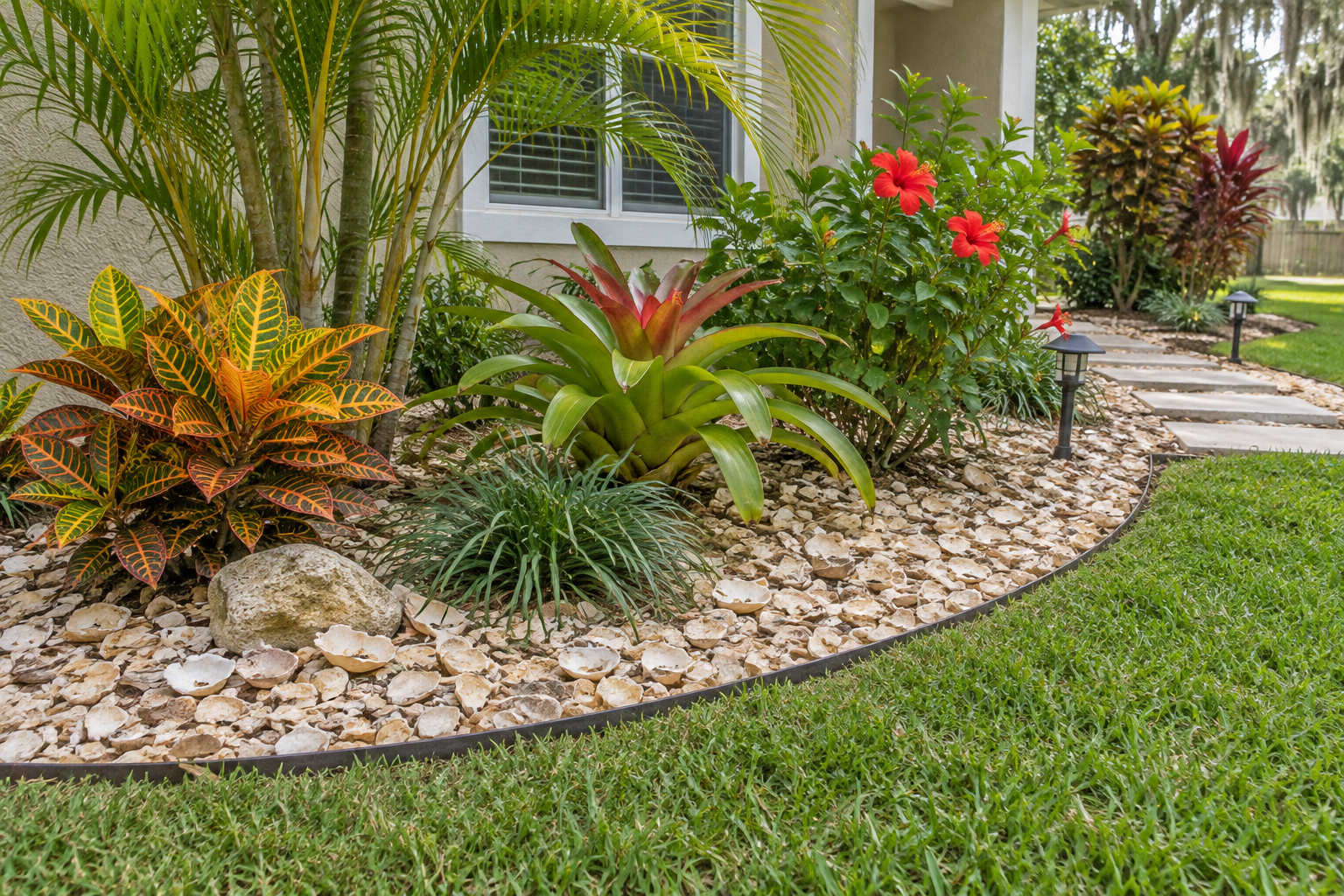
Coordinating coquina shell deliveries to more than one property is easiest when each address has its own clear scope, approval, and record—even when one person is organizing the work. Before asking about delivery, separate the properties on paper: identify what each site needs, who can authorize its order, where a delivery could be placed, and who can receive it. Then confirm availability, quantities, specifications, current product and delivery charges, and scheduling directly with the supplier for each site. Tropical Yards supplies and delivers bulk coquina shell in the St. Augustine through Daytona Beach corridor; customers or their landscapers handle installation. For broader material and project context, see the complete coquina shell guide for Northeast Florida.
Start with separate property scopes
Multiple addresses do not automatically mean one shared project. A front bed at one home, a path at another, and a driveway area at a third can have different boundaries, measurements, access conditions, intended uses, and decision-makers. Treat each property as a distinct scope unless the people responsible for all sites deliberately agree on a different arrangement. This makes it less likely that a measurement, approval, or delivery note intended for one address will be confused with another.
For every property, create a short scope record before requesting a quote. Include the address; the area or areas being considered; the intended application; who measured or assessed the site; and the name or role of the person authorized to approve a purchase. If the owner, property manager, homeowner association, or landscaper has a role in approving the material or placement, identify that role and ask the responsible party what documentation is needed. Do not assume that approval for one property applies to another, or that one person’s authority at one address extends to all addresses.
Measurements and quantity decisions should also remain attached to the site they describe. A landscaper or other qualified project professional can assess the intended application and advise what quantity and specifications fit that property. If you are still estimating, label the figure as preliminary rather than treating it as an approved order amount. Supplier availability and specifications should be confirmed directly; do not infer that a quantity or product detail discussed for one site transfers to another.
Use a property-by-property coordination sheet
A simple shared document can serve as a control sheet, but keep a distinct section or row for every property. Give each site a short identifier that is easy to recognize, such as “Property A” plus the street address. Use that identifier consistently in quote requests, approval notes, delivery communications, and records. Avoid using an owner’s name alone as the identifier: the same person may be connected with multiple sites, and the address is what distinguishes the receiving location.
Record whether a detail is confirmed, pending, or not applicable. That small status distinction prevents a preliminary measurement or unanswered question from being mistaken for a final instruction. Keep the actual source of a decision visible: for example, note whether a quantity came from the landscaper’s assessment, an owner’s measurement, or a supplier conversation. This is a practical recordkeeping suggestion, not a substitute for professional assessment or supplier confirmation.
- Property identity: address, internal project label, and the owner or authorized decision-maker for that site.
- Scope: intended use, areas included, boundaries, and any areas specifically excluded from the proposed work.
- Quantity and specifications: the current proposed amount, who assessed it, what remains uncertain, and what the supplier has confirmed.
- Approval status: who must approve the material or work, what has been approved, and any outstanding association or property-manager review.
- Receiving details: the proposed placement area, access questions, receiving contact, and any site constraints that need discussion before confirming delivery.
- Order record: quote or invoice reference, date of communication, confirmed charges and terms, and copies of relevant messages.
Keep a separate folder or clearly separated record for each address, even if all the files are maintained by one person. If you use a spreadsheet, make the property identifier visible in every row rather than relying on color coding alone. If multiple people can edit the document, agree on who updates it and how a changed quantity or approval is marked. These simple conventions are intended to reduce mix-ups; they do not establish a supplier’s order, scheduling, or resolution policy.
Keep quote requests comparable—but not blended
When requesting quotes for several properties, ask for an address-specific quote or a clearly itemized record for each one. A combined conversation may be convenient, but the information still needs to show which material, quantity, charge, and delivery detail belongs to which destination. Ask the supplier how it wants separate property requests organized. Do not assume a multi-address request qualifies for a combined price, discount, minimum, or delivery arrangement; those details are not established here and must be confirmed directly.
For a fair comparison across addresses, ask the same categories of questions at each site. Confirm the proposed product and specifications, the quantity being discussed, current product and delivery charges, and whether the supplier can serve the specific address. Ask how the quote is documented and how a later change should be communicated. A quote for one site should not be treated as confirmation of availability or charges for another. Likewise, an estimate based on a preliminary measurement should not be represented as a final quantity.
Use the table as a planning template. Its entries are questions and record fields, not promised supplier terms. Fill each row with the answer that applies to that address, and mark unresolved items as pending rather than guessing.
| Coordination item | Property A | Property B | Property C |
|---|---|---|---|
| Address and site identifier | Record exact destination | Record exact destination | Record exact destination |
| Scope and intended use | List included area and use | List included area and use | List included area and use |
| Quantity and specifications | Identify assessor; confirm with supplier | Identify assessor; confirm with supplier | Identify assessor; confirm with supplier |
| Approval owner | Name role and approval status | Name role and approval status | Name role and approval status |
| Receiving contact and placement | Confirm person and location | Confirm person and location | Confirm person and location |
| Quote, charges, and timing | Obtain current site-specific details | Obtain current site-specific details | Obtain current site-specific details |
Resolve approvals before treating a request as ready
Responsibility can differ from property to property. One owner may be organizing work at several homes, while each address has a separate owner, tenant, association, property manager, or landscaper involved. Before an order is placed, identify who has authority to approve the purchase and who can approve the proposed placement or access plan. If that authority is unclear, ask the owner or relevant property representative rather than assuming that the coordinator can approve on everyone’s behalf.
For a managed or association-governed property, ask the relevant manager or association whether review is required and what information it needs. Do not assume that a supplier’s ability to deliver means a property has approved the project. Similarly, a landscaper’s recommendation about quantity or application is not automatically an owner’s purchase authorization. Keep these decisions separate in the record: professional scope advice, property approval, and the supplier’s confirmed order details are different items.
When a project has several decision-makers, agree in advance how changes will be approved. A revised area, quantity, placement point, or receiving contact can affect the site plan. Record who requested the change, who approved it, when it was communicated, and whether the supplier confirmed the updated details. If a change has not been confirmed, mark the status as pending. Do not rely on a verbal assumption that one property’s adjustment also changes another property’s request.
Plan receiving details for every address
Receiving information is site-specific. A person coordinating several homes should identify a receiving contact for each address and confirm that the person knows what delivery is being discussed, where placement is proposed, and how to raise a question if the site condition differs from the plan. If the intended recipient will not be present, ask the supplier directly what instructions or arrangements are acceptable. Do not assume that an unattended delivery, a particular placement, or a particular communication method is available.
Walk the proposed placement area with the property’s responsible person or landscaper, when appropriate, and note concerns to discuss with the supplier. These might include whether the proposed location is actually within the approved work area, whether access details need clarification, or whether another site activity could conflict with delivery. This is a coordination checklist, not an assessment of ground suitability, vehicle access, utility locations, or safe operating conditions. Ask the relevant professional or supplier about site-specific questions.
Tropical Yards uses a 14-foot dump trailer for larger plant orders and bulk coquina shell. That fact does not establish the space, access, turning room, ground conditions, or placement options at any particular property. Ask the supplier what site information it needs and whether the proposed access and placement can be accommodated. Keep the answer tied to the address under discussion; a site that works for one delivery is not evidence that another site has the same conditions.
Track confirmations and changes in writing
Once a quote or order is under consideration, save the documents and communications with the correct property record. The Federal Trade Commission’s general consumer guidance recommends collecting purchase documents such as receipts, invoices, and contracts; keeping originals while providing copies to a business; explaining a problem and the resolution requested; keeping notes of dates, conversations, and promised actions; and saving copies or screenshots of online customer-service messages. These are general recordkeeping suggestions, not Tropical Yards’ order terms, refund policy, or guarantee of a particular resolution.
For multi-property coordination, those habits are especially useful when a message concerns only one destination. Put the address and project identifier in your own note, then retain the original communication. If a discussion covers several addresses, summarize the confirmed details separately for each and ask the supplier to correct any ambiguity. Do not rewrite an informal conversation as if it were a confirmed quote or schedule. Keep a clear distinction between what was asked, what was answered, and what remains open.
- Before requesting details: make one scope sheet per address and identify the person authorized to approve that site.
- When requesting a quote: state the destination and intended use, provide the current proposed quantity and its source, and ask which specifications and charges apply to that property.
- Before confirming: check that the property representative has approved the scope and that the supplier has confirmed the relevant product, quantity, charges, and scheduling details.
- After confirmation: save the quote, invoice, and related messages under that property’s record; note the date and the person responsible for receiving.
- If something changes: identify the affected address, document the requested change, and obtain confirmation from the appropriate decision-maker and supplier before treating it as settled.
Compare logistics without assuming a combined delivery
It may be convenient to discuss several destinations in one planning conversation, but convenience is not proof that the orders can be combined, that one trip will serve multiple addresses, or that any particular delivery sequence is available. Ask directly whether the supplier can accommodate the proposed arrangement and what the current charges and scheduling would be for each property. The supplier must confirm whether the request is feasible; do not infer capacity, timing, or savings from the number of addresses.
If delivery needs to occur in a particular sequence, explain why and ask whether the sequence can be accommodated. Keep the desired timing separate from a confirmed schedule. For example, a landscaper may prefer material at one site before beginning work at another, but that preference does not establish the supplier’s availability. Confirm the schedule directly, then communicate the confirmed information to each property’s receiving contact. If the plan is not confirmed, keep it labeled as a preference or request.
Also consider whether different sites are genuinely ready at the same time. One property may still need measurements or approval; another may already have a receiving contact and placement plan. It can be clearer to advance each site according to its own readiness rather than forcing all properties into one assumed order. Whether separate orders or a coordinated request is suitable depends on supplier confirmation and the owners’ decisions—not on an assumed discount or delivery rule.
A practical readiness check before contacting the supplier
Use this final review to identify gaps, not to certify a property as ready. If a question concerns site access, installation, drainage, grading, or another property-specific condition, direct it to the relevant supplier or qualified professional. Customers or their landscapers handle installation; Tropical Yards supplies and delivers the loose coquina shell.
- Is every destination listed separately, with an address and a clear internal project label?
- Does each property have its own intended use, defined scope, proposed quantity, and source for that quantity?
- Have the correct owner or authorized representative approved the request for that site?
- Are any association, manager, or landscaper questions identified and assigned to the person who can answer them?
- Is a receiving contact identified for each destination, with placement and access questions raised rather than assumed?
- Are current product details, availability, quantities, charges, and scheduling awaiting direct confirmation where they have not yet been confirmed?
- Can the coordinator locate the matching quote, approval, invoice, and communications without mixing records between addresses?
Next step: confirm the details address by address
Before moving from planning to an order, prepare the property-by-property information and ask the supplier to confirm what applies to each destination. Tropical Yards’ supply and delivery details—including availability, quantities, specifications, current product and delivery charges, scheduling, and any order-resolution policy—must be confirmed directly. For a coquina shell inquiry, use the coquina shell service page for product information, or contact Tropical Yards with the separate property scopes and questions. Keep each address’s approved scope and receiving details clear, and arrange installation through the property’s owner or landscaper.