Coquina Shell Color Variation in Flagler Beach, FL
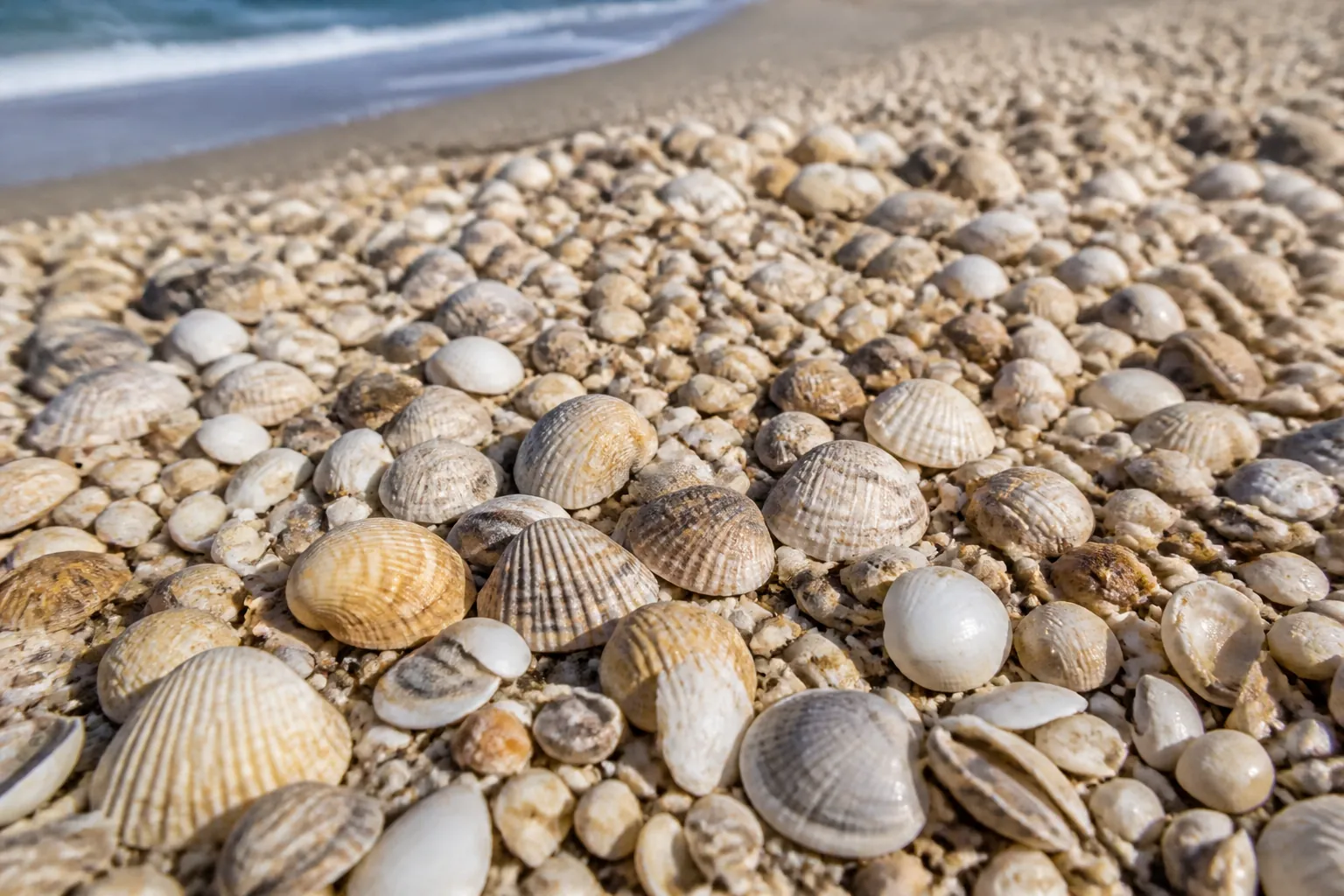
Coquina shell natural color variation comes from differences among shell pieces and the mix within each load. Moisture, dust, light, and nearby surfaces can change its apparent shade. For a Flagler Beach project, check a current sample and ask about the available material before choosing by color alone.
What causes coquina shell natural color variation between loads?
Coquina shell is a natural material, so separate loads may look different. The balance of light and darker pieces can change the overall look. Review coquina shell material specifications for product questions, then use the Northeast Florida coquina driveway guide to put appearance in context with your planned use.
A load contains many pieces rather than one uniform surface. Some pieces may look pale, while others show warmer tones. Their size and position affect what catches your eye. A small handful may look different from a broad, spread area.
The mix matters as much as any single piece. A few darker bits may stand out in a close photo. From farther away, those same bits may blend into the whole. Judge both views before deciding that a load looks too dark.
Don't assume that every visible difference has the same cause. Wetness, loose dust, shade, and the shell mix can overlap. First compare the material under similar conditions. Then ask the supplier what is known about the current load.
A color difference alone doesn't establish that material is unsuitable. It also doesn't prove that two products share the same traits. Keep appearance questions separate from questions about size, contents, and intended use.
For a Flagler Beach yard, start with the overall effect you want. You might prefer a light backdrop or a more mixed look. Describe that preference in plain words. Avoid treating one photo as an exact color standard for every order.
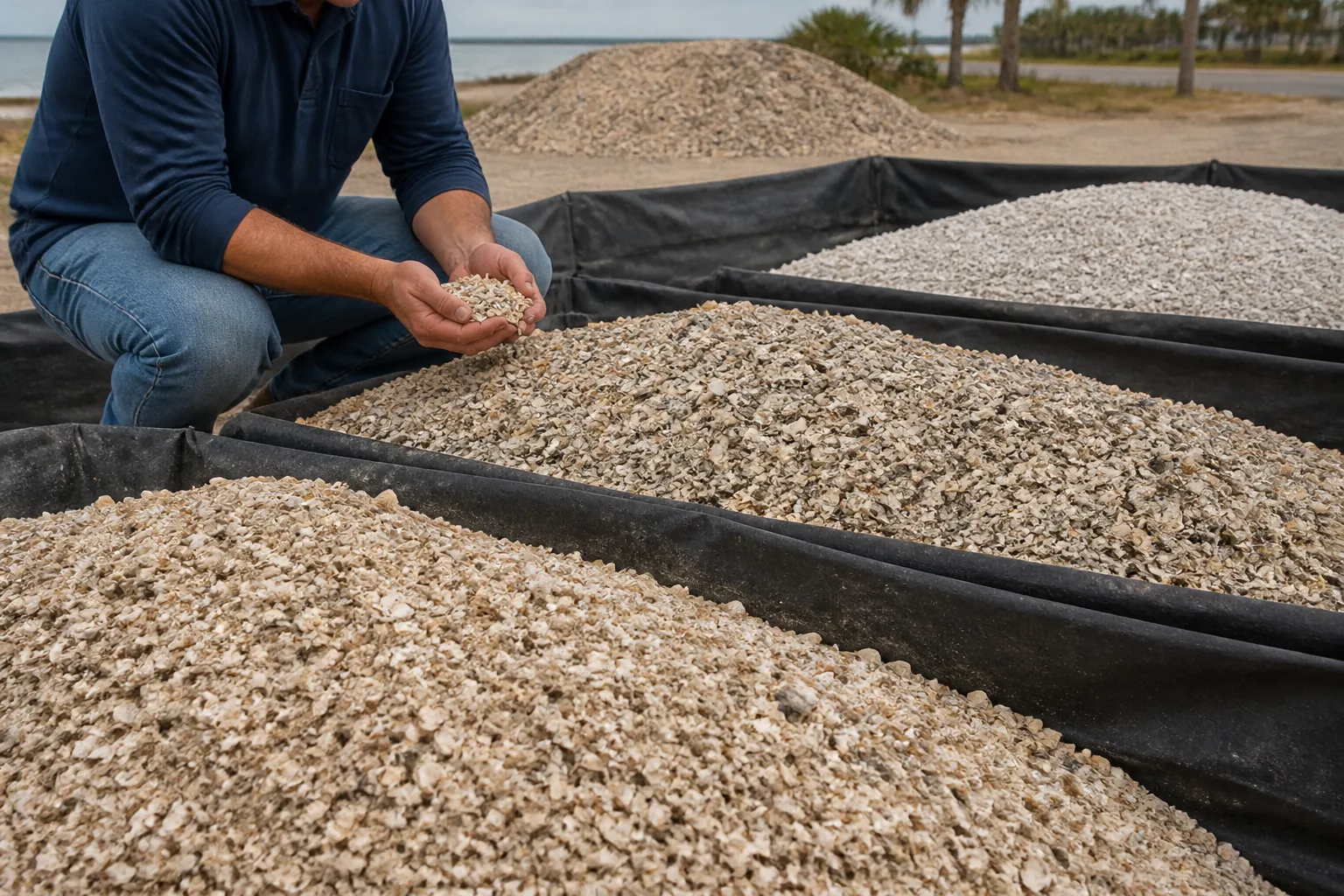
Can photos show the true color of a shell load?
Photos help show the general mix, but they aren't precise color matches. Light, wetness, camera settings, and screens can shift what you see. Use the coquina shell sample buying guide for a closer check, alongside coquina shell material specifications when comparing appearance with product details.
A bright photo may make pale pieces look nearly white. Deep shade can hide warm tones and small contrasts. A phone may also adjust brightness on its own. That makes two photos hard to compare without knowing how each was taken.
Ask if a photo shows current material or an earlier project. Both can help, but they answer different questions. A past project shows a possible finished look. It doesn't establish the exact color of material available for your order.
If current photos are available, ask about their conditions. A close view shows the pieces and their range of shades. A wider view shows how those shades blend. Neither view should replace clear details about what you would receive.
| Viewing condition | Possible visual effect | Useful check |
|---|---|---|
| Wet shell | May appear darker | Compare after drying. |
| Strong sunlight | May wash out pale tones | Check in softer daylight. |
| Deep shade | May hide small color differences | View the same sample in open light. |
| Phone or computer screen | May shift warmth or brightness | Use a physical sample when available. |
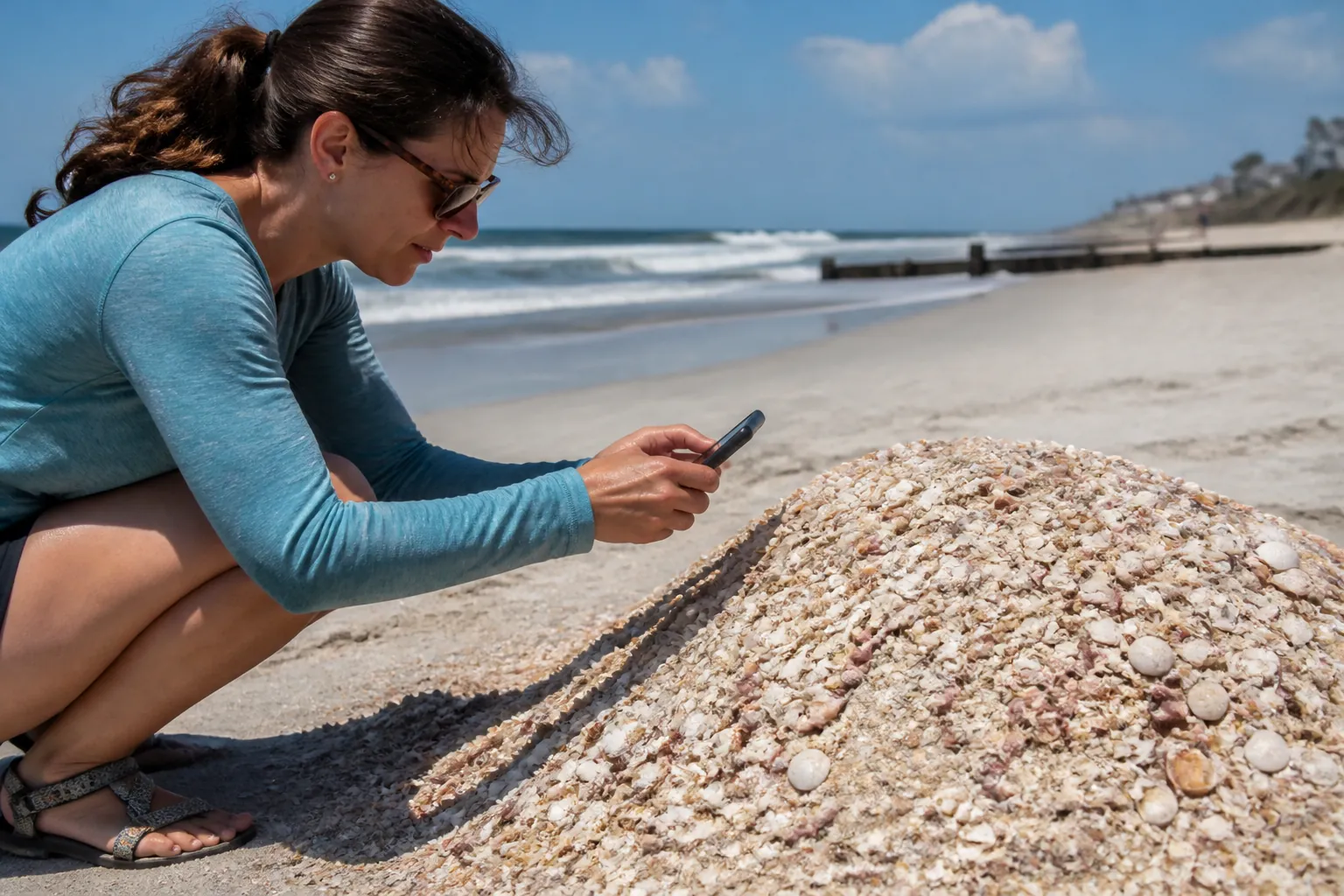
How should you check a sample before buying?
Check a sample in the place where you plan to use shell. Look at it dry, in daylight, and beside nearby finishes. The coquina shell sample buying guide helps frame that check, while coquina shell material specifications keeps color separate from other buying needs.
First ask if a sample is available and what it represents. It may come from current material or an earlier batch. That distinction matters when color drives your choice. A sample still shows only a small part of a larger load.
Use a clean, shallow tray to view the shell together. A thin scatter may let the tray color show through. A deeper grouping gives another view of the blend. Neither method predicts the exact look of the whole project.
Place the tray near the surfaces that matter most. These might include house paint, edging, pavers, or existing shell. Check from your usual viewing spot as well. A close-up inspection can make small contrasts seem much stronger.
Keep brief notes so you can explain your preference later. Words such as pale, warm, or mixed are useful starting points. Tie them to the sample you saw. Ask what differences could remain in the material you order.
- Ask which batch the sample represents before using it for color decisions.
- View the dry sample beside the finishes that will border your project.
- Check the sample in open daylight and again under normal yard shade.
- Record your preference without treating the sample as an exact load match.
Can a new order match shell already in your yard?
A new order may look close to existing shell, but an exact match isn't a sound assumption. Age, surface dirt, and batch differences complicate comparisons. Consult the coquina shell maintenance guide for existing areas and the coquina shell sample buying guide before choosing new material.
Start by checking the old area in several spots. The surface near a tree may look unlike an open patch. Leaves, soil, and dampness can affect what you see. Don't use one dirty corner as the standard for the whole yard.
Compare old and new material under similar conditions. Dry existing shell beside wet new shell can give a misleading contrast. A photo from last season adds another unknown. Use a current view whenever you can.
A small refill can create a visible patch within a larger area. A separate bed may make the same contrast less noticeable. Think about where the new shell will meet the old. That boundary often matters more than a close color match.
If you plan a DIY blend, test a small, contained amount first. Check the result from a normal standing distance. Don't assume that mixing will erase every difference. Ask a qualified contractor about the work if the area needs more than simple surface care.
For a project ordered in stages, keep the original product details. Save photos with notes about light and wetness. Those records can support a later discussion with the supplier. They don't establish that a future batch will look the same.
Does a color change mean the material is different?
Color alone can't tell you the size, contents, or suitability of a shell product. Check those details directly rather than judging from shade. Start with coquina shell material specifications, then review the Northeast Florida coquina driveway guide if vehicle use forms part of your project.
Two samples can look alike while having different piece sizes. Two loads can look different while sharing a product description. Ask for the details that matter to your planned use. Don't treat a color name as a full material description.
Keep the order record clear and simple. Note the product name, stated size details, and quantity basis. Add any color preference as a separate note. This helps avoid a conversation where appearance stands in for all other needs.
Tropical Yards' coquina shell page describes the product and DIY use. It is a starting point for product questions. It doesn't replace confirmation of current load details. Ask the supplier to clarify anything the page doesn't establish.
For driveways or other load-bearing areas, appearance is only one choice. Base needs, drainage, and site conditions require their own review. A suitable qualified contractor can assess those concerns. A pale or even-colored surface doesn't prove that the underlying plan is sound.
The same care applies near drains, roads, or property lines. Check any rules that affect your proposed work with the proper authority. Keep those decisions separate from the color discussion. Tropical Yards supplies materials; it doesn't provide design or installation labor.
What should you confirm before a shell delivery?
Confirm product details, quantity, access, and a suitable drop area before delivery. Raise color questions before placing the order rather than after unloading. Use the coquina shell delivery readiness guide for site planning and coquina shell sample buying guide for appearance checks before you commit.
Tropical Yards sells coquina shell and tropical plants. Its configured service includes dump trailer delivery from St. Augustine to Daytona Beach. For a Flagler Beach order, confirm the site details directly. Don't assume a route description settles access or scheduling questions.
Ask how the supplier will identify the material on your order. If you discussed a sample or photo, refer to it clearly. Ask what that reference can establish about the load. Leave room for the natural range within the material.
Choose a proposed drop spot before the delivery discussion. Describe access limits and nearby objects that may affect unloading. The supplier needs to confirm what works for its equipment. Don't assume a dump trailer can reach every place in a yard.
Plan separately for moving and spreading the shell after delivery. Tropical Yards does not install, maintain, or clean up yards. If you need labor, arrange it with another provider. Keep delivery scope distinct from the work needed to finish your project.
- Confirm the product details and quantity basis shown on your order.
- Ask what current samples or photos can establish about the material.
- Discuss the proposed drop area and access with the delivery provider.
- Arrange your own spreading work or hire a separate qualified provider.
How can you choose a shell color you'll like?
Choose for the whole yard rather than one shell piece. Compare the blend with fixed surfaces, then decide how much variation fits your taste. Use coquina shell versus mulch pathways when weighing materials and coquina shell maintenance guide to think beyond the first day's appearance.
Begin with features that are hard to change. House paint, paving, and permanent edging set the visual context. A warm shell blend may read differently beside cool gray paving. View those materials together instead of judging each one alone.
Next, think about the scale of the finished area. A small border gives a different impression from a broad driveway. Stand where you will usually see the shell. The view from a front window may matter more than a close photo.
Plants add another layer, but their needs deserve a separate check. Don't choose bed details on color alone. UF IFAS Extension's St. Johns County horticulture fact sheets offer regional plant-care education. Use plant-specific guidance when reviewing care around a shell area.
If a near-uniform shade is essential, say so before buying. Ask what the current product can reasonably provide. You may need to reconsider the material if natural differences bother you. That is better than expecting a mixed natural product to act like a factory color.
Finish with a short written plan for the purchase. Record the use, the appearance you prefer, and the details still unconfirmed. This keeps the choice practical. It also gives you a clear basis for asking the supplier useful questions.
- Choose the overall blend before focusing on a few unusual shell pieces.
- Compare the material with fixed surfaces that will remain beside it.
- Decide how much visible difference you can accept between separate areas.
- Resolve open product and delivery questions before placing your final order.
Questions about next steps? Call Tropical Yards at 772-267-1611 or review coquina.
Frequently Asked Questions
Will all the shell in one load have the same shade?
No. One load can contain pieces with different shades and surface tones. The mix may look fairly even from a distance while showing clear differences up close. If you see an unexpected pocket of material, document it and ask the supplier. Don't identify its contents or quality by color alone.
Does cream or white in a product description mean a fixed color?
Treat those words as broad descriptions unless the supplier states otherwise. They don't tell you the full range within a load. Ask what the term means for the current material. A sample or clear photo can help explain the description, though neither establishes an exact match for every piece.
Should I buy extra shell now to help with a later color match?
Buying extra may reduce reliance on a later batch, but it creates storage and quantity decisions. Confirm your present needs first. Ask how any extra material should be stored without mixing with soil or other products. Weigh that space and handling work against the chance of visible differences in a future order.
Can I ask for only the lightest pieces?
You can explain that preference, but don't assume sorting is offered. Ask how the product is sold and what choices are available. A bulk shell blend may include a range of tones. If a narrow shade range is essential, resolve that need before ordering rather than planning to sort the delivered load.
What should I do if the delivered color surprises me?
Before spreading the material, take clear photos and contact the supplier. Include your order details and the sample or photo you discussed. Explain the difference without assuming its cause. Ask what review process applies to your order. Avoid treating a screen image as proof of an exact color commitment.
Sources
- Coquina Shell Landscaping, Tropical Yards
- St. Johns County Horticulture Fact Sheets, UF IFAS Extension
Call 772-267-1611 to talk through next steps.