 Tropical
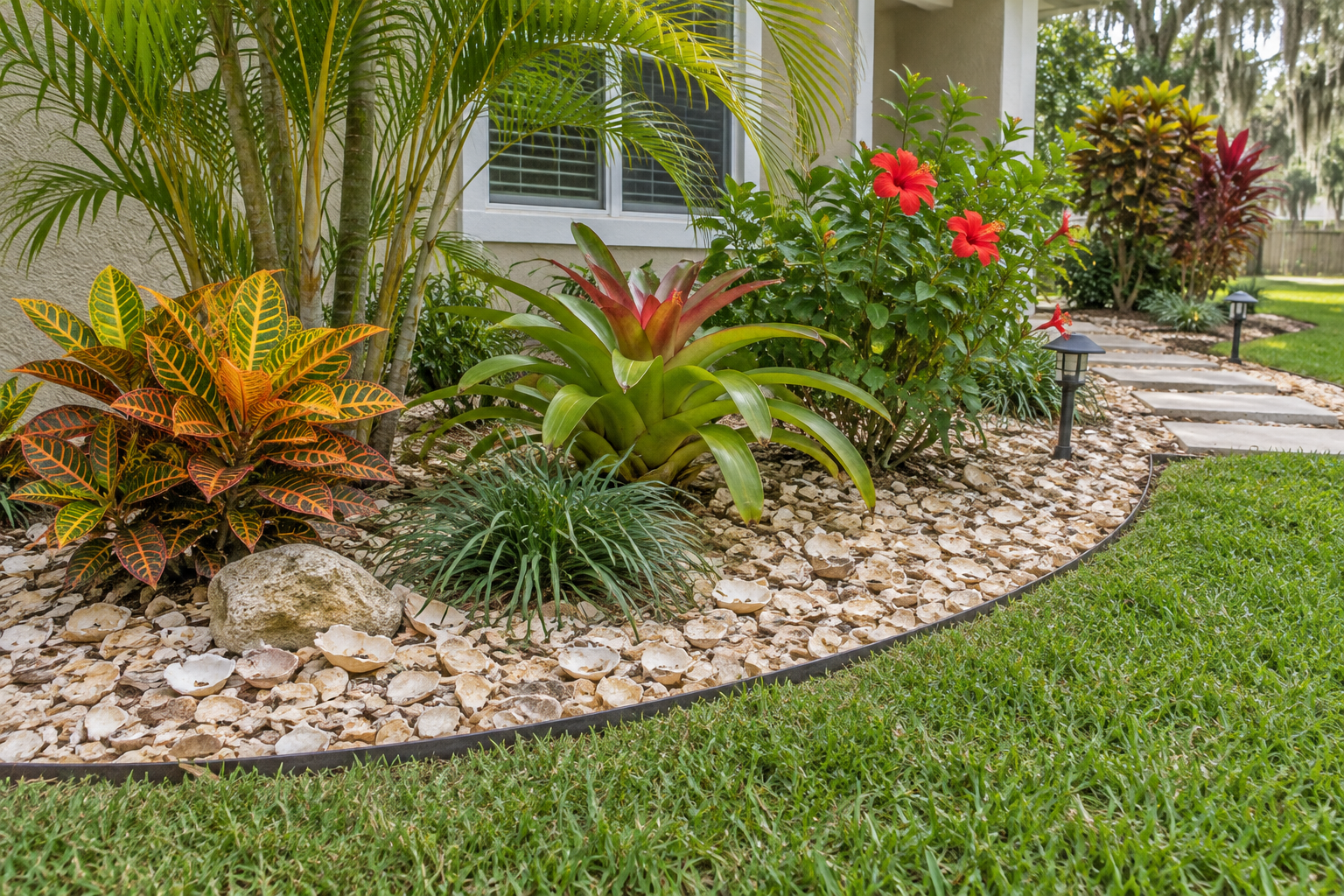
Coquina shell around a raised planter is a layout decision before it is a material order: first decide how people will reach, use and maintain the planter, then determine where a loose-shell surround fits. In St. Augustine, FL, sketch the planter footprint, nearby paths, gates, doors and places where you need to stand or kneel. Mark those routes before asking for a quantity or delivery quote. Tropical Yards supplies and delivers bulk coquina shell; customers or their landscapers handle installation. For general product context, see the coquina shell guide for Northeast Florida.
Start with how the planter will be used
Before planning a coquina shell surround for a raised planter, consider the ordinary tasks the space should support. Who will use it, how often will they tend the plants, and which side is the practical approach from the house or yard? Thinking through these questions can help you spot awkward pinch points where someone may need to pass, carry tools, tend plants or reach the planter edge.
Draw the planter as a simple rectangle or other outline, then mark every route you want to keep usable. Include the path from the nearest regular entrance, any connection to a patio or lawn, and access to a gate if one is nearby. Show fixed features such as posts, steps, walls, paving and utility equipment. Treat this as a planning sketch rather than a construction drawing, and confirm property-specific clearances and layout constraints with the relevant professional.
- What is the usual approach to the planter, and do people need to pass it in both directions?
- Where will someone stand to tend each accessible side, and where might tools or containers be set down temporarily?
- Which doors, gates, steps and other features should remain accessible?
- Should the surround read as one connected area or as separate sections between existing routes?
- Are any boundary or access issues uncertain enough to discuss before ordering?
Choose a surround shape that respects circulation
A surround can follow the planter’s outline closely, form a broader framed area, or use separate bands alongside selected sides. These are visual planning approaches, not performance claims about coquina shell. The right choice depends on the geometry of the yard and the way people move through it. A close outline can preserve more of the surrounding yard as open space, while a broader area may create a more distinct visual zone. Separate sections can be worth considering where a route or existing surface needs to remain clearly legible.
Use a plan view and a ground-level view together. On the plan, check whether the proposed outline intersects a route, gate swing or nearby feature. From standing height, consider whether the edge will look intentional beside the planter and adjacent surfaces. If the planter is not square to the house or paving, do not assume that a perfectly parallel surround will look balanced. Mark the relationship on the sketch and review it in place before finalizing the outline.
Where more than one person will use the area, ask them to walk the proposed route or review a full-size outline made with a temporary marker that is appropriate for the surface. Treat this as a way to evaluate the layout, not as a guarantee of clearance or suitability. If an edge location is uncertain, pause and ask the landscaper or other relevant professional to assess the actual site.
Compare layout approaches before settling on one
The table compares planning configurations, not different grades or physical properties of shell. Use it to identify which questions matter for your space. The answer may change with the planter’s position, nearby circulation and the installer’s advice.
| Layout approach | Visual effect to consider | Access question | Boundary question |
|---|---|---|---|
| Close-following outline | Keeps the surround visually tied to the planter footprint. | Is there enough practical room for the way you reach and tend each side? | Can the outline be clearly distinguished from adjacent surfaces? |
| Broader framed area | Makes the planter and its immediate surroundings read as one zone. | Does the larger zone interrupt a route or take space from another use? | Where should the broader area stop in relation to nearby paths or beds? |
| Separate side sections | Leaves a visual break where a route or other surface continues. | Will the gap preserve a useful approach or passage? | How should each section meet the planter and neighboring surfaces? |
| One connected surround with a planned access opening | Creates a continuous-looking area while identifying an approach point. | Does the opening align with the way people actually enter and work? | Who will determine the opening’s location and edge detail? |
Keep the planter and planting decisions separate
This topic is the area around a raised planter, not a recommendation to place coquina shell in the growing medium or use it as vegetable-garden mulch. Keep the planting plan, planter contents and surrounding surface as distinct decisions. If you are considering shell close to a planter, ask the landscaper whether the proposed boundary and layout are appropriate for the actual planter, plants and site. Do not infer soil, food-safety, pH, drainage or pest-control outcomes from the visual plan.
Likewise, do not assume that the planter itself can support or retain a particular arrangement simply because a sketch looks tidy. If the proposed edge meets a wall, paving, slope, structure or another built feature, ask the installer or relevant professional to evaluate that interface. The available information here does not establish structural details, required dimensions or a universally suitable edge treatment.
Plan the visible edges and transitions
Edges are where a surround meets the rest of the yard, so mark them deliberately. Identify each transition: planter to surround, surround to path, surround to lawn, and surround to any adjacent bed or paving. A drawing that shows only the central area can conceal the most important choices. Label the intended stopping points and note any change in direction rather than leaving the installer to guess what the finished outline should be.
Think about the view from the home, the main approach and any nearby seating area. A single outline may look different from each viewpoint. If the planter is long, ask whether a continuous band or a more segmented arrangement better matches the surrounding layout. If it sits beside an existing path, show whether the proposed surround should meet that path, stop short, or remain visually distinct. These are design questions; a qualified installer can advise on how to carry the chosen line through the actual site.
When the desired edge is not obvious, take a few photographs from the relevant viewpoints and draw the proposed boundary over a copy. Pair each image with a short note about the route or visual relationship you are trying to preserve. Share those notes with the person responsible for installation so that the intended shape can be discussed before material is placed.
Coordinate delivery with the planned drop location
Delivery planning begins with a practical question: where can the material be placed so that it is accessible for the work without blocking the routes or areas you need to keep open? The preferred drop location and the final surround location may not be the same. Mark both on your sketch, and explain how the material would be moved from the proposed placement point to the work area. Confirm the actual site arrangement with the supplier and installer rather than assuming that a particular placement or access method is available.
Tropical Yards reports that bulk coquina shell delivery uses a 14-foot dump trailer. Do not infer that every driveway, gate, overhead space, turning area or surface can accommodate a delivery vehicle. Discuss the actual access and intended placement with the supplier before confirming an order. Availability, quantities, specifications, current product and delivery charges, and scheduling must be confirmed directly. Customers or their landscapers handle installation.
A useful pre-order conversation can cover the proposed drop point, the route to the work area, any access restrictions you have identified, the amount under consideration, and how the supplier wants the site details shared. If the site has a narrow entrance, limited approach or uncertain turning area, state that plainly and ask what information is needed to assess delivery feasibility. Do not treat a sketch or a general description as confirmation of access.
Prepare a clear handoff for the installer
Before work begins, give the installer a marked-up plan rather than relying on memory or a verbal description alone. Label the planter, the proposed surround, open routes, transition points, delivery placement and any areas that should not be part of the work. Walk through the plan together and ask the installer to repeat back the intended boundaries. This simple review can reveal mismatched assumptions while the layout is still being discussed.
- Measure and label the planter’s outer footprint on your sketch, recording the measurements you took without treating them as an engineered specification.
- Draw the approach routes and note where people need to pass, stand, turn or reach the planter.
- Mark adjacent features and the proposed start and stop points for each edge.
- Identify a possible delivery placement area separately from the area to be surrounded.
- Ask the installer to review the outline, access needs and any site-specific questions before work proceeds.
- Confirm product availability, quantity, specifications, charges and scheduling directly with the supplier.
Keep a copy of the plan and the written order details. As a general recordkeeping suggestion, retain receipts, invoices or agreements, and keep copies of relevant messages. If a question comes up later, having a record of the agreed layout and the questions asked can make it easier to explain what you understood. This is a planning practice, not a statement about any supplier’s order-resolution policy.
Use questions, not assumptions, for site-specific decisions
There is no one outline that fits every raised planter. The planter’s position, existing access, nearby surfaces and the intended use all affect the drawing. When information is missing, ask the appropriate person rather than filling the gap with an assumed clearance, material specification or installation rule.
- For the installer: Does this outline fit the way the planter will be approached and maintained? Which edges or transitions need a site-specific decision?
- For the supplier: Is the product available for the quantity being considered, and what product details, current charges and scheduling can be confirmed?
- For delivery planning: Is the proposed placement and access information sufficient to discuss the 14-foot dump trailer delivery for this site?
- For a relevant professional: Does the proposed arrangement raise a property-specific concern because it meets a structure, existing surface or other site feature?
- For the homeowner: Does the plan preserve the route and working access you actually want, from the viewpoints you use most?
Next step: review the plan and confirm details
Once your sketch shows the planter, intended surround, access routes and possible delivery area, use it to ask focused questions. For product context, review the coquina shell supply page. To discuss availability, quantities, specifications, current charges and scheduling, contact Tropical Yards through its contact page. Confirm delivery arrangements directly before making plans around a particular date or placement. Installation is handled by you or your landscaper.