 Tropical
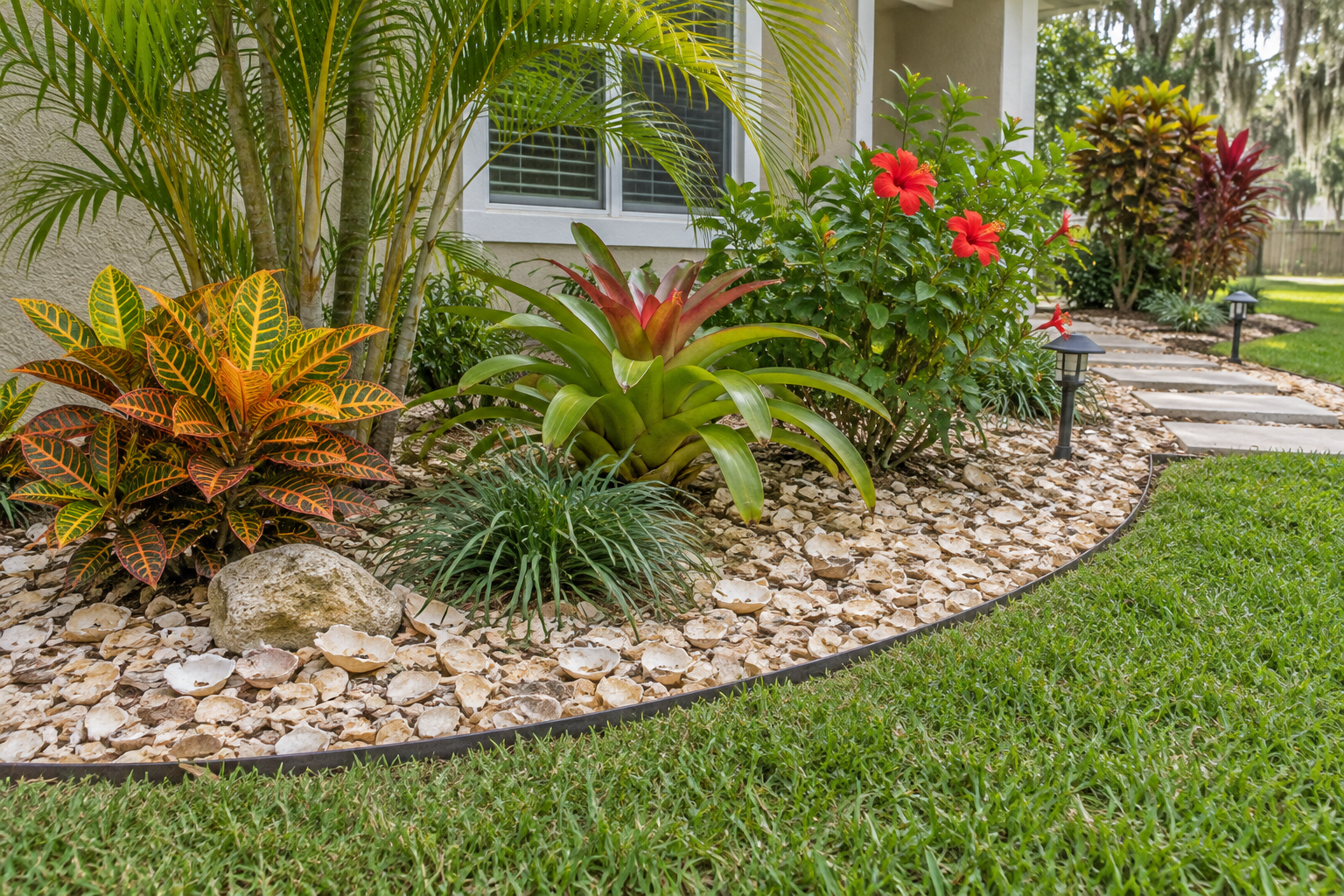
Before changing a landscape that already contains coquina shell, decide what you need the finished yard to do and ask a landscape professional to assess the existing material before anyone moves it. Some areas may be candidates to retain, while others may conflict with a new layout; whether shell can be separated or reused depends on the site and the intended work. Treat those as project questions, not assumptions about the material. Tropical Yards supplies bulk coquina shell but does not perform installation or removal. Its coquina shell guide for Northeast Florida is a starting point for understanding common planning topics before you discuss your specific yard.
Start with the design decision, not the pile
“Reuse” can mean several different things: leaving shell in its current place, moving it to another part of the property, setting some aside for a later decision, or retaining it while other landscape elements change. Those choices are not interchangeable. A surface that seems suitable to keep in one location may not fit the proposed layout elsewhere, and the amount available to move cannot be estimated reliably from appearance alone. Have the person responsible for the landscape plan identify the desired finished areas first, then ask what role the existing shell could have in that plan.
It is also useful to separate the question of material from the question of labor. A homeowner may be deciding whether to retain existing shell while separately hiring a landscaper or other qualified professional to carry out site work. Tropical Yards is a supplier, not a removal or installation contractor. Confirm who will assess the site, who will do any moving or separating, who will make decisions about material that is not retained, and who will coordinate delivery if new shell is considered.
Make an area-by-area inventory
A simple site sketch can make a conversation more concrete without pretending to measure the job. Mark where shell is currently visible and label each area with the intended outcome: keep in place, consider moving, reassess after professional review, or remove as part of the planned work. Include pathways, beds, access areas, and any boundaries where the design changes. These labels are planning prompts; they do not establish whether the existing material is appropriate for a new use.
Take clear overview photographs and a few close views of each distinct area. Add notes about what is changing nearby and what you hope the finished space will accomplish. Avoid drawing conclusions about material quality, composition, or suitability from a photograph. Instead, use the images to help a professional identify questions that may require an on-site assessment.
- Identify the goal: describe what the area should become, rather than simply saying that shell should be reused.
- Record boundaries: note where shell meets lawn, planting areas, structures, walks, or other surfaces so the professional can understand the transitions.
- Flag unknowns: mark locations where you do not know what lies beneath the visible surface or whether other work is planned.
- Keep decisions open: use “assess” or “confirm” where you do not yet know whether material should remain or move.
Compare the main planning paths
The table below is a decision aid, not a verdict about any particular site. It distinguishes possible project paths and the questions to resolve before choosing one. The professional responsible for the landscape work should advise on site-specific feasibility; ask the supplier separately about current product availability, specifications, quantities, delivery charges, and scheduling if a new supply may be needed.
| Planning path | When to discuss it | Question to resolve | What remains unconfirmed |
|---|---|---|---|
| Retain in place | The proposed design may continue to use the area as it is. | Does keeping the existing surface fit the intended layout and the work planned around it? | Its suitability and condition require site-specific professional assessment. |
| Consider relocating | The current area is changing, but another planned area may use shell. | Can the material be moved and used in the proposed destination, and who would do that work? | Feasibility, handling needs, quantity, and suitability are not established here. |
| Set aside pending review | The final landscape plan or the material assessment is not complete. | Is there a practical, agreed way to hold the decision until the responsible professional reviews it? | Storage arrangements, duration, and later use must be determined for the property. |
| Remove from the planned area | The new design calls for a different use of the space. | Who is responsible for the work and for advising on handling and disposition? | Removal method, disposal options, and any site requirements are outside this guide. |
| Add new shell after review | The plan identifies a need for additional material after evaluating what is already there. | What quantity and product specifications should be confirmed with the supplier? | Current availability, quantity, specifications, charges, and scheduling must be confirmed directly. |
Questions to ask before anyone moves material
Ask the professional who will direct or perform the landscape work to explain the proposed sequence and the decision points. This is especially useful when several parts of the yard are changing at once. A clear sequence can help you avoid making a premature choice about retaining material before the design, site assessment, and responsibilities are clear. The questions below are prompts, not instructions for handling shell.
- What is the intended finished use for each existing shell area? Ask the designer or landscaper to distinguish areas planned to remain from areas that may change.
- Can the existing material be assessed for the proposed use? Ask what can be determined on site and what cannot be concluded without further professional review.
- If relocation is considered, what destination is actually planned? Identify the area and ask the responsible professional whether moving material there is appropriate.
- Who is responsible for each part of the work? Confirm who evaluates, moves, separates, or otherwise handles existing material, and who makes the final disposition decision.
- What assumptions affect the scope? Ask whether the work plan depends on an unverified quantity, condition, or site detail, and how that uncertainty will be resolved.
- Will new material be needed? If so, ask the supplier directly about current coquina shell availability, specifications, quantity, product and delivery charges, and scheduling.
- How will decisions and changes be recorded? Keep the agreed scope and any changes in writing so everyone is working from the same plan.
Keep reuse and new supply as separate decisions
Existing shell and newly supplied shell should not be treated as automatically interchangeable. The sources available for this guide do not establish whether material from a particular property can be reused, whether it can be separated from other material, or whether it will suit a proposed destination. A landscape professional should assess those project-specific questions. If that assessment points to new supply, ask the supplier about its current product details rather than assuming the existing material has the same specifications.
Tropical Yards supplies and delivers bulk coquina shell in the St. Augustine through Daytona Beach corridor. Customers or their landscapers handle installation. The supplier’s delivery information notes that bulk coquina shell is delivered using a 14-foot dump trailer, but that fact alone does not determine whether a particular property has suitable access or where a load could be placed. Discuss site access and delivery placement directly when planning an order. Availability, quantities, specifications, current product and delivery charges, and scheduling must also be confirmed directly.
Plan the work in a clear order
As a general planning suggestion, try to resolve the design and responsibility questions before arranging new supply. The exact sequence depends on the project, and the responsible professional should set it for the site. One useful approach is to move through a series of decisions rather than treating “reuse” as an all-or-nothing choice:
- Define the end state. Identify what each part of the landscape is meant to do when the change is complete.
- Review what is already present. Ask the landscape professional to assess the existing material in relation to that plan.
- Assign responsibilities. Agree who will make and carry out decisions about retaining, relocating, separating, or removing material.
- Confirm supply needs. Only after the site plan is clear, ask whether additional coquina shell is needed and confirm current details with the supplier.
- Document the plan. Keep the agreed scope, outstanding questions, and later changes together with your project records.
This sequence is a homeowner’s coordination tool, not a guaranteed schedule or a claim about how quickly any work can be completed. Supplier availability and scheduling are not established in advance and must be confirmed directly. If the project involves other planned work, ask the professionals responsible for it how the sequence should be coordinated.
Keep useful records without assuming a policy
For a purchase or contracted project, keeping records can make it easier to refer back to what was discussed. As general consumer-recordkeeping suggestions, retain invoices, receipts, and written agreements; keep originals and provide copies when needed; note dates and the substance of conversations; and save copies or screenshots of online messages. These are general practices, not Tropical Yards order terms, a guarantee of any particular resolution, or a statement of the supplier’s policies.
If a question or concern comes up about a supplier transaction, describe the issue and the resolution you are asking the business to consider, then keep a copy of the communication. Do not assume a refund, replacement, or other outcome is available unless the relevant business confirms its applicable policy directly. For the yard work itself, keep your project agreement and notes separate from product-order records so responsibilities are easier to follow.
Next steps for a St. Augustine project
Prepare a short area inventory, gather photographs, and ask a landscape professional to review the proposed design alongside the existing shell. If new supply may be part of the plan, contact Tropical Yards to confirm current product and delivery details. A useful request includes the intended project area, the planned use, your best available quantity information, and any delivery-access questions. Those details are starting points for discussion, not a guarantee of availability, price, or schedule.
For product details, visit the coquina shell supply page. For a project-specific supply or delivery question, use the Tropical Yards contact page and confirm the details directly.