 Tropical
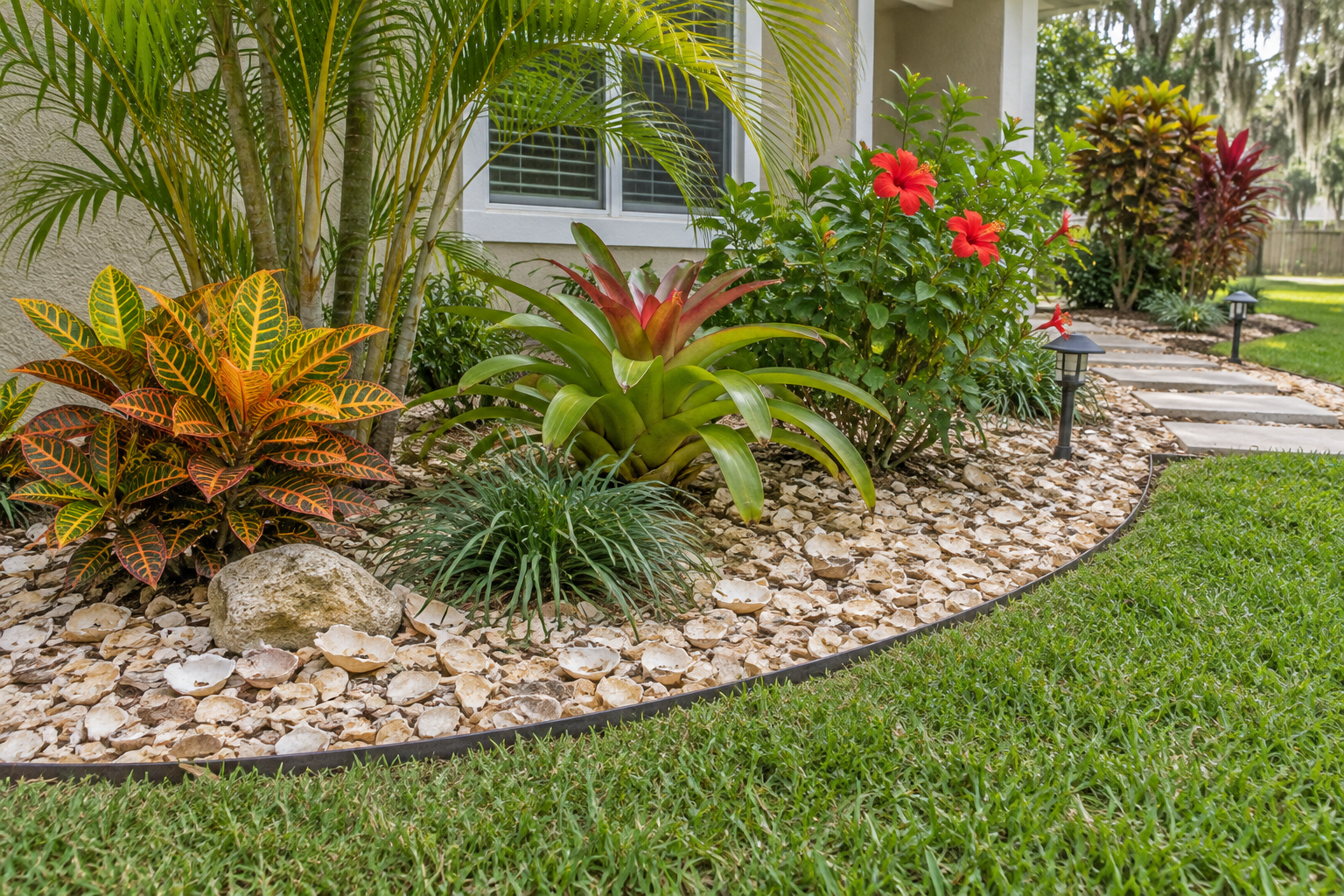
For a coquina shell landscaping handover in St. Augustine, what details should the property owner and chosen manager record? They might note where the loose shell is, what was supplied if that information is available, which edges define the area, and who will handle future checks or work. This record is a planning aid—not a lease, legal interpretation, installation instruction, or promise about product performance. For broader context on coquina shell uses and planning, see the coquina shell guide for Northeast Florida.
Make the handover record specific to the property
Start with a dated document that identifies the rental property and the people exchanging information in their relevant roles, such as owner and property manager. Keep personal information limited to what the parties need for their own records; do not put private identifiers into a general landscaping note. State whether the record covers the whole yard or only named areas, such as a front bed, side path, or a defined portion of a driveway. Use a simple location description and a marked-up site sketch or property photo so the labels can be understood later.
Describe what is visible rather than inferring how the area was built. For example, record that loose coquina shell is present in a particular bed, and note visible borders, adjacent surfaces, and any obvious change in elevation. Do not assume the surface has a particular base, depth, compaction, drainage behavior, or installation history. If those details matter for planned work, mark them as unknown and ask the installer or relevant professional to assess them.
A handover note can also point readers to the current product and delivery information page, but it should not treat a webpage as proof of what a past order contained. Keep available order documents with the property file and distinguish confirmed records from recollection.
Build a useful product record from documents
Record the product name as it appears on an invoice, order confirmation, or other supplier document. Tropical Yards supplies bulk coquina shell and delivers in the St. Augustine through Daytona Beach corridor; customers or their landscapers handle installation. Do not describe the supplied product as coquina stone. If the property’s current surface came from another source, identify that source only when records establish it.
Where documents exist, retain a copy of the receipt, invoice, order correspondence, delivery record, and any written description of the order. Note the document date and what it actually confirms. An invoice may identify a purchase but may not establish where material was spread, the depth after placement, the condition of a surface later, or who performed installation. Keep those distinctions explicit. If no documentation is available, write “not documented” rather than filling in a guess.
Supplier details can change or may require direct confirmation. Before a future purchase, ask about current availability, quantity, specifications, product charges, delivery charges, scheduling, and any applicable order-resolution process. Do not copy old figures or assumptions into a future budget as though they were current. Tropical Yards does not perform installation; establish separately who will receive and spread material.
Photograph the condition and define the boundaries
When documenting an area for handover, consider including both wider views and close details. Take a wide view of each documented area and additional views that show its edges, neighboring surfaces, and access points. Use consistent viewpoints when practical, and label each image with a date and a plain-language location. A ruler or other scale reference can be included if useful, but do not treat a photo as a professional measurement or a substitute for an assessment.
- Photograph each shell area from a distance that shows where it sits in relation to the building, lawn, path, or other recognizable feature.
- Take closer images of visible transitions, edging, openings, and places where the boundary is not obvious.
- Record visible concerns neutrally, such as “shell is beyond the marked bed edge” or “surface appearance differs from the prior dated image.” Avoid assigning a cause without evidence.
- Save original image files and keep a simple image index that connects each file name with its date and location.
- For later comparisons, try to repeat the angle and framing; note when seasonal growth, changed furnishings, or a different viewpoint limits comparison.
Define boundaries with words and a sketch, not only a photo. Mark the approximate perimeter of the area being discussed, the edges that appear to contain it, and any boundary that needs clarification. A handover record should not declare an edge adequate or compliant. If a proposed change could affect neighboring property, drainage, utilities, or access, ask the appropriate property professional or contractor what assessment is needed before acting.
Separate observations from responsibilities
Ownership, management, landscaping, and supplier roles are not interchangeable. Use the record to state who has agreed to do a task, rather than assuming responsibility based on who noticed an issue. The parties can use a responsibility list to identify who observes the area, who reports a concern, who decides whether to obtain advice, who hires a landscaper, and who confirms any product or delivery details with a supplier. Those assignments are private arrangements to be agreed by the parties, not terms established by this article.
Keep routine observation separate from technical judgment. A manager may document a visible change and notify the owner, while an owner may decide to consult a landscaper. Whether a condition requires repair, what work is suitable, or whether there is an underlying drainage or surface issue should be determined by the relevant professional. Do not present a visual check as a guarantee of condition or safety.
For each assigned action, record the responsible role, the agreed communication method, and any trigger for follow-up in the parties’ own system. Avoid inventing a universal inspection interval. The owner and manager can choose a review rhythm that fits their arrangement, and can revisit it after a landscape project or a reported change. The record should say when it was last updated so a later reader knows whether the information may be dated.
| Record field | What to enter | What not to assume | Follow-up question |
|---|---|---|---|
| Area and boundary | Location label, sketch, visible edges, and adjacent features | That an edge is permanent, adequate, or a property line | Who can clarify the intended boundary if it is uncertain? |
| Product and order documents | Documented product name, date, and copies of available records | That an old document confirms current availability, specifications, or charges | What current product and delivery details should be confirmed with the supplier? |
| Photographs | Dated wide and close views with a location index | That images establish depth, cause, or technical condition | Does a professional need to assess the reported change? |
| Task ownership | Agreed role for observing, reporting, deciding, and arranging work | That the owner, manager, supplier, or landscaper has accepted an unconfirmed task | Who will confirm scope and responsibility before work is arranged? |
| Open questions | Unknowns, who will ask, and any response received | That silence or an old note settles an unresolved issue | Which professional or supplier is best placed to answer? |
Keep a short, traceable update history
When the record changes, add a dated entry rather than silently replacing earlier notes. Identify whether the update comes from a document, a direct observation, a conversation, or a professional assessment. Summarize the point and keep the supporting material with the record. If two accounts differ, preserve both and identify the issue as unresolved until the people involved clarify it. This keeps the handover useful without turning a recollection into a verified fact.
As general consumer recordkeeping guidance, the Federal Trade Commission advises keeping purchase documents such as receipts, invoices, and contracts; retaining originals while providing copies to a business; explaining a problem and requested resolution; keeping notes of dates, conversations, and promised actions; and saving copies or screenshots of online customer-service messages. These are general suggestions, not Tropical Yards policies or promises about a purchase. For a landscaping handover, the owner or manager can adapt the recordkeeping idea by retaining relevant documents and noting follow-up conversations accurately.
- Make a dated entry describing what prompted the update and which area it concerns.
- Attach or identify supporting images, invoices, written messages, or professional notes.
- List unanswered questions separately from confirmed facts, with the person responsible for seeking an answer.
- Share the updated record with the people who need it under the owner’s chosen management process.
- Keep earlier versions or a change log so the record shows how the understanding developed.
Prepare supplier and landscaper questions for the next project
A handover file should make the next conversation easier, not predetermine its answer. Before ordering, describe the intended location and use, the quantity being considered if known, and the delivery access details the supplier requests. Ask the supplier to confirm current availability, product details, quantities, and current product and delivery charges. Confirm scheduling directly rather than treating an estimated date as a commitment. Tropical Yards uses a 14-foot dump trailer for larger plant orders and bulk coquina shell; ask about the delivery arrangement for your order.
Ask the chosen landscaper or installer to clarify what site preparation, placement, and follow-up are within their scope. Tropical Yards supplies and delivers bulk coquina shell; customers or their landscapers handle installation. Questions about surface design, appropriate placement, boundaries, grading, drainage, nearby structures, or other property-specific conditions belong with the relevant professional. This article does not establish a construction method or say that a particular site is suitable.
When there is a possible order discrepancy or another concern, gather the purchase record, dated photos, and a concise description of the question before contacting the appropriate party. State what information is confirmed and what outcome or clarification is being requested. Keep the message and any response with the property file. Do not assume a particular resolution is available; ask directly about the applicable process.
Use the record as a handover aid, not a legal document
This checklist is for organizing landscape information between an owner and a chosen property manager. It does not interpret a lease, determine legal duties, create a maintenance obligation, or replace a written agreement. If a responsibility question affects a rental arrangement, ask the relevant legal or property professional. If the question concerns technical site conditions, consult an appropriate landscaper or other qualified professional. Keep the landscaping note consistent with the parties’ own agreements and records.
For current coquina shell supply information, review the coquina shell product page. Availability, specifications, quantities, charges, scheduling, and order-resolution details should be confirmed directly. To discuss a property-specific supply question or request current information, use the Tropical Yards contact page. Arrange installation separately with the customer’s chosen landscaper or other appropriate professional.