 Tropical
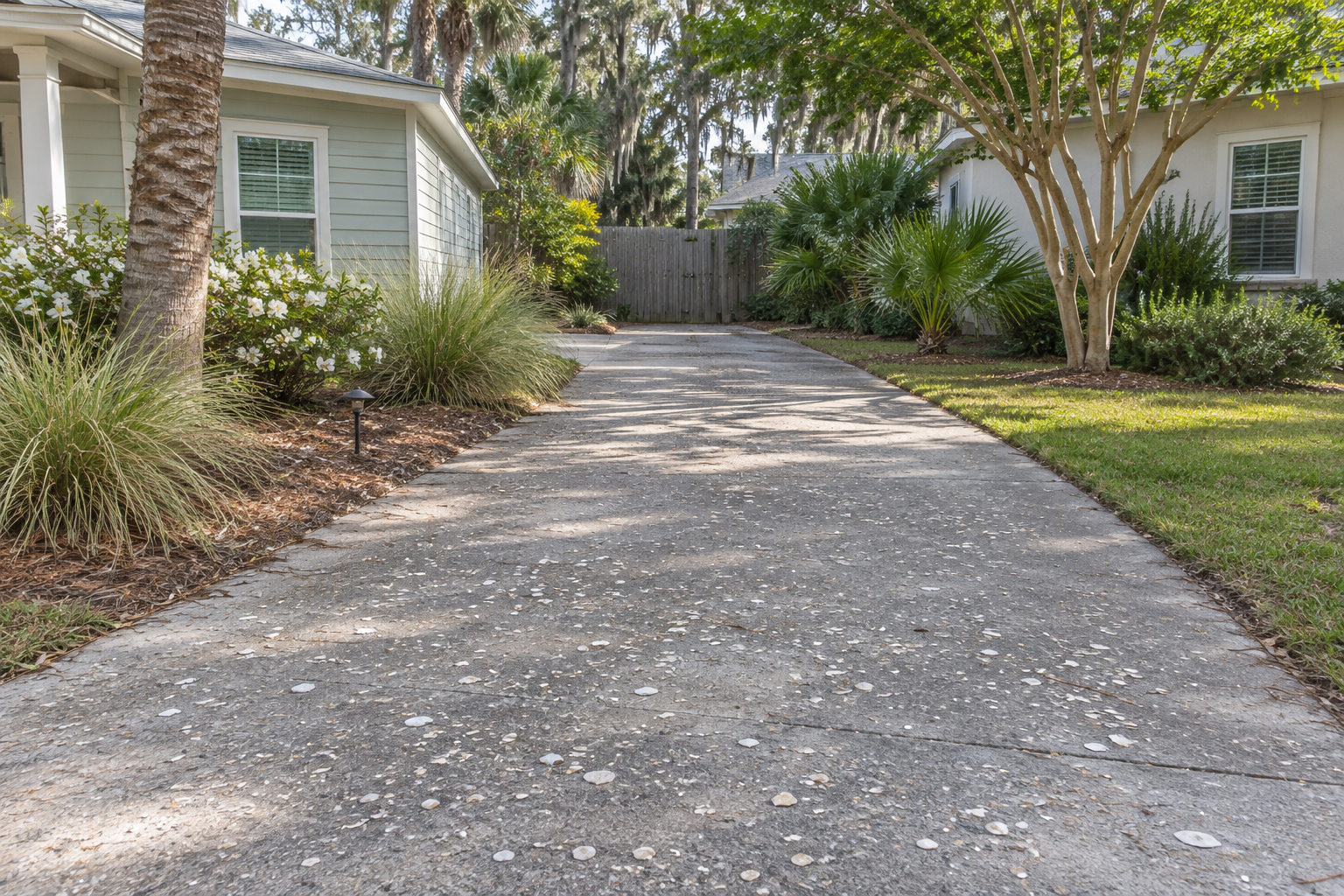
A shared driveway coquina shell project needs one thing before a delivery inquiry: a common understanding of what the group is buying and where the work ends. When adjoining households use the same drive, a sketch, a written list of open questions, and a clear record of decisions can help keep a material order separate from installation choices or unresolved property questions. This guide focuses on coordination—not legal rights, access entitlements, engineering, or a promise that a particular surface will suit your site.
For background on coquina shell uses and the questions that can shape a project, read the complete coquina shell guide for Northeast Florida. Then use the steps below to organize a shared conversation before requesting current product, quantity, delivery, and charge details.
Start with a shared project brief
Before anyone requests a quote or places an order, describe the proposed work in language all participants can recognize. “The driveway” may mean the whole shared route to one household, the section used by everyone, a turning area, or only a surface that needs attention. Write down the intended purpose and mark the proposed work area on a simple drawing. It does not need to be a survey or a construction plan; it is a coordination aid. Do not treat a sketch as proof of a boundary or permission to work on land whose status is unclear.
Keep the brief factual and easy to revise. Label the homes or participants neutrally, identify the visible start and end points being discussed, and note any area that is excluded or still uncertain. Include a date and version so a later drawing does not silently replace the one the group discussed. If participants disagree about where the work may occur, pause the material plan and ask the appropriate property professional how to resolve that question before proceeding.
- Purpose: describe the intended surface work in one sentence, such as refreshing a defined section of a shared drive.
- Proposed extent: mark the section under discussion and identify any branches, parking areas, entrances, or transitions that are not included.
- Open questions: list matters needing confirmation, such as the boundary, the person coordinating a supplier inquiry, or the installation plan.
- Decision record: note who participated, what was agreed, and what remains undecided; circulate the same version to everyone involved.
Separate agreement on the project from property questions
A group can agree to explore a purchase without settling every question about ownership, access, maintenance, or authority to make changes. Do not infer those matters from everyday use of a driveway, a neighbor’s past work, or a shared sketch. If a proposed work area or decision authority is uncertain, ask the relevant property professional rather than treating this article as a legal answer. Keep the supplier discussion focused on product and delivery questions once the participants have identified who is authorized to communicate about the order.
Likewise, do not assume every household has the same priorities. One participant may care most about the visible appearance; another may be concerned about how work affects routine use or how the installer will handle edges. Put each concern into a short list and distinguish preference from a technical requirement. For technical questions about the site or the proposed surface, consult the installer or another qualified professional. Tropical Yards supplies and delivers loose coquina shell; customers or their landscapers handle installation.
Build a decision map before asking for material details
Shared decisions are easier to manage when each item has an owner and a status. A simple table can show whether a question is answered, awaiting a professional, or ready to take to the supplier. It also prevents a preliminary discussion from being mistaken for a final order. Use “confirm directly” for matters that can change, including availability, quantities, specifications, current product and delivery charges, and scheduling.
| Decision area | Coordination step | Question to resolve | Record to keep |
|---|---|---|---|
| Work area | Mark the proposed extent on a dated sketch | Is this the section every participant intends to discuss? | Shared, dated sketch and list of exclusions |
| Site suitability | Describe site concerns to the installer or relevant professional | What preparation or design decisions are appropriate here? | Professional guidance and follow-up questions |
| Material inquiry | Choose one contact to request current details | What product, quantity, specifications, charges, and scheduling are currently available? | Written inquiry, reply, and any updated quote information |
| Payment plan | Agree how participants will document contributions | Who pays the supplier or installer, and what documentation will each person receive? | Receipts, invoices, agreement notes, and payment confirmations |
| Installation | Identify the customer’s installer or landscaper | Who is responsible for preparation, spreading, and any site-specific work? | Installer’s written scope and any revisions |
Ask the supplier precise, current questions
Once the participants have a defined inquiry, send the same project description to the supplier rather than having each person request a different scenario. That helps the group compare the answers it receives without assuming that one conversation established a final order. Ask what information the supplier needs to discuss the proposed order, and request confirmation of current availability, quantity options, product specifications, product charges, delivery charges, and scheduling. Do not assume any of those details from an older estimate, a neighboring project, or a website page that may not describe the group’s current circumstances.
Tropical Yards supplies and delivers bulk coquina shell in the St. Augustine through Daytona Beach corridor. Delivery uses a 14-foot dump trailer for bulk coquina shell. That fact alone does not establish whether a specific site, access route, unloading location, amount, or date can be accommodated. Share site and access questions directly with the supplier, and ask the installer to address placement and material-use decisions. The supplier provides material and delivery, not installation.
- Choose one participant as the supplier contact, while sharing the inquiry and replies with the group.
- Describe the proposed area and intended use without presenting an unverified boundary or design as settled fact.
- Ask for current product and delivery details, including which specifications apply to the proposed order.
- Ask what remains unconfirmed and what information is needed before a purchase decision.
- Share the response with all participants and record the date, assumptions, and any follow-up required.
Agree on payment records before money changes hands
Cost-sharing can become confusing when one person pays the supplier and others reimburse that person, or when material and installation are handled separately. Before committing, decide how the group will record each expense and contribution. This is a bookkeeping suggestion, not a statement about legal obligations or any supplier payment policy. Identify whether a record relates to coquina shell, delivery, installation, or another item, and avoid treating a combined amount as though it explains every component.
Federal Trade Commission consumer guidance recommends collecting purchase documents such as receipts, invoices, and contracts; keeping originals while providing copies to the business; explaining a problem and the requested resolution; keeping notes of dates, conversations, and promised actions; and saving copies or screenshots of online customer-service messages. Those are general recordkeeping suggestions, not Tropical Yards order terms, refund guarantees, or a description of its resolution policy. Confirm any order-specific policy directly with the business rather than relying on assumptions.
For a shared project, a practical record set might include the final written quote or order information, the group’s decision note, receipts or invoices, proof of each participant’s contribution, and the installer’s separate scope if applicable. Keep a simple ledger with the date, amount, payer, purpose, and the record supporting the entry. Share copies with the participants who need them, and keep original documents in a place the group can retrieve later. If the scope or amount changes, record the revision and obtain renewed agreement before treating it as part of the plan.
Clarify the installer’s role separately
A supplier’s delivery is not an installation plan. Customers or their landscapers handle installation, so the shared group should identify who will select and coordinate the installer, what work the installer is being asked to perform, and which decisions remain for that professional. Do not assume the material supplier has assessed the site, selected a base or depth, defined a drainage approach, or accepted responsibility for spreading. Those are not established by an inquiry about supply and delivery.
Ask the installer to state the scope in writing and to identify any unresolved site questions before the material order is finalized. Participants can ask how the proposed work relates to the marked area and what work is excluded. The professional should address site-specific matters; the group’s role is to make sure everyone has seen the same scope and understands which questions are still open. If the installer’s proposal changes the work boundary or total material request, return to the group decision process rather than assuming the original agreement covers the revision.
Use a decision checkpoint before ordering
A short pause before purchase can catch mismatches between the group’s idea, the supplier’s current information, and the installer’s scope. This is not a guarantee that every issue has been identified; it is a way to make unresolved items visible. Keep the checklist in the same place as the project sketch and current documents.
- Participants have reviewed the same dated work-area description.
- Any property-boundary or authority question has been directed to the appropriate professional rather than guessed at.
- The supplier has directly confirmed the current product, quantity, specifications, charges, and scheduling relevant to the inquiry.
- The delivery location and any access questions have been discussed with the supplier; no trailer fit or site accommodation has been presumed.
- The installer’s role and written scope are distinct from the supplier’s material and delivery role.
- The group has recorded who communicates, who pays, how contributions are tracked, and how changes will be documented.
- Any unresolved technical or property-specific question is clearly marked as unresolved—not silently treated as approved.
Keep changes visible after the initial agreement
Shared plans often evolve as participants review a quote, hear from an installer, or notice that the proposed area needs clarification. Make each change visible. Update the sketch with a new date or version, summarize what changed, and circulate it to the same group. If a change affects quantity, delivery, charges, or scheduling, ask the supplier to confirm the updated details directly. If it affects installation scope or site decisions, ask the installer or relevant professional. A verbal “that should be fine” may not communicate the same scope to everyone, so retain the written response when one is available.
It can help to distinguish three statuses in the project notes: agreed, awaiting confirmation, and not included. For example, a group may agree to request details for a defined section while leaving a turn-around area undecided. That does not mean the excluded area is included in an eventual order. Revisit the document whenever a participant joins the discussion or a scope changes, and avoid presenting an inquiry as a purchase commitment until the group has made that decision.
Take the next step with one coordinated inquiry
When the shared project brief, open questions, and decision contact are ready, request current information from Tropical Yards and provide the same inquiry to the participants. Availability, quantities, specifications, current product and delivery charges, scheduling, and any order-resolution policy must be confirmed directly. For coquina shell supply information, visit the coquina shell service page; for a project-specific inquiry, use the Tropical Yards contact page. Keep the reply with the group’s dated project notes, and have the customer or landscaper coordinate installation separately.