 Tropical
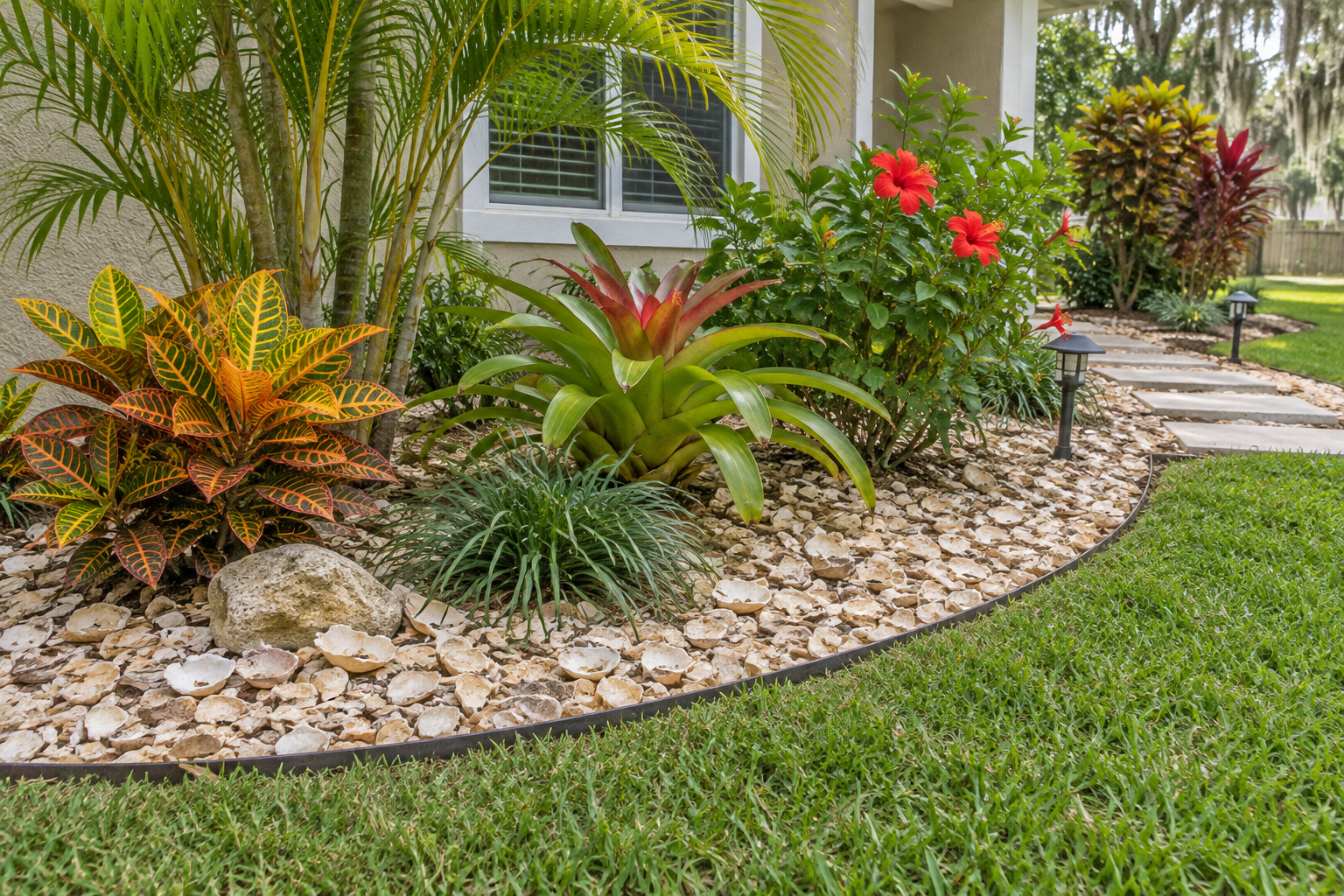
Choosing between coquina shell and crushed limestone starts with a basic distinction: they are not interchangeable names for one product, and the word “limestone” alone does not tell you whether a particular material suits your project. Tropical Yards supplies bulk, loose coquina shell in its service corridor; it does not supply crushed limestone or install materials. Your useful first step is to define the finished surface you want, then ask each supplier and your landscaper specific questions about the exact product, site preparation, installation, and delivery. For broader context on coquina shell uses and planning, see the coquina shell guide for Northeast Florida.
This comparison is about how to make an informed selection—not a claim that one material is better. The supplied information confirms that limestone has uses such as cement and aggregate in concrete and asphalt; that broad fact does not establish the properties or suitability of any particular crushed-limestone landscape product. Likewise, the product name “coquina shell” does not, by itself, answer project-specific questions about grading, preparation, drainage, access, or performance. Treat specifications as questions to verify, not assumptions to carry into an order.
Start with what your project must accomplish
Before comparing names or photographs, describe the intended use in practical terms. A path, planting bed, driveway, parking area, or decorative strip may involve different expectations. Avoid relying on a supplier’s general category description as a substitute for a project review. Write down what the surface needs to do, where it will be placed, and who will decide whether the proposed material and installation plan fit that purpose.
For example, a homeowner comparing two products might be trying to coordinate a surface with adjoining paving, establish a clearly bounded landscape area, or obtain a material for a defined section of yard. Those are starting points for a conversation, not evidence that either material meets a particular requirement. If the area will carry vehicles, needs an accessibility outcome, affects runoff, or interacts with a structure or utility, ask the relevant project professional to assess those conditions and specify what is appropriate.
- Name the use: Describe the surface as a path, bed, driveway, parking area, or another specific application.
- Define the desired result: Explain the appearance and intended use you want, rather than asking only which product is “best.”
- Identify constraints: Note adjoining surfaces, boundaries, access, existing site conditions, and any plans that may affect placement.
- Ask who decides technical fit: Confirm whether the supplier, installer, designer, or another project professional should answer each site-specific question.
If you are still mapping the project, keep the comparison at the planning level. A material label cannot resolve unknown site conditions, and a general product description is not a site assessment.
What “crushed limestone” does—and does not—tell you
“Crushed limestone” names a material category, but that phrase alone does not specify a particular product’s grading, preparation, intended uses, or delivery terms. A supplier should identify the actual product being quoted and provide the relevant details for your intended application. Ask whether the product has a written description or specification and whether that description covers the use you have in mind.
The U.S. Geological Survey identifies limestone uses that include cement and aggregate in concrete and asphalt. That general information is useful context, but it should not be stretched into a conclusion about a particular landscape product. It does not establish that every crushed-limestone product is suitable for a driveway, walkway, bed, or any specific property. You can review the USGS summary of limestone uses, then ask the actual supplier and project professional about the product and site in front of you.
Use direct questions rather than filling gaps from the material’s name:
- What exact product are you quoting, and how does the supplier describe it?
- Is there a written specification or product description I can review?
- Does the supplier identify an intended application for this product?
- What information about grading, preparation, or other technical details is available for this specific material?
- Who should confirm whether the product is appropriate for my site and proposed use?
If a supplier cannot answer a question, ask who can. A landscaper or other project professional may need to evaluate the proposed installation, while the supplier can clarify product identity and order details. Do not treat an answer about limestone’s broad industrial uses as a substitute for those project-specific conversations.
What to verify about loose coquina shell
Tropical Yards supplies and delivers bulk coquina shell; customers or their landscapers handle installation. The product is loose coquina shell, not quarried coquina stone. That distinction is important when you are comparing product descriptions, coordinating an installation plan, or checking that a quote refers to the material you actually intend to order.
A product name is only the start of a useful comparison. Ask the supplier to confirm the current product details that matter to your project, including available quantities and specifications. Ask your installer or landscaper how the proposed material fits the planned work. The supplied business facts do not establish current stock, product dimensions, a guaranteed quantity, or any site-specific installation method, so those items need direct confirmation.
When discussing coquina shell, consider asking:
- Does the quote identify loose coquina shell, rather than a different material?
- What product specifications are currently available, and can I review them before ordering?
- What quantity does the supplier propose, and what assumptions were used to estimate it?
- Who will check the quantity against the area and installation plan?
- Does the proposed use raise questions about the site that my landscaper or another professional should assess?
- What delivery details and current charges should I confirm before placing an order?
These questions help separate product supply from project design and installation. Tropical Yards does not install coquina shell; if you are not spreading it yourself, coordinate the installation scope with your landscaper. A delivery quote and an installation proposal are separate pieces of the project unless the relevant provider explicitly explains otherwise.
Compare the decision, not an assumed material ranking
A fair comparison does not begin by assigning one material an unverified advantage. Instead, compare the information available for the exact products being considered and the answers you receive from the people responsible for supply and installation. If a supplier offers a statement about a product’s performance or intended use, ask whether it applies to the specific product and your site. If the answer depends on installation, ask the installer to explain the assumption and scope.
The table below is a conversation guide. It does not claim that crushed limestone or coquina shell has a particular performance characteristic. Confirm the details with the relevant provider before relying on them.
| Comparison point | Loose coquina shell | Crushed limestone |
|---|---|---|
| Product identity | Ask the supplier to confirm the order is for loose coquina shell and identify its current product description. | Ask the supplier to identify the exact crushed-limestone product being quoted; the category name alone is not a specification. |
| Supplier relationship | Tropical Yards supplies and delivers bulk coquina shell in its service corridor; confirm availability and order details directly. | Seek a supplier that can identify and quote the exact product; Tropical Yards does not supply crushed limestone. |
| Project suitability | Ask your landscaper or relevant professional to assess the proposed use and site-specific questions. | Ask the supplier for product information and the project professional to assess whether it fits the planned use. |
| Specifications | Request current available specifications; do not assume details not confirmed by the supplier. | Request the actual product specification or description; do not infer technical properties from the name. |
| Installation | The customer or their landscaper handles installation; confirm who is responsible for each task. | Ask the chosen supplier and installer to clarify responsibilities and the proposed installation scope. |
| Quote and delivery | Confirm current product and delivery charges, quantity, delivery details, and scheduling directly. | Request an itemized quote and confirm product, quantity, delivery terms, and scheduling with that supplier. |
| Open technical questions | Ask the project professional about preparation, grading, drainage, accessibility, and any site-specific concerns. | Ask the project professional the same questions for the exact product and site; do not assume the answer transfers between materials. |
Read across the rows instead of treating the table as a scorecard. The point is to compare what each provider confirms. If one quote is more specific than another, ask the less detailed provider to clarify rather than treating missing information as proof that a product is unsuitable or suitable.
Make the quote comparable before comparing totals
A total is meaningful only when you understand what it includes. Two quotes may describe different products, quantities, delivery arrangements, or scopes. Before comparing amounts, make sure both providers have priced the same project assumptions—or list the differences plainly. Current product and delivery charges for coquina shell must be confirmed directly with Tropical Yards. No current price or delivery charge is established here.
Ask for the proposed quantity and unit, product description, delivery charge, and any separate installation estimate to be stated clearly. If the amount of material is based on an area measurement or a depth assumption, ask who supplied that assumption and whether your landscaper has reviewed it. Avoid converting a material quantity or coverage estimate into a promise about the finished surface. The actual work and result depend on project details that this guide does not establish.
For each quote, check whether it answers these practical questions:
- What is being supplied? Record the product name and any available specification, not just a broad material category.
- How much is proposed? Note the unit, quantity, and who is responsible for confirming the project estimate.
- What is included? Separate material supply, delivery, and installation responsibilities.
- What is the current charge? Ask the provider directly about product and delivery charges and any other stated line items.
- What remains undecided? List technical or site questions that need an installer, landscaper, or other professional’s review.
- What is the order process? Confirm availability and scheduling directly; do not assume either from a past quote or a general web page.
Keep the written quote and notes together. If a provider gives a verbal clarification, record what was said and follow up if an important detail remains unclear. This is a general planning practice, not a statement about any company’s order-resolution policy.
Separate material supply from the site plan
Material selection and site preparation are connected, but they are not the same decision. A supplier can identify and quote a product, while the person responsible for project planning evaluates how the work fits the property. Confirm who will address any questions about existing surfaces, transitions, boundaries, grading, drainage, accessibility, or nearby features. These are prompts for review—not instructions about what construction detail your property requires.
For a project involving a driveway, parking space, or another area with a defined use, give the professional enough context to assess the actual conditions. Describe how the area will be used, what adjoins it, and whether any constraints affect the work. Ask what information they need before recommending a material or installation plan. Do not infer that a product is appropriate merely because it has been used for a different purpose somewhere else.
If a project raises questions about runoff or the effect of work on neighboring areas, ask the responsible professional to evaluate the site and explain the proposed plan. This article does not establish drainage behavior for either material or prescribe a technical solution. Likewise, if accessibility is part of the goal, explain the intended users and outcome to the appropriate professional and ask them to identify the relevant design requirements. Do not assume a loose material meets a particular accessibility need without a qualified, project-specific assessment.
Plan who will do what after delivery
For loose coquina shell supplied by Tropical Yards, customers or their landscapers handle installation. If you plan to hire a landscaper, agree on the scope before ordering: who verifies the proposed quantity, who prepares the area, who places and finishes the material, and who handles any coordination with the delivery provider. These are planning questions, not a representation that Tropical Yards provides installation or that a landscaper’s work is included in a material quote.
For crushed limestone, ask its supplier and the installer you choose to explain their respective responsibilities. Do not presume that a supplier’s delivery quote includes site preparation or spreading. Confirm what the quote does and does not cover in writing, and make sure the person ordering has the information the installer needs. If the project is self-managed, decide who will answer the technical questions before committing to a material.
Delivery details matter to the plan, but they should be confirmed rather than guessed. Tropical Yards uses a 14-foot dump trailer for larger plant orders and bulk coquina shell; that fact does not establish whether a particular property, route, or unloading location is suitable. Confirm current scheduling, access details, and delivery arrangements directly with the supplier, and ask the delivery provider what site information is needed. Do not assume a specific arrival time, placement location, or access outcome without confirmation.
A simple decision sequence for homeowners
Use this sequence to keep the comparison concrete and prevent a product label from standing in for a project plan:
- Describe the intended use. State what the area is for and what result matters most to you.
- Ask for exact product identification. Request the product name and current written details from each supplier.
- Bring the site questions to the right professional. Ask about suitability, preparation, grading, drainage, and accessibility only in relation to the actual site and proposed work.
- Clarify installation responsibility. Identify who is doing the work and what each quote includes.
- Compare complete quotes. Align product, quantity, delivery, and scope before comparing totals.
- Confirm current order details. Check availability, quantity, charges, and scheduling directly before placing an order.
After those steps, the choice may become clearer—or you may find that an important question remains open. It is reasonable to pause and ask for the missing information. A confident material decision is based on a clearly identified product and a project plan that has been reviewed by the people responsible for it, not on an assumed difference between material names.
Next step: confirm the product and delivery details
If you are considering loose coquina shell, review the coquina shell supply page and contact Tropical Yards to confirm current availability, specifications, quantities, charges, and scheduling for your project. Tropical Yards supplies and delivers bulk coquina shell in the St. Augustine through Daytona Beach corridor; customers or their landscapers handle installation. For a crushed-limestone proposal, contact its supplier directly and ask for the exact product description and current quote. In either case, bring property-specific questions to the professional responsible for planning or installing the work.
When you are ready to ask about coquina shell, use the Tropical Yards contact page. Include the intended use, approximate area, preferred product, and any delivery questions you want clarified. Confirm the final product and order details directly before making a decision.