 Tropical
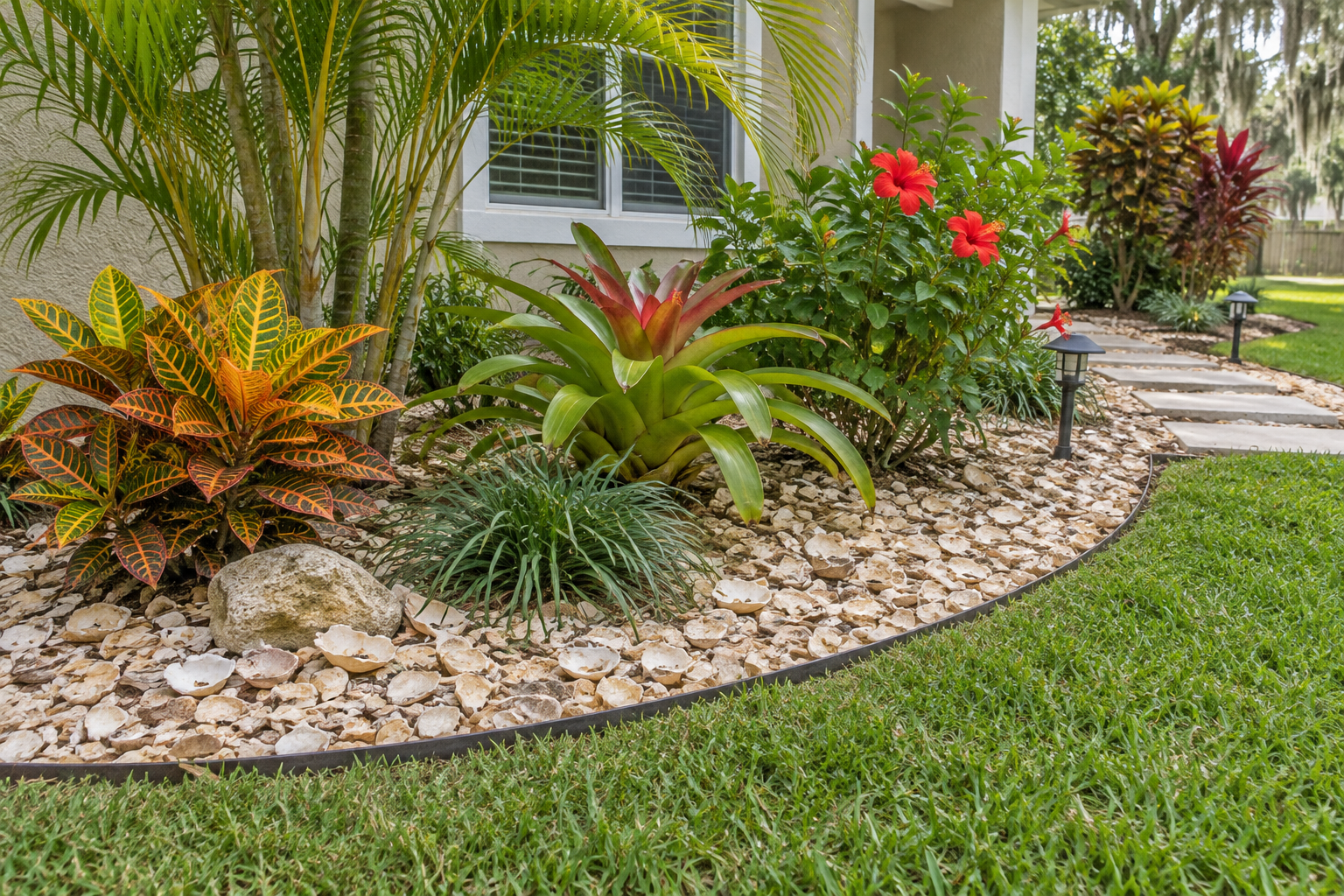
Choosing between coquina shell and decomposed granite starts with a project question, not a claim that one material is universally better: what exactly will the finished surface need to do on your property? The available information here does not establish comparative performance, composition, price, availability, or installation requirements for these materials. Instead, use this guide to gather comparable supplier information, evaluate samples in context, and ask the relevant landscape professional about site-specific decisions before ordering.
For a broader overview of coquina shell applications and planning, see the Northeast Florida coquina shell guide. Tropical Yards supplies and delivers bulk coquina shell in the St. Augustine-to-Daytona Beach corridor; customers or their landscapers handle installation. This is not a comparison-product sales claim: ask other suppliers directly whether decomposed granite is available and what its specifications are.
Start with the job the surface must perform
“Path,” “bed,” and “driveway” describe locations, but they do not fully describe the demands of a project. A side-yard route may be used occasionally, while a main entrance may receive repeated foot traffic. A parking area may be expected to support vehicles. A bed surface may be decorative, or it may need to fit around plants, irrigation components, and maintenance access. Those differences matter because the correct comparison depends on the intended use and site conditions—not on a generic label for either material.
Write down the project purpose before requesting information. Include whether the area is walked on, driven over, used for moving bins or equipment, or primarily viewed. Note the approximate shape and boundaries, existing surface, nearby structures, and any features the installer should inspect. These notes are a planning aid, not a substitute for a site assessment or construction specification.
- For a path: describe who is likely to use it, how it connects to doors or gates, and whether access needs should be reviewed by a qualified professional.
- For a landscape bed: identify plants, irrigation, edging, and maintenance access that may affect the design.
- For a parking or vehicle area: tell the installer what kinds of vehicles and use are anticipated, then ask what surface design and preparation they recommend.
- For a visual refresh: identify the existing colors and adjacent materials you want the new surface to coordinate with.
These descriptions help suppliers and installers answer the same question. They do not establish that either material is suitable for a particular load, location, drainage condition, or accessibility need. Ask the professional responsible for the project to make those judgments based on the property.
Request comparable specifications rather than relying on names
A material name alone is not a complete product description. Before comparing coquina shell with decomposed granite, ask each relevant supplier to describe the product they would actually provide. Request written details in a consistent format, and clarify which information is a stated product specification versus a recommendation for your particular installation.
Potential questions include what the supplier calls the material, whether it is sold loose or in another form, what sizes or gradations are offered, and whether those details are documented for the specific product being quoted. Ask how the quantity is expressed and whether the quoted amount refers to a delivered loose volume or another measurement. Do not assume that similar units, product names, or sample appearances mean the products are equivalent.
For coquina shell, confirm current availability, quantities, specifications, product charges, delivery charges, and scheduling directly with the supplier. Those details can change and are not assumed here. Tropical Yards supplies loose coquina shell, not coquina stone, and does not install it. For decomposed granite, direct the same questions to a supplier that confirms it offers that product; Tropical Yards is not represented here as a seller of granite.
| Comparison point | Ask about coquina shell | Ask about decomposed granite |
|---|---|---|
| Product identity | What exact product is being quoted, and how is it described? | What exact product is being quoted, and how is it described? |
| Documented specifications | Which size, gradation, or other specifications are documented for this supply? | Which size, gradation, or other specifications are documented for this supply? |
| Quantity basis | What unit is used, and what does the quoted quantity represent? | What unit is used, and what does the quoted quantity represent? |
| Sample and appearance | Can I review a sample representative of the product being offered? | Can I review a sample representative of the product being offered? |
| Project suitability | Who should assess whether this product fits my intended use and site? | Who should assess whether this product fits my intended use and site? |
| Order and delivery details | What are the current product, delivery, availability, and scheduling details? | What are the current product, delivery, availability, and scheduling details? |
Use samples to compare appearance, not to guess performance
A sample can help you judge visible color, particle appearance, and how a material looks beside a house, path edge, planting, or existing hardscape. It cannot by itself establish how a full installation will perform, how much preparation is required, or whether the material meets a particular design need. Ask whether a sample represents the product and specification that would be supplied, and whether the delivered material may vary from the sample. Do not assume an answer; get the supplier’s explanation.
Look at samples in the places where the finished surface will be seen. Check them in more than one lighting condition if practical, and compare each against the same nearby elements. Keep samples labeled so you do not confuse the products. If a visual match matters, ask the supplier what variation to expect and whether the sample is typical, illustrative, or from the material proposed for your order.
Keep visual choice separate from technical approval. A homeowner may prefer one sample’s appearance, but the installer or other relevant professional should review whether the proposed material and installation approach fit the actual use and site. If the sample raises questions about product identity or specification, resolve those questions before making a quantity decision.
For a useful side-by-side check, set up the samples in the same shallow containers or on separate labeled sheets, then view them together rather than relying on memory from separate visits. This is a proposed comparison method, not a test of suitability. Note the visual details that matter to you: overall tone, visible particle range, and whether the sample feels consistent with the surrounding landscape. Record observations without treating them as evidence of durability, drainage, maintenance needs, or suitability for traffic.
Keep the product names and supplier descriptions with each sample. For coquina shell and decomposed granite, ask each respective supplier to identify the material being shown and provide the specification for the product they would quote. Request comparable information in writing where possible, and clarify any terms you do not understand rather than assuming similarly named products have matching specifications. Tropical Yards supplies coquina shell; it does not supply decomposed granite.
Then relate the visual preference to the planned use. A sample that looks appealing beside a planting bed may not answer questions about a path or another intended surface. Write down the exact location and use you are considering, along with any design constraints, and ask the installer or relevant professional to review both proposed products and the installation approach for that specific situation. Ask what additional information or evaluation they need before advising you.
Before choosing a quantity, confirm which product and specification the quote covers, whether the sample is representative, and what could differ between sample and delivered material. If answers remain uncertain, pause the comparison and request clarification from the appropriate supplier or professional; appearance alone should not settle a project-specific decision.
Let the installer assess site conditions and design details
Surface choice can depend on details that are not established by a product label or general article: the existing base, grade, edges, neighboring surfaces, expected use, water movement, access, and the installation method. Avoid treating this guide as a design, engineering, drainage, accessibility, or code determination. When any of those issues could affect the project, ask the appropriately qualified professional to inspect the site and explain the recommendation.
Bring that professional a clear description of the area and your intended use. Ask what preparation and installation steps they propose for each candidate material, what assumptions those recommendations rely on, and whether a site visit or additional assessment is needed. If the answer depends on a property feature, ask the professional to identify that feature and explain how it affects the choice.
- Ask whether the proposed surface is appropriate for the specific traffic and use you described.
- Ask what the installer expects to do with the existing surface and what conditions could change the scope.
- Ask how the proposed design addresses transitions, borders, adjoining surfaces, and access.
- Ask who is responsible for confirming any drainage, accessibility, structural, or regulatory questions that apply to your property.
- Request the recommendation and its assumptions in writing so you can compare proposals accurately.
These are questions to take to the professional, not claims that a specific construction method, permit, or approval applies in St. Augustine. If a local rule or property-specific restriction may matter, verify it with the responsible authority or professional rather than relying on a material comparison.
Compare quotes on the same scope
A fair quote comparison requires more than two totals. Ask each supplier or installer to identify the product, quantity basis, delivery or handling scope, and any work included in the proposal. Confirm whether installation is included or separate. A supplier’s material quote and an installer’s completed-project proposal may cover different things, so do not treat them as directly comparable until the scope is clear.
For each proposal, record the quoted product name and specification, quantity and measurement unit, product charge, delivery charge if applicable, installation scope if included, and any stated assumptions or exclusions. Ask which items remain unconfirmed. Confirm current charges and scheduling directly; no price or delivery date is implied by this comparison. If a proposal uses a product term you do not understand, ask for a plain-language explanation and supporting specification before approving it.
Also clarify who will handle installation and who should answer questions about the completed work. Tropical Yards supplies and delivers bulk coquina shell, while customers or their landscapers handle installation. The company’s current availability, quantities, specifications, charges, scheduling, and any order-resolution details must be confirmed directly. Do not infer an installation service or a particular order policy from a supply inquiry.
A practical sequence for making the choice
- Define the use. Describe what the surface is for, who or what will use it, and what you want it to look like.
- Ask both sides the same questions. Request product identity, documented specifications, quantity basis, sample information, and current supply or delivery details.
- Review samples in context. Compare appearance near the actual project area, while treating visual preference separately from suitability.
- Get a site-specific professional opinion. Ask the installer or other relevant professional to assess preparation, intended use, transitions, and any property-specific concerns.
- Align the scopes. Compare proposals only after product, quantity, delivery, installation, assumptions, and exclusions are clear.
- Confirm before ordering. Recheck availability, specifications, quantities, current charges, and scheduling directly with the supplier.
This sequence helps avoid choosing based on an unsupported generalization. If a supplier cannot answer a specification question, note that gap and ask what documentation is available. If an installer cannot assess an important site condition from the information provided, ask whether an inspection or specialist input is needed before committing.
When coquina shell is under consideration
If coquina shell is one candidate, Tropical Yards’ coquina shell supply page provides a starting point for learning about the offered product and requesting current details. The business serves the St. Augustine through Daytona Beach corridor and delivers bulk coquina shell. Delivery uses a 14-foot dump trailer for larger plant orders and bulk coquina shell; that fact does not establish access suitability for an individual property, so discuss site access and delivery placement directly.
Customers or their landscapers handle installation. Before ordering, have the installer identify the product specification and quantity needed for the proposed design. Ask the supplier to confirm current availability, quantities, specifications, charges, and scheduling. For a decomposed granite option, seek those details from a supplier that confirms it provides that material, and avoid assuming its product or delivery terms match those of coquina shell.
Next step: ask for current coquina shell details
If you are considering coquina shell for a project in the service corridor, contact Tropical Yards to ask about current product availability, specifications, quantity, charges, and delivery scheduling. Share the intended use and site access information, and have your landscaper or installer confirm the project design and installation needs. Use the Tropical Yards contact page for a supply inquiry. For decomposed granite, contact a supplier that offers it directly; this article does not represent it as a Tropical Yards product.