 Tropical
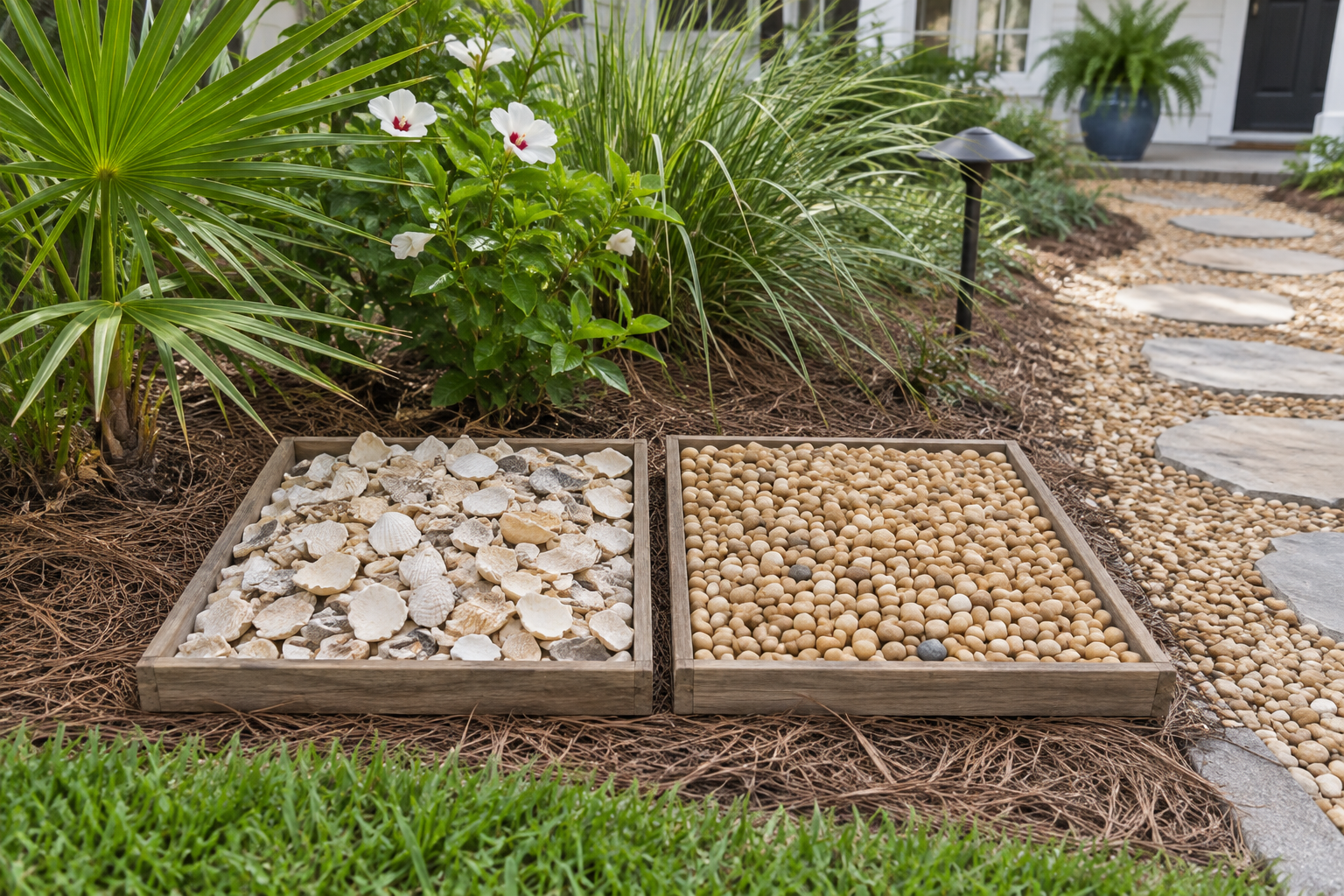
Choosing between coquina shell and pea gravel for a St. Augustine project starts with a clear description of the job—not with assumptions about how either product looks, behaves, or performs. Product names alone do not establish particle size, composition, coverage, suitability, or delivered cost. Gather comparable information from the suppliers and the installer who will prepare the site, then decide using the requirements of your particular area.
This guide offers a repeatable way to compare quoted products while leaving material-specific answers to the people who can confirm them. For broader context about coquina shell planning, see the coquina shell guide for Northeast Florida. Tropical Yards supplies and delivers bulk coquina shell in the St. Augustine through Daytona Beach corridor; customers or their landscapers handle installation. Confirm current availability, specifications, quantities, charges, and scheduling directly.
Start with the job each product must serve
Before requesting quotes, write down what the finished area is meant to do. A decorative bed, a footpath, and an area intended for vehicle use are different project briefs. This does not establish which material is suitable for any of them; it makes the question precise enough for a supplier and installer to answer. If the same material is being considered for several areas, describe each area separately rather than asking for one broad recommendation.
Record the location, approximate dimensions, boundaries, access route, existing surface, and any nearby features that may affect preparation. Note where people or vehicles are expected to travel, how the area connects to adjacent surfaces, and what appearance you are trying to achieve. These are homeowner planning prompts, not local construction standards. Ask the installer what additional site information is needed before they recommend a product or method.
- Define the use: Identify whether the proposed area is ornamental, pedestrian, vehicle-related, or intended for another specific purpose.
- Describe the site: Note the existing ground or surface, dimensions, boundaries, access limitations, and nearby landscape features.
- State the priorities: Explain what matters to you, such as a particular appearance, ease of maintaining the area, or compatibility with an existing design. Ask the professional how those priorities translate into product requirements.
- Separate unknowns: List questions about product identity, specification, quantity, preparation, and installation rather than filling gaps with assumptions.
Compare documented offers, not material-name assumptions
Ask each supplier to identify exactly what is being offered and provide the available product details in writing. “Coquina shell” and “pea gravel” are product labels, not enough information to establish that two offers are equivalent or that either one meets a specific project requirement. The supplier should explain what the quoted product is, which specifications they can confirm, and what remains unverified. If a detail matters to your decision but is not supplied, mark it as unanswered.
Then ask the installer to review those same product descriptions against the planned use and site. The supplier can confirm the item being quoted; the installer can explain what they need to know to evaluate preparation and installation for your property. Avoid treating a supplier’s product description as an installation recommendation, or an installer’s recommendation as confirmation of a supplier’s current inventory or delivered charges.
For coquina shell, Tropical Yards’ approved business information is limited to supplying and delivering bulk coquina shell and tropical plants in the St. Augustine-to-Daytona Beach corridor. The customer or their landscaper handles installation. Ask directly about current product specifications, availability, quantities, charges, and scheduling. Do not assume that Tropical Yards provides installation or that an unconfirmed specification applies to a particular order.
A side-by-side comparison worksheet
Use the table to make the comparison concrete. The entries are questions to resolve, not claims about either material. Fill in a column only when the supplier or installer confirms the answer for the particular product and project. If a supplier cannot provide a detail, record that it is unknown; do not infer it from a sample, a product name, or another seller’s description.
| Comparison point | Coquina shell offer | Pea gravel offer |
|---|---|---|
| Product identity | Ask the supplier to identify the exact coquina shell product offered. | Ask the supplier to identify the exact pea gravel product offered. |
| Written specifications | Request available specifications and clarify any details not provided. | Request available specifications and clarify any details not provided. |
| Sample review | Ask whether a sample can be reviewed and whether it represents the quoted product. | Ask whether a sample can be reviewed and whether it represents the quoted product. |
| Intended-use fit | Ask the installer to assess the stated use against the confirmed product details. | Ask the installer to assess the stated use against the confirmed product details. |
| Quantity basis | Ask how the proposed quantity was determined for this site and plan. | Ask how the proposed quantity was determined for this site and plan. |
| Preparation and installation | Ask the installer to describe the proposed work and any assumptions. | Ask the installer to describe the proposed work and any assumptions. |
| Current delivered offer | Confirm current product and delivery charges, availability, and scheduling directly. | Ask that supplier to confirm current product and delivery terms directly. |
Review samples without overreading them
A sample can help you discuss appearance and confirm what you are evaluating, but it does not independently establish every specification or suitability for an installation. Ask the supplier whether the sample represents the product being quoted, and what written product details accompany it. If a detail cannot be determined from a sample, keep it on the open-question list. A visual impression should not substitute for an answer about a specification that matters to the project.
Review samples under conditions that help you compare them fairly. Put them beside one another, use the same viewing area, and note what you see rather than relying on memory. If you are matching an existing landscape, compare the sample to that setting and ask whether the supplied sample is representative of the quoted material. Do not assume that every future delivery will look identical unless the supplier specifically confirms what variation, if any, to expect.
Take notes using neutral descriptions: the sample’s visible appearance, the date reviewed, the supplier’s product name, and any unanswered specification questions. If multiple people are deciding, let them review the same samples and written product information. This helps distinguish a personal preference from a confirmed product attribute.
Ask the installer to evaluate the application
The intended use and site details determine which questions the installer needs to answer. Give them the same written descriptions and samples you used for the supplier discussion. Ask them to state whether the information is adequate to assess the project, what site conditions they need to inspect, and whether either offer is unsuitable for the purpose you described. If they recommend one option, ask them to connect that recommendation to the confirmed product details and the actual installation plan.
Do not choose a depth, base, edging detail, compaction approach, or other construction specification from a generic comparison article. The available evidence here does not establish those requirements for either product or for your property. Ask the installer to provide project-specific recommendations and explain which decisions depend on site conditions. If the project has drainage, access, utility, boundary, or other property-specific concerns, ask the relevant professional to assess them rather than assuming a material will resolve them.
- Send both suppliers the same description of the intended area and ask for the exact product identity and available specifications.
- Request a written offer that separates product, quantity, delivery, and any other quoted items so you can see what is included and what is not.
- Show the product information to the installer and ask for a site-specific assessment of suitability, preparation, and installation scope.
- Record open questions, including any specification or site condition that neither supplier nor installer has yet addressed.
- Compare the completed answers and written offers; proceed only when you understand what product is being supplied and what work the installer is proposing.
Make the quote comparison fair
A low or high total is difficult to interpret if the offers describe different products, quantities, delivery terms, or installation scopes. Ask each supplier to state what the price covers and what is excluded. Confirm whether the quote is for material only or includes any separate service; do not assume that delivery, site preparation, spreading, or cleanup is included. For coquina shell from Tropical Yards, the confirmed role is supply and delivery, while the customer or landscaper handles installation.
When reviewing a quote, make sure the product name and any confirmed specification match the sample or written description you evaluated. Check that the quantity is based on the same dimensions and project plan. Ask how delivery charges and scheduling are handled for the current order, since current charges and timing must be confirmed directly. For another supplier’s pea gravel offer, request its terms from that supplier; no particular pea gravel price, inventory, delivery arrangement, or product specification is established here.
Keep the comparison focused on decisions you can verify: what is offered, what the supplier confirms, what the installer proposes, and which project assumptions remain open. If an offer uses a broad or unclear description, ask for clarification before comparing it. If the installer says that either option requires a particular specification or site preparation, ask them to put the recommendation and scope in writing so you can compare the same work.
A practical way to organize the review is to make one line for each offer and use identical headings: material name, stated specification, quoted quantity, unit used, delivery charge, delivery conditions, installation scope, and exclusions. Leave a field blank when the quote does not answer it rather than filling gaps with assumptions. This makes missing information visible and gives you a focused list of follow-up questions. Keep the quote and the sample notes together so you can check that the written offer refers to the material you actually assessed.
Before requesting revisions, give each supplier the same project description and the same measurements or plan. If your intended area or scope changes, update every offer you are comparing; otherwise, a revised quote may no longer be comparable to the others. Ask suppliers to identify whether the quoted amount is based on a stated measurement, an estimate, or another project assumption, and ask what information would be needed to confirm it. The goal is not to make suppliers use identical wording, but to understand what each offer means.
Separate the material decision from the installation decision. You can ask each supplier to clarify its product and delivery terms, then ask the installer to describe the proposed work for each material option. Ask whether the installer has included the same preparation, placement, and finishing tasks in both alternatives, and request any differences in writing. If the installer cannot assess one option without further details, record that as unresolved rather than treating the two proposals as equivalent.
When a sample is part of your decision, record its source and the description the supplier gave with it. Ask whether the quoted product corresponds to that sample and whether any specification in the quote changes the comparison. A sample can help you evaluate the particular material presented, but it cannot by itself confirm quantity, delivery terms, or installation scope. Keep those items as separate checks.
Finally, compare the unresolved items before choosing: which supplier must confirm a specification, whether delivery terms are clear, and which installer assumptions still need an answer. A short written clarification can prevent you from comparing a material-only offer with a broader project proposal. Retain the final written quotes and the clarifications you receive as your record of what you evaluated.
Keep a simple record of the decision
Organizing the information is useful if questions arise during ordering or installation. Save the quote, product description, sample notes, site measurements, and written installation proposal together. Record the date of conversations and summarize any answers or next steps. These are general recordkeeping suggestions, not a statement about a seller’s order-resolution policy, refund terms, or guarantee.
For general consumer recordkeeping, the Federal Trade Commission advises keeping purchase documents and notes about communications. Its page is not an approved in-body link for this article, and that guidance should not be mistaken for Tropical Yards’ policies. For this purchase, ask the relevant supplier directly what documents and terms apply to your order.
Confirm coquina shell details before ordering
If coquina shell remains under consideration, review the coquina shell supply information and contact Tropical Yards to confirm current details for your project. Its service is supply and delivery, not installation; you or your landscaper handle installation. Ask directly about the product, quantity, current charges, and scheduling, and have your installer assess the proposed use and site requirements. To discuss a coquina shell inquiry or request current information, use the Tropical Yards contact page.