How Much Coquina Shell For A Path in St. Augustine, FL
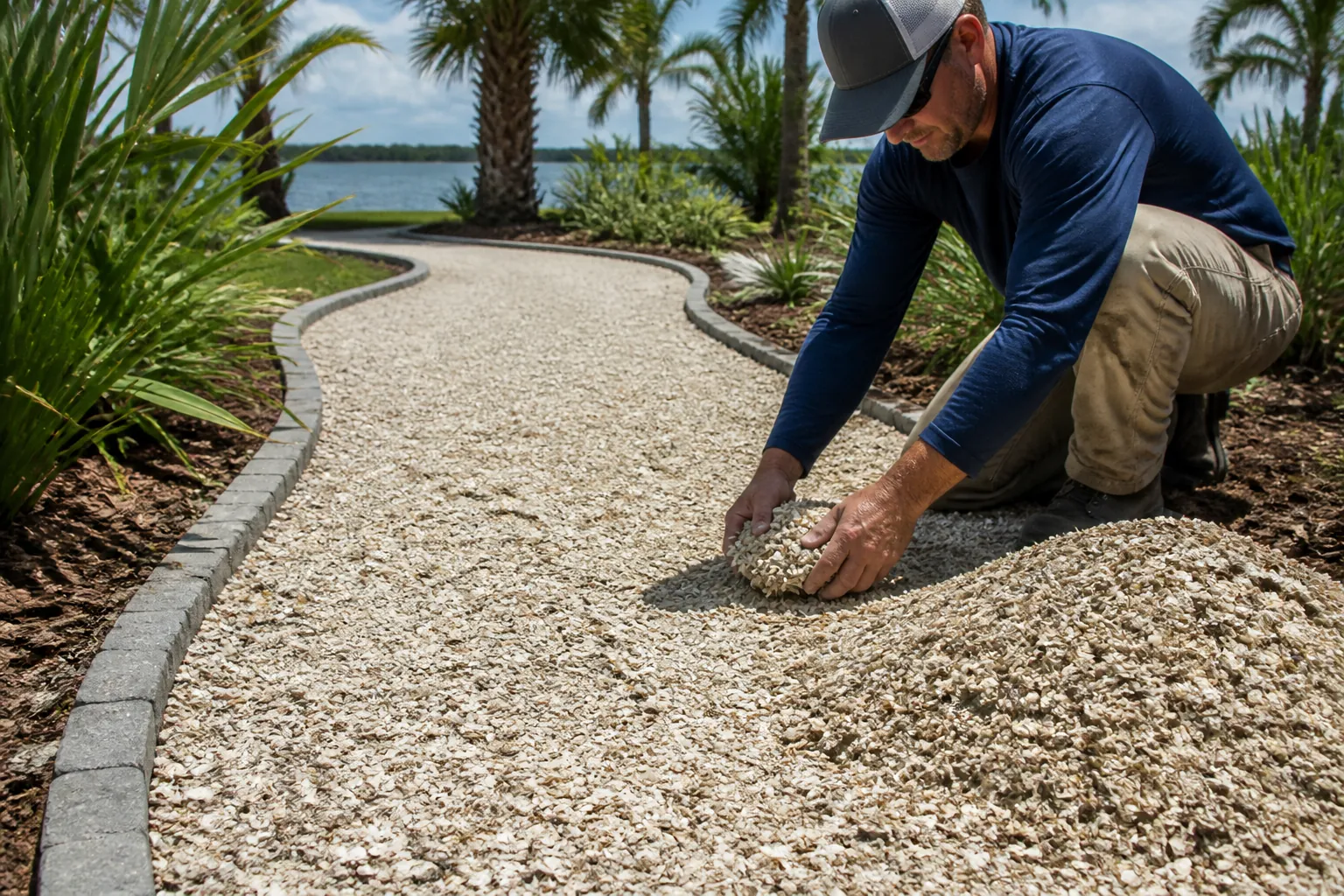
To estimate how much coquina shell for a path, measure the path’s length and width, then choose a planned depth. Multiply those three measurements to find the volume in cubic feet, then divide by 27 for cubic yards. Treat the result as a planning estimate and confirm the order size and delivery details before buying.
How Much Coquina Shell for a Path Do You Need?
The amount depends on the path’s length, width, and planned shell depth. Measure the path in feet and depth in inches, then convert depth to feet before multiplying. This gives a rough cubic-foot volume. Divide by 27 to convert cubic feet to cubic yards, the unit used for ordering shell.
Start with the path shape. For a straight path, measure its length and average width. For a curved path, break it into simple sections, such as rectangles, and estimate each section before adding the areas.
For example, a path 30 feet long and 3 feet wide covers 90 square feet. At a planned depth of 2 inches, the depth is one-sixth of a foot. The basic volume is 15 cubic feet, or about 0.56 cubic yard before you account for uneven ground or handling.
This is a math example, not a recommended depth or order amount. Check the intended use and ground conditions before choosing a depth. Tropical Yards describes coquina shell for landscaping and DIY use, but the right amount depends on the project.
For a broader look at the material, read the Northeast Florida coquina shell guide. For a closer look at what the product includes, see coquina shell material details.
How Do You Measure a Path Before Ordering?
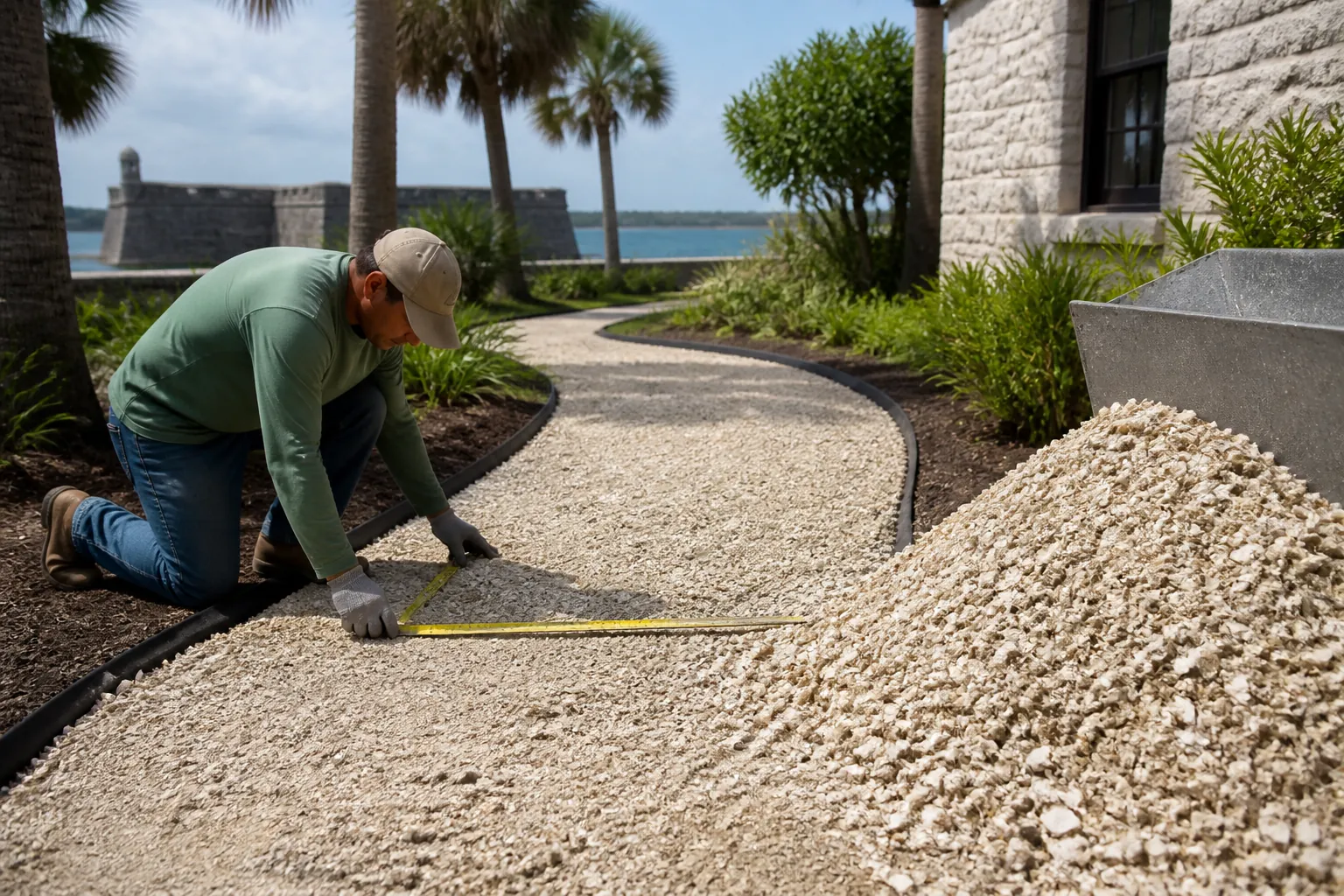
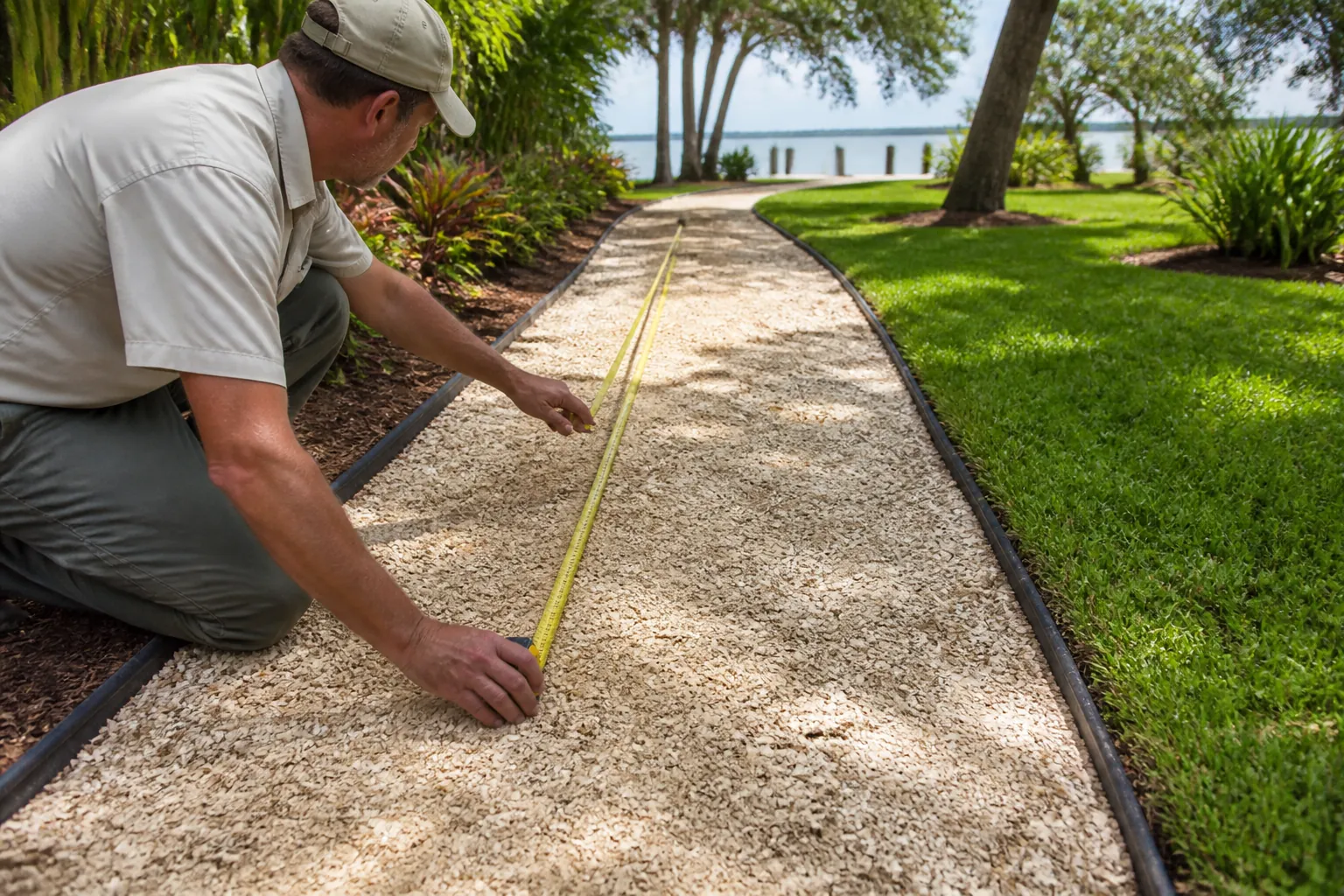
Measure the finished path area, not the whole yard. Record length and width for each straight section, then add the areas. For curves or irregular edges, divide the path into smaller shapes and use simple estimates. Keep the measurements in feet so the volume calculation stays consistent.
Use a tape measure and write down each section as you go. For a rectangle, multiply length by width to get square feet. Add the area of each section. If the route bends, measure the parts separately rather than stretching one measurement across the full curve.
Do not count planting beds or spaces that will stay uncovered. If the path narrows or widens, use several smaller measurements. An average width can work for a modest change, but several sections give a clearer estimate for a winding route.
Walk the route and mark where the path begins and ends. Check that the measurements match the area you plan to cover. If the edge will follow a curve, make a simple sketch so the delivery and placement plan reflects the actual shape.
A sample can help you judge the shell’s appearance before you choose an area to cover. See coquina shell sample guidance. For the full path calculation and broader planning context, use the coquina shell driveway and path guide.
- Mark the path edges so you measure the planned surface, not nearby lawn or beds.
- Measure each straight section’s length and width, then write down the area.
- Split bends into smaller shapes and add their areas for a more useful estimate.
- Keep all measurements in feet and note any spots with uneven ground.
What Depth Should You Use in Your Estimate?
There is no single depth that fits every path. The planned depth depends on the ground, path use, and the result you want. Check the site and project needs before using a number in your estimate. If you are unsure, ask a qualified local professional about site conditions.
Depth has a direct effect on volume. At the same path area, doubling the planned depth doubles the calculated volume. That makes it useful to compare a few depth estimates before you decide what amount to order.
For the calculation, convert inches to feet by dividing the inch measurement by 12. Multiply the area in square feet by that depth in feet. Then divide the cubic-foot result by 27 to get cubic yards.
The math does not account for every feature of a yard. Ground dips, path edges, and changes in the planned surface can affect how much material you use. Avoid treating a simple estimate as an exact measure for every site.
Tropical Yards is a supplier, not an installation or yard design service. For a material overview, read coquina shell specifications. If comparing surface choices, see coquina shell versus mulch paths.
How Do You Turn Path Measurements Into Cubic Yards?
First multiply the path’s area in square feet by its planned depth in feet. The result is cubic feet. Divide that number by 27 to convert it to cubic yards. Keep the unrounded result for your notes, then discuss a practical order quantity with the supplier.
Here is the formula: length in feet times width in feet times depth in feet equals cubic feet. Divide cubic feet by 27 to get cubic yards. For multiple path sections, calculate each section and add the cubic-foot amounts before converting.
Suppose a straight path measures 40 feet by 4 feet, with a planned depth of 2 inches. Its area is 160 square feet. Two inches equals one-sixth of a foot, so the estimate is about 26.7 cubic feet, or just under one cubic yard.
This example only shows the math. It does not set a suitable depth, allow for site changes, or represent an order recommendation. Small projects may also face a minimum order, so a calculated amount below that minimum may not match the available purchase terms.
Compare the amount with the supplier’s order minimum and delivery terms before setting a budget. For help thinking through site access, read coquina shell delivery site readiness. For path material choices, see shell or mulch for a path.
What Affects the Order and Delivery Plan?
A volume estimate is only one part of planning. The order minimum, delivery distance, access to the drop area, and the path layout can all affect the next steps. Confirm these details with the supplier before ordering, especially if the measured amount is small or the site has limited access.
Tropical Yards sells coquina shell at $145 per cubic yard, with a four-yard minimum. Delivery is from $275 within 25 driving miles of St. Augustine. Delivery farther out is quoted by phone. These are the approved current terms; confirm them when planning your purchase.
The minimum order means a small path can require buying more shell than the measured volume. Consider whether you have another planned use for the remaining material, and ask about the order terms before you proceed. Do not assume that a path estimate is also the final order size.
Delivery planning also depends on the drop area. Think about where a dump trailer could reach and where material can be placed. Share site access limits with the supplier before arranging delivery. Do not assume a particular placement method or delivery option without confirmation.
Tropical Yards offers dump trailer delivery of coquina shell in its configured service area, from St. Augustine to Daytona Beach. The site details do not establish a staffed office in every service-area city. Use delivery site readiness tips to prepare questions, and review the Northeast Florida coquina shell guide for related planning.
- Confirm the minimum order before comparing it with your calculated volume.
- Ask how delivery is quoted for the project’s driving distance from St. Augustine.
- Describe the proposed drop area and any limits on trailer access.
- Plan how the material will move from the drop point to the path.
How Can You Reduce Waste and Keep the Path in Good Shape?
Careful measuring and a clear drop plan can help limit unused material. Keep the path outline simple where possible, check the surface before ordering, and follow suitable care practices after placement. Coquina shell can shift or change over time, so consider upkeep as part of the project.
Before buying, compare the path estimate with the available order size. If there is extra shell, plan a suitable place to use or store it. Keep the storage spot in mind before delivery, since loose material needs a place that will not block access or collect where you do not want it.
A path’s condition can change with use, weather, and the surrounding ground. Check it from time to time for areas that need attention. The amount and type of upkeep depend on the site and use, so avoid assuming that one care routine fits every path.
Tropical Yards sells coquina shell, but does not provide installation, maintenance, cleanup, or yard design. Buyers planning DIY work should decide how they will move and spread material before ordering. For broad plant and garden care information in the region, UF/IFAS Extension’s St. Johns County fact sheets are a relevant educational source.
For material comparisons, read coquina shell versus mulch paths. For care planning, see coquina shell maintenance guidance. These topics can help frame questions, but site conditions still shape a useful plan.
Questions about next steps? Call Tropical Yards at 904-526-8345 or review coquina.
Frequently Asked Questions
Can I use a square-foot estimate to order coquina shell?
Square feet tell you the surface area, but not the material volume. You also need a planned depth. Multiply the area by the depth in feet to find cubic feet, then divide by 27 to estimate cubic yards. Compare that estimate with the supplier’s minimum order and ask about delivery terms before placing an order.
What if the path is curved or has an uneven width?
Divide the path into sections that are easier to measure. Estimate each section’s area, add the areas, and use the same planned depth for the volume calculation. For a curve, a simple sketch can help you keep track of the sections. If the width changes a lot, measure several smaller sections instead of relying on one average.
Does Tropical Yards install coquina shell paths?
No. Tropical Yards is configured as a supplier of coquina shell and tropical plants, with dump trailer delivery of plants and shell. It does not install, design, maintain, trim, or clean up yards. Buyers should plan their own DIY work or seek a qualified provider for labor they need.
Does the delivery price stay the same for every location?
No. Delivery is from $275 within 25 driving miles of St. Augustine, and delivery farther out is quoted by phone. The coquina shell price is $145 per cubic yard with a four-yard minimum. Confirm current order details and the delivery quote for the project location before buying.
How should I prepare for a coquina shell delivery?
Decide where the material could be dropped and consider access limits before you contact the supplier. Share those details and the project location when discussing delivery. The available information does not set out a universal access rule or placement method, so confirm what can work for your site before arranging delivery.
Sources
- Coquina Shell Landscaping, Tropical Yards
- St. Johns County Horticulture Fact Sheets, UF IFAS Extension
Call 904-526-8345 to talk through next steps.