 Tropical
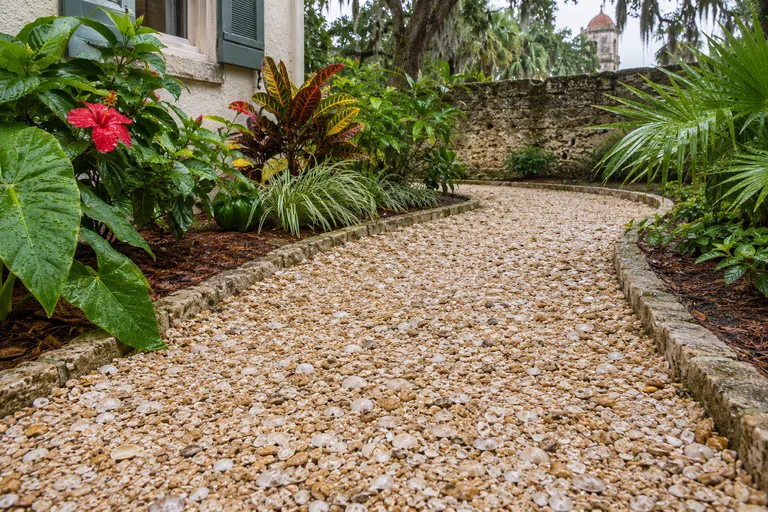
Bulk coquina shell can provide a porous landscape surface, but buying shell and solving a drainage problem are different decisions. Before ordering for a wet side yard, driveway edge or planting bed in St. Augustine, FL, separate material selection from property preparation. What surface do you want, where does water collect, and who will prepare the area?
Tropical Yards sells coquina shell and delivers materials by dump trailer. Customers or their own contractors handle preparation, spreading, grading and compaction. The most useful drainage questions therefore cover both the shell you are buying and the conditions beneath and around it. A clear plan helps prevent a material delivery from arriving before the underlying problem has been assessed.
Does Bulk Coquina Shell Improve Surface Drainage?
Coquina shell can create a porous landscape surface that allows rainfall to pass through the shell layer. However, base preparation and compaction also matter when planning a drainage-related application. The material's porosity alone does not establish how a particular wet yard will perform.
The distinction matters because the shell layer is only one part of the project. A surface can be porous without answering where water goes after it passes through. For buying purposes, ask two separate questions: whether coquina shell suits the intended landscape use, and whether the underlying area has been prepared to handle water. The first concerns material selection. The second may require an on-site assessment by your own qualified contractor.
Tropical Yards characterizes crushed coquina shell as creating a “firm, porous surface.” That material characteristic is not a promise that every installation will eliminate standing water. Avoid turning a general product benefit into a fixed drying time or a guarantee for a low area beside your home.
Plan coquina shell applications, quantities and maintenance together before committing to a bulk purchase. Material identification, driveway and bed preparation, delivery arrangements and coverage calculations all affect the buying decision. A planting-bed finish and a vehicle-bearing driveway have different preparation needs, even when both use the same loose shell aggregate.
Also confirm the product name when discussing an order. Loose coquina shell differs from harder, consolidated shell rock and from broader crushed-shell blends. Do not assume that advice about one product automatically applies to another. Describe your intended use and ask what material is currently available, rather than ordering solely by color or by a photograph of someone else's finished yard.
What Should You Check Before Covering A Wet Area?
Record where water enters, where it collects and what occupies the area before deciding to cover it with shell. Treat wet-area and drainage-channel applications separately from decorative coverage, and avoid locations that remain wet when choosing a planting area for hibiscus. A surface finish should not replace an assessment of persistent wetness.
EPA explains that permeable pavement moves water into underlying soil and gravel. That general principle helps frame a drainage discussion, but the page supplies no coquina-shell design or promise that shell will correct a wet yard.
Start with a simple sketch of the proposed project. Mark the house, driveway, planted areas, existing drains and the places where you see water. Photographs taken from the same safe location before and after rainfall can help you explain the issue to your contractor. These observations are a record of conditions, not a soil test or a drainage design.
- Identify the wet footprint. Note whether water collects across the whole area or in one depression.
- Describe visible water movement. Record whether runoff crosses the proposed shell surface or arrives at one concentrated point.
- Mark nearby features. Include downspout discharge points, drain openings, path borders and planting-bed edges.
- Record the intended use. Distinguish a decorative bed from a walking route or vehicle area.
- Explain previous changes. Tell your contractor whether the area has already been filled, topped off or compacted.
For a planting bed, make plant suitability part of the discussion. Hibiscus needs consistent moisture without waterlogged roots. That distinction is more useful than assuming a dry-looking shell surface proves the root zone is suitable. If the project includes hibiscus, assess the planting location before committing to plants and shell together.
Keep the observations separate from your proposed solution. “Water collects along this edge after rain” gives your contractor useful information. “This needs six inches of shell” commits to an answer before the cause has been assessed. Once the preparation plan is settled, you can give the supplier a clearer description of the material order without asking the delivery team to diagnose the property.
How Do Depth, Base And Compaction Affect The Plan?
Depth should follow the intended use and preparation plan, not serve as a universal drainage remedy. Use application-based shell depths as general references, and account for prepared bases and compacted driveway depth before calculating an order. Confirm which depth your measurements and quantity estimate actually represent.
A general residential driveway reference is at least four inches of compacted shell over a prepared base. Soft spots and depressions need attention before shell placement. For planting beds, a two- to three-inch layer is a common reference. Neither depth should be treated as a prescription for filling a drainage channel or correcting a wet foundation perimeter.
| Application | General Planning Reference | Drainage Question | Preparation Responsibility |
|---|---|---|---|
| Planting bed | A 2- to 3-inch shell layer for landscape coverage | Is the planting location suitable before shell is added? | Customer or customer's contractor |
| Residential driveway | At least 4 inches of compacted shell over a prepared base | Have soft spots and depressions been assessed? | Customer or customer's contractor |
| Wet area or drainage channel | A property-specific preparation plan, not a universal shell depth | What preparation and water route does the area require? | Customer's qualified contractor |
Compaction also belongs in the conversation. Loose shell settles into a denser layer, and excessive compaction can reduce drainage performance. Ask your contractor how the planned surface balances stability and permeability. A supplier's yardage estimate does not replace that preparation decision, particularly where vehicles will turn or park.
Landscape fabric is another application-specific choice. Geotextile can help separate shell from underlying soil beneath paths and unplanted areas, but blanket use is not recommended in established planting beds. Ask what purpose a proposed fabric serves and whether it suits the project. Do not treat the word “fabric” as proof that drainage has been addressed, or buy it automatically for every shell-covered space.
Once the area and depth are settled, calculate geometric volume by multiplying square feet by depth in feet, then dividing by 27 to obtain cubic yards. For example, 300 square feet at three inches equals 300 × 0.25 ÷ 27, or about 2.78 cubic yards. That is volume before any allowance for compaction, handling or uneven ground. It is not a drainage recommendation or a confirmed order quantity.
Have the contractor distinguish loose placement depth from finished compacted depth before requesting a quote. Otherwise, two people may discuss the same number of inches while describing different amounts of material. Resolve that difference before delivery rather than discovering it while spreading the load.
Will Rain Move Shell Or Change Its Drainage?
Shell can shift under traffic or moving water, so inspect the surface and its edges rather than assuming it is maintenance-free. Plan for raking, edge restoration and displacement checks when choosing a compacting shell landscape surface. Stability and drainage depend on more than the material's appearance.
Ordinary rainfall on gently graded surfaces presents different conditions from faster-moving water on steeper ground. For a buyer, the practical question is whether the proposed area receives rainfall directly or also carries concentrated runoff. Describe visible channels, displaced material and water crossing the area to your contractor. Do not assume that a deeper shell layer or taller edging will resolve every washout pattern.
Edges help keep shell within its intended footprint, but their placement belongs in the overall preparation plan. Without restraint, shell can migrate into neighboring planted areas. Ask your contractor how the border will contain material while accommodating the intended water route. Containment and drainage should be considered together, especially along a narrow side yard or driveway edge.
After installation, look for changes that call for attention: shell pushed toward the perimeter, ruts in turning areas, uneven coverage or accumulated leaves. Raking, edge restoration and occasional top-offs are normal maintenance tasks. Removing fallen plant debris and redistributing displaced shell are different tasks from correcting a recurring drainage problem.
If ponding returns, record where it occurs before adding more material. A top-off can restore missing coverage, but it should not be the automatic response to unexplained standing water. Compare the condition with your original photographs and ask the contractor whether the preparation still performs as intended. Keep routine surface care separate from a decision to alter drainage across the property.
What Drainage Questions Belong In Your Delivery Order?
Bring a settled material plan, measured area and proposed unloading location to the order conversation. Tropical Yards offers dump trailer material delivery and bulk coquina shell supply. Ask for current availability, a quote and delivery coverage for your address; arrange installation and drainage work separately.
Tropical Yards uses a 14-foot dump trailer for deliveries. That equipment description is not a guaranteed fit through every entrance or a promise to unload anywhere on the property. Explain gates, turns, overhead restrictions and the proposed drop area when discussing access. Let Tropical Yards confirm delivery arrangements rather than estimating safe clearance from trailer length alone.
Keep the unloading location distinct from the finished project area. A wet side yard may be the place where shell will eventually be used, while the agreed delivery drop may be elsewhere. Make sure the person spreading the material understands that arrangement and has planned how to move it. Delivery does not include spreading, base preparation or drainage correction.
- Confirm the product. Ask for loose coquina shell suitable for the stated landscape use, and discuss current availability.
- Share the measurements. Provide each area's square footage and the depth basis agreed with your contractor.
- Explain the preparation status. Say whether the base and drainage-related work are complete or still pending.
- Discuss access and unloading. Describe restrictions and ask the supplier to confirm the proposed delivery arrangement.
- Request the current quote. Confirm material quantity, delivery coverage and scheduling before placing the order.
If plants are part of the same project, discuss them during the order conversation, but confirm availability and whether a combined delivery is practical. Plants and coquina shell may be coordinated in one order when the load arrangement allows. A coordinated delivery can simplify purchasing; it does not remove the need to choose suitable planting locations or arrange the labor independently.
For a project in St. Augustine, FL, the final decision should be clear enough to explain in a few sentences: the intended use, the prepared area, the depth basis, the quantity being quoted and the agreed drop location. If the unresolved question is still why water stands there, finish that assessment first. Order shell when the material purchase supports an established plan, rather than using the delivery itself as the starting point for drainage decisions.
Frequently asked questions
Will bulk coquina shell fix a yard that holds standing water?
Coquina shell provides a porous surface, but that does not establish the cause of standing water or guarantee a correction. Drainage performance also depends on preparation and surrounding conditions. Have persistent ponding assessed before choosing a depth or ordering material, especially near a building or an existing drainage channel.
Should landscape fabric go under coquina shell for drainage?
Fabric is an application-specific decision, not an automatic drainage solution. Geotextile can help separate shell from underlying soil beneath paths and unplanted areas, but blanket use is not recommended in established planting beds. Ask your contractor what purpose the fabric serves and whether it suits the planting, base and intended use.
Can coquina shell move during heavy rain?
Yes, moving water can displace shell, particularly on steeper ground. Ordinary rainfall on a gently graded surface differs from concentrated runoff crossing a shell-covered area. Edge containment and preparation matter. Record where runoff crosses the area and where shell moves. Repeated displacement deserves assessment rather than an automatic order for more material.
How deep should coquina shell be for a drainage-related project?
There is no single depth that answers every drainage question. General application references are two to three inches for planting beds and at least four inches of compacted shell for residential driveways over a prepared base. Those references do not establish the correct preparation or depth for a persistent wet spot or drainage channel.
Does Tropical Yards install shell or correct drainage in St. Augustine, FL?
Tropical Yards supplies coquina shell and offers dump trailer delivery. It does not provide installation, grading or drainage construction. Customers handle the labor themselves or arrange their own contractor. Contact the business for current material availability, a quote, delivery coverage and confirmation of access and unloading arrangements for your address.