 Tropical
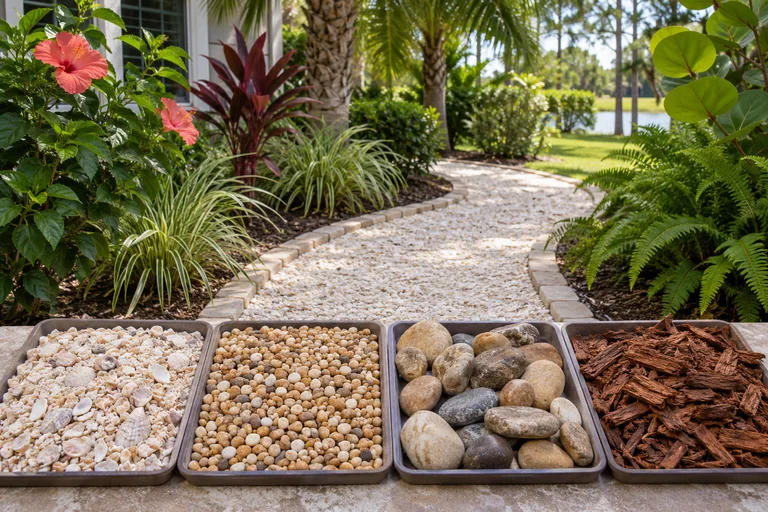
Bulk coquina shell is worth considering for a Palm Coast, FL landscape when you want a cream-to-tan finish for beds, paths or a residential driveway. It is not interchangeable with every product sold as gravel, crushed shell or shell rock. The right comparison depends on what the surface must do, how it will be prepared and which maintenance tasks you are willing to handle.
Material selection belongs alongside quantity calculations, preparation and maintenance in your project plan. Use the complete coquina shell guide for Northeast Florida when working through those connected decisions. First establish whether you need a decorative ground cover, a walking surface or material within a vehicle-bearing surface. Those are different buying decisions, even when the finished areas look similar.
Start With The Surface Function, Not Just The Material Name
Choose loose coquina shell for its shell texture and coastal appearance, then compare alternatives against the actual job. Distinguish it from harder shell rock aggregate, especially when the material must support vehicle traffic rather than simply cover a planting bed.
Crushed coquina shell creates a “firm, porous surface with a warm cream-to-tan color.” These characteristics give buyers three useful comparison points: the finished texture, the passage of water through the material and the color. They do not establish that shell is the best choice for every slope, soil condition or traffic load.
Start by separating the visible finish from the layers beneath it. A decorative bed covering has a different purpose from a compacted driveway base. Likewise, an aggregate selected for supporting traffic may not be the finish you want beside a front entry. Comparing only the material names can hide these differences and lead to quotes for unlike projects.
- Decorative beds: Compare color, plant-care access, organic matter needs and the work involved in keeping edges tidy.
- Walking routes: Compare firmness, surface texture, footwear comfort and material movement at entrances.
- Driveways or parking: Compare the complete proposed surface, including base preparation, expected traffic and upkeep.
- Accent areas: Decide whether appearance matters more than frequent foot travel or a compacted finish.
Write down which of these functions applies before asking for prices. If a side-yard area serves both as a planting bed and a regular access path, identify both uses. A material that looks right around shrubs may still be inconvenient where people repeatedly walk, turn a cart or carry garden supplies.
Also clarify the product itself. “Crushed shell” is a broad description, while shell rock refers to consolidated material processed into aggregate. Ask what is being quoted rather than assuming all shell-based products have the same texture, firmness or intended use.
Compare Coquina Shell With Gravel And Harder Aggregates
Coquina shell offers a firmer walking finish than decorative river rock, while harder shell rock and crushed concrete serve different aggregate roles. Compare the exact product and its place within the proposed surface, not just its appearance in a sample pile.
| Material | Main distinction | Comparison focus | Buyer question |
|---|---|---|---|
| Coquina shell | Loose shell aggregate with a cream-to-tan finish | Coastal appearance, surface firmness and periodic redistribution | Is this the right finish for the intended traffic? |
| Pea gravel | An alternative loose aggregate | Movement, settling and future topping off | How will the material stay within its edges? |
| River rock | Decorative stone that does not compact like shell | Accent appearance versus regular walking comfort | Is this an accent area or a traveled route? |
| Limerock or shell rock | Harder aggregate alternatives, not identical products | Load demands, compacted stability and finish texture | Which exact product does the proposed surface require? |
| Crushed concrete | Recycled concrete aggregate used in base applications | Base function versus the visible finish layer | Is the quote for a base layer, finish layer or both? |
For pea gravel, focus on movement and maintenance rather than assuming one loose material stays perfectly fixed. Settling and topping off belong in the comparison for pea gravel. Shell can also move toward edges under traffic. Ask how each proposed material will be contained and what the owner will need to do when the surface becomes uneven.
River rock is a more direct comparison for decorative areas than for a frequently traveled path. It offers a decorative finish but does not compact into a walking surface like shell. If you like its appearance, consider whether the area actually needs to support daily foot travel. A border accent and a route to a side gate do not have the same requirements.
Limerock and shell rock deserve separate product descriptions. Harder aggregates can be options where stability and heavier traffic are important. That does not mean a harder material automatically solves an unsuitable base. Have your own contractor explain the role of each layer and why the selected product fits the anticipated vehicles.
Crushed concrete is another case where the layer matters. Recycled concrete aggregate can serve as a compacted subbase beneath a shell finish when appropriate for the project. A quote for recycled aggregate as a base is therefore not directly comparable with a quote for decorative shell alone. Ask for the proposed layers to be named separately before deciding which option costs less.
Weigh Coquina Shell Against Bark Mulch In Planting Beds
Coquina shell provides an inorganic landscape-bed covering that does not decompose like bark mulch. Bark mulch contributes organic matter as it breaks down, so the better choice depends partly on whether soil improvement or a lasting mineral finish is your priority.
UF/IFAS compares organic and inorganic mulches and advises against shell mulch around plants. Shell is durable, but it does not provide the soil benefits of decomposing organic material.
This is not simply a contest between a permanent material and a temporary one. Shell remains inorganic, but a shell bed still needs attention. Leaves collect, weeds can emerge and material can migrate beyond the border. Bark mulch breaks down, but that breakdown can be useful when improving soil organic matter is an important goal.
For an established ornamental bed, compare the care routine you want. Shell care can include removing fallen debris, returning displaced material and adding shell where coverage becomes thin. Organic mulch care includes monitoring the layer as it decomposes and replenishing it when needed. Neither choice removes the need to inspect plants, irrigation or weeds.
Think about future changes to the bed as well. If you expect to add plants, move shrubs or work the soil, include access to those areas in the decision. A tidy surface today should not make ordinary plant care an afterthought. Keep the distinction clear between covering the soil and meeting the needs of the plants growing in it.
Plant requirements remain important regardless of the material's appearance. For example, hibiscus needs a location that does not stay wet after rain. Selecting a porous-looking ground cover is not a substitute for checking whether the planting location itself is suitable. Ask plant-specific questions rather than treating every tropical bed as identical.
For a Palm Coast, FL front bed, the practical choice may come down to a light shell finish versus the organic contribution of bark mulch. Evaluate those benefits honestly. Avoid building the budget around a fixed replacement interval, since traffic, debris, edge containment and the condition of the existing layer all affect the work required.
Compare Walking Comfort, Vehicle Use And Surface Upkeep
For paths and driveways, compare the experience of using the finished surface as well as its appearance. Tracking, displaced shell and uneven turning areas are potential tradeoffs when choosing coquina shell for pedestrian or vehicle areas. Match the finish to the people and traffic using it.
A compacted shell surface is still textured rather than identical to a smooth concrete finish. Shell can be uncomfortable in bare feet or heels and can track into a garage or house. Before choosing it near a main entrance, consider the footwear people use and how close the loose surface will be to indoor flooring.
For a garden path, look beyond a small decorative sample. Ask to understand the texture of the finished material and how the route will be contained. Edge restraint matters because shell can gradually move into neighboring areas. Where a path meets a planting bed, keeping that boundary clear becomes part of the maintenance comparison.
Vehicle areas require a broader discussion. Frequent turning, heavier vehicles and existing soft spots should be explained to your own contractor before selecting a finish. Displacement and ruts are possible shell-driveway issues. Do not compare a thin decorative covering with a prepared vehicle-bearing surface and assume the cheaper material quote represents the same result.
Maintenance preferences can also change the shortlist. If you do not want to rake loose material back into place, that is a meaningful drawback even if you like the shell's color. Consider a different surface approach with your contractor instead of expecting a loose aggregate to behave like a continuous paved finish.
Finally, distinguish lower maintenance from no maintenance. Raking, edge restoration, weed management and occasional top-offs can all be part of caring for a shell surface. Those tasks belong in the comparison alongside the initial purchase. A material is a better fit when its ongoing care matches what you are prepared to do.
Compare Complete Project Quotes Before Ordering Bulk Shell
Compare delivered material and the work needed to make it usable, not just a quoted unit price. Tropical Yards sells bulk coquina shell and offers dump trailer delivery of shell and tropical plants. Request a current quote and confirm delivery coverage for your specific address.
First, make sure the quantities describe comparable coverage. Calculate volume by multiplying area in square feet by depth in feet, then dividing by 27. Expressed using inches, that is area multiplied by depth in inches, divided by 324. This calculation describes volume; it does not select the correct depth or account automatically for every preparation requirement.
For example, 300 square feet at a chosen depth of 3 inches equals about 2.78 cubic yards before any project-specific allowance. This is a measurement example, not a depth recommendation. If another proposed material requires a different layer thickness, calculate its quantity separately. Equal cubic-yard orders do not necessarily produce comparable finished surfaces.
- Define the use: State whether the area is a bed, path, driveway, parking space or decorative accent.
- Identify the product: Confirm the exact material rather than relying on a broad term such as gravel or crushed shell.
- Separate the layers: List finish material, any proposed base, edging and removal or preparation work.
- Confirm delivery details: Give the address, access restrictions, gate requirements and proposed unloading location.
- Price labor separately: Include your DIY equipment needs or obtain a labor quote from your own contractor.
For shell, ask Tropical Yards about current availability, order requirements, delivered cost and coverage for the specific Palm Coast, FL address. Describe access conditions rather than assuming a dump trailer can unload anywhere on the property. Confirm the proposed drop location before delivery, especially if the material must later be moved to a rear or side-yard project.
Keep supply and installation responsibilities separate. Tropical Yards sells and delivers coquina shell and tropical plants. Spreading, base preparation, grading, compaction and landscape construction are the customer's responsibility or work for the customer's own contractor. A delivered-material quote should not be read as an installed-project quote.
The strongest comparison ends with a clear scope: the right product, the right quantity, an agreed delivery plan and a realistic care routine. Choose shell because those details fit your project, not because a general claim says it always beats gravel, mulch or a harder aggregate.
Frequently asked questions
Is coquina shell the same material as shell rock?
No. Loose coquina shell aggregate differs from shell rock formed from consolidated deposits and processed into harder aggregate. Their intended uses can differ, particularly where heavier traffic is involved. Ask for the exact product description and discuss the complete surface with your own contractor before treating them as substitutes.
Is bulk coquina shell cheaper than gravel for a Palm Coast, FL project?
A unit price alone cannot establish which project costs less. Compare the required quantities, proposed layers, preparation, edging, delivery and labor. Different products may require different surface plans. Ask Tropical Yards for a current shell quote for your address, then compare it with an equally detailed quote for the alternative.
When should I compare bark mulch with coquina shell?
Compare them when choosing a covering for planting beds. Shell does not decompose like bark mulch, but it can still require weeding, debris removal, redistribution and top-offs. Bark mulch contributes organic matter as it breaks down. Consider plant needs and whether soil improvement or a lasting mineral finish is the priority.
Will switching from river rock or mulch to shell fix standing water?
Do not assume a material change will correct an existing drainage problem. Shell is porous, but that does not establish how a particular property will drain. Have your own qualified contractor assess persistent wet areas before purchasing material or changing a swale, driveway or area beside a building.
Does Tropical Yards install the coquina shell it delivers?
No. Tropical Yards supplies coquina shell and tropical plants and offers dump trailer delivery. Customers handle installation themselves or hire their own contractors. When comparing materials, budget separately for any removal, preparation, spreading, edging or compaction, and confirm current availability, delivery coverage and unloading arrangements before ordering.