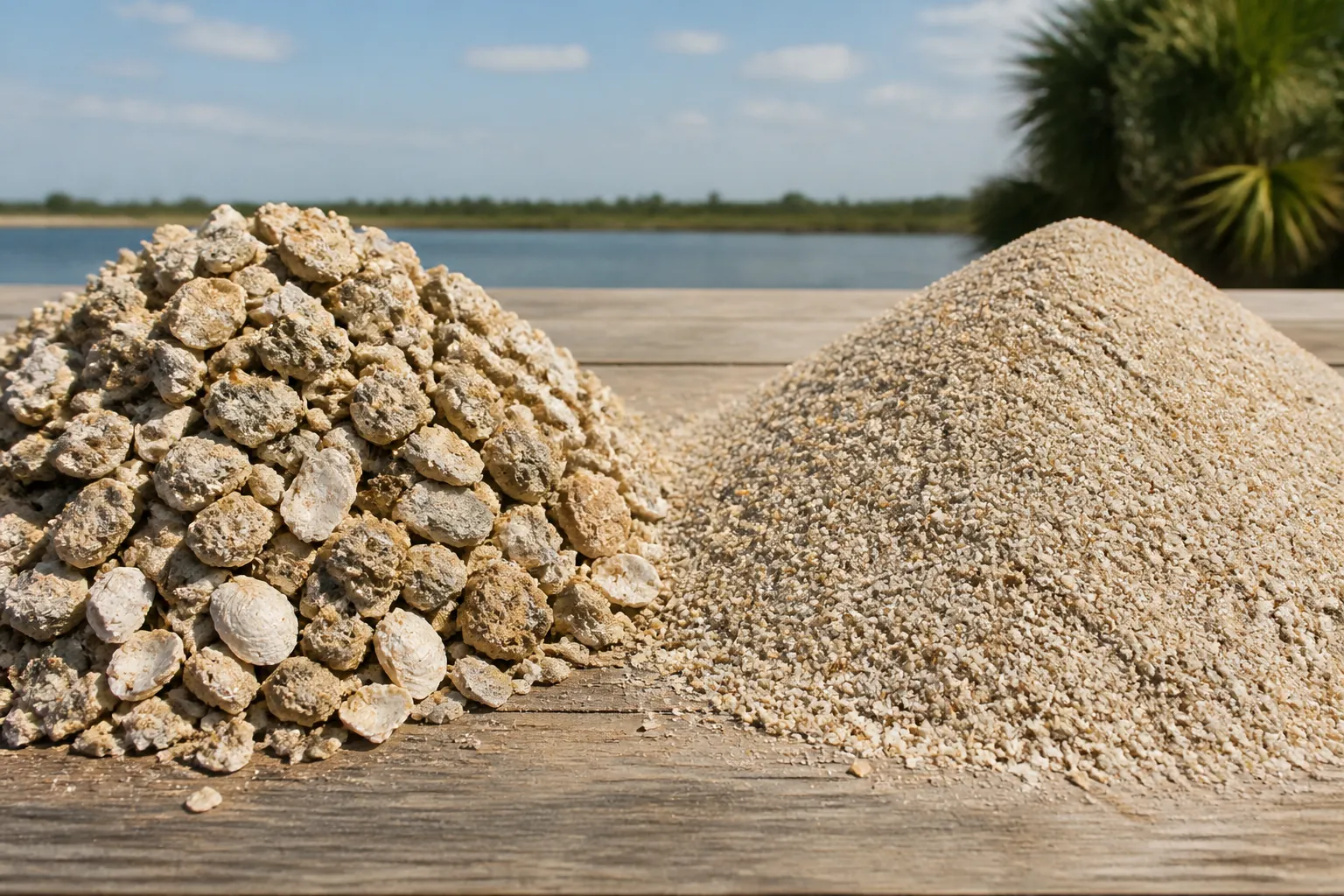
Coquina shell can be considered as ground cover near an outdoor AC unit only when the unit’s required clearances, airflow, drainage, and service access remain unobstructed. Start with the unit’s manual and ask an HVAC professional about site-specific limits. Plan the shell edge outside those limits, then check the separate delivery route and drop location with the supplier.
What should you check before planning shell around an AC unit?
Start with the unit, not the landscape outline. Find the model and installation details for the outdoor unit, then note any maker clearances and access requirements. The coquina shell material specifications guide can help you frame product questions, while the guide to coquina shell near house siding covers a separate boundary condition.
Outdoor units vary by model and setup. Do not apply a distance from another home’s unit, an online photo, or a generic landscape sketch to yours. If the manual is missing or the unit has been replaced, ask the installing contractor or a qualified HVAC technician to identify the applicable clearance and service needs.
Walk around the unit and identify the parts that must remain reachable. A technician may need room to inspect panels, disconnects, lines, or the unit base. The exact service zone depends on the installation. Do not use shell, edging, plants, pots, or stored items to define a boundary until the technician’s access needs are clear.
Take a few photos from the sides a technician would use and write down what you could not verify. That gives the contractor a concrete starting point. It also prevents a decorative plan from quietly becoming an unit modification.
- Record the model number and locate the unit maker’s manual.
- Ask which sides need airflow clearance and service access.
- Note the base, wall, drains, disconnect, and visible lines.
- Mark unknown dimensions as questions, not approved limits.
How does airflow affect a coquina shell layout?
Outdoor AC units need the unobstructed operating area set by each unit maker. The U.S. Department of Energy and ENERGY STAR advise keeping the unit clear so air can circulate. Read your manual, then review the siding boundary guide and coquina shell product overview before outlining shell.
That does not create one universal setback for every unit. A side discharge model, a top discharge model, and a different unit configuration can have different instructions. Read the specific manual and ask an HVAC professional if the planned edge is close to an intake, fan outlet, service panel, or other opening.
Think about the mature shape of nearby plants as well as their size today. A shrub that is small when planted can expand toward an air opening. A border can also collect leaves or become a place to store tools. If the space is tight, keep the design simple and let the unit requirements set the usable boundary.
Do not raise the surrounding grade or pile coquina shell against the unit to create a finished look. The unit’s base, drainage arrangement, and mounting should be reviewed by a qualified HVAC professional before any changes are considered. Shell is a landscape material, not a method for leveling, supporting, shielding, or repairing mechanical equipment.
- Mark verified clearances on your sketch.
- Draw the planned shell edge outside the marked unit zone.
- Check whether plants, furniture, screens, or leaves could block the zone.
- Ask an HVAC professional to review close or uncertain placement before ordering.
How can you keep service access visible and usable?
Airflow clearance and technician working room are separate needs. Ask the contractor which sides and panels need access. Compare the plan with the delivery site readiness guide and material specifications; delivery access does not define service clearance.
Ask the HVAC contractor which panels and sides require routine or occasional access. Keep that area visible from the yard. Avoid burying the edge of a pad, disconnect, line cover, or visible service point under loose shell. If a component is already partly covered or difficult to identify, do not uncover or adjust it yourself; ask the contractor what is safe to move.
Consider how a service visit happens in practice. A technician may bring tools, kneel, open a panel, or need to move around the unit. A narrow decorative strip can be difficult to maintain and can collect debris. A broader clear area may be more useful, but its required dimensions must come from the unit documentation or qualified professional, not from this article.
Keep gates and the route from the yard entrance clear as well. Equipment access may follow a path across the property, beyond the small area around the unit. Do not assume the delivery truck route and the technician route are the same; they involve different vehicles, tasks, and clearances.
- Ask the contractor to identify service panels and the needed working area.
- Keep the disconnect and visible labels easy to see and reach.
- Plan a tool route outside the planned shell area.
- Leave household members a note showing the clear space.
What drainage questions belong in the plan?
Observe visible flow and condensate outlets, but do not assume shell changes drainage. For product context, see coquina shell landscaping and drainage use questions. Ask a qualified professional about pooling, grading, or the unit base.
Do not cover a condensate outlet, drain opening, or inspection point. Do not route a line through shell or bury it to make the area look neater unless the responsible professional approves the method. A line that becomes hard to see may also become harder to inspect when a problem appears.
Walk the area after ordinary rain and note visible flow paths, low points, and places where water stands. This observation is not an engineering assessment. It simply gives a contractor useful context and helps you avoid presenting an unverified drainage change as a cosmetic project.
In Palm Coast, a property can have its own grading, roof runoff, and neighborhood constraints. A nearby home may not share those conditions. Use your own observations and the advice of the professional responsible for the unit or site drainage rather than copying a neighbor’s layout.
If the work changes grade, runoff, buried lines, or the unit base, ask the responsible pro before placing shell. Tropical Yards supplies coquina shell and dump trailer delivery; it does not inspect the HVAC unit, design drainage, or perform landscape installation.
How should you plan the shell edge and surrounding landscape?
Draw only the area left after verifying unit clearances and service access. Compare the boundary with shell garden-bed planning and coquina landscape edging options, while keeping the HVAC zone clear.
Keep loose material distinct from plant soil and any areas that need access. The edge should be easy to recognize and maintain, but do not add edging where it narrows a required service zone or traps water. If a border or screen is being considered near the unit, check that it will not restrict airflow and that it can be removed for service if needed.
Plan for routine yard work. Mowing, trimming, leaf removal, and unit service may all happen in the same small area. A complicated design can put the tasks in conflict. A modest, clearly separated ground-cover area is easier to explain to a contractor and easier for household members to keep clear.
Do not promise yourself that a layer of shell will prevent weeds, control moisture, protect the unit, or reduce maintenance. The result depends on the actual site and product conditions, and those claims are outside the facts available here. Treat the choice as a surface preference that still needs to fit the unit instructions.
- Sketch the verified clearances before drawing the shell footprint.
- Show the technician route and any existing inspection points.
- Keep the unit area separate from planting, storage, and decorative objects.
- Recheck the outline after considering mature plants and future service access.
What should Palm Coast homeowners check before delivery?
Once the layout has been reviewed, keep the product order and unit work as separate decisions. The coquina shell delivery readiness page explains the kind of site details to discuss, and the material specifications page helps organize product questions. Neither page substitutes for an HVAC contractor’s clearance review.
Describe the planned drop spot and the route from the street. Mention nearby unit, gates, overhead obstacles, and the area that must remain clear. Ask the supplier what details is needed to review dump trailer access. Do not assume that a drop spot near the AC unit is suitable simply because the planned shell area is nearby.
Check the product, amount, delivery charge, minimum order, and address-specific availability before making a project commitment. The current site lists coquina shell at $145 per cubic yard, a four-cubic-yard minimum, and $275 delivery when those prices apply; check the current details directly. Do not use a supplier delivery quote as an estimate for HVAC work, surface preparation, or spreading labor.
Tropical Yards supplies plants and coquina shell. Customers or their separately arranged landscapers handle installation and maintenance. If the work involves moving the unit, changing a line, covering the unit, or altering the base, arrange qualified HVAC service independently before the material is delivered.
- Check the unit’s requirements with the HVAC professional.
- Share the planned route and drop spot with the supplier.
- Keep the service area empty during delivery and spreading.
- Arrange any installation or landscape labor separately from material supply.
What is a practical sequence for the project?
Separate unit review, site review, material order, and delivery in that order. The site-readiness checklist and product specifications page help with supplier questions, not HVAC approval.
Take dated photos before changing the area. Include the unit label if it can be photographed safely, the existing base, nearby wall, visible drains, and the yard route. Do not remove covers or touch wiring to get a better picture. Save the contractor’s written guidance with the sketch so it can be checked later.
Before the load arrives, make sure the agreed drop spot remains separate from the unit and service route. Keep tools, hoses, and household items out of the area. If conditions or the planned drop location change, contact the supplier and check the revision rather than expecting the driver to infer a new plan.
After shell placement, do not push material toward the unit to fill a gap or hide a low spot. Check that the visible service points and clear area remain as reviewed. If material has moved into a required area, ask the responsible professional how it should be corrected.
- Document the existing unit and landscape conditions.
- Get written guidance for clearance, access, and any drainage concern.
- Mark the planned surface boundary and check product details with the supplier.
- Keep the service area clear through delivery, spreading, and later yard care.
Frequently Asked Questions
Can coquina shell touch the outdoor AC unit?
Do not assume it can. Follow the unit maker’s manual and ask an HVAC professional about the base, drainage, and required clearances. Keep loose material away from openings, access panels, and visible service points unless the responsible professional checks a specific arrangement.
How far should coquina shell stay from an outdoor AC unit?
There is no single distance that applies to every model and installation. Check the unit manual and ask the installing contractor or a qualified technician to identify the measurement points and service area. Do not copy a distance from another home or general article.
Can I use shell to level the area around the unit?
Do not use landscape shell to level, support, raise, or repair an outdoor unit. Changes to its base or nearby grade should be reviewed by a qualified HVAC or site expert. Tropical Yards supplies material and delivery, not unit or landscape installation.
Will coquina shell improve airflow or protect the AC?
No. Don’t count on coquina shell to improve airflow or protect the unit. The unit’s airflow needs come from its maker and installation. ENERGY STAR and the U.S. Department of Energy advise keeping outdoor unit clear of debris, but that guidance does not make shell a protective or efficiency product.
What should I tell Tropical Yards about the drop location?
Explain the access route, planned drop area, nearby unit, and any space that must stay clear. Ask the supplier to review delivery logistics before agreeing to the plan. The supplier does not assess HVAC clearance or approve a landscape design.
Tropical Yards supplies and delivers coquina shell. Customers or their landscapers handle installation. Call 904-526-8345 to request current material and delivery details.
This article uses AI-assisted drafting. It includes no images of Tropical Yards projects or current inventory.
Sources
- Consumer Guide to Home Heating and Cooling, U.S. Department of Energy
- Clean Heating and Cooling, ENERGY STAR
- Coquina Shell Landscaping, Tropical Yards